Airspace Classification: Classes A to G
Airspace classification is the ICAO system that divides air traffic services airspace into seven classes, A to G. Each class fixes which flight rules are permitted, which flights air traffic control separates, what other services are given, and whether a clearance, continuous radio contact and a speed limit apply.
Airspace classification is the ICAO system, set out in Annex 11, that sorts air traffic services airspace into seven classes, A to G. One letter settles several questions at once: whether VFR flight is permitted, which flights air traffic control keeps apart, who receives only traffic information, whether a clearance and continuous two-way radio are needed, and whether the 250 kt speed limit applies. Each State chooses which classes to use and publishes them in section ENR 1.4 of its AIP.
The classes are graded. Class A is the most restrictive: IFR only, every flight separated from every other. Class G is the least: anyone may fly, nobody is separated, and information is given on request. Classes A to E are controlled airspace; F and G are not. Europe applies the ICAO classes through the Standardised European Rules of the Air (SERA, Regulation (EU) No 923/2012), which adds radio and transponder mandatory zones. The United States uses six of the seven letters, with its own dimensions, equipment rules and chart symbols.
ICAO classes A to G
Each class is defined by the service it provides:
- Class A. IFR flights only. All flights receive an air traffic control service and are separated from each other.
- Class B. IFR and VFR. Every flight receives ATC and is separated from every other flight, VFR included.
- Class C. IFR and VFR, all under ATC. IFR flights are separated from IFR and VFR flights. VFR flights are separated from IFR flights and receive traffic information on other VFR flights, with traffic avoidance advice on request.
- Class D. IFR and VFR, all under ATC, but only IFR is separated from IFR. IFR flights receive traffic information on VFR flights; VFR flights receive traffic information on all other flights.
- Class E. IFR and VFR. IFR flights receive ATC and are separated from other IFR flights; all flights receive traffic information as far as practical. VFR flights need no clearance. ICAO states that Class E is not to be used for control zones.
- Class F. IFR and VFR. Participating IFR flights receive an air traffic advisory service, which separates them only as far as practical, and any flight may ask for flight information service. It is meant as an interim arrangement until a full control service can replace it.
- Class G. IFR and VFR. Nobody is separated, and flight information service is given on request.
Services and separation by class
Annex 11 Appendix 4, mirrored in SERA Appendix 4, condenses the scheme:
| Class | Flights | Separation by ATC | Other service | Clearance | Continuous two-way radio | 250 kt limit below 10,000 ft AMSL |
|---|---|---|---|---|---|---|
| A | IFR only | All flights | ATC | Yes | Yes | No |
| B | IFR, VFR | All flights | ATC | Yes | Yes | No |
| C | IFR, VFR | IFR from IFR and VFR; VFR from IFR | VFR: traffic information on VFR | Yes | Yes | VFR only |
| D | IFR, VFR | IFR from IFR | Traffic information to IFR on VFR and to VFR on all | Yes | Yes | All |
| E | IFR, VFR | IFR from IFR | Traffic information as far as practical | IFR only | IFR only | All |
| F | IFR, VFR | Participating IFR, as far as practical | Advisory service to IFR; FIS on request | No | IFR only | All |
| G | IFR, VFR | None | FIS on request | No | IFR only | All |
Separation means the controller keeps aircraft apart by prescribed minima. Traffic information only says where other traffic is; avoiding it remains the pilot's job.
Exam tip: the pairs most often confused are C and D (C separates VFR from IFR, D does not) and D and E (in E a VFR flight needs neither a clearance nor a radio).

Entry, radio and speed requirements
A clearance is needed for every flight in Classes A to D and for IFR flights in Class E. Continuous two-way voice communication is required of all flights in A to D but only of IFR flights in E, F and G, so a VFR aircraft without a radio may fly in those classes unless a radio mandatory zone says otherwise.
The ICAO speed limit is 250 kt IAS below 3,050 m (10,000 ft) AMSL. It does not apply in Classes A and B, applies only to VFR flights in Class C and applies to everyone in D to G. Where the transition altitude is below 10,000 ft, FL100 is used instead. SERA lets the competent authority exempt aircraft types that cannot keep to 250 kt for technical or safety reasons. The FAA is stricter: 14 CFR 91.117 applies 250 kt to every aircraft below 10,000 ft MSL, including in Class B.
The VMC minima of SERA.5001 depend on class and height:
| Level band | Classes | Flight visibility | Distance from cloud |
|---|---|---|---|
| At and above 3,050 m (10,000 ft) AMSL | A to G | 8 km | 1,500 m horizontally, 300 m (1,000 ft) vertically |
| Below 3,050 m AMSL and above 900 m (3,000 ft) AMSL or 300 m (1,000 ft) above terrain, whichever is higher | A to G | 5 km | 1,500 m horizontally, 300 m vertically |
| At or below 900 m AMSL or 300 m above terrain, whichever is higher | A to E | 5 km | 1,500 m horizontally, 300 m vertically |
| As above | F, G | 5 km | Clear of cloud, surface in sight |
The Class A values are published for guidance only, since VFR is not permitted there. In F and G the authority may accept visibility down to 1,500 m for flights at 140 kt IAS or less. SERA also bars VFR above FL195 except in reserved airspace or, with ATC authorisation, up to FL285, and never above FL285 where 1,000 ft vertical separation is applied above FL290. Flight below VMC inside a control zone needs a special VFR clearance, covered under VFR and IFR rules.
Airspace classes in the United States
The FAA uses Classes A, B, C, D, E and G; Class F is not used. The classes are designated under 14 CFR Part 71, and 91.126 to 91.135 set the operating rules.
| Class | Typical dimensions | To enter | Equipment | VFR minima |
|---|---|---|---|---|
| A | 18,000 ft MSL up to and including FL600 | IFR clearance | Mode C, ADS-B Out (1090ES) | VFR not permitted |
| B | Surface to 10,000 ft MSL, in layers | Explicit ATC clearance; private pilot certificate or student endorsement | Radio, Mode C, ADS-B Out | 3 SM, clear of clouds |
| C | 5 NM core from surface to 4,000 ft above the airport; 10 NM shelf from 1,200 ft | Two-way radio contact established | Radio, Mode C, ADS-B Out | 3 SM; 500 ft below, 1,000 ft above, 2,000 ft horizontally |
| D | Surface to about 2,500 ft above the airport, individually tailored | Two-way radio contact established | Radio | 3 SM; 500, 1,000, 2,000 ft |
| E | Floor at the surface, 700 ft AGL, 1,200 ft AGL or 14,500 ft MSL, up to but not including 18,000 ft MSL; also above FL600 | Nothing for VFR | Mode C and ADS-B at and above 10,000 ft MSL | Below 10,000 ft MSL as D; above, 5 SM and 1,000 ft, 1,000 ft, 1 SM |
| G | Surface to the overlying Class E | Nothing | None | Day below 1,200 ft AGL: 1 SM, clear of clouds |
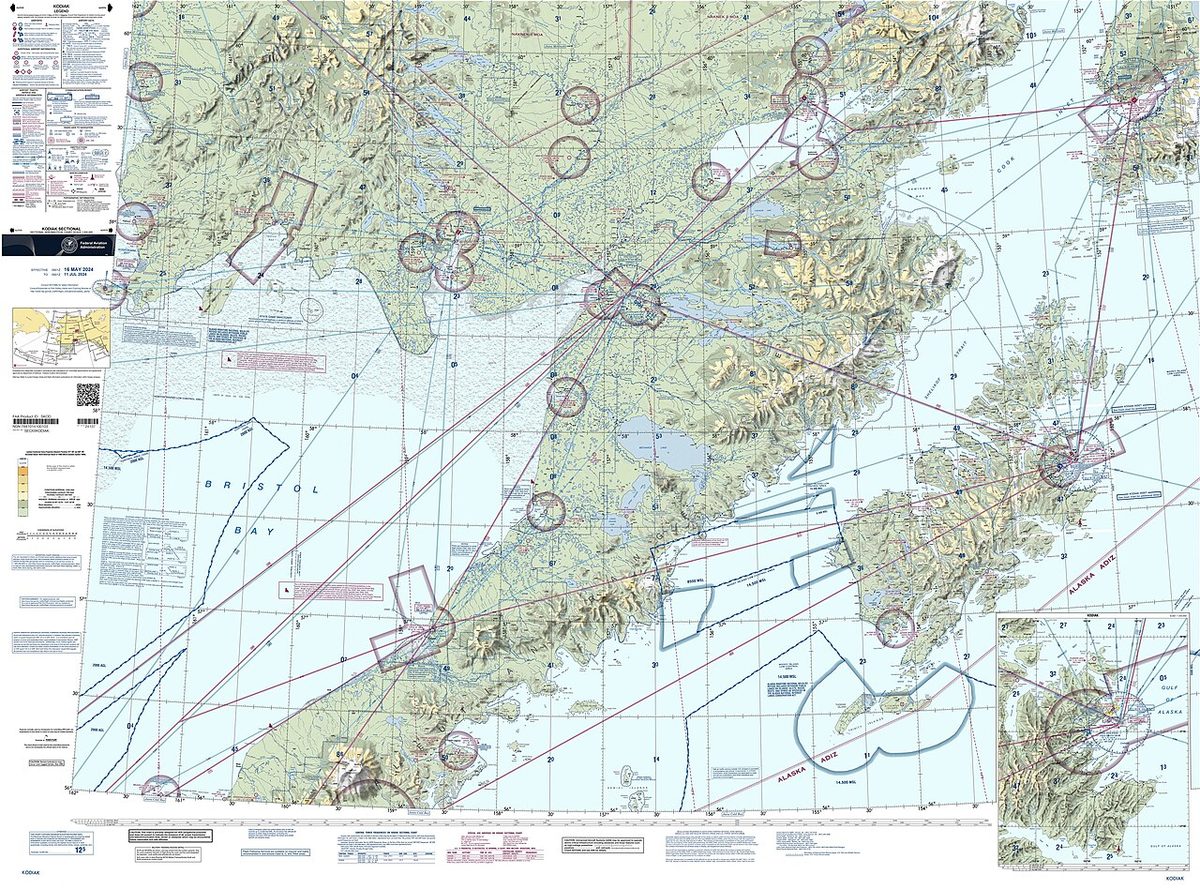
In Class B every aircraft is sequenced and separated, and entry needs an explicit clearance such as "cleared into the Class Bravo airspace"; a squawk and "radar contact" are not one. In Class C, communication is established when the controller answers with the aircraft's callsign, even with "standby", but "remain outside" means stay out. Controllers there separate VFR from IFR aircraft by visual separation, 500 ft vertically or target resolution, and give VFR aircraft traffic advisories on each other. Class D provides no separation for VFR aircraft.
Elsewhere in Class G below 10,000 ft MSL the rule is 1 SM by day and 3 SM at night, with 500 ft below, 1,000 ft above and 2,000 ft horizontally from cloud; at night a pattern within half a mile of the runway may be flown in 1 SM clear of clouds. Above 1,200 ft AGL and at or above 10,000 ft MSL the Class E values apply. Two lower speed limits apply: 200 kt at or below 2,500 ft AGL within 4 NM of a Class C or D primary airport, and 200 kt beneath Class B or in a VFR corridor through it.
FAA surface areas
A surface area is the part of Class B, C, D or E airspace designated for an airport that begins at the ground. The Class B and C cores are surface areas, as is the whole of a Class D. A Class E surface area, drawn with a dashed magenta line, surrounds an airport without an operating tower so that its instrument approaches stay in controlled airspace down to the runway. The airport must have weather observation and reporting and radio contact with aircraft down to the runway surface. A part-time Class D reverts to a Class E surface area or to Class G when the tower closes.
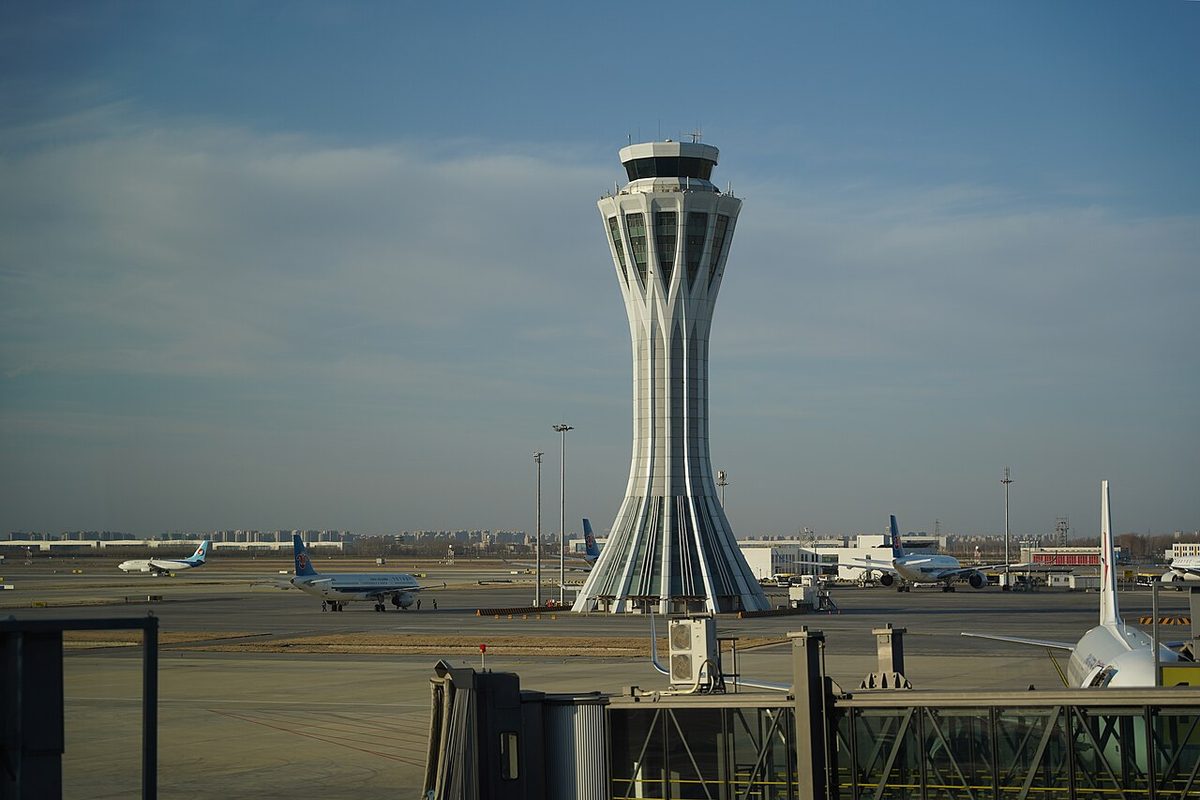
Inside any surface area, VFR flight beneath a ceiling below 1,000 ft, or a take-off, landing or pattern entry in less than 3 SM ground visibility, needs a special VFR clearance. The Class E surface area departs from ICAO practice: it is in effect a Class E control zone.
Class C outer area and TRSA
Every Class C has a Class C outer area, normally 20 NM from the primary airport. It is not charted, and approach control offers Class C services there, but participation is voluntary and can be ended on request.
A Terminal Radar Service Area (TRSA) surrounds certain airports where approach control provides sequencing and separation between all IFR flights and participating VFR aircraft. A TRSA is not an airspace class: its primary airport is normally Class D, participation is urged but not mandatory, and a pilot who does not want the service says "negative TRSA service".
Mode C veil and ADS-B
The Mode C veil is the airspace within 30 NM of the airports listed in 14 CFR Part 91 Appendix D, Section 1, mostly Class B primary airports, from the surface to 10,000 ft MSL. Aircraft inside it need a transponder with automatic altitude reporting. Gliders, balloons and aircraft certificated without an engine-driven electrical system are exempt while they stay outside Class A, B and C airspace and below the lower of the Class B ceiling or 10,000 ft MSL.
Since 1 January 2020, 14 CFR 91.225 has required ADS-B Out in Classes A, B and C, in the veil, above Class B and C up to 10,000 ft MSL, in Class E at and above 10,000 ft MSL except within 2,500 ft of the surface, and over the Gulf coast at and above 3,000 ft MSL within 12 NM of the shore. Class A requires 1090 MHz extended squitter; the 978 MHz UAT is accepted only below 18,000 ft MSL.
An operator of an aircraft without ADS-B Out may ask for access through the ADS-B Deviation Authorization Preflight Tool (ADAPT). The request must be made between 24 hours and one hour before departure, the aircraft needs a working transponder and altitude encoder, and approval arrives by email; ATC takes no such requests by telephone or in flight.
VFR corridors, transition routes and flyways
A VFR corridor is a tunnel through Class B airspace with defined lateral and vertical limits, surrounded by Class B and not reaching the ground, in which aircraft may fly without a clearance or radio contact. The 200 kt limit applies, and pilots are urged to exchange position reports on 122.750 MHz.
A VFR transition route is a charted course through Class B that needs a clearance and has ATC-assigned altitudes. A VFR flyway is a general flight path on terminal area charts for planning a route around Class B; it needs no clearance.
Radio and transponder mandatory zones
SERA.6005 lets European States add equipment requirements without changing the class. In a Radio Mandatory Zone (RMZ), VFR flights in Classes E, F or G and IFR flights in F or G must keep a continuous listening watch and establish two-way contact as necessary. Before entry the pilot calls the unit with callsign, aircraft type, position, level and intentions. In a Transponder Mandatory Zone (TMZ) all aircraft must carry and operate a Mode A and C or Mode S transponder unless alternative provisions are published. Both are promulgated in the AIP and are often combined as an RMZ/TMZ.
An RMZ in Class G is still Class G: calling in buys neither separation nor a clearance. The UK uses Classes A, C, D, E and G, with no Class B or F. All UK airspace above FL195 is Class C, the classification Regulation (EC) No 730/2006 first required of EU States. Parts of Scotland are Class E with a TMZ, where VFR aircraft squawk 7000 with altitude reporting or a frequency monitoring code. See also air traffic services and special use airspace.
Frequently asked questions
Which airspace classes are controlled airspace?
Classes A, B, C, D and E are controlled airspace, because an air traffic control service is provided there and IFR flights are always controlled flights. Class F is advisory airspace, where participating IFR flights receive advice rather than clearances, and Class G is uncontrolled, with flight information service only. In Class E, VFR flights may enter without a clearance even though the airspace is controlled.
What is the difference between Class C and Class D airspace?
Both admit IFR and VFR flights, and both require a clearance and continuous two-way radio contact. In Class C air traffic control separates IFR flights from VFR flights, and VFR pilots receive traffic information on other VFR traffic. In Class D only IFR flights are separated from each other; everyone else receives traffic information. Under ICAO rules the 250 kt limit binds only VFR flights in C but all flights in D.
What is the Mode C veil?
The Mode C veil is the airspace within 30 NM of the primary airports listed in 14 CFR Part 91 Appendix D, from the surface up to 10,000 ft MSL, mostly around Class B airports. Aircraft inside it need a transponder with automatic altitude reporting and, since 1 January 2020, ADS-B Out. Gliders, balloons and aircraft certificated without an engine-driven electrical system are exempt if they stay outside Class A, B and C airspace and below the lower of the Class B ceiling or 10,000 ft MSL.
Does the UK use Class B or Class F airspace?
No. The UK uses Classes A, C, D, E and G. Class B is not used in the London and Scottish FIRs and UIRs, and the advisory routes that were once Class F have been reclassified. All UK airspace above FL195 is Class C, and parts of Scotland use Class E combined with a transponder mandatory zone.
What are an RMZ and a TMZ?
A radio mandatory zone (RMZ) is a volume, usually in Class E, F or G, where pilots must call the controlling unit before entry and keep a listening watch. A transponder mandatory zone (TMZ) requires every aircraft to carry and operate a Mode A and C or Mode S transponder. Both are created under SERA.6005 and published in the AIP; neither changes the class of airspace or the services given within it.
Test yourself on Airspace Classification: Classes A to G
The v1prep banks cover this topic in Air Law (010), with a worked explanation for every answer. EASA ATPL, PPL, IR and CPL, the FAA written tests and A320/B737 type ratings.
Start practising →Sources and further reading
- ICAO Annex 11, Air Traffic Services (consolidated text, Appendix 4, ATS airspace classes)
- EASA Easy Access Rules for Standardised European Rules of the Air (SERA), SERA.6001 Classification of airspaces
- UK CAA Regulatory Library, SERA.6005 Requirements for communications and SSR transponder
- UK CAA, Policy for the Classification of UK Airspace
- FAA Aeronautical Information Manual, Chapter 3 Section 2, Controlled Airspace
- FAA Aeronautical Information Manual, Chapter 3 Section 5, Other Airspace Areas (VFR routes, TRSA)
- 14 CFR 91.225, Automatic Dependent Surveillance-Broadcast (ADS-B) Out equipment and use
- FAA, ADS-B Deviation Authorization Preflight Tool (ADAPT)
Library articles are written for study and exam preparation. They do not replace your aircraft's approved documentation, your operator's procedures or the regulations themselves.