B737 Pressurisation
The Boeing 737 pressurisation system controls cabin altitude and its rate of change by positioning an outflow valve, using one of two automatic controllers or, in manual mode, the crew's outflow valve switch, while relief valves limit the differential pressure to 9.1 psi.
The Boeing 737 pressurises its cabin with the air supplied by the two air conditioning packs and controls the pressure by letting that air out through an outflow valve. In automatic operation the crew set two altitudes before flight, the planned cruise altitude and the destination field elevation, and a controller schedules the cabin from take-off to landing. Two relief valves stand behind the controller as a structural backstop.
The 737's pressurisation panel is a frequent exam and interview subject, partly because of what happens when it is set wrongly: the Helios Airways accident of 2005 began with a mode selector left in manual. This article follows the 737 Next Generation (NG) FCOM and notes where the 737 MAX differs. The general principles are in pressurisation principles and control and pressurisation safety valves and warnings.
Pressurisation overview
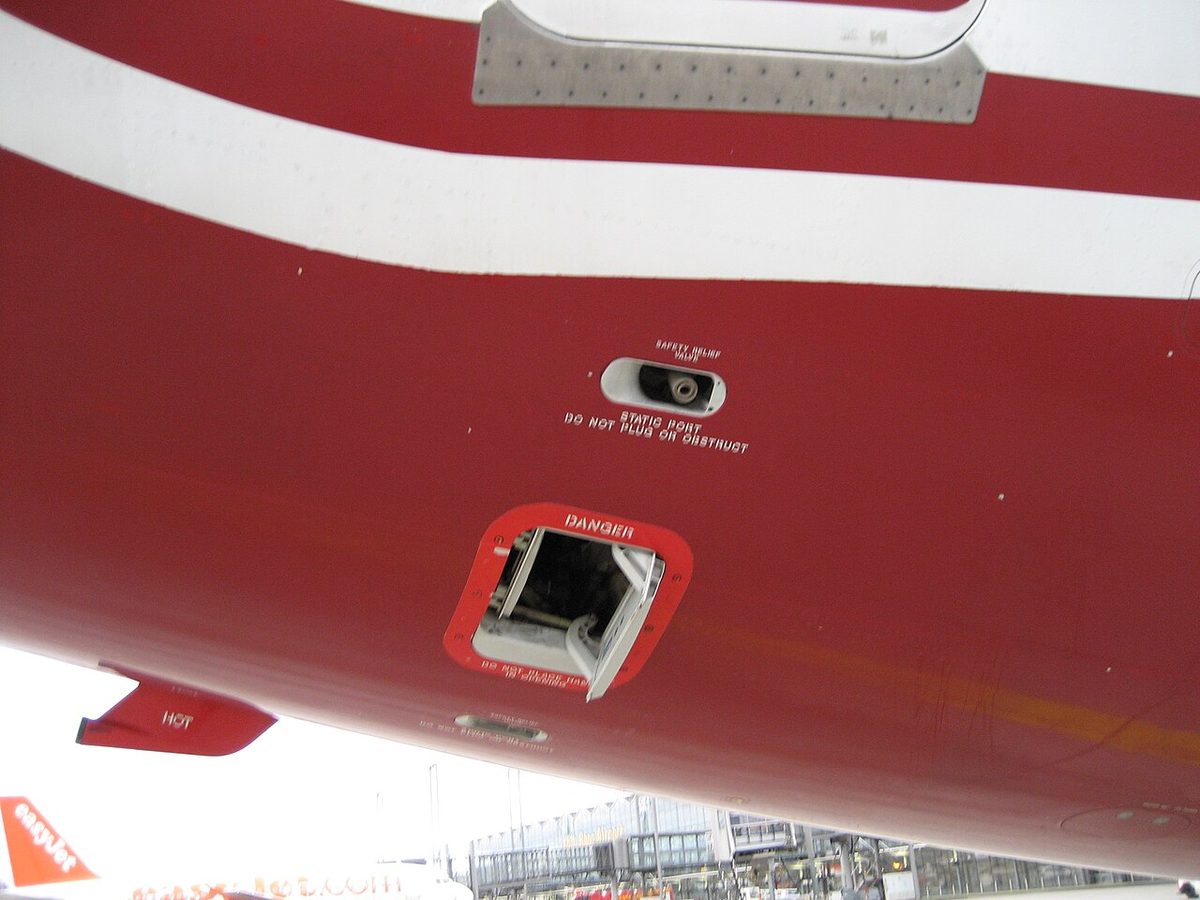
Cabin altitude is normally rate controlled by the cabin pressure controller, up to a cabin altitude of 8,000 ft at the aeroplane's maximum certified ceiling of 41,000 ft. The outflow valve is the overboard exit for most of the air circulated through the passenger cabin; the controller positions it, and so sets both the cabin altitude and how fast it changes. A smaller overboard exhaust valve discharges warm air from the electronic equipment compartment on the ground and at low differential pressure (see B737 air conditioning).
Behind the controller are the safety valves:
- Two pressure relief valves limit the differential pressure to a maximum of 9.1 psi. This is also an AFM limitation.
- A negative relief valve prevents the outside atmospheric pressure from exceeding the cabin pressure.
If pressurisation is lost suddenly, blowout panels in the lower cargo compartments relieve the pressure faster than their equalisation valves could, and two pressure sensors in the flight deck door unlock its decompression panels.
The AUTO system consists of two identical controllers. One of them is sequenced as the primary for each new flight, alternating from one flight to the next, and the other is immediately available as a backup. Both receive ambient static pressure, baro-corrected and non-corrected altitude and calibrated airspeed from the air data inertial reference units (ADIRUs), throttle position from the two stall management computers, and signals from the air/ground sensors.
Pressurisation mode selector
The pressurisation mode selector has three positions:
- AUTO: normal operation by the primary automatic controller.
- ALTN: operation by the other automatic controller. The ALTN light shows single-channel operation.
- MAN: both automatic controllers are bypassed and the crew drive the outflow valve with the spring-loaded outflow valve switch, OPEN or CLOSE. The green MANUAL light comes on.
The outflow valve switch works only with the selector in MAN. In manual mode a separate DC motor, powered from the DC standby system, drives the outflow valve faster than in AUTO or ALTN, covering its full range of motion in up to 20 seconds. That speed lets the crew depressurise the aeroplane quickly in a non-normal situation, but the FCOM cautions that a small movement of the valve can cause a large change in cabin rate of climb or descent. Manual pressurisation control remains available on battery power alone, together with the cabin altitude warning horn and lights.
Flight and landing altitude settings
The flight altitude (FLT ALT) selector sets the planned cruise altitude, from −1,000 ft to 42,000 ft in 500 ft increments. The landing altitude (LAND ALT) selector sets the planned landing field altitude, from −1,000 ft to 14,000 ft in 50 ft increments. In the preflight procedure the crew set:
| Item | Setting |
|---|---|
| FLIGHT ALTITUDE indicator | Cruise altitude |
| LANDING ALTITUDE indicator | Destination field elevation |
| Pressurisation mode selector | AUTO; ALTN and MANUAL lights extinguished |
The cruise and descent modes and the off-schedule descent logic described below all refer to the FLT ALT setting, so it must match the planned cruise altitude.
The landing altitude indication on the primary flight display is a different thing. The amber crosshatched area on the PFD altitude tape shows the FMC landing altitude for the destination runway or airport, or the landing altitude of the departure runway or airport until 400 NM from departure or half the distance to destination, whichever comes first. It comes from the FMC, not from the LAND ALT selector, and an amber LDG ALT flag means that landing altitude input is unavailable or invalid.
Automatic scheduling and ground pressurisation
On the ground the air/ground logic allows pressurisation only at high power settings. At lower power settings the controller keeps the cabin depressurised by driving the outflow valve fully open. At higher power settings, as for take-off, it modulates the valve towards closed and slightly pressurises the cabin. This ground pressurisation makes the transition to pressurised flight more gradual. In flight the air/ground logic allows the programmed pressurisation of the automatic modes.
The cruise mode begins when the aeroplane climbs to within 0.25 psi of the selected FLT ALT. The controller then holds the lowest cabin altitude the differential pressure limits allow:
| Selected FLT ALT | Cruise differential pressure limit |
|---|---|
| At or below 28,000 ft | 7.45 psi |
| 28,000 ft to 37,000 ft | 7.80 psi |
| Above 37,000 ft | 8.35 psi |
The descent mode begins when the aeroplane descends 0.25 psi below the selected FLT ALT.
Off-schedule descent
If the aeroplane starts to descend before it has reached the cruise altitude set in the FLT ALT indicator, the amber OFF SCHED DESCENT light comes on and the controller programmes the cabin to land at the take-off field elevation, without further crew input. It covers, for example, a return to the departure airport during the climb. The FCOM calls this the automatic abort capability, and it depends on the FLT ALT setting: if the FLT ALT indicator is changed, the abort capability to the original take-off field elevation is lost.
Exam tip: an off-schedule descent programmes the cabin for the take-off field elevation, not for the LAND ALT setting.
Cabin altitude indications
The cabin altitude/differential pressure indicator (CABIN ALT/DIFF PRESS) has two scales: the inner scale shows the cabin altitude in feet, and the outer scale the differential pressure between cabin and ambient in psi. It belongs to the overhead cabin altitude panel, with the ALT HORN CUTOUT switch. After a cabin altitude warning, both pilots check on that panel that the cabin altitude has stabilised at or below 10,000 ft before removing their oxygen masks. In cruise at the maximum certified ceiling of 41,000 ft the scheduled cabin altitude is 8,000 ft, and the differential pressure for a selected FLT ALT above 37,000 ft is limited to 8.35 psi.
Auto fail and cabin altitude warning
The amber AUTO FAIL light comes on for any of the following:
- loss of DC power;
- a controller fault;
- an outflow valve control fault;
- if the controller is not responding properly: a differential pressure above 8.75 psi, an excessive cabin rate of change (2,000 sea-level ft/min), or a cabin altitude above 15,800 ft.
When AUTO FAIL comes on, pressure control transfers automatically to the other controller. AUTO FAIL together with ALTN therefore means a single controller failure, and moving the mode selector to ALTN extinguishes AUTO FAIL while ALTN stays on. AUTO FAIL alone means a dual controller failure, and only manual control is left.
The cabin altitude warning activates when the cabin altitude exceeds 10,000 ft: an intermittent cabin altitude warning horn sounds and the red CABIN ALTITUDE light comes on. The horn can be silenced with the ALT HORN CUTOUT switch on the cabin altitude panel, but the light remains until the cabin altitude pressure switch deactivates, between 500 and 1,500 ft below the activation altitude. Passenger oxygen deploys automatically at 14,000 ft cabin altitude.
Warning: the cabin altitude warning and the take-off configuration warning use the same intermittent horn. In flight, an intermittent horn is a cabin altitude warning.
Whenever the horn sounds in flight above 10,000 ft MSL, the memory items are: oxygen masks on with regulators at 100 %, crew communications established, then the cabin altitude warning or rapid depressurisation non-normal checklist. Its recall items continue with the pressurisation mode selector to MAN and the outflow valve switch to CLOSE; if pressurisation is restored, manual control continues. The passenger oxygen switch is set ON if the cabin altitude exceeds, or is expected to exceed, 14,000 ft, and the Emergency Descent checklist is accomplished if the aeroplane is above 14,000 ft MSL and cabin pressure is uncontrollable, or if cabin pressure is lost. The physiology is covered in decompression.
The same horn was at the centre of the loss of Helios Airways Flight 522, a Boeing 737-300, on 14 August 2005. The pressurisation mode selector had been left in MAN after unscheduled maintenance, and the setting went unnoticed through the preflight procedure, the before start checklist and the after take-off checklist. The cabin altitude warning sounded as the aeroplane climbed through about 12,040 ft; the crew took it for the take-off configuration warning and did not put on their masks. Hypoxia incapacitated the pilots, and the aeroplane flew on until its fuel was exhausted, then struck hilly terrain near Grammatiko, about 33 km north-west of Athens airport. All 121 people on board were killed.
737 NG and 737 MAX
The EASA type certificate data sheet gives both the 737-800 and the 737-8 a maximum operating altitude of 41,000 ft. The schedule, limits and light logic in this article are those of the NG FCOM, and MAX crews confirm them in their own FCOM.
Frequently asked questions
What does the AUTO FAIL light mean on the Boeing 737?
The amber AUTO FAIL light means an automatic pressurisation controller has failed. With the ALTN light also on, a single controller has failed and control has passed automatically to the other one; selecting ALTN then extinguishes AUTO FAIL. AUTO FAIL alone means both controllers have failed, leaving manual mode. Causes include loss of DC power and a controller or outflow valve control fault, or, if the controller is not responding properly, excessive differential pressure, rate or cabin altitude.
What is the maximum cabin differential pressure on the Boeing 737?
Two pressure relief valves limit the differential pressure to 9.1 psi on the 737 NG. In normal operation the controller holds less: in cruise the limit is 7.45 psi for a selected flight altitude at or below 28,000 ft, 7.80 psi from 28,000 to 37,000 ft and 8.35 psi above 37,000 ft. A negative relief valve stops the outside pressure exceeding the cabin pressure.
What does OFF SCHED DESCENT mean on the 737?
The amber OFF SCHED DESCENT light means the aeroplane has started to descend before reaching the cruise altitude set in the FLT ALT indicator, for example after a return to the departure airport. The controller then programmes the cabin to land at the take-off field elevation with no further crew input. If the FLT ALT setting is changed, that automatic return capability is lost.
How are FLT ALT and LAND ALT set on the Boeing 737?
Before flight, the FLT ALT indicator is set to the planned cruise altitude and the LAND ALT indicator to the destination field elevation, with the mode selector in AUTO and the ALTN and MANUAL lights out. FLT ALT can be set from minus 1,000 to 42,000 ft in 500 ft steps, and LAND ALT from minus 1,000 to 14,000 ft in 50 ft steps.
What should the crew do when the cabin altitude warning sounds on a 737?
An intermittent horn in flight above 10,000 ft MSL is treated as a cabin altitude warning. The memory items are oxygen masks on with regulators at 100 percent, crew communications established, then the cabin altitude warning or rapid depressurisation checklist. The masks come off only when both pilots have checked that the cabin altitude is stabilised at or below 10,000 ft.
Test yourself on B737 Pressurisation
The v1prep banks cover this topic in the B737 type-rating bank, with a worked explanation for every answer. EASA ATPL, PPL, IR and CPL, the FAA written tests and A320/B737 type ratings.
Start practising →Sources and further reading
- EASA Type Certificate Data Sheet IM.A.120, Boeing 737
- EASA Easy Access Rules for Large Aeroplanes (CS-25), CS 25.841 Pressurised cabins
- 14 CFR 25.841, Pressurized cabins
- FAA Lessons Learned, Helios Airways Flight 522, Boeing 737-300, Grammatiko, 14 August 2005
- FAA Aviation Maintenance Technician Handbook, Airframe (FAA-H-8083-31B), Chapter 16, Cabin Environmental Control Systems
Library articles are written for study and exam preparation. They do not replace your aircraft's approved documentation, your operator's procedures or the regulations themselves.