Boeing 787 No-Bleed Systems Architecture
The no-bleed architecture is the Boeing 787's systems design in which electrical power from engine- and APU-driven generators replaces engine bleed air for cabin pressurisation, wing ice protection, engine starting and the large hydraulic pumps, leaving engine cowl (nacelle) anti-ice as the remaining pneumatic system.
The Boeing 787 was designed without the conventional engine bleed air system of earlier jet transports. On most airliners, hot compressed air tapped from the engine compressors feeds the air-conditioning packs, heats the wing leading edges and turns the air turbine starters. On the 787 those jobs are done electrically: each engine drives two large generators, electric motors drive the cabin air compressors and the large hydraulic pumps, the same generators run as motors to start the engines, and heating blankets protect the wing. Boeing called this the no-bleed systems architecture.
In Boeing's current documents, one aircraft system still uses engine air: engine cowl, or nacelle, anti-ice. The airport planning document says the 787 has no traditional pneumatic system, that the remaining pneumatic system is for engine nacelle anti-ice, and that there are no ground pneumatic connections. The FAA Flight Standardization Board (FSB) report lists the pneumatic chapter as "engine anti-ice only". Boeing's 2007 article named one more use of bleed air, the pressurisation of the hydraulic reservoirs; the later documents used here do not mention it.
Boeing's design aims are set out in a 2007 AERO magazine article by Mike Sinnett, then Director of 787 Systems, written before entry into service; its figures are given here as Boeing's predictions at the time. How the aircraft is built today comes from the EASA type-certificate data sheet (TCDS), the FAA Master Minimum Equipment List (MMEL), the airport planning document and the FSB report. The electrical side is covered in Boeing 787 electrical system, the general principles in bleed air and pneumatic systems.
Bleed air on traditional airliners
In a conventional design the engines supply most of the aircraft's secondary power as compressed air. A bleed manifold carries it to the packs, the wing anti-ice valves and the engine starters, and on some types to air-driven hydraulic pumps. Boeing's 2007 article sets out the costs it saw in this arrangement:
- The ducting needs check valves and pre-coolers and is itself made of titanium, which adds hundreds of pounds.
- The air is taken at more pressure than the users need and then regulated down through pre-coolers and modulating valves, which wastes energy.
- A pneumatic system generally develops more power than is needed in most conditions, so excess energy is dumped overboard.
- Air diverted from the engines robs them of some thrust and raises their fuel consumption.
For the wing, the traditional system Boeing described sends hot bleed air through one valve per wing to a "piccolo" duct that spreads the heat along the leading edge; a telescoping duct feeds the slats when extended, and the spent air leaves through holes in the lower surface of the wing or slat. In the same traditional architecture, the centre hydraulic system is powered by two large air-turbine-driven pumps of about 50 gallons per minute (gpm) at 3,000 psi for the peak demands of take-off and landing, and by two small electric pumps of about 6 gpm for the rest of the flight.
What the 787 does instead
In the no-bleed architecture the engines deliver most of the aircraft's systems power in electrical form, through shaft-driven generators. The power sources are the engine-driven and APU-driven generators; the AERO article lists the electrified functions as wing ice protection, engine starting, the high-capacity hydraulic pumps and the cabin environmental control system. The APU is listed in the TCDS for all three models as a no bleed-air APU, the Hamilton Sundstrand APS5000. Boeing's article describes it as mounted in the tail cone, as on earlier types, but providing only electrical power.
| Function | Traditional bleed design | Boeing 787 |
|---|---|---|
| Cabin air and pressurisation | Bleed air to the packs | Four electric cabin air compressors, two per pack |
| Wing ice protection | Hot bleed air in a piccolo duct | Electro-thermal heating blankets in the slats |
| Engine start | Pneumatic (air turbine) starter | Two starter generators per engine run as motors |
| Centre hydraulic system | Air-turbine-driven pumps | Two electric motor-driven pumps |
| APU output | Compressed air and electricity | Electricity only |
| Engine cowl anti-ice | Bleed air | Bleed air (unchanged) |
The price is a much larger electrical system. Boeing's pre-service article says it generates twice as much electricity as previous Boeing models and adds two new voltages, 235 V AC and ±270 V DC. Four auto-transformer-rectifier units convert 235 V AC into ±270 V DC for a handful of large adjustable-speed motors: the cabin air compressor motors, the ram air fan motors, the nitrogen generation system compressor used for fuel tank inerting, and the large hydraulic pump motors.
For pilots coming from the 777, the original 2011 FSB differences table shows the bleed air control panel as "eliminated"; the current FSB report lists the packs as "electric CACs".
Cabin air compressors
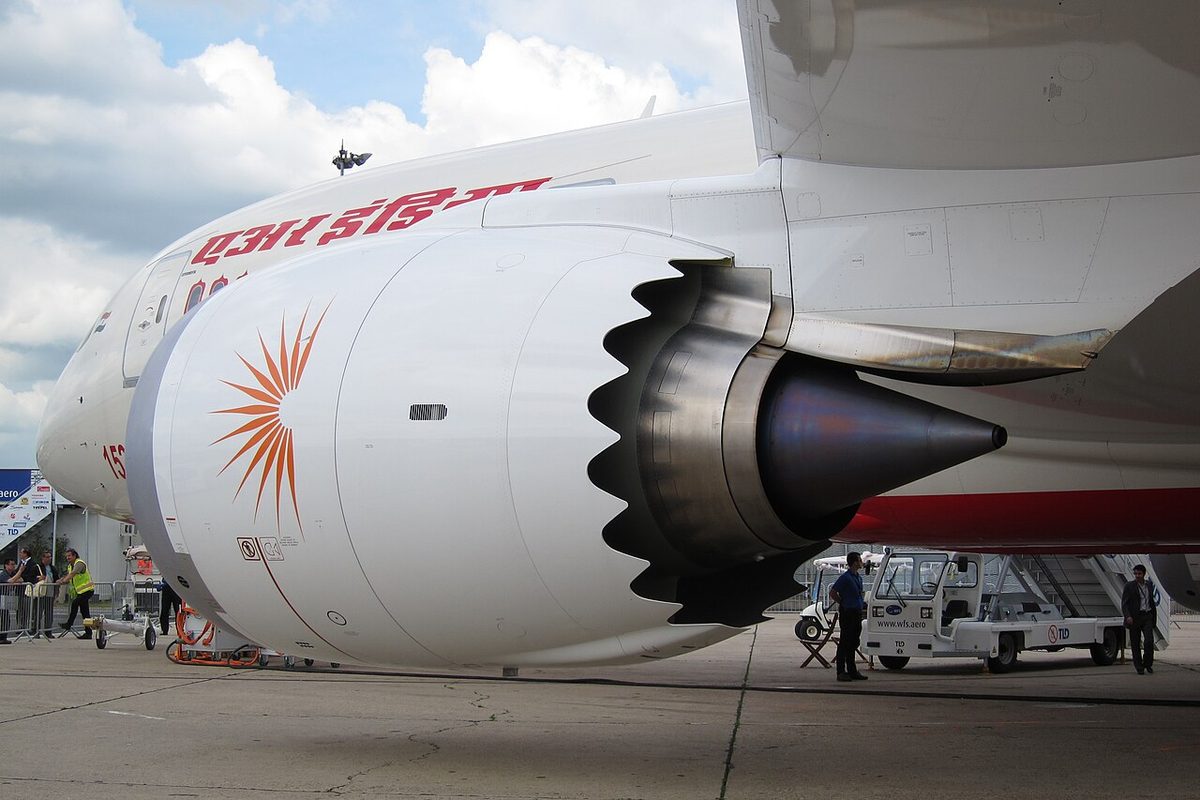
In the 787, electrically driven compressors provide cabin pressurisation, with fresh air brought on board through dedicated cabin air inlets. These are the cabin air compressors (CACs). The MMEL lists two left and two right CACs on every model; with both left CACs inoperative it treats the left air-conditioning pack as inoperative, so two compressors feed each of the two packs. The compressor output flows through what Boeing calls low-pressure air-conditioning packs; the MMEL lists two air cycle machines and a left and a right ram air fan, each fan with its own motor controller. The compressor inlets have their own ice protection: the MMEL lists two cabin air compressor inlet ice protection systems (CIPS).
Boeing's efficiency argument rests on speed control: adjustable-speed motor compressors produce air at the required pressure, so nothing has to be regulated down, and the inflow can be matched to the number of occupants.
The MMEL provisos tie each CAC to an associated variable frequency starter generator (VFSG): with one left CAC inoperative, the VFSG associated with the operating left CAC must operate normally. Engine starting and compressor control also share hardware. Boeing wrote in 2007 that the engine- and APU-start converters would also act as the motor controllers for the cabin compressors, and the current MMEL lists four common motor start controllers (CMSCs) under the heading "Main Engine Start/Cabin Air Compressor". With one CMSC inoperative, its VFSG starter and its CAC are both counted as inoperative, and for CMSC L1 the left APU starter generator's starting function as well.
Pressurisation control is familiar to 777 crews: the 2011 FSB listed the pressurisation system, controls and indicators as the same as the 777's, and the MMEL lists forward and aft outflow valves with automatic and manual control. On the ground, low-pressure conditioned air from a ground unit can be supplied through an 8-in (20.3 cm) ground air connection directly to the passenger cabin, bypassing the air cycle machines; the airport planning document shows one such port on the 787-8 and two on the 787-9 and 787-10.
Electric wing ice protection
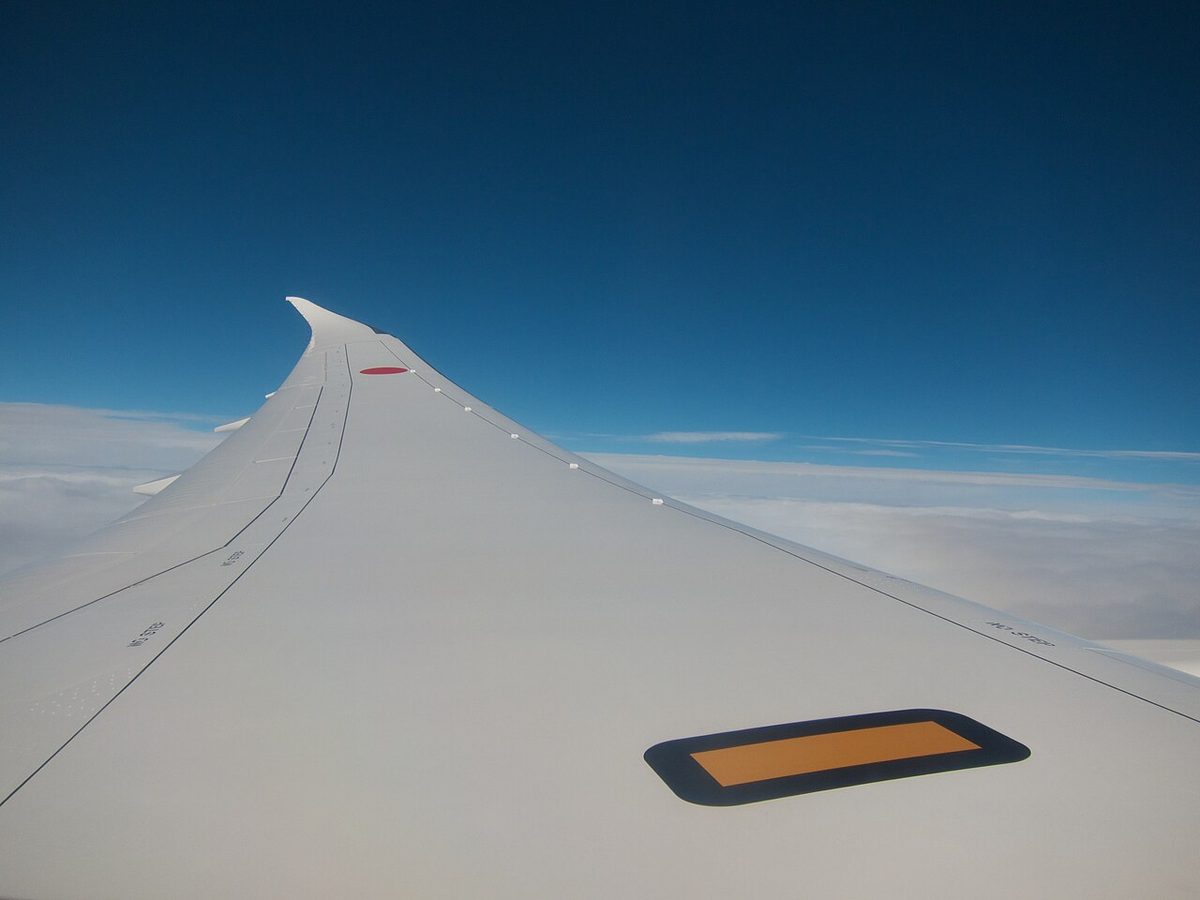
The 787 uses an electro-thermal wing ice protection scheme. In Boeing's 2007 description, several heating blankets are bonded to the inside of the protected slat leading edges, and they can be energised all together for anti-icing or one after another for de-icing. The same pre-service article claimed two gains over a pneumatic system: no excess energy is exhausted, so the power used is approximately half, and with no bleed air exhaust holes, drag and community noise are lower.
The MMEL describes the installed system as the wing ice protection system (WIPS), with 48 heat zones and three channels. Its dispatch relief allows one heat zone pair in symmetrical slats to be inoperative. The original FSB report adds that the 787 has a primary ice detection system, operable in flight in all day and night lighting conditions, which detects icing conditions and automatically activates the wing ice protection; the MMEL lists two ice detectors. Ice protection in general is covered in ice protection and ice detection.
Electric engine start
The traditional pneumatic starters are replaced, in the airport planning document's words, by a pair of gearbox-mounted main-engine starter/generators on each engine; both engine data sheets show two VFSGs and one hydraulic pump on the accessory gearbox.
Boeing's 2007 description of the start, written before entry into service:
- The generators run as synchronous starting motors, and start converters supply them with conditioned power of adjustable voltage and frequency.
- Normally both generators on the engine, and both on the APU, are used for the best start performance.
- If one engine generator has failed, the other can still start the engine, but more slowly.
- Power for an engine start can come from the APU generators, from the generators of the opposite engine or from forward ground power.
- The APU is started the same way, through its own generators, and needs only one of them; its power can come from the aircraft battery, ground power or an engine-driven generator.
The current airport planning document gives the practical rule. A normal engine start uses the APU for electrical power. With the APU inoperative or unavailable, a start needs at least two 90 kVA ground power units on the two forward external receptacles, and Boeing recommends three to limit the load shedding of cabin ventilation, in-flight entertainment and lighting. There is no air start cart: the 787 has no ground pneumatic connection. The original FSB differences table notes an electric starter with a starter duty cycle limitation for both the engines and the APU.
What still uses engine bleed
In Boeing's current description, engine cowl anti-ice is the remaining pneumatic system. The MMEL lists, for each engine anti-ice system, a pressure regulating and shutoff valve (PRSOV), a pressure regulating valve (PRV) and two pressure sensors.
The engine data sheets add detail. The Rolls-Royce Trent 1000 TCDS, which also covers the Trent 7000, states that only the Trent 7000 models supply compressor air to the airframe for cabin ventilation; every Trent 1000 model supplies compressor air only for nacelle anti-icing, with the flow modulated by a regulating valve. The maximum cowl anti-ice flow ranges from 2.67 % of core mass flow at idle to 0.54 % at high turbine entry temperature on the earlier Trent 1000 models, and from 2.9 % to 0.5 % on the Trent 1000 TEN models. For the GEnx-1B, the aircraft TCDS records, for the 787-8 and 787-9, an equivalent safety finding titled "GEnx Cowl TAI Duct", TAI standing for thermal anti-ice.
The engines also use their own compressor air, for example through the booster or engine section stator anti-ice valves and the turbine case cooling valves listed in the MMEL engine chapters; these valves serve the engines themselves. More on the engines is in Boeing 787 engines.
Exam tip: in Boeing's current description, the only pneumatic system left on the 787 is engine cowl (nacelle) anti-ice. Cabin air, wing ice protection, engine and APU starting and the centre hydraulic pumps are electric, and the APU gives no bleed air.
Benefits and trade-offs
Boeing's 2007 article made the case in these terms, all of them predictions made before entry into service:
- Fuel savings of about 3 % from the systems architecture as a whole.
- An improvement in cruise fuel consumption of 1 to 2 % from no longer bleeding the engines, because the aircraft draws less power from them.
- As much as 35 % less power extracted from the engines.
- Lower maintenance costs from removing the maintenance-intensive bleed system: no integrated drive generators, pneumatic ducts, pre-coolers, valves, duct burst protection or over-temperature protection.
- Better reliability from modern power electronics, fewer components in the engine installation and a simpler APU without any compressed air output.
The trade-off is dependence on electrical generation and power electronics. The cabin air supply, the centre hydraulic system and engine starting all rely on the generators and on the CMSCs. The power electronics need their own cooling: the MMEL lists a liquid power electronics cooling system (PECS) with four pumps. One MMEL dispatch condition for flying with one VFSG inoperative is that the APU be started before departure and run for the whole flight with both APU generators working: a dispatch rule, not a normal procedure, but a clear picture of how much the 787 relies on its six generators.
For crews, the differences are mostly in the systems chapters. The FSB report rates the 777-300ER to 787-8 differences in air conditioning (including the electric CACs) and engine starting at level B, aided instruction, and the pneumatic chapter, engine anti-ice only, at level A, self-instruction.
Frequently asked questions
Does the Boeing 787 use bleed air at all?
Very little. Boeing's current airport planning document says the 787 has no traditional pneumatic system and that the remaining pneumatic system is for engine nacelle anti-ice, and the FAA FSB report lists the pneumatic chapter as engine anti-ice only. Cabin air, wing ice protection, engine starting and the centre hydraulic pumps are electric, and the APU supplies no bleed air. Boeing's pre-service 2007 article also named hydraulic reservoir pressurisation as a bleed air use.
How is the 787 cabin pressurised without bleed air?
Fresh air enters through dedicated cabin air inlets and is compressed by four electrically driven cabin air compressors, two feeding each of the two air-conditioning packs. Boeing's 2007 description calls the packs low-pressure packs and explains that, because the compressor motors run at adjustable speed, they make air at the pressure needed instead of taking high-pressure air and regulating it down, and the inflow can be matched to the number of occupants.
How are the 787 engines started without an air turbine starter?
Each engine has two variable frequency starter generators on its gearbox, which run as motors for the start; Boeing's 2007 description has start converters feeding them with adjustable voltage and frequency. The power normally comes from the APU generators; without the APU, at least two 90 kVA ground power units on the forward receptacles are needed, and Boeing recommends three. There is no ground pneumatic connection.
How is the 787 wing protected against ice?
By an electro-thermal system: several heating blankets are bonded inside the protected slat leading edges and can be energised together for anti-icing or in sequence for de-icing. The MMEL lists 48 heat zones and three wing ice protection channels. Boeing's pre-service 2007 article estimated the power needed at about half that of a pneumatic system, with no bleed exhaust holes to add drag and noise.
How much fuel does the 787 no-bleed architecture save?
Boeing's 2007 AERO article, written before the 787 entered service, predicted fuel savings of about 3 percent from the systems architecture as a whole, of which removing the bleed extraction was expected to improve cruise fuel consumption by 1 to 2 percent. It also expected the new architecture to extract as much as 35 percent less power from the engines. These are Boeing's pre-service predictions, not measured results.
Test yourself on Boeing 787 No-Bleed Systems Architecture
The v1prep banks cover this topic in the 787 type-rating bank, with a worked explanation for every answer. EASA ATPL, PPL, IR and CPL, the FAA written tests and A320/B737 type ratings.
Start practising →Sources and further reading
- Boeing AERO magazine, Q4 2007, M. Sinnett, 787 No-Bleed Systems: Saving Fuel and Enhancing Operational Efficiencies
- Boeing, 787 Airplane Characteristics for Airport Planning (D6-58333), Rev Q, October 2025
- FAA Master Minimum Equipment List, Boeing 787, Revision 19 (20 May 2025)
- FAA Flight Standardization Board Report, Boeing 787, Revision 7 (8 May 2019)
- FAA Flight Standardization Board Report, Boeing 787 (original report, 25 August 2011)
- EASA Type-Certificate Data Sheet EASA.IM.A.115, Boeing 787-8, 787-9 and 787-10, Issue 30
- EASA Type-Certificate Data Sheet E.036, Rolls-Royce Trent 1000 series, Issue 24
Library articles are written for study and exam preparation. They do not replace your aircraft's approved documentation, your operator's procedures or the regulations themselves.