Emirates Pilot Interview Prep: Stages, Sim, Questions (2026 Guide)
LAST UPDATED: 5 OCTOBER 2026
Emirates is one of the most sought-after pilot employers in the world: an all wide-body fleet of Boeing 777s, Airbus A380s and A350s, a single hub in Dubai, and four published ways in, from a First Officer route at 2,000 hours to direct-entry Captains at 7,000. This guide sets out what Emirates asks for on each route, the two published stages of its assessment, what candidates report happens inside them, and the questions that are particular to Emirates. Emirates publishes the outline of its selection but not the detail, so candidate reports are labelled as such.
Note for narrow-body pilots: Emirates flies no A320s and no 737s, and no Emirates type rating is needed beforehand. Candidates report systems questions on your current type, plus solid ATPL theory, sharp interview and CRM answers, and fundamentals that transfer, rather than a 777 or A380 systems exam.
About Emirates
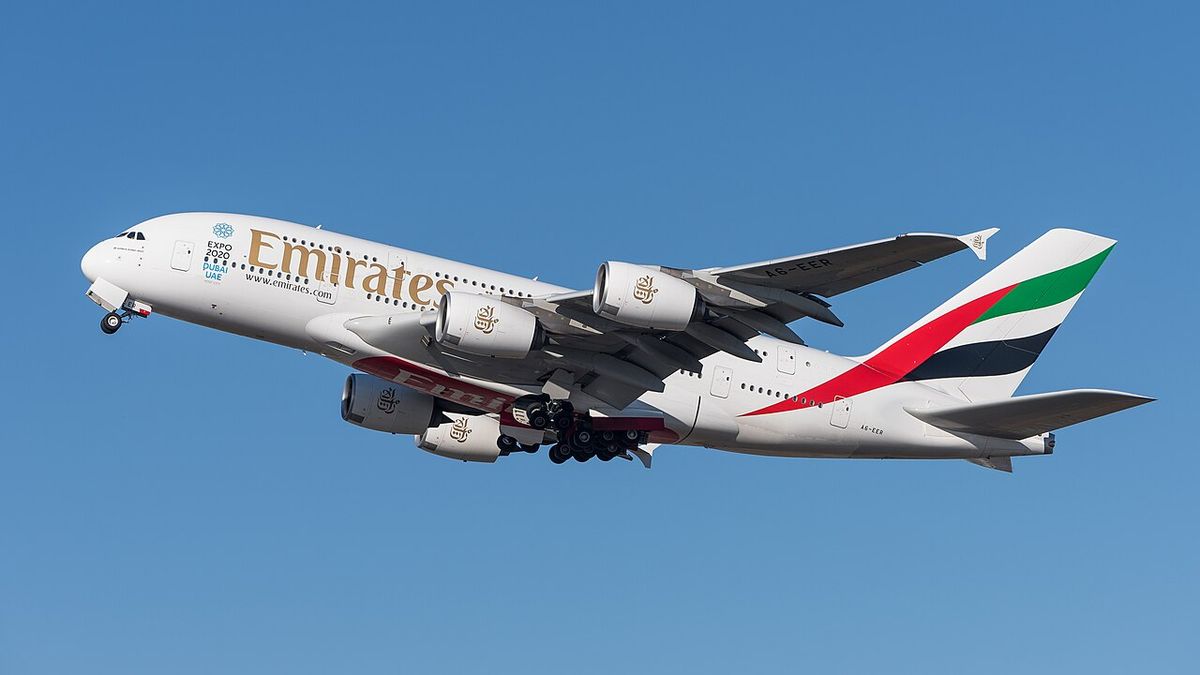
Emirates operates one of the largest wide-body fleets on earth: 277 aircraft at 31 March 2026, made up of the Airbus A380, the Boeing 777 and, since November 2024, the Airbus A350-900. It is the world’s largest operator of both the A380 and the 777, and the 777-9 is expected from 2027. There are no narrow-bodies, and the network connects Europe and the Americas with Asia, Africa and Australasia from a single hub at Dubai International (DXB). The region’s risk is real: after the conflict involving Iran began in late February 2026 the UAE closed its airspace, Emirates rebuilt its network through March, and the last restrictions were lifted in early May, yet the group still reported a record 2025-26 profit.
That single hub shapes the whole job: every Emirates pilot lives in Dubai. There are no outstations or regional crew bases, so relocation is a certainty, and the interviewers will probe whether you, and your family if you have one, have thought it through. The package on the careers site (tax-free pay, a company villa or housing allowance, transport, an education allowance for children aged 4 to 19, medical cover, 42 days’ annual leave and a provident scheme) is a major draw, but “the package” is a weak answer to “why Emirates?”
Hiring is experience-based and comes in waves. On 1 May 2025 Emirates committed to hiring more than 1,500 pilots over two years, and it reported more than 450 pilot hires in 2025-26. In September 2026 it ran a recruitment roadshow across South Korea, Ireland and the UK with sessions for Direct Entry Captain, Accelerated Command and First Officer candidates, and its pilots page lists open-day sessions with registration forms. The open days are information sessions, not a selection stage.
Entry routes and minimums
| Route | Published minimum | Notes |
|---|---|---|
| First Officer, B777 stream | ICAO ATPL; 2,000 h total on jets of 20 t or more; 1,000 h on a Boeing type, currently flying it, 150 h on type in the last 12 months | A frozen ATPL is accepted for assessment if the hours are met, under Emirates’ frozen-ATPL terms |
| First Officer, A380/A350 stream | 2,000 h total on jets of 50 t or more; 1,000 h on Airbus fly-by-wire, currently flying it, 150 h in the last 12 months | The enhanced package needs 4,000 h on jets above 20 t, 2,000 h on commercial jets above 50 t and ICAO English Level 5 |
| Accelerated Command | 5,000 h total; 2,000 h in command on Boeing or Airbus fly-by-wire, of which 1,000 h in command on Airbus fly-by-wire flown within the last 3 years | For narrow-body Airbus Captains; you join as a First Officer with a fast track to command |
| Direct Entry Captain | 7,000 h total in multi-crew aircraft; for the A380, 3,000 h in command on Airbus fly-by-wire wide-bodies; for the A350, 3,000 h in command on any Airbus fly-by-wire type; currently flying Airbus fly-by-wire as Captain | Airbus only; the A220 does not count as Airbus fly-by-wire |
| National Cadet Pilot Programme | No flying hours | UAE nationals only; ages 18 to 21 from high school or 22 to 26 with a diploma or degree; IELTS 6.0 |
Every direct-entry route asks for an unrestricted Class 1 medical from the authority that issued your ATPL, and ICAO English Level 4 for First Officers or Level 5 for the command routes. Emirates sponsors the UAE residence visa and publishes no nationality restriction for direct entry. Two versions of the First Officer requirements have been online at the same time, so work from the advert you apply against, not a forum summary.
What sets Emirates apart for a pilot
- Command routes are Airbus-only. Both Accelerated Command and Direct Entry Captain ask for command time on Airbus fly-by-wire. A Captain whose command time is all on Boeing meets neither and applies as a First Officer on the 777 stream.
- You do not choose your fleet. Emirates says fleet allocation is based solely on its operational requirements: experience and preference are considered, but they do not decide it.
- The training is bonded. The careers FAQ sets the bond at USD 42,000 over 42 months for First Officers and Captains on the passenger fleet, and Emirates will not pay off a bond you still owe your current airline.
- The upgrade criteria are published. To start the command course: 6,000 hours total, 2,000 hours in the operating seat on the Emirates type you upgrade on, six EBT modules, and a minimum age of 30.
- The assessment trip is paid for. For the Dubai stage Emirates provides you and your legal spouse with a return Economy ticket, upgradable to Business when seats allow, from the nearest Emirates destination.
- New training capacity. A Crew Training Centre opened in September 2025 with six full-flight simulator bays for the A350 and the 777X, and the A350 type rating runs as a competency-based course developed with IATA and Airbus.
The two published stages
| Stage | Published by Emirates | Commonly reported |
|---|---|---|
| 1. Online application | CV, passport, licence with your current type rating, and Class 1 medical, against the minima for your stream | |
| 2. Remote stage | Short HireVue video interview, psychometric testing, abstract reasoning testing, live digital panel interview | A Microsoft Teams panel with a line or training Captain and HR, mixing competency and technical questions |
| 3. Dubai stage | Two days plus a travel day each side: simulator assessment, Advanced COMPASS, Emirates medical | A Level D 777 or A380 (a few mention the A350), 60 to 90 minutes, flown in pairs, brief sent before you travel |
| 4. Logbook check | Complete certified logbook records at the assessment: a fleet manager or chief pilot stamp, or a stamped original letter from your airline or authority |
Emirates names the test categories but not the supplier: several preparation providers say the psychometrics are from Saville Assessment, so confirm it from your test link. Older guides still describe a group exercise; the published process does not include one, and candidate feedback relayed by preparation sites says it was dropped. An assessment date can be deferred by emailing pilot recruitment, but declining an accepted date with less than a week’s notice may close the application.
The simulator in Dubai
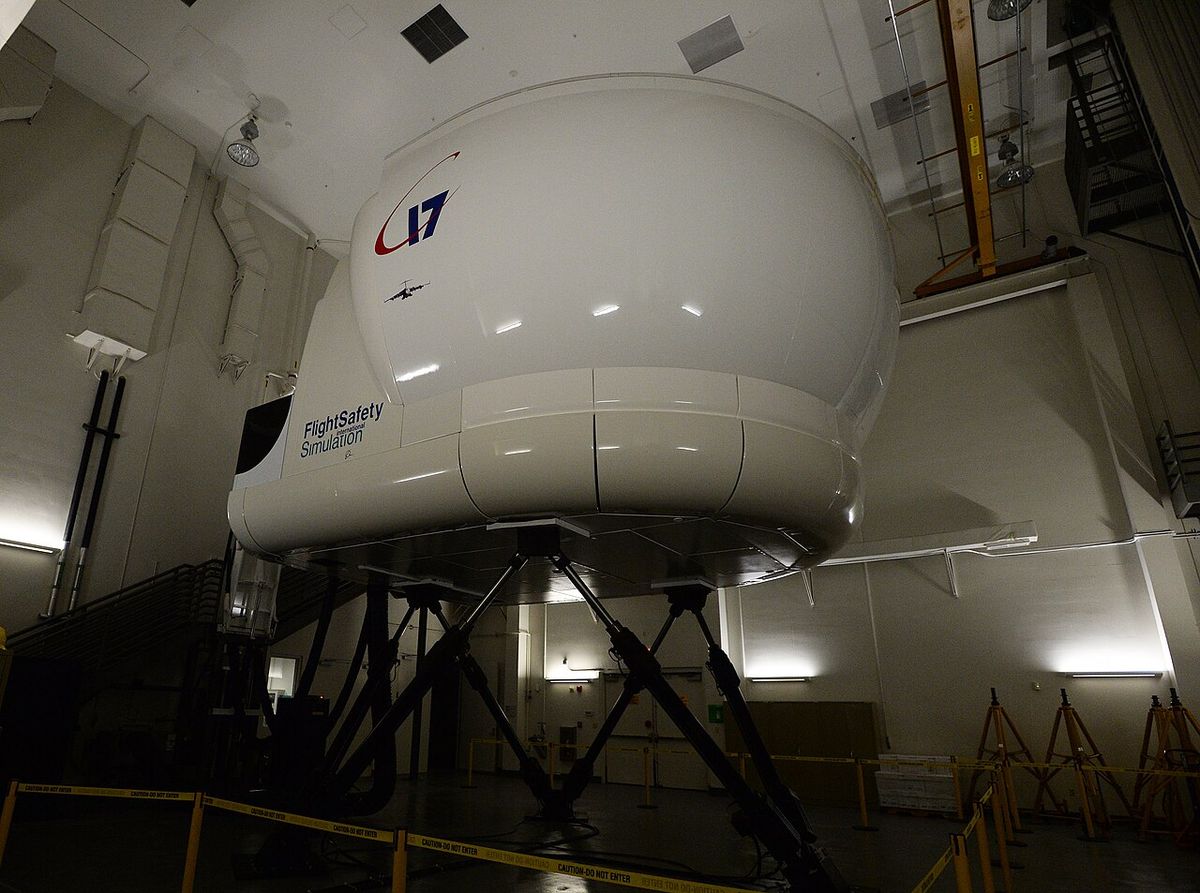
Emirates does not publish the profile. Candidates commonly report a Level D 777 or A380 simulator in Dubai, a session of 60 to 90 minutes with two candidates flying together, and a brief sent before you travel. Learn the brief and its calls by heart, but do not try to learn the type’s full SOPs. If the simulator uses the other manufacturer’s philosophy from yours, spend a few hours on it beforehand: the Airbus sidestick needs no trim, the 777 does.
What candidates commonly report flying
- Visual circuits, which show how you handle a heavy aircraft close to the ground
- ILS approaches, sometimes hand-flown on raw data
- An engine failure, and go-arounds
- A crew element: several reports stress that CRM and SOP discipline count as much as handling
Coming from a narrow-body, expect more inertia and slower spool-up, so make small inputs early and fly attitude and thrust. Because you fly with another candidate, how you brief, monitor and support them is part of the score: an accurate but silent session reads as weak crew performance, and so does flying the other candidate’s sectors for them.
HireVue and the digital panel
The interview that carries the weight is the live digital panel: candidates describe a Captain and an HR interviewer on Microsoft Teams, alternating competency questions with technical ones, for about 30 minutes to an hour. Use a quiet room and a headset, dress as you would in person, and when you need a moment, say so, because silence feels longer on video. Before it comes the one-way HireVue recording, where your English is assessed along with your content: put the camera at eye level and finish each answer inside the time.
Questions particular to Emirates
- Why Emirates? Beyond the package: a long-haul-only operation, A350s arriving now and 777-9s from 2027, A380s kept flying, and published upgrade criteria. If your answer would fit another Gulf carrier, it is not finished.
- You may be given a type you did not ask for. Emirates allocates fleets on its own needs, so say plainly that you would accept the type offered and how you would study the differences if you switch between Airbus and Boeing.
- Why Dubai, and how will your family manage? Housing, schools, the summer heat, your partner’s plans. Concrete research beats enthusiasm.
- Working with someone from a very different background. Emirates’ flight decks are strongly multinational: choose an event where language or culture created a risk and show what you changed in your own behaviour.
- A duty you felt unfit to fly. The answer is that you would not operate, and that you would tell crew scheduling early enough for the company to cover the duty.
The technical questions come in the same panel: candidates report systems questions on their current type and scenarios on weather, fuel and diversion, not questions on the Emirates type you would be trained on after joining.
Technical questions
Because Emirates trains you on the type it allocates, the technical questions are not a 777, A380 or A350 systems exam. Candidates report two things: systems questions on the type you fly now, and scenarios on weather, fuel and diversion. Underneath both sits whether your ATPL fundamentals have survived years of line flying.
Examples in the style candidates report
- Your current type loses a generator in the cruise: what do you have left, and where do you go?
- What is EDTO, and what changes in your planning and en-route checks on an EDTO sector?
- Why does the margin between low-speed and high-speed buffet narrow at high altitude, and what does it mean for your choice of cruise level?
- Destination weather is deteriorating on a long sector: when do you start thinking about a second alternate? (drill this with our ATPL meteorology questions)
Topics worth refreshing for an all wide-body, single-hub network
- Hot-weather performance: high temperatures at Dubai in summer and their effect on take-off weight and climb
- EDTO and oceanic procedures, and in-flight rest on augmented crews
- Long-range fuel planning: reclearance, decision points and alternates
- Low-visibility operations and ILS categories
- RVSM and contingency procedures, and ICAO rules of the air (see our ATPL air law questions)
Where Emirates candidates go wrong
- Applying for command on Boeing time. Both command routes need Airbus fly-by-wire command; a Boeing-only Captain applies as a First Officer.
- An uncertified logbook. Emirates asks for complete certified records at the assessment. Get the stamp or the letter before the invitation, not after.
- A shaky current type. The panel asks about the aircraft you fly now, and years on type erode the theory underneath it.
- Neglecting the aptitude tests. Abstract reasoning and Advanced COMPASS (tracking, multi-tasking, mental arithmetic, spatial orientation, memory) reward two to three weeks of daily timed practice; experienced pilots neglect mental arithmetic most.
- Treating relocation as a detail. “I’ve always wanted to fly the A380” is not a plan for moving a family to Dubai.
- Embellishment. Hours or stories that do not survive the panel’s follow-up questions, or a logbook that does not match the CV.
From invitation to the line
| Phase | Published or reported |
|---|---|
| Application to first response | Varies: hiring comes in waves |
| Assessment in Dubai | Two days plus a travel day each side (published) |
| Application to joining | Some candidates report three to six months |
| Residence visa | Started once you join and can take up to about two weeks; dependants’ visas follow, up to about 10 more days (published) |
| Probation | Six months from joining; leave is not normally granted during it (published) |
The waiting is out of your control and the preparation is not. Use the gap to get your current type and your theory sharp, and to settle the family conversation before the panel asks about it.
Emirates pilot recruitment: common questions
What is the Emirates pilot interview process?
The careers site describes two stages. The first is remote: a short HireVue video interview, psychometric testing, abstract reasoning testing and a live digital panel interview. The second is in Dubai over two days plus a travel day each side: a simulator assessment, the Advanced COMPASS aptitude battery and the Emirates medical, with your certified logbook checked. Candidates report the panel as a Captain and an HR interviewer on Microsoft Teams, and the simulator flown in pairs with a brief sent in advance. Older guides describe a group exercise; the published process no longer includes one.
What aircraft does Emirates operate?
Only wide-bodies: 277 aircraft at 31 March 2026, made up of the Airbus A380-800, the Boeing 777 (mainly the 777-300ER, plus freighters) and the Airbus A350-900, which arrived in November 2024. Emirates is the world’s largest operator of both the A380 and the 777, and at 31 March 2026 it had 367 aircraft on order, including 270 777X, with the first 777-9 expected in 2027. Every pilot is based in Dubai.
Do I need a type rating to join Emirates?
No Emirates type rating is needed beforehand: the careers FAQ says training is bonded at USD 42,000 over 42 months, and fleet allocation is based solely on operational requirements. The First Officer advert does ask you to be flying a Boeing type (777 stream) or an Airbus fly-by-wire type (A380/A350 stream) now, with 1,000 hours on it and 150 in the last 12 months.
What are the requirements to apply to Emirates as a First Officer?
A valid ICAO ATPL, or a frozen ATPL if the hours are met, with an unrestricted Class 1 medical from the same authority; at least 2,000 hours total (jets of 20 tonnes or more for the 777 stream, 50 tonnes or more for the A380/A350 stream) with 1,000 hours on type and current flying on it; and ICAO English Level 4, or Level 5 with 4,000 jet hours for the enhanced package.
Can a Boeing Captain join Emirates as a Captain?
Not on the routes published in 2026. Direct Entry Captain is for the A350 or A380 and asks for 3,000 hours in command on Airbus fly-by-wire, and Accelerated Command asks for 1,000 hours in command on Airbus fly-by-wire flown within the last three years. A Captain with only Boeing command time meets neither and would apply as a First Officer on the 777 stream.
Drill ATPL theory, interview & CRM
v1prep covers 6,100+ questions across ATPL theory, interview and CRM banks. Emirates doesn't test you on its types before it trains you — so it tests your current type and your fundamentals. Make yours bulletproof.
Practice the full bank →