Aircraft Axes and Stability Fundamentals
Aircraft stability is the tendency of an aeroplane, once disturbed from steady trimmed flight, to return to that condition without help from the pilot. It is described about three axes through the centre of gravity, first as an initial tendency (static stability) and then as a motion over time (dynamic stability).
Stability describes what an aeroplane does, left to itself, after something has disturbed it from steady flight: a gust, a knock on the controls, a change of power. A stable aeroplane tends to go back to the condition for which it was trimmed; an unstable one moves further away from it. Because an aeroplane can rotate in three ways, stability is described separately about each of its three axes, and in two stages: the first tendency after the disturbance, called static stability, and the motion that follows over time, called dynamic stability.
These ideas run through every Principles of Flight syllabus, from the PPL to EASA ATPL subject 081 and the FAA knowledge tests. They explain why an aeroplane loaded to its aft limit feels light and twitchy, why swept-wing jets carry yaw dampers, why some fighters are built deliberately unstable, and how a pilot can make an oscillation worse by trying to stop it.
The three axes of rotation
The axes of the aircraft are three imaginary lines at right angles to one another that meet at the centre of gravity (CG). Any rotation in flight can be described as a combination of rotations about them, and each has its own primary control. They are body axes, fixed to the aeroplane and moving with it: in a banked turn the normal axis tilts with the wings instead of staying vertical.
| Axis | Runs | Rotation about it | Primary control | Stability about it |
|---|---|---|---|---|
| Longitudinal axis | Nose to tail | Roll | Ailerons, often assisted by roll spoilers | Lateral stability |
| Lateral axis | Wingtip to wingtip | Pitch | Elevator, stabilator or trimmable stabiliser | Longitudinal stability |
| Normal axis | Top to bottom, perpendicular to the other two | Yaw | Rudder | Directional stability |
EASA material names these axes of rotation as in the table; the FAA calls the normal axis the vertical axis, although in a bank or a climb it is not vertical at all.
Exam tip: the names cross over. Longitudinal stability is stability in pitch, about the lateral axis, and lateral stability is stability in roll, about the longitudinal axis. Only directional stability, in yaw about the normal axis, is named the way most students expect.
The motions are not independent. Pitch can usually be studied on its own, because a pitching motion does not by itself produce roll or yaw. Roll and yaw are coupled. When an aeroplane yaws, the outer wing moves faster, lifts more and rolls the aeroplane in the direction of the yaw; when it rolls with aileron, the up-going wing's extra induced drag yaws it the other way, the adverse yaw of the roll controls. This is why longitudinal stability is treated on its own, while roll and yaw share an article on lateral and directional stability.
Equilibrium and trim
Stability only has meaning in relation to an equilibrium. In steady, unaccelerated flight the forces are balanced, lift against weight and thrust against drag, and the moments about the CG add up to zero. The aeroplane is in trim when those moments are zero without the pilot holding any force on the controls, a state reached with trim tabs, a trimmable horizontal stabiliser or fuel transfer. Trimmed flight gives a reference condition: a given angle of attack and speed, wings level and no sideslip. Stability describes what happens when the aeroplane is pushed away from it.
Static stability: positive, neutral and negative
Static stability is the initial tendency of the aeroplane once a disturbing force has been removed, before any of the subsequent motion is considered. It can take three values:
- Positive static stability. The disturbance creates a moment that tends to return the aeroplane towards its trimmed condition.
- Neutral static stability. No restoring moment arises. The aeroplane stays in whatever new attitude the disturbance left it, with no tendency either to return or to continue.
- Negative static stability. The disturbance creates a moment in the same direction, so the aeroplane diverges further from trim. Such an aeroplane cannot be trimmed in the normal way and would need illogical control forces.
The usual analogy is a ball: in a bowl it rolls back to the bottom, on a flat table it stays where it is put, on an upturned bowl it rolls off. On an aeroplane the restoring moment comes from surfaces placed some distance from the CG. A disturbance changes the angle at which the airflow meets them, the change in their aerodynamic force acts on a lever arm, and the moment either opposes the disturbance or adds to it. In pitch the tailplane does this work, in yaw the fin, and in roll the wing's response to the sideslip that follows a wing drop.
Transport aeroplanes are designed with positive static stability in pitch and yaw and close to neutral stability in roll. Neutral static stability marks the boundary and is generally not accepted in pitch for a transport aeroplane; a naturally unstable airframe can be flown only with artificial help.

Dynamic stability and damping
Dynamic stability describes the motion that follows the disturbance, over time. A statically stable aeroplane starts back towards trim, but it arrives with some momentum and may overshoot. What happens next decides its dynamic stability:
- Positive dynamic stability: the motion dies away, either by a direct return without overshoot or through oscillations that shrink with each cycle.
- Neutral dynamic stability: the oscillation continues at constant amplitude.
- Negative dynamic stability: the oscillation grows with each cycle, or the aeroplane departs steadily from trim.
| Motion after the disturbance | Static stability | Dynamic stability |
|---|---|---|
| Returns directly, or in shrinking oscillations | Positive | Positive |
| Oscillates at constant amplitude | Positive | Neutral |
| Oscillates with growing amplitude | Positive | Negative |
| Stays in the disturbed position | Neutral | Neutral |
| Moves steadily further away | Negative | Negative |
The relationship is a favourite exam point. Positive static stability is necessary for positive dynamic stability but does not guarantee it: an aeroplane with no tendency to return can never settle back to trim, while one with a strong tendency can still overshoot into a growing oscillation. An undamped oscillation of constant size shows positive static stability with neutral dynamic stability.
What stops the oscillation is aerodynamic damping. When the aeroplane rotates, surfaces far from the CG move up, down or sideways through the air, and that motion changes their angle of attack. As the nose pitches up, the tailplane moves down, meets the air at a greater angle and produces a force that opposes the rotation. The fin damps yaw in the same way, and in a roll the down-going wing meets the air at a higher angle of attack than the up-going one, which damps the roll. The damping moment depends on the rate of rotation, not on the displacement, so it slows a motion without changing where it ends.
Damping decreases with altitude. At a given indicated airspeed the true airspeed is higher in thin air, so a given rate of rotation changes the angle of attack of the tail or fin by less, and the damping moment is smaller. Motions that are well damped at low level can become lightly damped at cruise altitude, which is why jets use artificial dampers, above all the yaw damper, to supply what the air no longer provides.
Every aeroplane has characteristic dynamic modes: the short-period and phugoid oscillations in pitch, and the Dutch roll and spiral modes in roll and yaw, each described in the linked articles. A pure rolling motion, by contrast, is so heavily damped that it stops almost as soon as the ailerons are centralised.
Stability versus controllability
Stability and control pull in opposite directions. A stable aeroplane resists being displaced from its trimmed condition, and it cannot tell a gust from a deliberate control input: the restoring moments that bring it back after turbulence must be overcome by the pilot every time a manoeuvre is started. More stability therefore means heavier controls and a slower response.
The FAA's Pilot's Handbook of Aeronautical Knowledge separates the qualities involved:
- Stability is the inherent tendency of the aircraft to correct for disturbances and return to, or continue on, its original flight path.
- Controllability is the capability of the aircraft to respond to the pilot's control inputs, especially in flight path and attitude.
- Manoeuvrability is the quality that allows the aircraft to be manoeuvred easily and to withstand the stresses of manoeuvring. It depends on weight, inertia, the size and location of the flight controls, structural strength and the powerplant.
The CG is where a pilot meets the trade-off. A forward CG gives the greatest longitudinal stability, the heaviest stick forces and the least controllability and manoeuvrability; an aft CG gives the least stability, the lightest forces and the most controllability. The two CG limits reflect the two needs. The forward limit guarantees a minimum of controllability, typically the elevator power to raise the nose in the landing flare, and the aft limit a minimum of stability. The article on centre of gravity sets out the other consequences.
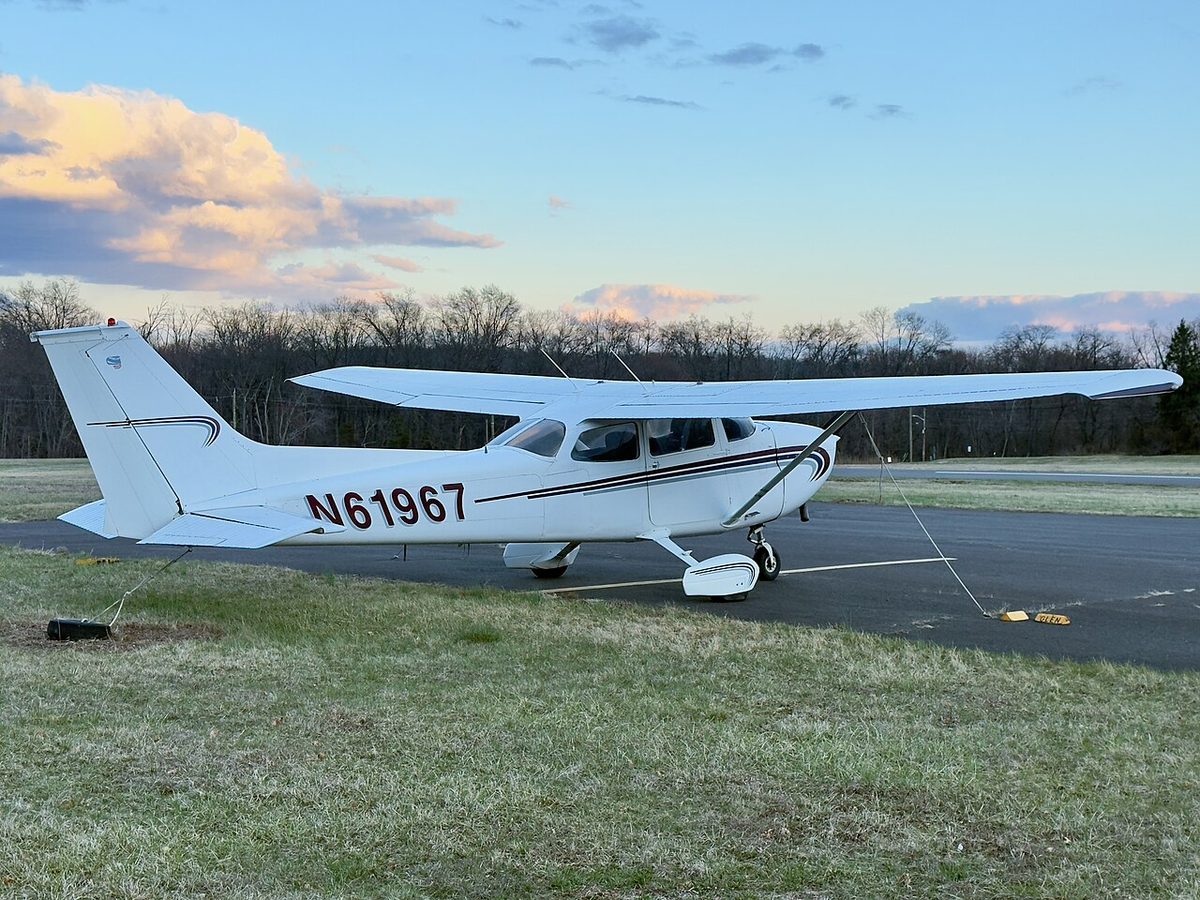
Designers set the balance according to the aeroplane's job. A trainer is a deliberate compromise, a transport aeroplane favours stability and low workload over long flights, and a combat aircraft wants agility, which modern ones get through relaxed stability.
Relaxed stability and fly-by-wire
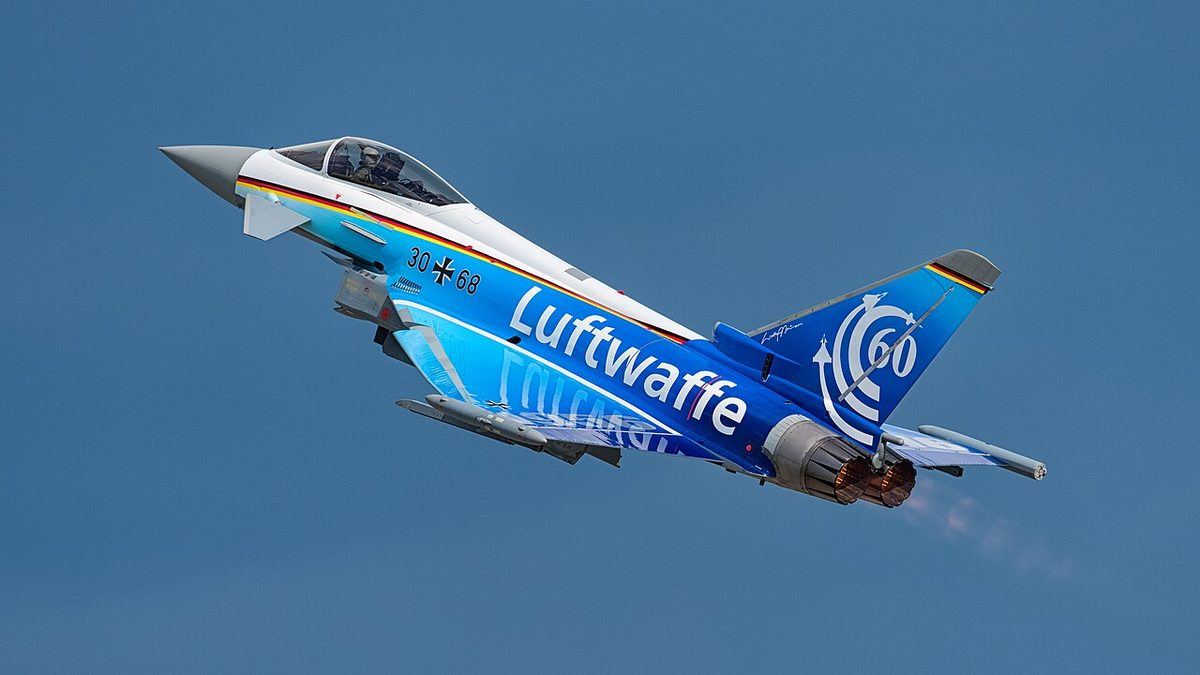
Relaxed stability is the deliberate design of an airframe with reduced, neutral or even negative natural static stability, with flight control computers supplying the stability the airframe lacks. A disturbance that a stable aeroplane would resist grows quickly on an unstable one, so the airframe turns small control inputs into rapid manoeuvres; left alone, it would diverge. Only a fly-by-wire system, which measures the aircraft's motion and moves the control surfaces continuously, can hold it. The F-16, the Eurofighter Typhoon and the F-22 are all aerodynamically unstable and depend entirely on their flight control computers.
The gains are not only in agility. Natural stability is bought with large tail surfaces and, in pitch, with a tail download that costs trim drag. A computer-stabilised design can use a smaller, lighter tailplane and fin and fly with less trim drag, which saves fuel over the life of the aircraft. Transport aeroplanes apply the idea mildly, relaxing their natural stability for efficiency without going as far as instability.
Conventional aeroplanes also receive help from stability augmentation, which adds to their natural stability rather than replacing it. A yaw damper damps Dutch roll; a Mach trim system counters the nose-down tendency, Mach tuck, at high Mach number; the Boeing 737's speed trim system improves speed stability at low weight, aft CG and high thrust when the autopilot is not engaged. When a fly-by-wire aeroplane reverts to a degraded control law, more of its natural character returns, and the pilot must fly it accordingly.
Pilot-induced oscillation
A pilot-induced oscillation (PIO) is an oscillation that the pilot's own control inputs sustain or amplify. It happens when corrections arrive out of phase with the motion. The pilot pushes to stop a nose-up pitch, but by the time the input takes effect the nose is already coming down, so the push adds to the next swing instead of opposing it. The loop formed by pilot and aeroplane is then unstable, even though the aeroplane on its own would be stable.
PIO is most likely when the aeroplane responds at a rate close to the pilot's own reaction time. The short-period pitch oscillation is the classic case: it is so quick that a correction easily arrives half a cycle late, which is one reason certification requires it to be heavily damped. Other triggers are:
- very light or sensitive pitch controls, such as an aft CG with a low stick force per g, or an all-moving tailplane without the anti-balance tab that normally adds feel;
- tasks that demand tight, high-gain tracking, such as the flare or formation flying;
- powerful controls used abruptly, such as a large jet rudder, which applied carelessly near the stall can produce too much roll;
- rudder used against a Dutch roll, which tends to lag the motion and can make the oscillation diverge. With the yaw damper inoperative, the recommended manual technique is to damp Dutch roll with aileron.
The cure is to break the loop. For a pitch oscillation in flight, relax or release the controls so that the aeroplane's own damping can stop the motion, then re-establish the attitude with small, deliberate inputs. Chasing each swing with larger inputs only feeds the oscillation.
Porpoising after a bounced landing is a familiar PIO close to the ground: the aeroplane meets the runway nose first and bounces, and late, out-of-step corrections make each swing larger. Near the ground there is no height to let the motion die away. The FAA's Airplane Flying Handbook treats a slight porpoise like a bounce, cushioning the next touchdown with power while setting the landing attitude, and calls for an immediate go-around from a severe one.
Warning: a PIO close to the ground, in the flare or after a bounce, can end in a hard landing or a nose-wheel-first touchdown. If the oscillation does not stop at once, go around.
Frequently asked questions
What are the three axes of an aircraft?
The three axes pass through the centre of gravity at right angles to one another. The longitudinal axis runs from nose to tail, and the aeroplane rolls about it with the ailerons. The lateral axis runs from wingtip to wingtip, and the aeroplane pitches about it with the elevator. The normal axis, called the vertical axis by the FAA, runs from top to bottom, and the aeroplane yaws about it with the rudder.
What is the difference between static and dynamic stability?
Static stability is the initial tendency after a disturbance: positive if the aeroplane starts back towards its trimmed condition, neutral if it stays where the disturbance left it, negative if it moves further away. Dynamic stability describes the motion that follows over time: positive if it dies away, neutral if it oscillates at constant amplitude, negative if the oscillation grows. Positive static stability is needed for positive dynamic stability but does not guarantee it.
Can an aircraft be statically stable but dynamically unstable?
Yes. A statically stable aeroplane always starts back towards its trimmed condition, but it may overshoot. With too little damping each overshoot can be larger than the last, giving an oscillation of growing amplitude: positive static and negative dynamic stability. The reverse is impossible, because an aeroplane with no tendency to return cannot settle back to trim. Damping falls at high altitude, so this is a particular concern for jets.
Why do stability and controllability conflict?
A stable aeroplane resists any displacement from its trimmed condition, and it cannot tell a gust from a pilot's input. The restoring moments that smooth out turbulence also oppose every manoeuvre, so more stability means heavier controls and a slower response. A forward centre of gravity gives the most stability and the least controllability, an aft one the reverse, which is why the forward CG limit protects controllability and the aft limit stability.
What is relaxed stability?
Relaxed stability is the practice of designing an airframe with reduced, neutral or even negative natural stability and letting fly-by-wire computers provide the missing stability artificially. The airframe responds quickly to small inputs and can use smaller tail surfaces with less trim drag. Fighters such as the F-16 and the Eurofighter Typhoon are aerodynamically unstable and cannot fly without their computers; transport aeroplanes relax their stability only mildly, for efficiency.
What is a pilot-induced oscillation?
A pilot-induced oscillation (PIO) is an oscillation sustained or amplified by the pilot's own control inputs, because each correction arrives out of phase with the motion and reinforces the next swing. It is most likely when the aeroplane responds at a rate close to the pilot's reaction time, as in the short-period pitch mode, or when the controls are very light or sensitive. The remedy is to relax or release the controls, let the damping act, then correct gently.
Test yourself on Aircraft Axes and Stability Fundamentals
The v1prep banks cover this topic in Principles of Flight (081), with a worked explanation for every answer. EASA ATPL, PPL, IR and CPL, the FAA written tests and A320/B737 type ratings.
Start practising →Sources and further reading
- FAA Pilot's Handbook of Aeronautical Knowledge (FAA-H-8083-25), Chapter 5, Aerodynamics of Flight
- FAA Airplane Flying Handbook (FAA-H-8083-3C), Chapter 9, Approaches and Landings
- EASA, Explanatory Note to ED Decision 2018/001/R, Part-FCL theoretical knowledge learning objectives
- EASA Easy Access Rules for Large Aeroplanes (CS-25)
- NASA Fact Sheet, F-8 Digital Fly-By-Wire
Library articles are written for study and exam preparation. They do not replace your aircraft's approved documentation, your operator's procedures or the regulations themselves.