Asymmetric Flight
Asymmetric flight is flight with the thrust unevenly distributed about the aircraft's centreline, normally after an engine failure on a multi-engine aircraft. The live engine's thrust and the dead engine's drag yaw and roll the aircraft towards the failed engine, and the pilot must control yaw, roll and sideslip.
Asymmetric flight is flight with the thrust unevenly distributed about the aircraft's centreline. It almost always follows an engine failure on a twin, although any large difference in thrust between engines produces the same effects. The live engine keeps pulling on its side, the dead one adds drag on the other, and the aircraft yaws and rolls towards the failed engine. The pilot has to stop the yaw with rudder, hold the wings with aileron, and fly the aircraft in a way that keeps drag low enough for it to climb.
An engine failure turns a twin's second engine from a safety margin into a handling problem, most acutely just after take-off, when speed is low and power high. The minimum control speed, the critical engine, the drill for identifying the failed engine and the technique for flying with the least drag all follow from the same few moments.
Engine failure and asymmetric thrust
When one engine of a twin fails, the other's thrust acts along a line some distance out from the centre of gravity. Thrust multiplied by that arm is a yawing moment towards the dead engine: the asymmetric thrust, or thrust asymmetry. It grows directly with the power on the live engine and with the distance of the engines from the centreline, which is why engines mounted close to the rear fuselage give a much smaller yawing moment than engines out on the wings.
The failed engine adds to the problem. A propeller left windmilling absorbs energy from the airflow and produces a large drag on the dead side, yawing the aircraft the same way as the live engine's thrust (see propeller aerodynamics). A roll towards the dead engine follows. As the aircraft yaws, the wing on the live side moves forward and faster and produces more lift, the sideslip that develops acts on the wings' dihedral effect, and on a propeller twin the wing behind the live engine keeps the extra lift of its slipstream while the other loses it.
The pilot controls the yaw with rudder and the roll with aileron. Directional control with asymmetric thrust is the most demanding job the rudder has. The rudder's side force depends on dynamic pressure, so it falls rapidly as the airspeed falls, while the asymmetric moment, set by the power on the live engine, does not. At some low speed full rudder is no longer enough to hold the aircraft straight, and that speed, the minimum control speed in the air (VMCA), is the key limit in asymmetric flight.
Performance suffers even more. Losing one of two engines halves the thrust available, but it is the surplus over drag that climbs the aircraft, and the failed engine and the deflected controls add drag. The excess thrust and the rate of climb of a typical light twin fall by around 80 per cent.
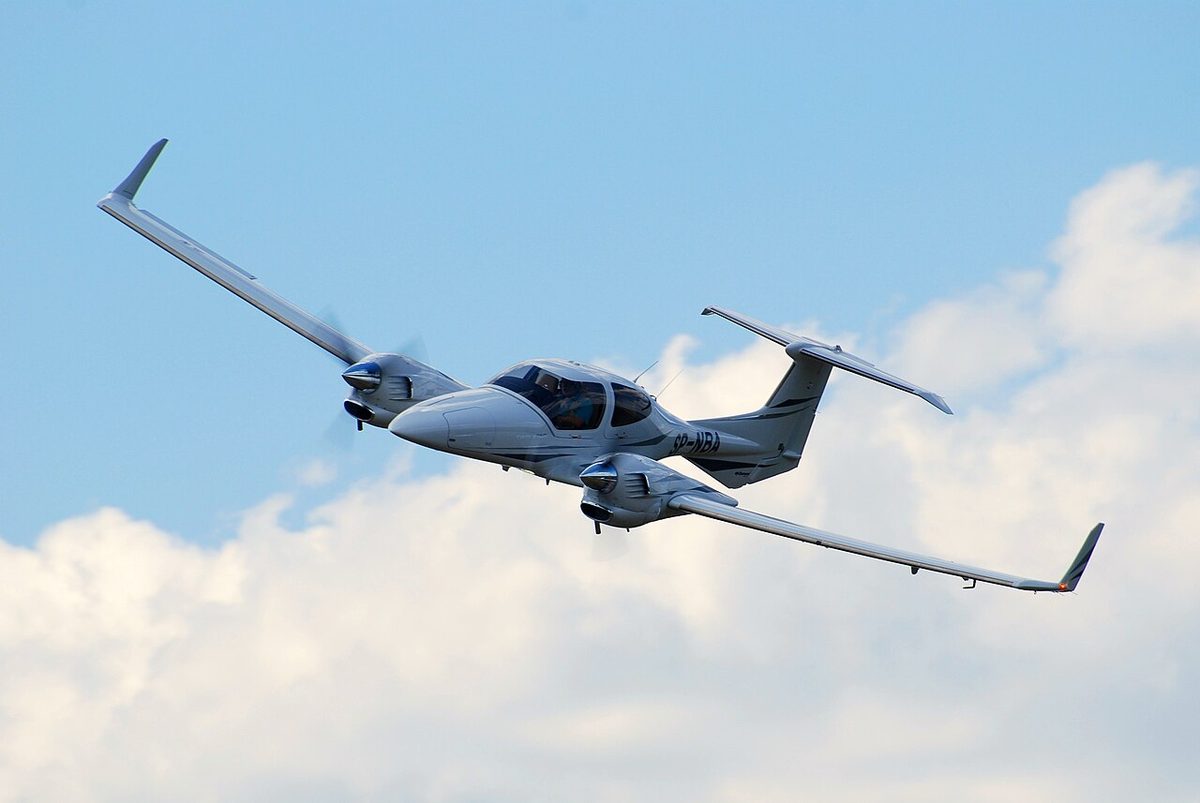
The critical engine: PAST factors
The critical engine is the engine whose loss would hurt the aircraft's performance and handling the most. In exam terms it is the engine whose failure gives the largest yawing moment and therefore the highest VMCA.
On a conventional light twin both propellers turn clockwise as seen from the cockpit, and the left engine is critical. The reason is asymmetric blade effect, or P-factor: at high angles of attack the descending blade of each propeller produces more thrust, so each engine's effective thrust line moves to its descending-blade side, which is the right. On the right engine that shift is outboard, lengthening its arm from the centreline; on the left engine it is inboard, shortening it. If the left engine fails, the right engine is left working on the longer arm.
FAA training material sets out four factors, summarised by the mnemonic PAST, all of which make the left engine critical on such a twin:
| Factor | Why losing the left engine is worse |
|---|---|
| P-factor | The right engine's descending blade is further from the centreline, so its thrust gives the larger yawing moment. |
| Accelerated slipstream | The right engine's slipstream, strongest behind its descending blade, gives extra lift further outboard, so losing the left engine leaves the larger rolling moment towards the dead side. |
| Spiralling slipstream | After a right-engine failure, the left engine's spiralling slipstream strikes the fin from the left and helps oppose the yaw to the right. After a left-engine failure that help is lost. |
| Torque | The right engine's torque reaction rolls the aircraft to the left, towards the dead left engine. |
EASA exam material gives the same answer and stresses the first factor, asymmetric blade effect, as the cause. Jet engines have no propeller effects, so on most jet twins neither engine is inherently more critical, although an engine failure at high thrust still produces the large yaw that sets the minimum control speeds.
Identifying the failed engine
The first priority is always control: rudder to stop the yaw, aileron to hold the wings, and pitch to hold the flight manual speed. On a light twin that is normally the blue-line speed VYSE, or VXSE if an obstacle must be cleared; on a transport aircraft after a failure on take-off it is V2 or slightly above, up to a type-specific limit (V2 + 15 kt on the A320). Only then is the failed engine identified.
The classic memory aid is dead foot, dead engine. To keep straight the pilot must push hard on the rudder pedal on the side of the live engine. The foot doing no work is on the same side as the dead engine. The identification is then confirmed from the engine indications. On a Boeing 737 the crew verify it from EGT, N1, a fire warning or other indications, and the pilot flying calls it for the pilot monitoring to confirm. On a light twin with constant-speed propellers the rpm gauge can mislead, because the governor fines the blades of a windmilling propeller to hold the selected rpm.
The confirmation step exists because shutting down the wrong engine is catastrophic. Airline procedures therefore take no action on the failed engine until a safe height, typically about 400 ft above the runway, except to fly the aircraft, and on the A320 both pilots cross-check any action on an engine master lever or guarded control.
On a light twin, the failed engine's propeller is feathered as soon as it has been identified and confirmed, since the drag of a windmilling propeller adds to the yaw, raises VMCA and destroys most of the remaining climb. The rest of the clean-up follows the flight manual: landing gear and flaps up, the cowl flap of the dead engine closed, maximum continuous power on the live engine, and VYSE. Securing the engine and the later decisions are covered in engine failure and engine fire, and the performance that remains in one-engine-inoperative en-route performance.
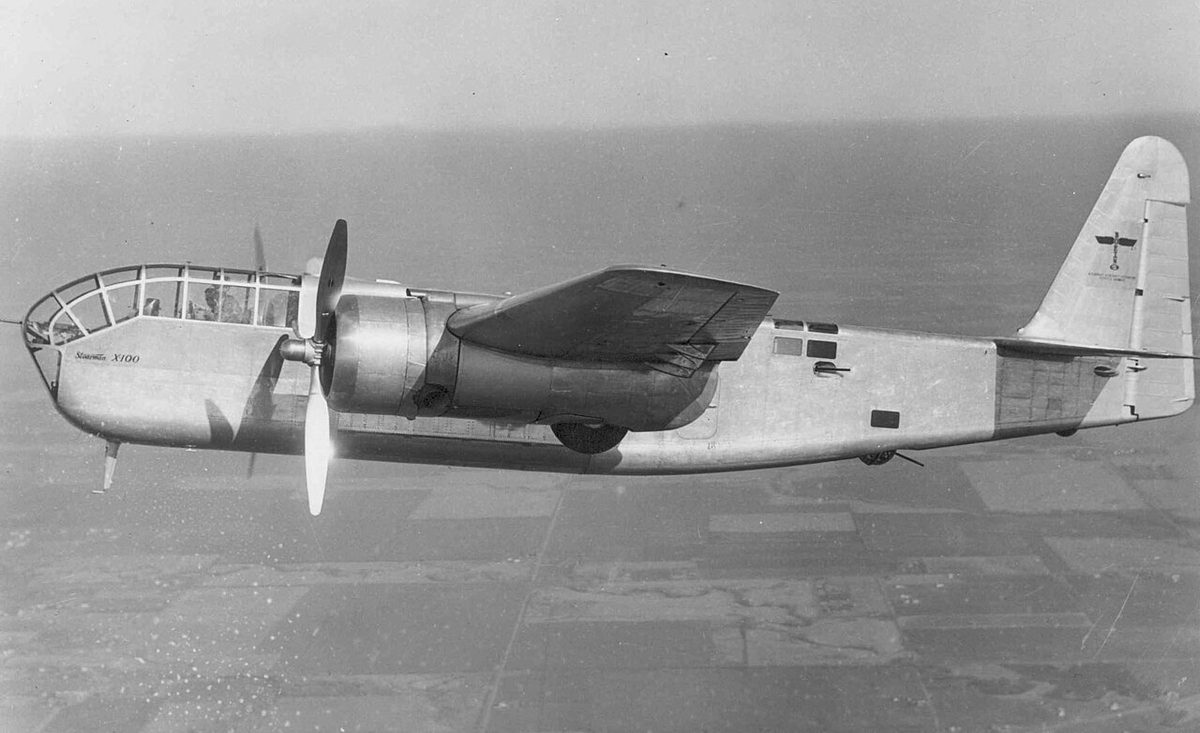
Controlling sideslip: zero sideslip and raised wing
After the yaw has been stopped, the rudder is still deflected and still producing a side force, pushing the tail towards the live engine. In steady straight flight something must balance that force, and there are two ways of doing it.
Wings level, ball centred. With the wings level, nothing balances the rudder's side force except a sideslip. The aircraft slips towards the dead engine, the fuselage is presented at an angle to the airflow and drag rises. The airflow then reaches the fin from the dead-engine side, and its weathercock effect yaws the nose further towards the dead engine, so still more rudder is needed and VMCA is higher. In asymmetric flight a centred ball does not mean zero sideslip.
Raised wing. Banking towards the live engine, and so raising the wing on the dead-engine side, lets a component of the weight act sideways along the wings and balance the rudder's side force. At the right bank angle the sideslip disappears: this is zero sideslip, and flying that way is the zero-sideslip technique. It gives the least drag, the best one-engine-inoperative climb and the lowest VMCA. The bank needed is small. For a light twin it is typically about 2° to 3° towards the live engine, with the ball displaced about a third to a half of its width towards the live engine; the VMCA certification demonstration allows no more than 5°. More bank than needed produces a sideslip the other way and costs lift, so the bank is a small, type-specific figure, not a target to maximise.
Exam tip: for best one-engine-inoperative performance, bank slightly (up to 5°) towards the live engine, with the ball about half out towards it. Examiners test two ideas: raising the wing on the dead-engine side, and a centred ball not being zero sideslip.
Transport aircraft show the pilot the answer directly. On the A320, after an engine failure at take-off or in a go-around in configuration 1, 2 or 3, the sideslip index on the primary flight display changes from yellow to a blue β target. It shows how much rudder to use for the best climb performance, with the ailerons near neutral and the spoilers retracted. The Embraer E190-E2's best beta function goes further, applying about 75 per cent of the rudder required and showing a target sideslip for the pilot to complete; yaw trim is disabled while it acts. Where rudder trim is available, it takes the load off the pilot's leg once the aircraft is stable.
Large sideslips, from a slow or mishandled response to an engine failure, can also stall the fin, particularly with rudder applied. The dorsal fin fitted ahead of many fins stalls only at very large sideslip angles and keeps directional stability there (see tail configurations).

Minimum control speed
EASA and FAA certification rules define the minimum control speed in the same terms: CS 25.149 and 14 CFR 25.149 for large aeroplanes, and the corresponding CS-23 and Part 23 requirements, historically section 23.149, for light twins. VMCA is the calibrated airspeed at which, when the critical engine is suddenly made inoperative, it is possible to keep control of the aeroplane with that engine still inoperative and to maintain straight flight with a bank angle of not more than 5°, conventionally towards the live engine. The rudder force needed may not exceed 150 lbf (about 667 N).
VMCA is established in unfavourable conditions: maximum take-off power or thrust on the operating engine, the aeroplane trimmed for take-off, the most unfavourable centre of gravity, the landing gear retracted, the flaps in the take-off position, and the failed engine's propeller windmilling unless an automatic feathering system is fitted. On a light twin it is marked on the airspeed indicator by a red radial line near the low-speed end of the scale, with the blue radial line for VYSE a little higher.
| Factor | Effect on VMCA | Reason |
|---|---|---|
| Higher altitude or temperature (normally aspirated engine) | Lower | Less thrust on the live engine, so a smaller yawing moment |
| Aft centre of gravity | Higher | Shorter arm between the rudder and the centre of gravity |
| Bank towards the live engine (up to 5°) | Lower | Weight component balances the rudder side force |
| Wings level | Higher | Sideslip and fin weathercocking add to the yaw |
| Failed propeller feathered | Lower | Less drag on the dead side |
| Counter-rotating propellers | Lower | Shorter thrust arms, no critical engine |
| Fixed take-off thrust derate | Lower | Less asymmetric thrust; an assumed-temperature reduction does not lower it |
The altitude effect hides a trap. Expressed as an indicated airspeed, the stalling speed hardly changes with altitude while VMCA falls, so above a certain altitude a light twin slowed with asymmetric power can stall before it loses directional control. A stall in that condition can turn quickly into a spin.
If control is being lost below VMCA, the pilot controls only two things: the size of the asymmetric moment and the airspeed. The immediate actions are to reduce power on the live engine, which restores control at once, and to lower the nose to regain speed, accepting the height loss.
For transport aeroplanes the take-off speeds are built on these limits: VR may not be less than 1.05 VMCA and V2 not less than 1.10 VMCA (see take-off speeds). The ground and landing-configuration speeds VMCG and VMCL are covered in minimum control speeds.
Counter-rotating propellers and fin offset
Counter-rotating propellers attack the asymmetry at its source. The left engine's propeller turns clockwise and the right engine's anticlockwise, as seen from the cockpit, so both descending blades are on the inboard side. Both effective thrust lines then lie close to the centreline, the worst-case yawing moment is smaller, neither engine is critical and VMCA is lower. Rudder is still needed after a failure, because a single engine still produces an off-centre thrust moment.
Fin offset and engine cant are single-engine remedies: the fin is offset or the thrust line angled slightly so that the aeroplane flies in balance at cruise power, cancelling the left-turning tendencies described in propeller torque and slipstream effects. A fixed offset balances only one condition. The asymmetry after an engine failure on a twin is far larger and can come from either side, so control rests on the rudder, rudder trim and the technique described above.
Frequently asked questions
Why is the left engine the critical engine on most light twins?
On a conventional twin both propellers turn clockwise as seen from the cockpit. At high angles of attack the descending blade of each propeller produces more thrust, shifting each thrust line to the right. The right engine's thrust therefore acts further from the centreline. If the left engine fails, that longer arm produces the larger yawing moment and the higher minimum control speed, so the left engine is critical. Counter-rotating propellers remove the difference.
What does dead foot, dead engine mean?
It is the memory aid for identifying a failed engine. After a failure the pilot must push hard on the rudder pedal on the side of the live engine to keep straight. The foot that is doing no work, the dead foot, is on the same side as the dead engine. The identification is then confirmed from the engine instruments, and cross-checked with the other pilot where there is one, before any engine control is moved.
Why is zero sideslip better than flying wings level with the ball centred?
With the wings level and the ball centred, nothing balances the rudder's side force except a sideslip towards the dead engine. The fuselage is then skewed to the airflow, drag rises and the fin's weathercock effect demands still more rudder. Banking a few degrees towards the live engine lets a component of the weight balance the rudder force instead, so the sideslip disappears, drag is least, climb performance is best and the minimum control speed is lower.
How is VMCA defined for certification?
VMCA is the calibrated airspeed at which, when the critical engine is suddenly made inoperative, it is still possible to keep control of the aeroplane with that engine inoperative and to hold straight flight with no more than 5 degrees of bank, conventionally towards the live engine, without exceeding a rudder force of 150 lbf. CS 25.149 and 14 CFR 25.149 use the same definition for large aeroplanes, and section 23.149 of the older CS-23 and Part 23 rules for light twins did the same.
Why does losing one engine of a twin cost so much climb performance?
Climb depends on the surplus of power over the power needed for level flight, not on total power. Losing one of two engines removes half the power available, but almost none of the power required, and the failed engine's drag, the deflected rudder and any sideslip add more drag on top. As a result the rate of climb of a typical light twin falls by around 80 per cent, and on a hot, high or heavy day it may be close to zero.
Test yourself on Asymmetric Flight
The v1prep banks cover this topic in Principles of Flight (081), with a worked explanation for every answer. EASA ATPL, PPL, IR and CPL, the FAA written tests and A320/B737 type ratings.
Start practising →Sources and further reading
- FAA Airplane Flying Handbook (FAA-H-8083-3C), Chapter 13, Transition to Multiengine Airplanes
- EASA Easy Access Rules for Large Aeroplanes (CS-25), CS 25.149 Minimum control speed
- 14 CFR 25.149, Minimum control speed
- EASA, Explanatory Note to ED Decision 2018/001/R, Part-FCL theoretical knowledge learning objectives
- FAA Pilot's Handbook of Aeronautical Knowledge (FAA-H-8083-25), Chapter 5, Aerodynamics of Flight
Library articles are written for study and exam preparation. They do not replace your aircraft's approved documentation, your operator's procedures or the regulations themselves.