Flight Simulation Training Devices
A flight simulation training device (FSTD) is a ground-based device that reproduces an aircraft's flight deck and behaviour to a standard defined by the regulator, so that training and checking done in it can be credited towards licences, ratings and recent experience. The credit depends on the device's qualification level.
A flight simulation training device (FSTD) is a ground-based device that reproduces an aircraft's flight deck and behaviour closely enough for training and checking done in it to count towards licences, ratings and recent experience. What counts is not how realistic a device looks but its qualification: each device is evaluated against a technical standard and given a level, and the regulations say what each level may credit. A home flight simulator, however good, earns no credit at all.
In Europe the family of FSTDs comprises the full flight simulator (FFS), the flight training device (FTD), the flight and navigation procedures trainer (FNPT) and the basic instrument training device (BITD). They are qualified under Part-ORA of the Aircrew Regulation against the certification specifications CS-FSTD(A) for aeroplanes. In the United States, 14 CFR Part 60 governs the qualification of FFSs and FTDs through the FAA's National Simulator Program, while aviation training devices (ATDs) are approved separately. Below all of these sit training aids such as flat panel trainers and computer-based training, which are useful but earn credit only as part of an approved course.
Why simulators are used
Simulators let crews practise what cannot be practised safely in an aeroplane: an engine failure at V1, a fire, a rejected take-off at high speed, windshear, an emergency descent, an approach to minima in fog, or recovery from a stall or upset. In the United States, for example, Part 121 airline pilots receive upset and extended envelope training in full flight simulators (see upset prevention and recovery). The instructor can freeze the simulation, reposition the aircraft, repeat an exercise until it is right and replay it in the debrief. The weather, the time of day and the failures are chosen, not waited for.
The other advantages are economic and practical. A simulator burns no fuel, makes no noise, is not grounded by the weather and can run through the night. It allows line-oriented flight training (LOFT), a full-mission scenario flown in real time as a crew, in which the non-technical skills of crew resource management are trained and assessed alongside the handling. It also keeps pilots legal: Part-FCL accepts take-offs, approaches and landings in an FFS of the type or class towards the 90-day recency for carrying passengers, and 14 CFR 121.439 accepts landings in an approved visual simulator.
A simulator's limits are those of its data. Its motion system can reproduce the onset of an acceleration but not a sustained one, and outside the flight envelope validated by flight test data its behaviour is only an estimate. That is why credit rises with fidelity, and why some exercises are demonstrated in a simulator but never claimed to reproduce the aeroplane exactly.
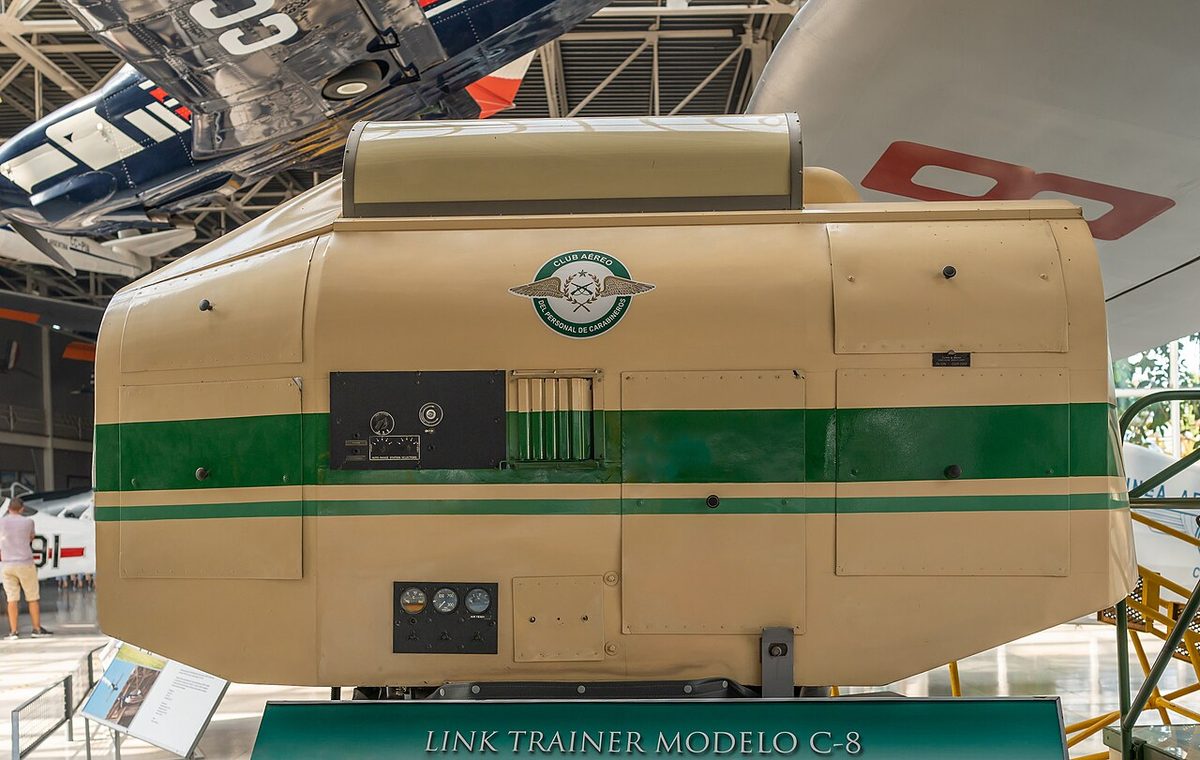
Full flight simulators
A full flight simulator is a full-size replica of the flight deck of one specific aircraft type, or make, model and series, with all the equipment and software needed to represent it on the ground and in flight, a visual system giving an out-of-the-window view and a motion system. Both the FAA and EASA qualify FFSs at Levels A, B, C and D, Level D being the highest. The level belongs to the individual device, is stated on its qualification certificate and is confirmed by periodic evaluation by the authority.
The FAA's Flight Standardization Board reports show how the levels are used. Their differences-training tables group Level A and B FFSs with the higher FTDs as manoeuvre devices, used when training needs real-time handling with some motion and visual cues, and place Level C and D FFSs alongside the aeroplane itself as the only devices for differences that need a high-fidelity environment, with motion, visual, control loading and sound all required. Specific tasks carry specific minimums: the Boeing 737 report requires the enhanced flight vision system to be trained in a Level C or higher FFS by day and by night, and the special 737 MAX training that every pilot must complete before flying aircraft with the revised flight control computer software to be flown in a 737 MAX Level C or D FFS, with a 737 NG simulator accepted for some exercises.
The FFS also carries licence credit:
| Requirement | Simulator credit |
|---|---|
| EASA ATPL(A), 1,500 hours of flight time | Up to 100 hours in an FFS and FNPT, of which no more than 25 in an FNPT |
| FAA ATP, 50 hours in the class of airplane | Up to 25 hours in an FFS |
| FAA ATP Certification Training Program | 10 hours of simulator training, of which 6 in a Level C or higher FFS representing a multi-engine turbine airplane of at least 40,000 lb |
| Type rating skill test and proficiency checks | Normally flown in an FFS of the type |
Flight training devices
A flight training device reproduces the flight deck, instruments, panels and controls of a specific type, in an open or enclosed flight deck, with the systems programmed to work as in the aircraft. Unlike an FFS it needs no motion system and, for aeroplanes, no visual system. EASA qualifies aeroplane FTDs at Levels 1 and 2. The FAA numbers its FTD levels differently, and its Flight Standardization Board tables treat Level 4 and 5 FTDs as systems devices, for mastering individual systems and procedures, and Level 6 and 7 FTDs as manoeuvre devices.
FTDs carry systems and procedures training, cockpit familiarisation and much differences training. Two examples from the 737 report show the kind of credit involved. A pilot moving from a 737 Classic to a 737 NG with primary flight and navigation displays needs at least 12 hours of interactive computer-based training and 6 programmed hours in a Level 6 FTD, plus supervised line flying. And a 4-hour LOFT session in a suitably configured device of at least Level 5 FTD may replace two of the supervised line flying legs for a pilot with previous electronic display experience. In the ATP Certification Training Program, the 4 simulator hours not required in a Level C or higher FFS may be flown in an FTD.
FNPT and ATD
The FNPT is a European device that represents the flight deck of an aircraft class, not one specific type, with systems that appear to function as in an aircraft and a simulated radio navigation environment for instrument procedures. FNPTs are qualified as type I or II, with an MCC version of the type II equipped for two-crew training. They carry much of the instrument training for the CPL and the instrument rating, and the multi-crew cooperation course is flown in an FFS or a suitable FNPT. The simpler BITD represents a student's station for a class of aeroplane, often with screen-based instruments, for basic instrument training.
The American counterpart is the aviation training device, in two grades: the basic ATD (BATD) and the advanced ATD (AATD). ATDs are not qualified under Part 60; each model is approved by a letter of authorisation from the FAA that sets how it may be used. Under 14 CFR 61.57(c) an instrument-rated pilot may fly the six approaches, holding and course interception required every 6 calendar months in an aircraft, FFS, FTD or ATD representing the category, or any combination. Part of the 40 hours of instrument time for the instrument rating may also be flown in approved devices, within limits that depend on the device and the training rule.
Flat panel trainers and CBT
Computer-based training (CBT) delivers ground school on a screen. The FAA's differences-training legend distinguishes tutorial CBT, a form of aided instruction for systems that work like those the pilot already knows, from interactive (full-task) CBT, which counts among the systems devices with cockpit procedures trainers, part-task trainers and Level 4 or 5 FTDs. A Level B differences check can be as simple as an oral or written examination or a CBT self-test.
A flat panel trainer (FPT) reproduces the flight deck panels on flat screens, often touch screens, around a seat or a desk. It is used for flows, checklists, FMS programming and the handling of system failures before the crew meets them in the full flight simulator. A typical US airline new-hire course runs procedures training in a flat-panel or fixed-base trainer before the full flight simulator sessions. The A320 type rating course described in the 2003 JAA evaluation report, an older document, used the same ladder: video and CBT, FMGS and ECAM trainers, a fixed-base simulator and a cabin mock-up, then the full flight simulator. Some flat panel devices are qualified as FTDs; others are unqualified training aids whose use is approved only as part of a training course.
Zero flight time training
A type rating course traditionally ends with base training: circuits and landings in the empty aeroplane before the pilot flies the line. Zero flight time training (ZFTT) replaces it with training in a full flight simulator approved for the purpose, so the pilot's first flight in the real aeroplane is line flying under supervision with a training captain. The A320 type rating course annexed to the 2003 JAA evaluation report already provided for base training in the aircraft, or in the FFS for operators authorised by their national authority.
ZFTT depends on three conditions: a simulator qualified and approved for it, a course approved for it, and a trainee with enough previous experience on multi-pilot turbine aeroplanes, set in Part-FCL, to transfer landing skills from one type to another. EASA's acceptable means of compliance expect line flying under supervision to start within 21 days of the skill test after ZFTT, so that the simulator training is still fresh when the pilot meets the aeroplane; the operator's approved course states the limit that applies. The result is cheaper and safer training, but only because the device is good enough to be trusted, which is the principle behind every simulator credit (see class and type ratings and airline pilot training and checking).
Frequently asked questions
What is the difference between a full flight simulator and a flight training device?
A full flight simulator (FFS) is a full-size replica of one aircraft type's flight deck with a visual system and a motion system, qualified at Levels A to D. A flight training device (FTD) reproduces the flight deck, instruments and systems but needs no motion system and, for aeroplanes, no visual system. FTDs are used for procedures and systems training; FFSs for handling, type rating skill tests and the highest training credits.
What does a Level D simulator mean?
Level D is the highest qualification level for a full flight simulator under both FAA Part 60 and EASA CS-FSTD(A). A Level C or D simulator has motion, visual, control-loading and sound systems faithful enough for type rating training and checking, recent experience and, where approved, zero flight time training. The level belongs to the individual device and is confirmed by periodic evaluation by the authority.
What is an FNPT?
A flight and navigation procedures trainer is an EASA training device that represents the flight deck of an aircraft class rather than one specific type, with systems that function as in an aircraft and a simulated navigation environment. FNPTs, qualified as type I or II, with an MCC version for multi-crew training, carry much of the instrument training for the CPL, the instrument rating and the multi-crew cooperation course.
Can simulator time count towards the ATPL?
Yes, within limits. Of the 1,500 hours needed for an EASA ATPL(A), up to 100 may have been completed in an FFS and an FNPT, of which no more than 25 in the FNPT. For the FAA ATP certificate, up to 25 of the 50 hours required in the class of airplane may be flown in a full flight simulator. Simulator time is logged separately from flight time.
What is zero flight time training?
Zero flight time training (ZFTT) is a type rating course in which every flight exercise, including the take-offs and landings once flown in the empty aeroplane, is completed in an approved full flight simulator. The pilot's first flight in the real aeroplane is then line flying under supervision. It needs a simulator and course approved for the purpose, and pilots with enough previous experience on multi-pilot turbine aeroplanes.
Test yourself on Flight Simulation Training Devices
The v1prep banks cover this topic in Air Law (010), with a worked explanation for every answer. EASA ATPL, PPL, IR and CPL, the FAA written tests and A320/B737 type ratings.
Start practising →Sources and further reading
- EASA Easy Access Rules for Aircrew (Regulation (EU) No 1178/2011), FCL.010 definitions, Part-ORA Subpart FSTD and FCL.510.A
- 14 CFR Part 60, Flight Simulation Training Device Initial and Continuing Qualification and Use
- FAA Flight Standardization Board Report, Boeing 737, Revision 17 (differences levels and training devices)
- JAA Joint Operational Evaluation Board Report A320 (2003), as published by EASA in the A320 OSD transition documents
- 14 CFR 61.57, Recent flight experience, pilot in command
- 14 CFR 61.156, Training requirements, airplane category multiengine class or type rating
- 14 CFR 61.159, Aeronautical experience, airplane category rating
Library articles are written for study and exam preparation. They do not replace your aircraft's approved documentation, your operator's procedures or the regulations themselves.