Cruising Levels and Minimum Heights
A cruising level is the level maintained during a significant part of a flight. Under the semicircular rule it is chosen by magnetic track, odd levels in one half of the compass and even levels in the other, and it may never be lower than the minimum heights and levels set for VFR and IFR flight.
A cruising level is the level held during a significant part of a flight. It is not a free choice. The level must suit the direction of flight, so that aircraft on opposite courses are vertically apart, and it must be high enough above terrain, obstacles and the people below. Air law meets the first need with the semicircular rule and the second with minimum heights for VFR flight and minimum levels for IFR flight.
The ICAO rules are in Annex 2 and its Appendix 3 tables of cruising levels, applied in Europe through SERA and national AIPs; the FAA's are in 14 CFR 91.119, 91.159, 91.177 and 91.179. The principles are the same, but the figures and units differ.
Cruising levels defined
Cruising levels are expressed as flight levels at or above the lowest usable flight level or, where one exists, above the transition altitude, and as altitudes below the lowest usable flight level or at or below the transition altitude (see altimeter settings). In item 15 of a flight plan FL080 is written F080 and an altitude of 4,500 ft A045.
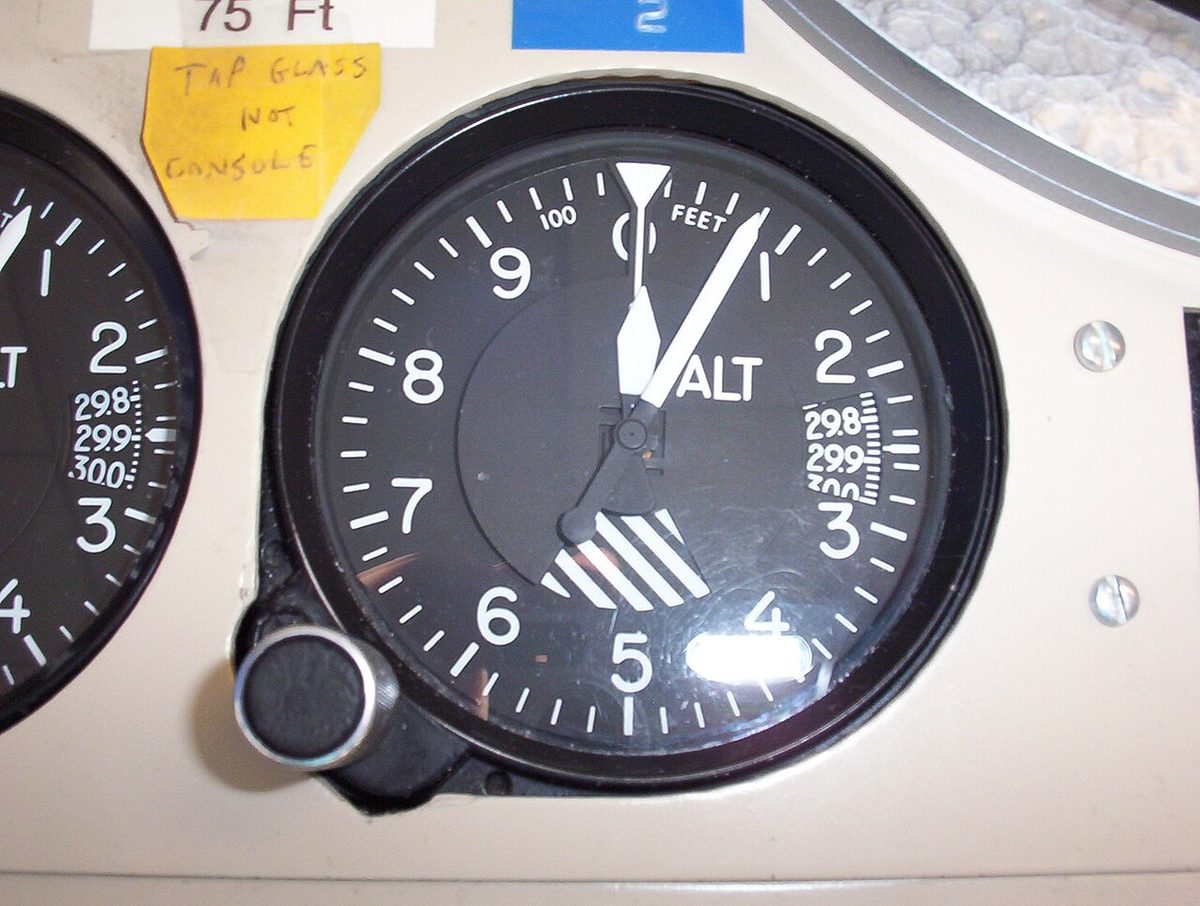
Levels are chosen by magnetic track, the direction actually made good over the ground measured from magnetic north; the FAA's rules say magnetic course, meaning the same. Heading does not count: an aircraft on a track of 170° holding a heading of 185° for drift is still in the 000° to 179° semicircle. Where ATC assigns a level, the clearance takes precedence over the table.
Semicircular rule for IFR
The semicircular rule, sometimes called the hemispheric rule, divides the compass at north and south. The SERA table follows Annex 2 Appendix 3:
| Magnetic track | IFR levels | VFR levels |
|---|---|---|
| 000° to 179° | Odd thousands: FL010, 030, 050 ... 290, 310 ... 410, then FL450, 490 ... | Odd thousands plus 500 ft: FL035, 055, 075 ... 275 |
| 180° to 359° | Even thousands: FL020, 040, 060 ... 280, 300 ... 400, then FL430, 470, 510 ... | Even thousands plus 500 ft: FL045, 065, 085 ... 285 |
Below the transition altitude the same values are flown as altitudes: 3,000 ft or 5,000 ft for IFR on an easterly track, 4,000 ft or 6,000 ft on a westerly one.
The IFR levels for the two semicircles interleave, so traffic following the rule on opposite tracks is at least 1,000 ft apart, the vertical separation minimum below FL290. RVSM keeps 1,000 ft separation from FL290 up to FL410 inclusive. Above FL410, and above FL290 wherever RVSM is not applied, the minimum is 2,000 ft, so the levels in each semicircle are 4,000 ft apart (see separation standards).
States may publish different tables. France applies the standard one below FL195, but in its upper control area between FL195 and FL660 it divides the compass at 090° and 270° instead, to suit its main traffic flows. Levels published for an airway, ATC clearances and free route airspace rules also override the general table: in French free route airspace, the parity of the level is set by the entry and exit points.
Track cases: same, reciprocal and crossing
For separation, ICAO classifies two tracks by the angle between them:
| Track case | Angular difference |
|---|---|
| Same track | Less than 45° or more than 315° |
| Reciprocal tracks | More than 135° but less than 225° |
| Crossing tracks | 45° to 135°, or 225° to 315° |
The semicircular rule fully protects only exactly opposite tracks: two tracks 180° apart always fall in different semicircles, so IFR aircraft keeping to the rule are at least 1,000 ft apart. The ICAO reciprocal case is wider, and 010° and 150°, 140° apart, share the odd levels. Aircraft on the same track usually share a semicircle and can be at the same level, so they depend on longitudinal separation from ATC or on the pilots' lookout. Crossing tracks may fall either way: 090° and 170° share the odd levels, while 170° and 250° do not. Near north and south the rule even splits almost identical tracks, since 175° and 185° take opposite parity. The rule reduces the head-on risk; it does not replace ATC separation or see and avoid.
Exam tip: use magnetic track, never heading. On a track of 275° with a minimum en-route altitude of 6,500 ft, and ignoring any QNH correction, the lowest IFR level is FL080: FL060 is too low and FL070 is an odd level, which belongs to easterly tracks.
VFR cruising levels
SERA requires a VFR flight in level cruise more than 900 m (3,000 ft) above the ground or water to fly a cruising level appropriate to its track, unless ATC or the competent authority indicates otherwise. Lower down, any level may be flown within the minimum heights and the airspace limits. Because VFR flight above FL195 needs a special authorisation, most VFR cruising is at altitudes such as 3,500 ft or 4,500 ft on QNH, or at flight levels such as FL055 or FL065 above the transition altitude.
The FAA's 14 CFR 91.159 applies to VFR level cruising more than 3,000 ft above the surface and below 18,000 ft MSL. Magnetic courses of 0° to 179° take odd thousands plus 500 ft (3,500, 5,500, 7,500 ft), and 180° to 359° even thousands plus 500 ft (4,500, 6,500 ft). The highest VFR cruising altitude is therefore 17,500 ft, since Class A begins at 18,000 ft. For IFR, 91.179 requires the altitude assigned by ATC in controlled airspace; in uncontrolled airspace below 18,000 ft it takes odd thousands for 0° to 179° and even thousands for 180° to 359°.
VFR minimum heights
Minimum heights protect people and property on the ground as much as the aircraft. The general rule of Annex 2 and SERA.3105 applies to every flight: except for take-off and landing or with the authority's permission, an aircraft may not fly over the congested areas of cities, towns or settlements, or over an open-air assembly of persons, unless it is high enough to land in an emergency without undue hazard to people or property on the surface. Annex 2 gives no figure for this.
SERA.5005(f) adds figures for VFR flight, again except for take-off and landing or with permission:
- over congested areas and open-air assemblies of persons, not below 300 m (1,000 ft) above the highest obstacle within a radius of 600 m from the aircraft;
- elsewhere, not below 150 m (500 ft) above the ground or water, or 150 m (500 ft) above the highest obstacle within a radius of 150 m (500 ft) from the aircraft.
The obstacle half of the second rule is a SERA addition to Annex 2. The FAA's 14 CFR 91.119 is built the same way: anywhere, an altitude that allows an emergency landing without undue hazard; over congested areas, 1,000 ft above the highest obstacle within 2,000 ft horizontally; elsewhere, 500 ft above the surface, except over open water or sparsely populated areas, where the aircraft may be lower but no closer than 500 ft to any person, vessel, vehicle or structure.

Congested areas
Neither SERA nor the FAA sets a population figure for a congested area. EASA's operational definitions describe it as any area of a city, town or settlement substantially used for residential, commercial or recreational purposes, and the judgement is the pilot's. The radius is as much part of the rule as the height: the 1,000 ft is measured from the highest obstacle within 600 m, so a mast just ahead counts even when the ground below is flat.
National rules can go further. France keeps a 1957 order that sets heights by the width of the town and the type of aircraft. A single-engine piston aeroplane or a helicopter must stay 500 m (1,700 ft) above a town less than 1,200 m wide, and a multi-engine piston or turbine aircraft 1,000 m (3,300 ft). Any powered aircraft must stay 1,000 m (3,300 ft) above a town 1,200 to 3,600 m wide or a gathering of more than 10,000 people, and 1,500 m (5,000 ft) above a larger town or a gathering of more than 100,000. Paris may not be overflown without an exceptional exemption. The same AIP lowers the SERA minimum to 50 m (150 ft) for simulated forced landings during instruction, provided the aircraft stays 150 m from any person, vehicle, vessel or structure.
Minimum IFR levels
Except for take-off and landing, or with the authority's permission, an IFR flight must fly at or above the minimum flight altitude established by the State overflown. Where none has been established, SERA.5015 requires at least 300 m (1,000 ft) above the highest obstacle within 8 km of the aircraft's estimated position, or 600 m (2,000 ft) over high terrain or in mountainous areas. The FAA's 91.177 takes 1,000 ft, or 2,000 ft in a designated mountainous area, above the highest obstacle within 4 NM of the course to be flown. Published figures such as the minimum en-route altitude and the minimum sector altitude, and the corrections they need in cold weather, are covered under minimum safe altitudes.
States may add to these. France requires an IFR flight outside controlled airspace to fly no lower than the higher of 900 m (3,000 ft) AMSL and 300 m (1,000 ft) above the surface, in addition to the SERA minimum and the national heights over towns. It also states that where the floor of one of its airways is a flight level, that floor is at least 300 m above the highest obstacle within 8 km, provided the QNH is not below 960 hPa.
Lowest usable flight level
Above the transition altitude, levels are flight levels referenced to 1013.25 hPa, and the lowest one that still clears the applicable minimum is the lowest usable flight level. A flight level is a pressure surface, so its true height changes with the weather. When the QNH is below 1013 hPa, the standard datum lies below mean sea level and every flight level is lower than its number suggests, by about 27 ft per hPa.

A worked example: the minimum en-route altitude is 5,000 ft and the regional QNH 983 hPa. The difference of 30 hPa is about 810 ft, so FL050 is only about 4,190 ft above the sea and FL055 about 4,690 ft. The lowest flight level at or above the minimum is FL060. The semicircular rule is then applied on top: FL060 suits a westerly track, while an easterly track needs FL070.
Air traffic services work this out for their airspace. The transition level, the lowest flight level available above the transition altitude, is set from the current QNH; in France it is at least 300 m (1,000 ft) above the transition altitude, and approach control centres determine the lowest usable flight levels for each control area. Temperature matters as well: in air colder than standard every flight level is lower still, so the lowest usable flight level must allow for both a low QNH and a low temperature. In the United States, 14 CFR 91.121 raises the lowest usable flight level above the 18,000 ft transition altitude as the altimeter setting falls: FL180 at 29.92 inHg or higher, FL185 from 29.91 to 29.42, FL190 from 29.41 to 28.92 and FL195 from 28.91 to 28.42.
Frequently asked questions
What is the semicircular rule for cruising levels?
It separates traffic flying in opposite directions by giving each half of the compass its own levels, chosen by magnetic track. Under ICAO and SERA, IFR flights on tracks from 000 to 179 degrees fly odd thousands of feet or odd flight levels, such as FL070, and on 180 to 359 degrees even ones, such as FL080. VFR flights more than 3,000 ft above the surface use the same pattern plus 500 ft, such as FL075 or FL085.
Which VFR cruising level should be flown on a magnetic track of 100 degrees?
A track of 100 degrees lies in the 000 to 179 degree semicircle, so a VFR flight in level cruise more than 3,000 ft above the surface uses an odd thousand plus 500 ft, such as 3,500 ft, 5,500 ft, FL055 or FL075. The FAA's 91.159 gives the same answer. The track decides, not the heading flown to correct for the wind.
What is the minimum height over a congested area?
Under SERA a VFR flight may not fly over the congested area of a city, town or settlement, or over an open-air assembly of persons, lower than 300 m (1,000 ft) above the highest obstacle within 600 m of the aircraft, except to take off or land or with permission. The FAA's 91.119 requires 1,000 ft above the highest obstacle within 2,000 ft horizontally. Both also require enough height for an emergency landing without undue hazard.
What is the minimum level for IFR flight when none is published?
Under SERA.5015, except for take-off and landing, it is 300 m (1,000 ft) above the highest obstacle within 8 km of the aircraft's estimated position, or 600 m (2,000 ft) over high terrain or mountainous areas. The FAA's 91.177 requires 1,000 ft, or 2,000 ft in a designated mountainous area, above the highest obstacle within 4 NM of the course to be flown.
Why does a low QNH raise the lowest usable flight level?
Flight levels are referenced to 1013.25 hPa. When the sea-level pressure is lower, that datum lies below mean sea level, so every flight level is closer to the terrain than its number suggests, by about 27 ft per hPa. With a minimum altitude of 5,000 ft and a QNH of 983 hPa, FL050 is only about 4,190 ft above the sea, and the lowest flight level that clears the minimum is FL060.
Test yourself on Cruising Levels and Minimum Heights
The v1prep banks cover this topic in Air Law (010), with a worked explanation for every answer. EASA ATPL, PPL, IR and CPL, the FAA written tests and A320/B737 type ratings.
Start practising →Sources and further reading
- ICAO Annex 2, Rules of the Air (Appendix 3, Tables of cruising levels)
- EASA Easy Access Rules for Standardised European Rules of the Air (SERA)
- AIP France, ENR 1.7, Altimeter setting procedures and table of cruising levels
- AIP France, ENR 1.1, General rules (minimum heights)
- 14 CFR 91.119, Minimum safe altitudes, general
- 14 CFR 91.159, VFR cruising altitude or flight level
- 14 CFR 91.179, IFR cruising altitude or flight level
- 14 CFR 91.177, Minimum altitudes for IFR operations
Library articles are written for study and exam preparation. They do not replace your aircraft's approved documentation, your operator's procedures or the regulations themselves.