Bird Strike and Foreign Object Damage
A bird strike is a collision between an aircraft and a bird; the wider term wildlife strike also covers other animals. Foreign object damage (FOD) is damage caused by any object that does not belong where it is, such as runway debris, ice or a loose tool, striking an aircraft or being drawn into an engine.
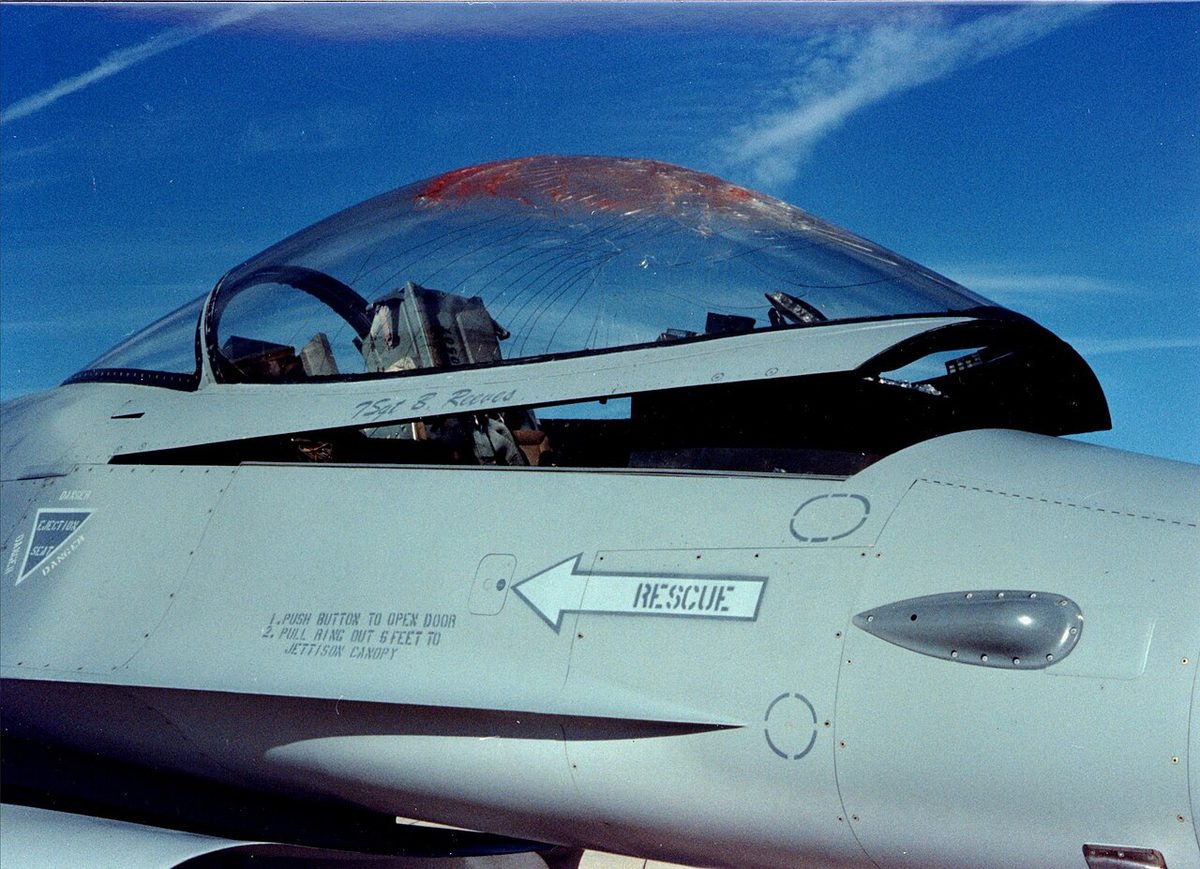
A bird strike, also written birdstrike, is a collision between an aircraft and a bird. Aerodromes and regulators increasingly speak of wildlife strikes, because deer and other animals on the runway pose the same kind of threat. Many strikes leave no more than a smear on the nose, but a bird drawn into an engine or through a windscreen can create an emergency within seconds, and a flock can damage more than one engine at once.
Foreign object damage (FOD) is a related and wider hazard: damage done by any object that is somewhere it should not be. A bolt on the taxiway, a stone blown onto the runway, a lump of ice shed from an intake or a pen left loose on the flight deck can all end up where they do harm. Both are managed the same way: know where the risk lies, keep objects away from the aircraft, report every event, and handle the aircraft correctly when prevention fails.
The bird strike hazard
Birds are concentrated close to the ground, so the risk is highest in the phases of flight flown there. The FAA's Aeronautical Information Manual (AIM) notes that over 90 per cent of reported strikes happen at or below 3,000 ft above ground level: during the take-off roll and initial climb, and on approach and landing. Strikes higher up are common during migration. Ducks and geese are often seen up to 7,000 ft AGL, and in the United States the risk rises from March to April and from August to November. The risk is also higher around dawn and dusk, and near coasts, estuaries, wetlands, rubbish tips and wildlife refuges, all of which attract birds.
Size, numbers and flocking behaviour make some species more dangerous than others. The AIM singles out gulls, waterfowl, vultures, hawks, owls, egrets, blackbirds and starlings. The energy of an impact grows with the square of the closing speed, so the same bird does far more damage to a jet at high speed than to a light aircraft in the circuit.
The AIM identifies two kinds of strike as the most serious:
- Engine ingestion. A bird drawn into a turbofan or turboprop can bend or break fan and compressor blades, cause a surge, or stop the engine altogether. Damage to the fan often shows first as a rise in vibration.
- Windscreen strikes. A strike on the windscreen has left pilots confused, disoriented, unable to communicate or struggling to control the aircraft, even when the glass held.
Large aeroplanes are designed to survive a typical strike. Under CS-25, and the equivalent FAA Part 25 rules, a transport aeroplane must be capable of continued safe flight and landing after striking a 4 lb (1.8 kg) bird at the design cruising speed VC at sea level or at 0.85 VC at 8,000 ft, whichever is more critical, and the windscreen panes in front of the pilots must resist penetration by such a bird. Flight deck windows are built from toughened glass panes bonded to a vinyl interlayer that stretches to absorb the impact. Their electrical heating does more than clear ice and mist: warm glass is less brittle, which is why a Boeing 737's temperature controllers keep windows 1 and 2 at the correct temperature for maximum strength against bird impact. Light aeroplanes have far less protection: CS-23 requires windscreen bird-impact protection only for the largest, Level 4, aeroplanes.
No design standard covers every flock. On 15 January 2009 US Airways Flight 1549, an Airbus A320, struck a flock of Canada geese while climbing out of New York LaGuardia below 3,000 ft. Both engines lost thrust, no runway was within reach, and the crew ditched on the Hudson River. All 155 people on board survived (see forced landing and ditching).
Bird strike reporting (IBIS)
Every strike should be reported, even one that does no visible damage, because reports are the only way to see where the risk lies. Under EASA teaching, the commander submits a written report after landing as soon as practicable, and strikes are also reported to the aerodrome and through the national occurrence reporting system.
States pass the reports they collect to ICAO, which gathers them in the ICAO Bird Strike Information System (IBIS) and disseminates the information. In the United States, pilots and others are urged to report any bird or other wildlife strike on FAA Form 5200-7, Bird/Other Wildlife Strike Report, and the data feed both certification standards and habitat control at airports.
Sightings matter as much as strikes. The AIM asks pilots who see birds or other animals on or near the runway to request that airport management disperse them before take-off, and to report large flocks to ATC or flight service with their location, type, approximate number, altitude and direction of flight.
Information flows back to crews through several channels:
- AIP ENR 5.6 publishes bird migration routes and times, and areas with sensitive fauna.
- AIP AD 2 entries describe the local hazard. At Toulouse-Blagnac, for example, the AIP notes that the airport lies within a significant bird migration area. A "very important bird strike risk" alert can be added to the ATIS, and while it is in force side-step manoeuvres and opposite-direction procedures are prohibited.
- NOTAM, ATIS broadcasts and, in the United States, the Chart Supplement warn of temporary concentrations and large animals near the runways.
Exam tip: IBIS is the ICAO Bird Strike Information System; migration routes are in AIP ENR 5.6; after a strike the commander submits a written report after landing. The FAA's reporting form is 5200-7.
Reducing bird strike risk
Most of the work is done on the ground by the aerodrome. ICAO Annex 14, Volume I, section 9.4, requires the wildlife strike hazard on and around an aerodrome to be assessed and reduced, including action against rubbish tips and other sites that attract wildlife. ICAO's Airport Services Manual (Doc 9137), Part 3, Wildlife Hazard Management, gives the guidance. Techniques include managing grass height and standing water so that the airfield attracts fewer birds, removing food and shelter, and dispersing birds with patrols, pyrotechnics and recorded distress calls. French AIP entries show the kind of cover provided: bird control from sunrise to sunset at Nice, and a wildlife control service from 30 minutes before sunrise to 30 minutes after sunset at Ajaccio.
Crews reduce their own exposure by:
- reading the AIP, NOTAM and ATIS for bird activity, and asking for dispersal or delaying the departure when birds are on or near the runway
- avoiding low flight over refuges, coasts, estuaries and rubbish tips, particularly during migration
- briefing the engine failure and windscreen procedures before operating from aerodromes with a known bird hazard
- climbing to avoid a flock met in flight. Startled birds tend to fold their wings and dive, and a flock spreads downwards with the leaders highest, so passing above it is safest.
Foreign object debris and damage
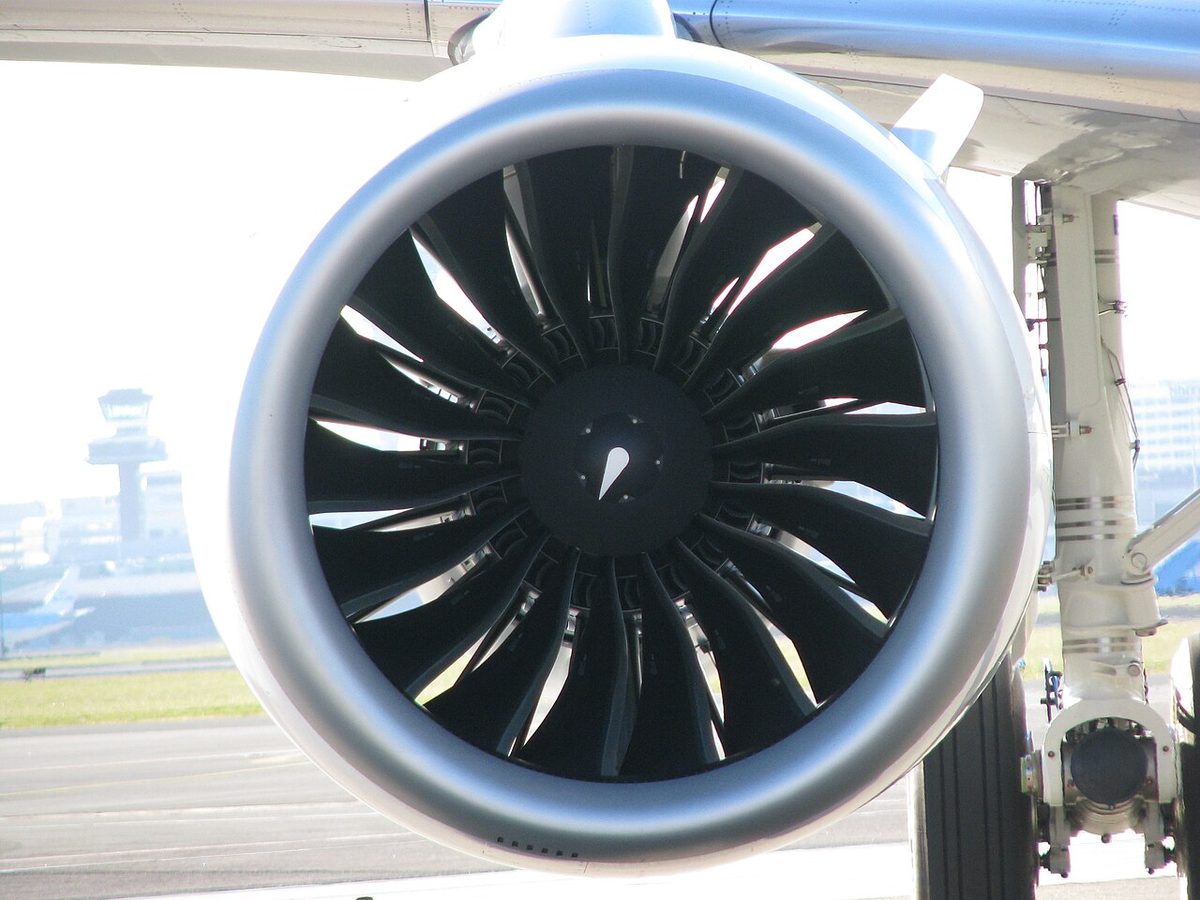
The abbreviation FOD is used for two things. Foreign object debris is the object: anything lying on the movement area or loose in an aircraft that has no business being there. Foreign object damage is what that object does: a nicked fan blade, a cut tyre, a dented flap or a jammed control. Typical debris includes fasteners and tools, parts of baggage and catering equipment, fragments of pavement and lighting fittings, stones, sand and gravel, and tyre debris from other aircraft. Ice shed from an engine intake, and snow, slush and standing water thrown up by the wheels, are also treated as FOD in winter operations.
FOD typically reaches an aircraft in one of five ways:
- Engine suction. A jet engine at high power on the ground acts like a vacuum cleaner and can lift debris off the surface into the intake. The effect grows with thrust.
- Reverse thrust at low speed. Below the speed at which reverse thrust should be reduced to idle, the deflected airflow can be drawn back into the intake with hot gas and runway debris.
- Jet and propeller blast. Blast from another aircraft, or from the aircraft's own engines during a turn or breakaway, blows debris into aircraft, vehicles and people.
- Tyres. A tyre that runs over debris can be cut or burst. Fragments from a burst tyre can strike engines, flaps, wheel wells and brake hydraulic lines. On 25 July 2000 an Air France Concorde taking off from Paris Charles de Gaulle ran over a metal strip that had fallen from a DC-10 which had departed a few minutes earlier. The strip cut a main-wheel tyre, pieces of the tyre struck the underside of the wing and ruptured a fuel tank, and the leaking fuel caught fire. The aircraft crashed shortly after take-off.
- Loose objects on board. A loose item can jam a flight control, so everything on the flight deck is stowed.
FOD prevention
Aerodrome operators inspect the runways, taxiways and aprons regularly, sweep them, remove debris found during works, and provide bins for loose items. Many airlines and airports also organise FOD walks, in which staff cross the apron in a line picking up anything they find. Maintenance organisations control their tools and parts so that nothing is left inside an engine, a wheel well or a closed panel.
Design helps too. The nose-wheel tyres of many aircraft, especially those with rear-mounted engines, carry chines, moulded ridges on the tyre shoulder that deflect water spray away from the engine intakes. On the Boeing 737, deflector doors ahead of the ram air inlets extend on the ground to keep slush out before lift-off and after touchdown. The Airbus A320's ram air inlet flap closes when take-off power is set with the main gear on the ground, to avoid ingesting foreign objects.
Pilots contribute through their own habits:
- The walk-round looks into the intakes and at the fan blades, tyres and wheel wells, and at the ground around the aircraft.
- Thrust is kept to the minimum needed on the ground during start, taxi and turns, and high-power runs over gravel or loose surfaces are avoided.
- Reverse thrust is reduced to reverse idle at the speed the manufacturer specifies, typically 60 to 80 kt on some types, so that the deflected air and debris are not drawn back into the intake.
- Brake cooling fans on the A320 are not used during take-off, to protect the fans and brakes from foreign object damage.
- Engine anti-ice is used in icing conditions on the ground as well as in flight, so that ice cannot build up on the intake and then shed into the engine (see aircraft ground de-icing and anti-icing).
- Any debris seen on the movement area is reported to ATC.
Actions after a strike
During the take-off roll, the decision follows the operator's rejected take-off policy (see take-off procedures and rejected take-off). In the low-speed regime, up to 80 kt on Boeing types and 100 kt on Airbus types, a significant event normally leads to a rejected take-off. Above it, only major failures such as an engine failure or fire, or an aircraft that is unsafe to fly, justify a stop. A bird strike with normal engine indications is therefore not a reason to reject at high speed.
In flight, the first task is to fly the aircraft. The crew then check the engine indications, particularly vibration, exhaust gas temperature, fuel flow and oil parameters, and apply the manufacturer's procedure for whatever symptom appears, whether vibration, a surge, overheating, a failure or a fire (see engine failure and engine fire). The next considerations are:
- Windscreen. If a windscreen is cracked, slowing down reduces the load on it.
- ATC. The crew declare PAN or MAYDAY as the situation requires and tell ATC, so that following aircraft and the aerodrome are warned and the runway can be inspected.
- Landing. If there is damage, or any doubt, the aircraft returns to land or diverts. The approach and landing are planned for the damage found, including the possibility of an engine failing later.
After landing, the aircraft is inspected before its next flight, because a strike can damage structure, a windscreen, an engine or a propeller where it cannot be seen. A spike in engine vibration calls for a borescope inspection of the engine. The commander completes the written report, the operator files it through its occurrence reporting system, and the data eventually join IBIS.
Warning: a strike that seems harmless can still have damaged the engine core or the airframe out of sight. Never accept an aircraft for flight after a strike until it has been inspected.
Frequently asked questions
At what altitude do most bird strikes happen?
Most happen close to the ground. The FAA's Aeronautical Information Manual notes that over 90 per cent of reported strikes occur at or below 3,000 ft above ground level, during take-off, initial climb, approach and landing. Strikes higher up are common during migration, and ducks and geese are often seen up to 7,000 ft. Risk also rises around dawn and dusk and near coasts, wetlands and wildlife refuges.
What should a pilot do after a bird strike?
First fly the aircraft, then check the engine indications, especially vibration, temperatures and fuel flow, and apply the manufacturer's procedure for whatever symptom appears. Tell ATC so that other traffic and the aerodrome are warned. Return or divert as the damage requires, and slow down if a windscreen is cracked. After landing the aircraft is inspected before it flies again and the commander makes a written report.
What is IBIS?
IBIS is the ICAO Bird Strike Information System. Each State runs a national procedure for recording and reporting bird strikes and passes the reports to ICAO, which gathers them in a worldwide system and disseminates the information. Knowing which species, places, seasons and phases of flight carry the most risk helps aerodromes direct their wildlife control, and the data also inform the design standards that aircraft must meet.
What is the difference between foreign object debris and foreign object damage?
Both are abbreviated FOD. Foreign object debris is the object itself, anything lying where it should not be, such as a bolt on a taxiway, a luggage tag on the apron or a stone at the runway edge. Foreign object damage is the harm it does when an engine ingests it, a tyre runs over it or jet blast throws it against an aircraft. Preventing the debris is the way to prevent the damage.
Why should you climb over a flock of birds rather than descend?
Birds that are startled by an approaching aircraft tend to fold their wings and dive, and a flock usually spreads downwards with the leading birds highest. Passing above the flock is therefore the manoeuvre least likely to end in a strike. Both EASA training material and the FAA's Aeronautical Information Manual advise climbing to avoid birds met in flight.
Test yourself on Bird Strike and Foreign Object Damage
The v1prep banks cover this topic in Operational Procedures (070), with a worked explanation for every answer. EASA ATPL, PPL, IR and CPL, the FAA written tests and A320/B737 type ratings.
Start practising →Sources and further reading
- FAA Aeronautical Information Manual, Chapter 7, Section 5, Bird Hazards and Flight Over National Refuges, Parks, and Forests
- FAA Airport Wildlife Hazard Mitigation and the National Wildlife Strike Database
- EASA Easy Access Rules for Large Aeroplanes (CS-25)
- 14 CFR 25.775, Windshields and windows
- NTSB AAR-10/03, Loss of Thrust in Both Engines After Encountering a Flock of Birds, US Airways Flight 1549, Hudson River, 15 January 2009
- AIP France, AD 2 LFBO Toulouse-Blagnac (AD 2.23, bird strike hazard)
- ICAO Annex 14, Aerodromes, Volume I (section 9.4, wildlife strike hazard reduction)
- BEA, Final Report on the accident on 25 July 2000 at Gonesse to the Concorde F-BTSC operated by Air France
Library articles are written for study and exam preparation. They do not replace your aircraft's approved documentation, your operator's procedures or the regulations themselves.