Boeing 787 Electrical System
The Boeing 787 electrical system generates variable frequency power from six starter generators, two on each engine and two on the APU. Boeing's pre-service description gives it as 235 V AC, converted to ±270 V DC for large motors and to 115 V AC and 28 V DC for most equipment.
The Boeing 787 uses electricity for jobs that earlier airliners did with engine bleed air: cabin air, wing ice protection, engine starting and the big hydraulic pumps. Its generators therefore carry loads that other aircraft feed with compressed air, and Boeing's 2007 description, written before entry into service, says the system generates twice as much electricity as previous Boeing models.
In that pre-service description it is a hybrid of four voltages. Six generators produce 235 V AC at a frequency that varies with engine speed; part of that is converted to ±270 V DC for a few very large motors, and the rest of the aircraft runs on the traditional 115 V AC and 28 V DC. Distribution is split between a forward and an aft electronics bay and a network of remote power distribution units built largely on solid-state power controllers rather than thermal circuit breakers.
This article draws on the FAA Master Minimum Equipment List (MMEL), the FAA Flight Standardization Board (FSB) reports, the EASA type-certificate data sheet (TCDS), Boeing's airport planning document and, for design intent, Boeing's 2007 AERO article on the no-bleed systems, written before entry into service. Why the 787 went electric is explained in Boeing 787 no-bleed systems architecture; general principles are in electrical power distribution.
Why the 787 needs so much electrical power
On a conventional airliner the engines provide most secondary power pneumatically. On the 787 they provide it through shaft-driven generators, and the loads that bleed air used to carry become electrical loads:
- Four cabin air compressors pressurise the cabin.
- Heating blankets in the slats protect the wing against ice.
- The engines and the APU are started by their own generators running as motors.
- Two large electric pumps power the centre hydraulic system.
- An electric compressor drives the nitrogen generation system that inerts the fuel tanks.
Boeing's case was that electrical power is more efficient than engine-generated pneumatic power: it is easier to monitor and control, and it is produced only as needed.
Engine and APU generators
Each engine drives two variable frequency starter generators (VFSGs) from its accessory gearbox: both engine data sheets, for the General Electric GEnx-1B and the Rolls-Royce Trent 1000, show two VFSGs and one hydraulic pump on the gearbox. The APU drives two APU starter generators (ASGs). The original FSB report, in its compliance review, states that any two of these six generators are rated to power all the loads necessary for safe emergency operation, and that the VFSG pairs are independent, as are the two APU generators and the battery.
| Source | Number | Rating | Other roles |
|---|---|---|---|
| VFSG (engine) | 2 per engine, 4 in all | 250 kVA each (Boeing, 2007) | Engine starter; each associated with a cabin air compressor |
| ASG (APU) | 2 | 225 kVA each (Boeing, 2007) | APU starter |
| External power | 3 receptacles | 90 kVA each, 200/115 V AC, 400 Hz (airport planning document) | Ground power and engine start without the APU |
The kVA ratings come from a diagram in Boeing's 2007 article and are given here as Boeing's pre-service description; the current documents used for this article do not restate them.
As starter generators, the machines work both ways. In Boeing's 2007 description, the VFSGs run as synchronous motors for an engine start, fed by start converters with power of adjustable voltage and frequency. The current MMEL lists four common motor start controllers (CMSCs) for "Main Engine Start/Cabin Air Compressor" and two more for the centre hydraulic system. With one of the first four inoperative, the MMEL counts its VFSG's starting function and its cabin air compressor as inoperative too; with one of the other two inoperative, its centre electric hydraulic pump.
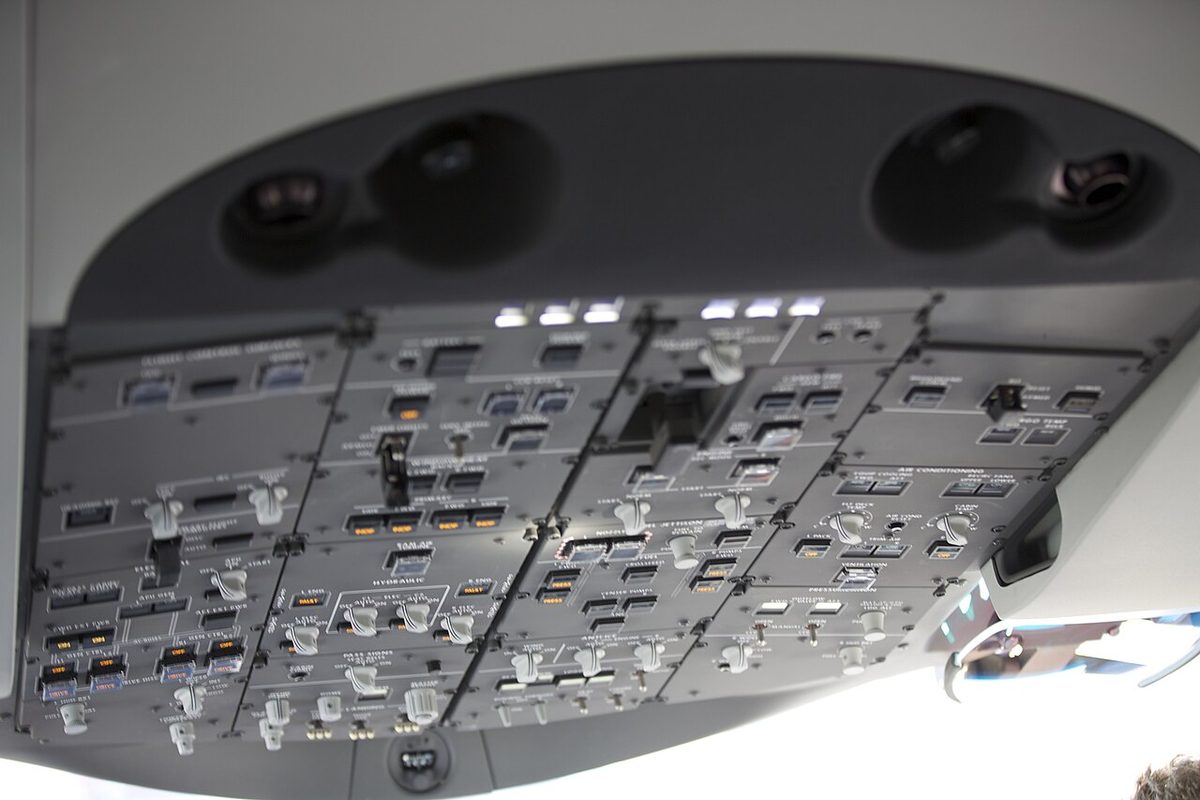
On the flight deck the MMEL lists four GEN CTRL switches with ON and OFF lights, four VFSG DRIVE DISC switches with DRIVE lights for disconnecting a generator from its gearbox, and two APU GEN switches. Each VFSG also has an electronic chip detector system. The APU generators have generator control units (AGCUs), and the MMEL refers to individual VFSGs as L1, L2, R1 and R2.
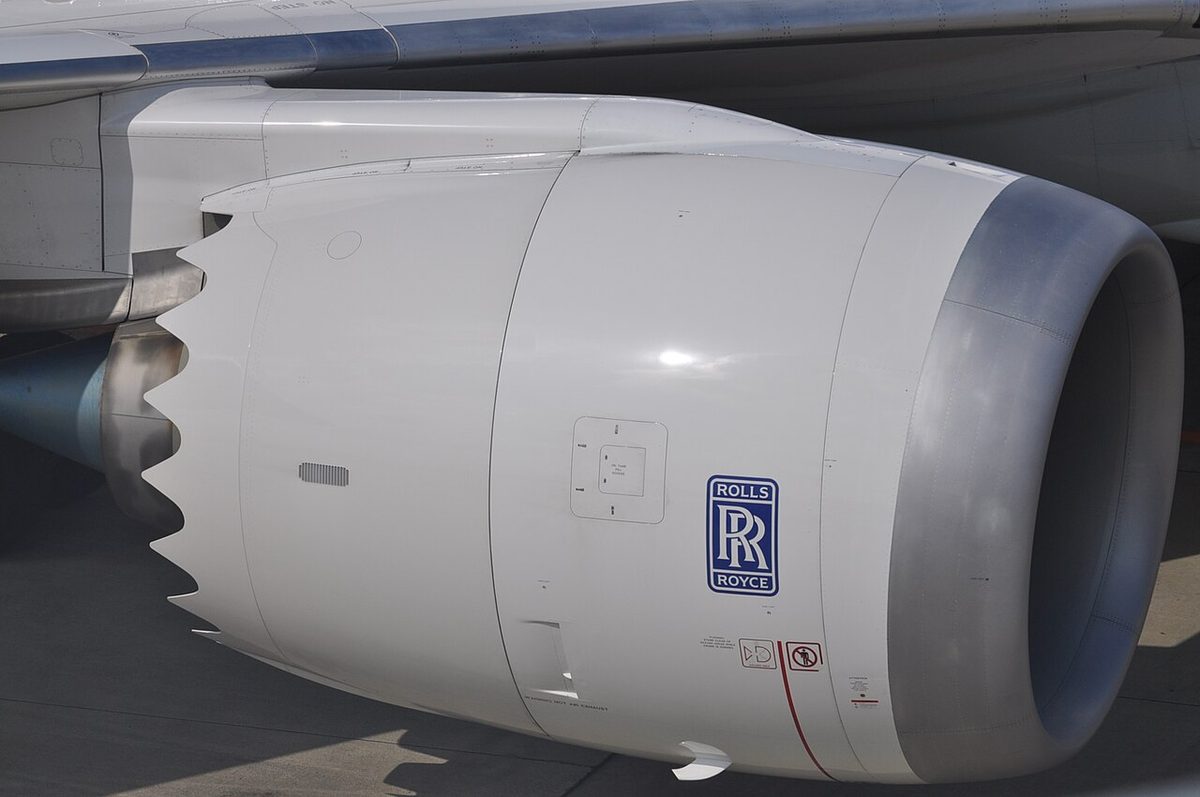
235 V AC variable frequency
The generators are connected directly to the engine gearboxes, so their output frequency is proportional to engine speed: Boeing's pre-service description gave the range as 360 to 800 Hz. Boeing described this as the simplest and most efficient way to generate power, because it does away with the constant speed drive, the key component of an integrated drive generator (IDG) as described in AC generators, CSD and IDG. It expected the generators to be more reliable, need less maintenance and cost less in spares than IDGs. The power is conditioned in the electronics bay before being distributed.
According to the same description, the generators run at 235 V AC to reduce the weight of the generator feeders, since a higher voltage carries the same power with less current, and only a limited number of 235 V AC loads are supplied as such, from the aft electronics bay.
Compared with the 777, the original FSB differences table lists no backup generators, four engine starter generators and two APU starter generators, extra generator and drive disconnect switches, an extra APU generator switch and extra external power switches, and no bus tie switches. The electrical control panel's system architecture is described as functionally equivalent.
±270 V DC and the large motor loads
According to Boeing's pre-service 2007 description, four auto-transformer-rectifier units convert 235 V AC into ±270 V DC. This supply serves the handful of large adjustable-speed motors that the no-bleed architecture needs:
- the cabin air compressor motors;
- the ram air fan motors of the air-conditioning packs;
- the nitrogen generation system compressor, used for fuel tank inerting;
- the large hydraulic pump motors.
Adjustable speed is the point: a cabin compressor can deliver the pressure required and no more. In the MMEL, the cabin compressors share their CMSCs with engine starting, the centre hydraulic pumps have two CMSCs of their own, and the left and right ram air fans have separate motor controllers. The power electronics are cooled by a liquid power electronics cooling system (PECS), for which the MMEL lists four pumps.
Exam tip: in Boeing's description, 235 V AC and ±270 V DC are the two "new" voltages on the 787, a consequence of the no-bleed design. 115 V AC and 28 V DC are the traditional ones and still supply most equipment.
115 V AC and 28 V DC
Boeing's 2007 description says the majority of electrical equipment, being either 115 V AC or 28 V DC, is supported by the forward electronics bay and the remote power distribution units. The original FSB report describes the 787's DC electrical system and its battery/standby power system as functionally equivalent to the 777's, and lists no flight instrument transfer buses on the 787.
Power distribution and electronics bays
The 787 has two electrical/electronics (E/E) bays, one forward and one aft. Instead of a centralised system of circuit breakers, relays and contactors, it uses remote power distribution units (RPDUs) near the equipment they serve. Boeing's article says the RPDUs are largely based on solid-state power controllers (SSPCs) rather than thermal circuit breakers and relays, and that remote distribution saves weight by reducing the size of the power feeders and should reduce maintenance costs. The original FSB report adds that no fuses are installed on the aircraft.
The MMEL shows the scale of the network:
| Item | Number listed |
|---|---|
| Primary power distribution system channels | 8 (one per primary power distribution panel may be inoperative) |
| Standard RPDU channels | 26 |
| Gateway RPDU channels | 8 |
| Electrical synoptic display | 1 |
The original FSB report states that EICAS messages alert the crew to electrical faults and to unpowered buses. The MMEL also lists two cabin switches, IFE/PASS SEATS and CABIN/UTILITY, each with ON and OFF lights, and a galley autotransformer unit. In the current FSB report, the 777-300ER to 787-8 differences in AC and DC generation and distribution, battery and standby systems and autoland are rated at level B, aided instruction.
Batteries, ground power and the RAT
Batteries. The MMEL refers to a main battery, whose BATTERY switch has OFF and ON lights, and lists a separate APU battery with an APU battery charger and an APU start power unit (SPU). The EASA TCDS includes a special condition titled Lithium-Ion Batteries in the certification basis of all three models, and the MMEL lists a main and APU battery enclosure system with two pressure burst discs and two burst disc indicators. According to Boeing's 2007 description, the APU can be started from the aircraft battery, ground power or an engine generator, and needs only one of its two generators to start. One related difference from the 777 shows how far electricity reaches: with electric brakes, the original FSB report notes a battery indication for the brakes where the 777 has an accumulator indication.
Ground power. Boeing's airport planning document shows three receptacles on every model, two forward and one mid-aft, each rated 90 kVA, 200/115 V AC, 400 Hz, and the MMEL lists three external power systems. Each has an EXT PWR switch on the flight deck with AVAIL and ON lights, and an external power panel with CONNECTED and NOT IN USE lights. A normal engine start uses the APU; without it, at least two 90 kVA ground power units on the two forward receptacles are needed, and Boeing recommends three to limit the shedding of cabin ventilation, in-flight entertainment and lighting.
Ram air turbine. The public sources used here do not describe what the RAT powers. The MMEL lists it in the hydraulic power chapter, with a RAT switch carrying UNLKD (unlocked) and PRESS lights, a position indication system and two RAT heaters. More on the hydraulic side is in Boeing 787 hydraulic system.
Note: the MMEL shows how the generators back each other up. Its relief for dispatching with one VFSG inoperative requires, among other things, the APU to be started before departure and run for the whole flight, with both APU generators and the APU battery working. That is a dispatch condition, not a normal procedure.
Frequently asked questions
How many generators does the Boeing 787 have?
Six. Each engine drives two variable frequency starter generators (VFSGs) from its accessory gearbox, and the APU drives two APU starter generators (ASGs). The original FAA FSB report states that any two of these six are rated to power all the loads needed for safe emergency operation, and that the VFSG pairs are independent, as are the two APU generators and the battery.
Why does the 787 generate 235 V AC instead of 115 V AC?
Boeing's pre-service (2007) description says the six generators operate at 235 V AC to reduce the weight of the generator feeders: at a higher voltage the same power needs less current and thinner cables. The generators are driven directly by the gearbox, without a constant speed drive, so their frequency varies with engine speed, between 360 and 800 Hz in the same description.
What is ±270 V DC used for on the 787?
In Boeing's pre-service (2007) description, it powers a handful of large adjustable-speed motors that replace bleed air functions: the cabin air compressor motors, the ram air fan motors, the nitrogen generation system compressor used for fuel tank inerting, and the large hydraulic pump motors. Four auto-transformer-rectifier units convert 235 V AC into ±270 V DC for them.
Does the Boeing 787 use lithium-ion batteries?
Yes. The EASA type-certificate data sheet lists a special condition titled Lithium-Ion Batteries in the certification basis of the 787-8, 787-9 and 787-10. The MMEL refers to a main battery and an APU battery, and lists a main and APU battery enclosure system with two pressure burst discs and two burst disc indicators. The APU battery has its own charger and the APU a start power unit.
How many ground power receptacles does the 787 have?
Three: two forward and one mid-aft, each rated 90 kVA, 200/115 V AC, 400 Hz, according to Boeing's airport planning document, and the MMEL lists three external power systems with three EXT PWR switches. Without the APU, an engine start needs at least two 90 kVA ground power units on the two forward receptacles; Boeing recommends three to limit cabin load shedding.
Test yourself on Boeing 787 Electrical System
The v1prep banks cover this topic in the 787 type-rating bank, with a worked explanation for every answer. EASA ATPL, PPL, IR and CPL, the FAA written tests and A320/B737 type ratings.
Start practising →Sources and further reading
- Boeing AERO magazine, Q4 2007, M. Sinnett, 787 No-Bleed Systems: Saving Fuel and Enhancing Operational Efficiencies
- FAA Master Minimum Equipment List, Boeing 787, Revision 19 (20 May 2025)
- FAA Flight Standardization Board Report, Boeing 787 (original report, 25 August 2011)
- FAA Flight Standardization Board Report, Boeing 787, Revision 7 (8 May 2019)
- Boeing, 787 Airplane Characteristics for Airport Planning (D6-58333), Rev Q, October 2025
- EASA Type-Certificate Data Sheet EASA.IM.A.115, Boeing 787-8, 787-9 and 787-10, Issue 30
- EASA Type-Certificate Data Sheet E.036, Rolls-Royce Trent 1000 series, Issue 24
Library articles are written for study and exam preparation. They do not replace your aircraft's approved documentation, your operator's procedures or the regulations themselves.