Boeing 787 Engines: GEnx-1B and Trent 1000
The Boeing 787 is certified with two engine types: the General Electric GEnx-1B, a two-spool turbofan, and the Rolls-Royce Trent 1000, a three-shaft turbofan. Both drive two starter generators and a hydraulic pump, are started electrically and are rated at up to about 349 kN of take-off thrust.
Every Boeing 787 model is certified with one of two engines: the General Electric GEnx-1B or the Rolls-Royce Trent 1000. The EASA type-certificate data sheet (TCDS) for the 787-8, 787-9 and 787-10 lists two Trent 1000 engines, under engine type certificate E.036, or two GEnx engines, under E.102. Boeing's airport planning document describes them as new engines representing nearly a two-generation jump in technology, and gives the same general characteristics for the aircraft with either.
The two engines share the 787's no-bleed installation. Each drives two variable frequency starter generators and one hydraulic pump from its accessory gearbox and starts electrically, and the only pneumatic system left on the aircraft is nacelle anti-ice. Inside, they are different machines, with different temperature parameters, limits and engine indications, and the FAA requires pilots in a mixed fleet to learn both sets of engine displays.
All figures here come from the type-certificate data sheets, the FAA Master Minimum Equipment List (MMEL), the FAA Flight Standardization Board (FSB) reports and Boeing's airport planning document; Boeing's 2007 AERO article is used only for design intent. For the systems the engines feed, see Boeing 787 no-bleed systems architecture and Boeing 787 electrical system.
Two engines, one aircraft
The take-off ratings below are the sea-level static thrusts in the aircraft TCDS, each limited to 5 minutes, with 10 minutes allowed only after an engine failure. The 787-8 and 787-9 can each carry several ratings of each engine; the 787-10 has one Trent 1000 rating and two GEnx models.
| Model | Rolls-Royce Trent 1000 | General Electric GEnx-1B |
|---|---|---|
| 787-8 | 265.3 kN (59,631 lbf, -E) to 331.4 kN (74,511 lbf) | 298.0 kN (67,000 lbf, -1B64) to 321.6 kN (72,300 lbf, -1B70 family) |
| 787-9 | 307.8 kN (69,194 lbf) to 347.5 kN (78,129 lbf, -J2, -K2, -J3, -K3) | 308.7 kN (69,400 lbf, -1B67/P2) to 341.2 kN (76,700 lbf, -1B74/75) |
| 787-10 | 347.5 kN (78,129 lbf, -J3 only) | 349.2 kN (78,500 lbf, -1B76/P2 and -1B76A/P2) |
Most ratings are flat rated to 30 °C; the others are flat rated to between 25 °C (Trent 1000-L2) and 38.8 °C (GEnx-1B70/75), for example 35 °C for the Trent 1000-D series. The FSB differences tables list "increased thrust ratings" for the 787-9 and 787-10 against the 787-8. For the 787-8 and 787-9, the TCDS refers to the aircraft flight manual for engine intermix eligibility.
Both engine data sheets give the same ETOPS capability, a maximum approved diversion time of 330 minutes at maximum continuous thrust plus 15 minutes at hold power, and both state that this engine eligibility is not in itself an approval to fly ETOPS.
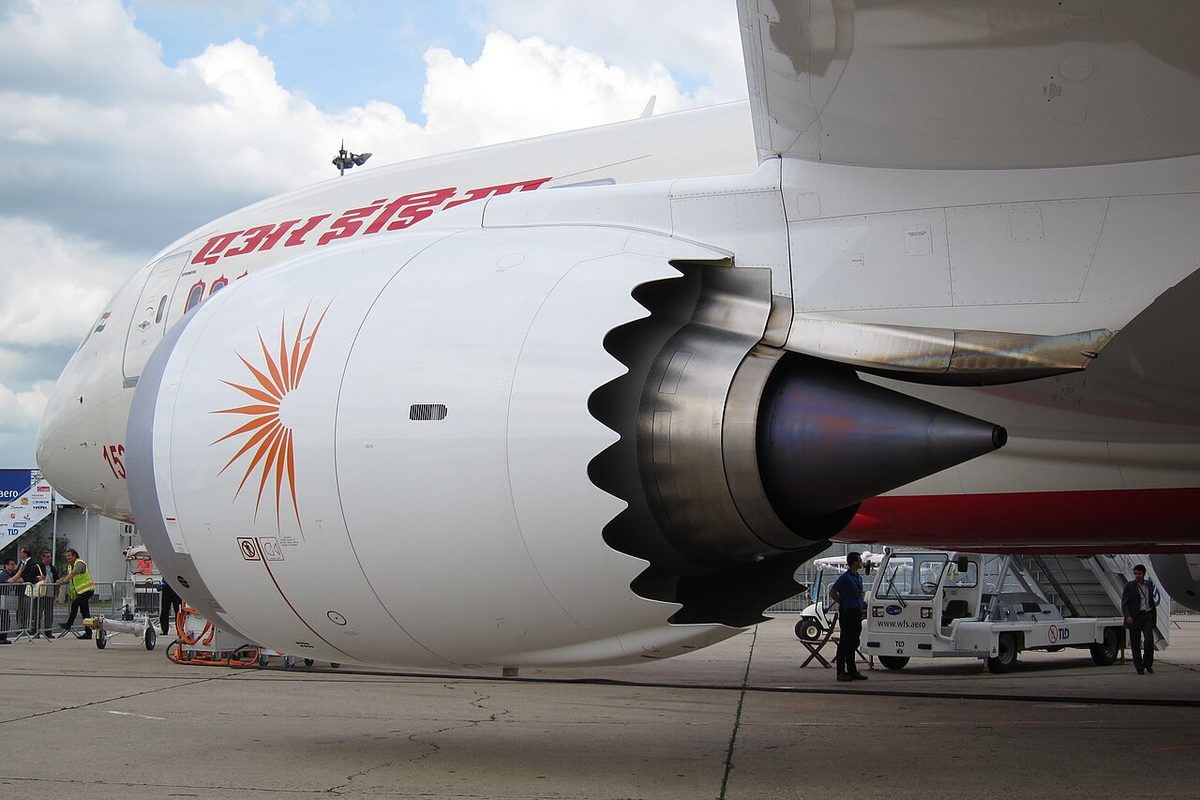
GEnx-1B
The GEnx-1B is a dual-rotor, axial-flow, high bypass ratio turbofan. A single-stage fan and a 4-stage low pressure compressor are driven by a 7-stage low pressure turbine; a 10-stage high pressure compressor is driven by a 2-stage high pressure turbine. The engine is about 4.95 m long, with a dry weight of 6,147.1 kg. It is controlled by a full authority digital engine control (FADEC) with a digital connection to the aircraft, and an engine monitoring unit sends vibration signals to the aircraft.
The data sheet distinguishes three standards, the original GEnx-1B, the /P1 and the /P2 models, with different limits. Thrust is set and checked on fan speed, N1, in all operations. Exhaust gas temperature (EGT) is measured at station T49, the stage 2 low pressure turbine nozzle. The data sheet allows the normal 5-minute take-off limit to be extended to 10 minutes for an engine-out contingency, and operation below minimum oil pressure for up to 15 seconds in negative-g flight.
Trent 1000
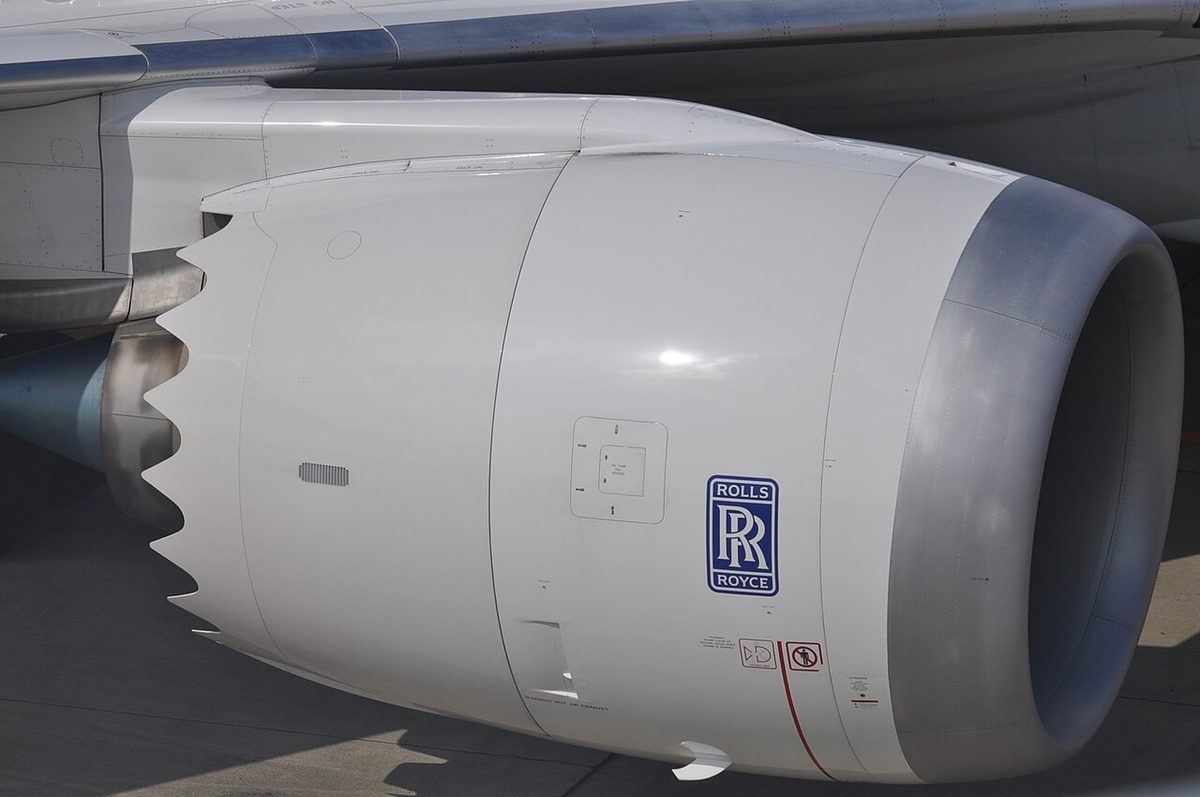
The Trent 1000 is a three-shaft turbofan: low, intermediate and high pressure compressors driven by separate turbines through coaxial shafts. The low pressure compressor is a single-stage fan of 2.85 m diameter with swept blades; the intermediate pressure compressor has 8 stages and the high pressure compressor 6, driven by a 6-stage LP turbine and single-stage IP and HP turbines. The combustor is a single annular chamber with 18 fuel spray nozzles. The engine is about 4.77 m long; the TEN models weigh 6,114 kg dry.
An electronic engine controller (EEC), part of a FADEC system, has a digital interface with the airframe, and an engine monitoring unit supplies vibration signals. The Trent 1000 TEN models, those ending in 3 such as the -J3 and -K3, have their own operating instructions; the -J3 is the only Trent 1000 rating listed for the 787-10. Among the 777 to 787 differences, the original FSB report notes for the Rolls-Royce engine that TPR replaces EPR on the flight deck. The turbine temperature displayed is a trimmed turbine gas temperature (TGT): the EEC adjusts the measured value with a trim profile held in a data entry plug, so that the displayed limits are the same for every Trent 1000 model.
Thrust ratings and limits
The engine data sheets set the operating limits. The table compares the GEnx-1B/P2 models with the Trent 1000 TEN models listed for the 787 (-AE3 to -K3).
| Limit | GEnx-1B/P2 | Trent 1000 TEN |
|---|---|---|
| Temperature limited | EGT, measured at station T49 | Displayed trimmed TGT, measured at the first-stage LP turbine nozzle guide vanes |
| Take-off (5 min) | 1,065 °C | 900 °C |
| Short transient | 1,070 °C for 30 s | 920 °C for 20 s, inadvertent use only |
| Maximum continuous | 1,030 °C | 850 °C |
| Ground start | 750 °C | 700 °C (ground starts and shutdown) |
| In-flight start | 875 °C (975 °C after a high-power fuel cut) | 900 °C (relight) |
| Maximum rotor speeds | N1 108 % (2,778 rpm), N2 117.5 % (13,368 rpm) | Take-off: LP 101.5 %, IP 103.6 %, HP 101.5 % |
| Oil temperature | 160 °C continuous, 177 °C for 15 min | 196 °C unrestricted, 201 °C for 15 min |
| Fuel temperature | −53.8 °C to 65.5 °C at the pump inlet | −54 °C before start, −45 °C to accelerate, 65 °C maximum |
Two notes in the Trent 1000 data sheet matter to pilots. The maximum continuous rotor speed limits are not displayed as limitations on the flight deck, as agreed during certification. And on the TEN models, the 30-second IP transient limit of 103.9 % applies only to take-off and go-around. The earlier GEnx-1B models had lower temperature limits, for example 1,035 °C for take-off on the original standard, so the limits always depend on the engine model fitted.
The MMEL adds details of the engine controls. Each engine's EEC has a normal (NORM) and an alternate (ALTN) mode; dispatch with the normal mode inoperative is allowed only with both engines operated in ALTN, the autothrottle working and performance adjustments applied, for both the Rolls-Royce and the GE installations. For the Rolls-Royce engines the MMEL also lists thrust control malfunction accommodation (TCMA) functions. Each engine has two ignition systems.
Electric start
Neither engine has an air turbine starter: Boeing's airport planning document says the traditional pneumatic starters are replaced by a pair of gearbox-mounted starter/generators. These variable frequency starter generators (VFSGs) run as synchronous motors during the start; in Boeing's pre-service 2007 description they are fed by start converters, both generators on an engine are normally used, and if one has failed the other can still start the engine at a slower pace. The MMEL lists four common motor start controllers (CMSCs) for main engine start and the cabin air compressors. It also lists two starter systems per engine and allows one per engine to be inoperative; for the Rolls-Royce engines, the engine concerned must then not be started on the ground at an outside air temperature above 45 °C, with some exceptions depending on the generator oil temperature.
A normal engine start uses the APU for electrical power. Without the APU, Boeing's airport planning document says a start needs at least two 90 kVA ground power units on the two forward external receptacles, and recommends three. The original FSB report lists an electric starter with a starter duty cycle limitation as a difference from the 777.
Bleed and power extraction
Both engine data sheets base their ratings on no customer bleed and no power offtake. Most of what the 787 takes from its engines is shaft power: the GEnx data sheet allows each VFSG drive up to 516 kW on the original GEnx-1B, 504 kW on the /P1 and 473.5 kW on the /P2 models, and the hydraulic pump drive up to 46.2 kW, or 44 kW on the /P2.
Air offtakes are small. The Trent 1000 data sheet states that no Trent 1000 model supplies compressor air for cabin ventilation: only the Trent 7000 models covered by the same data sheet do so. Every Trent 1000 supplies air only for nacelle anti-ice, modulated by a regulating valve, at most 2.9 % of core mass flow at idle on the TEN models, falling to 0.5 % at high turbine entry temperature. The GEnx-1B data sheet limits the bleed from compressor stage 7 to between 5.0 % and 3.3 % of the airflow at station 25, depending on corrected fan speed, on engines with booster anti-ice.
Boeing's pre-service 2007 case was that, without pneumatic systems diverting high-speed air, all of it goes to thrust, and that the aircraft would extract as much as 35 % less power from the engines. The engines still use their own air internally: the MMEL lists booster anti-ice valves and turbine case cooling air valves on the GEnx, and engine section stator anti-ice valves, IP bleed valves and turbine case cooling valves on the Trent.
Exam tip: GEnx-1B: two spools, thrust set on N1, EGT. Trent 1000: three shafts, TPR in place of EPR, trimmed TGT. Both: two VFSGs and one hydraulic pump on the gearbox, electric start, and nacelle anti-ice as the aircraft's only remaining pneumatic system.
Mixed fleets
For pilots, the FSB report makes engine variants a special emphasis area in initial ground training when GE and Rolls-Royce aircraft are in the same fleet. Pilots should be exposed to the alternate engine indicating and crew alerting system (EICAS) presentations, by photos, drawings or graphic media, so that they interpret the displays correctly. The original report listed GE and RR engine type design differences against the 777, and the current report rates the 777-300ER to 787-8 differences in engine indicating and starting at level B and the powerplant and EEC at level A.
On the ground, the inlet hazard radius is the same for both makes: Boeing's airport planning document gives a radius of 15 ft (4.6 m) at idle, 28.5 ft (8.7 m) at breakaway thrust and 63 ft (19.2 m) at take-off thrust for both the GE and the Rolls-Royce engines. The aircraft has two thrust reversers; the Trent 1000 data sheet notes that the reverser unit is certified as part of the aircraft type design, not the engine's, and the original FSB report describes the reverser system as the same as the 777's. More on engine control in general is in FADEC and engine fuel control.
Frequently asked questions
Which engines power the Boeing 787?
Two engine types are certified on every model: the General Electric GEnx-1B and the Rolls-Royce Trent 1000, two of the same type per aircraft. The EASA type-certificate data sheet lists several ratings of each per model; the 787-10, for example, can have the Trent 1000-J3 or the GEnx-1B76/P2 and -1B76A/P2. For the 787-8 and 787-9, the data sheet refers to the flight manual for engine intermix eligibility.
How much thrust do the 787 engines produce?
The EASA data sheet gives sea-level static take-off thrust, limited to 5 minutes or 10 minutes after an engine failure. On the 787-10 it is 347.5 kN (78,129 lbf) for the Trent 1000-J3 and 349.2 kN (78,500 lbf) for the GEnx-1B76/P2. The 787-9 goes up to 347.5 kN with the Trent and 341.2 kN with the GEnx-1B74/75, and the 787-8 up to 331.4 kN and 321.6 kN.
What is the difference between the GEnx-1B and the Trent 1000?
The GEnx-1B is a two-spool engine: a fan and 4-stage low pressure compressor driven by a 7-stage low pressure turbine, and a 10-stage compressor driven by a 2-stage high pressure turbine. Thrust is set by N1. The Trent 1000 has three shafts, low, intermediate and high pressure, with a 2.85 m fan; for the Rolls-Royce engine, the FSB notes that TPR replaces the 777's EPR. GEnx limits are in EGT, Trent limits in displayed trimmed TGT.
What are the temperature limits of the 787 engines?
For the GEnx-1B/P2 models, EGT is limited to 1,065 °C for take-off, 1,070 °C for 30 seconds, 1,030 °C maximum continuous, 750 °C for a ground start and 875 °C for an in-flight start. For the Trent 1000 the displayed trimmed TGT limits are 900 °C for take-off, 850 °C maximum continuous, 920 °C for 20 seconds of inadvertent over-temperature, 700 °C during ground starts and 900 °C for an in-flight relight.
What do pilots need to know when an airline flies both 787 engine types?
The FAA FSB report makes engine variants a special emphasis area in ground training when GE and Rolls-Royce aircraft are in the same fleet. Pilots should be shown the other engine's EICAS presentation by photos, drawings or graphic media, so they read the displays correctly. The differences include thrust set on N1 for the GEnx, TPR in place of EPR for the Rolls-Royce engine, and EGT limits on the GEnx against displayed trimmed TGT on the Trent.
Test yourself on Boeing 787 Engines: GEnx-1B and Trent 1000
The v1prep banks cover this topic in the 787 type-rating bank, with a worked explanation for every answer. EASA ATPL, PPL, IR and CPL, the FAA written tests and A320/B737 type ratings.
Start practising →Sources and further reading
- EASA Type-Certificate Data Sheet EASA.IM.A.115, Boeing 787-8, 787-9 and 787-10, Issue 30
- EASA Type-Certificate Data Sheet IM.E.102, General Electric GEnx series, Issue 12
- EASA Type-Certificate Data Sheet E.036, Rolls-Royce Trent 1000 series, Issue 24
- FAA Master Minimum Equipment List, Boeing 787, Revision 19 (20 May 2025)
- FAA Flight Standardization Board Report, Boeing 787, Revision 7 (8 May 2019)
- FAA Flight Standardization Board Report, Boeing 787 (original report, 25 August 2011)
- Boeing, 787 Airplane Characteristics for Airport Planning (D6-58333), Rev Q, October 2025
- Boeing AERO magazine, Q4 2007, M. Sinnett, 787 No-Bleed Systems: Saving Fuel and Enhancing Operational Efficiencies
Library articles are written for study and exam preparation. They do not replace your aircraft's approved documentation, your operator's procedures or the regulations themselves.