B737 Autothrottle and Thrust Management
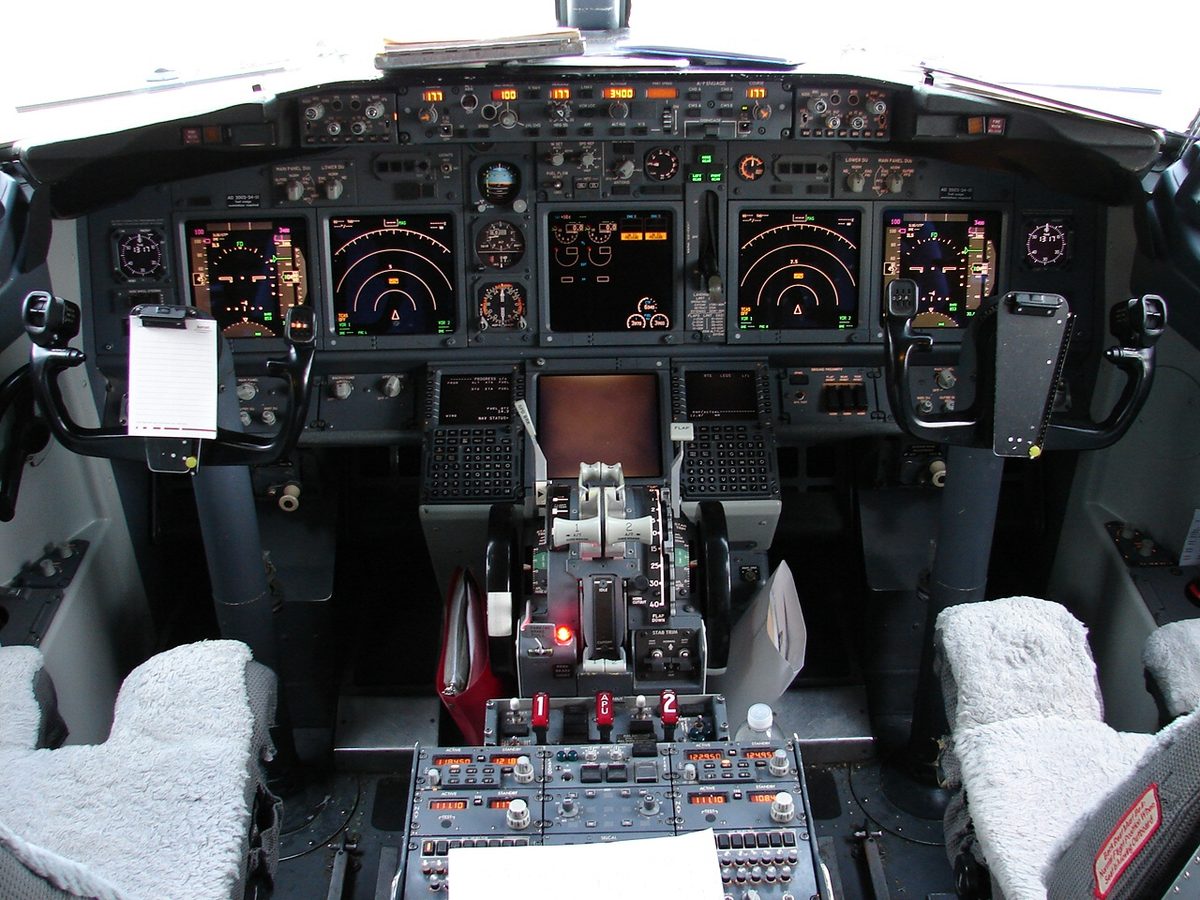
The Boeing 737 autothrottle moves the thrust levers to hold either an N1 limit computed by the flight management computer or a target speed, in modes that engage together with the pitch modes of the autopilot flight director system, from the take-off roll to the retard before touchdown.
The Boeing 737's autothrottle (A/T) is the thrust half of the automatic flight system, alongside the autopilot flight director system (AFDS). It moves the thrust levers itself, and it works in N1: the flight management computer (FMC) computes the N1 limits, and the engines' EECs deliver the N1 that lever position commands.
This article follows the 737 NG flight crew operations manual (FCOM) and notes where the MAX differs. The principles are in autothrottle and reduced and derated take-off thrust; the pitch modes the autothrottle works with are in B737 autopilot flight director system, and the engine side in B737 engines and engine indications.

Arming, engagement and disengagement
The A/T ARM switch on the mode control panel (MCP) is magnetically held at ARM and set there before start. Armed, the autothrottle engages by itself when the AFDS engages LVL CHG, ALT ACQ, V/S, VNAV, ALT HOLD, glideslope capture or TO/GA. Its engaged modes are annunciated in green on the flight mode annunciator: N1, GA, RETARD, FMC SPD, MCP SPD and THR HLD. ARM, shown in white, is not an engaged mode.
Pushing an autothrottle disengage switch disengages it, flashes the red A/T disengage lights and trips the A/T ARM switch to OFF; a second push puts the lights out. The autothrottle also disengages when the ARM switch is moved to OFF, when a fault is detected and 2 seconds after touchdown, the last without the disengage lights.
Many recall items include disengaging the autothrottle: engine limit, surge or stall, engine fire or overheat, uncommanded yaw or roll, airspeed unreliable, runaway stabiliser, stall recovery and the rejected take-off. The engine limit, surge or stall checklist gives the reason: with the autothrottle disengaged, the thrust lever stays where the pilot puts it.
MCP and FMC speed modes
| Mode | What the autothrottle does | Engaged by |
|---|---|---|
| N1 | Holds the N1 limit selected on the FMC CDU | LVL CHG or VNAV in a climb; TO/GA for take-off; the N1 switch |
| MCP SPD | Holds the speed in the IAS/MACH window, or a performance or limit speed | ALT ACQ, ALT HOLD, V/S, glideslope capture |
| FMC SPD | Holds the FMC target speed; the IAS/MACH window is blank | VNAV cruise; VNAV path descent if ground speed becomes too low |
| RETARD | Retards to idle | LVL CHG or VNAV descent; autoland flare |
| GA | Reduced go-around N1 | First TO/GA push below 2,000 ft RA |
| THR HLD | Annunciated during the take-off roll | 84 kt on take-off |
The pairing with the AFDS swaps with the phase of flight. In a LVL CHG or VNAV climb the autothrottle holds limit thrust in N1 and the elevator holds the speed. In cruise and in ALT HOLD or V/S, the autothrottle holds the speed (FMC SPD or MCP SPD) and the elevator the path. In a LVL CHG or VNAV descent it retards and then shows ARM once the levers reach idle. N1 does not engage automatically when LVL CHG is selected in the climb during the first 2½ minutes after lift-off.
Take-off and THR HLD
For take-off the levers are advanced to about 40 per cent N1, the engines are allowed to stabilise and TO/GA is pushed. With the autothrottle engaged in N1, the levers advance until the engines reach take-off thrust; if, in a strong headwind, they stop short, the crew advance them by hand before 60 kt. At 84 kt the annunciation changes to THR HLD, and the captain's hand stays on the levers until V1.
After lift-off with no engine failure, THR HLD remains until 800 ft above field elevation, when the annunciation changes to ARM and climb thrust is set by pushing the N1 switch. The thrust reduction height at which take-off thrust gives way to climb thrust is entered on TAKEOFF REF page 2, between 800 and 9,999 ft, with a default chosen by the airline.
N1 limits and the thrust mode display
All thrust limits in the FMC are expressed as N1 limits, and thrust equalisation also references N1. The active N1 limit, normally calculated by the FMC, appears on the thrust mode display:
| Annunciation | Limit |
|---|---|
| TO, R-TO | Take-off, reduced take-off |
| CLB, R-CLB | Climb, reduced climb |
| CRZ | Cruise |
| G/A | Go-around |
| CON | Continuous |
| Dashes | FMC not computing a thrust limit |
R-TO does not say how the take-off limit was reduced: by an assumed temperature, a take-off thrust derate or both. The assumed temperature method may reduce thrust by up to 25 per cent below any certified rating; it is not used when slush, snow or ice affect braking, when windshear is possible or with anti-skid inoperative. The total air temperature shown on the engine display is not a substitute for the outside air temperature in take-off performance.
The N1 LIMIT page of the CDU selects the limit and the derates. Two fixed climb derates are offered: CLB-1 reduces the climb limit by 3 per cent N1, about 10 per cent thrust, and CLB-2 by 6 per cent N1, about 20 per cent; either blends back to full climb thrust by 15,000 ft. Derated climb lowers engine maintenance costs but increases trip fuel.
When the FMC cannot supply limits, a white A/T LIM indication shows that the engaged autothrottle is working to a degraded N1 thrust limit from the related EEC.
N1 reference bugs and command sector
The N1 SET control on the engine display control panel has an outer and an inner knob. At AUTO, the normal preflight setting, the FMC positions both reference N1 bugs from the N1 LIMIT and TAKEOFF REF pages, at the active N1 limit, and the autothrottle will not set thrust above the displayed limit. At BOTH, 1 or 2, the spring-loaded inner knob sets the bugs and readouts by hand, the thrust mode display shows MAN, and an engaged autothrottle does not follow the manual bugs. In AUTO with an invalid FMC source, the reference N1 readouts show dashes; they are not shown in reverse thrust.
The white N1 command sector on each N1 dial shows the momentary difference between actual N1 and the N1 commanded by the thrust lever position, so the crew can see the engine catching up with a lever movement.
Speed protection and reversions
Autothrottle approach speed protection works only in non-VNAV modes. On an approach with the gear down, the flaps at 15 or more and below 800 ft, the autothrottle controls speed to the minimum speed calculated by the stall management (SMYD) computer, advancing the levers so that speed rises to 5 kt above it. It is a thrust function only: the 737 has neither alpha floor nor envelope protection.
The autothrottle also takes part in the AFDS speed reversions. When a gear, flap or VMO/MMO placard limit is reached with the AFDS engaged but not controlling speed, an armed autothrottle not in speed control reverts to SPEED and holds just below the placard. For VMO/MMO, with the autothrottle in a speed mode and the levers at idle, V/S changes to LVL CHG. Without the autothrottle there is no reversion for the gear or flap placards. Minimum speed reversion, which commands minimum speed plus 5 kt, is described in the AFDS article.
Warning: minimum speed reversion is not available with the autothrottle off in ALT HOLD or after glideslope capture, nor on a VNAV PTH level segment. There the crew alone must watch the speed.
Autothrottle wake-up
The NG FCOM's autothrottle logic includes an autothrottle wake-up, available only when the aeroplane is in a VNAV mode: it occurs when the indicated airspeed falls 5 kt below the command speed. In a VNAV path descent, similarly, the autothrottle normally holds idle but can command FMC SPD when ground speed becomes too low to hold the path. Outside VNAV there is no wake-up, and the crew rely on the reversions above and on their own monitoring of speed and thrust.
Go-around and landing
With the ARM switch at ARM, the autothrottle go-around mode arms below 2,000 ft RA, with or without the AFDS engaged; if both radio altimeters have failed, below 15,500 ft pressure altitude. A first TO/GA push then engages GA, advancing thrust towards a reduced go-around N1 that gives 1,000 to 2,000 fpm, and a second push gives the full go-around N1 limit. A push at or above 2,000 ft RA engages N1 and full go-around thrust at once.
On an autoland the autothrottle begins to retard at about 27 ft RA, annunciating RETARD, so that the levers reach idle at touchdown. The retard depends on radio altitude, and Turkish Airlines Flight 1951 showed the cost of a wrong input: on 25 February 2009 the left radio altimeter of the 737-800 began to read -8 ft on approach to Amsterdam, and the autothrottle, which took its height from that altimeter, entered its RETARD flare mode and closed the levers while the autopilot held the glideslope, and the speed decayed unnoticed until the approach to the stall. The aeroplane crashed short of the runway. On a single-channel ILS the crew disengage autopilot and autothrottle no later than the minimum use height, and on a VNAV or IAN approach they disengage the autothrottle together with the autopilot when suitable visual reference is established.
Differences on the 737 MAX
The FSB lists no change to the mode control panel, but several in thrust management, all Level B:
- an engine display control panel that is updated and relocated, with revised N1 and speed set selectors;
- a variable take-off rating function in the FMC and a revised N1 LIMIT page;
- an EEC without the overboost rating, so what the forward stop gives should be learned from the MAX FCOM.
Selector positions, pages and limits should therefore be checked against the MAX documents rather than carried over from the NG by habit.
Frequently asked questions
What does A/T LIM mean on the Boeing 737?
A/T LIM is a white indication on the thrust mode display. It means the autothrottle is engaged but the flight management computer is not providing it with N1 limit values, so the autothrottle is working to a degraded N1 thrust limit supplied by the related engine's EEC instead. Normally the thrust mode display shows the active N1 limit computed by the FMC, such as TO, CLB or CRZ.
When does the 737 autothrottle show THR HLD on take-off?
After the crew push TO/GA with the levers at about 40 per cent N1, the autothrottle engages in N1 and advances the levers to take-off thrust. At 84 kt the mode changes to THR HLD, and it stays there until 800 ft above field elevation, when it changes to ARM and climb thrust is set by pushing the N1 switch. The captain keeps a hand on the thrust levers until V1.
Does the Boeing 737 autothrottle have alpha floor protection?
No. The 737 has autothrottle approach speed protection, a thrust function only, available in non-VNAV modes. On an approach with the gear down, flaps 15 or more and below 800 ft, the autothrottle controls speed to the minimum speed calculated by the stall management (SMYD) computer, advancing the levers so that speed rises to 5 kt above it. Alpha floor is an Airbus fly-by-wire function.
What is autothrottle wake-up on the 737?
It is part of the autothrottle logic described in the 737 NG FCOM. Wake-up is available only when the aeroplane is in a VNAV mode, and it occurs when the indicated airspeed falls 5 kt below the command speed. Outside VNAV there is no wake-up; the protections to know are the placard limit and minimum speed reversions of the autopilot flight director system and, on approach, autothrottle approach speed protection.
Will the 737 autothrottle follow manually set N1 bugs?
No. With the N1 SET outer knob at AUTO, the flight management computer sets both reference N1 bugs from the N1 LIMIT and TAKEOFF REF pages, and the autothrottle will not set thrust above the displayed N1 limit. At BOTH, 1 or 2, the inner knob sets the bugs by hand and the thrust mode display shows MAN, but an engaged autothrottle does not follow the manually set bugs.
What does R-TO mean on the 737 thrust mode display?
R-TO means a reduced take-off N1 limit. It does not say why: the limit may be reduced by an assumed temperature, by a take-off thrust derate or by both together. The assumed temperature method may reduce thrust by up to 25 per cent below any certified rating, and is not used when slush, snow or ice affect braking, when windshear is possible or with anti-skid inoperative.
Test yourself on B737 Autothrottle and Thrust Management
The v1prep banks cover this topic in the B737 type-rating bank, with a worked explanation for every answer. EASA ATPL, PPL, IR and CPL, the FAA written tests and A320/B737 type ratings.
Start practising →Sources and further reading
- FAA Flight Standardization Board Report, Boeing 737
- EASA Type Certificate Data Sheet IM.A.120, Boeing 737
- FAA AC 25-13, Reduced and Derated Takeoff Thrust (Power) Procedures
- EASA Easy Access Rules for Large Aeroplanes (CS-25), CS 25.1329 and AMC 25.1329, Flight guidance system
- Dutch Safety Board, Turkish Airlines, crashed during approach, Boeing 737-800, Amsterdam Schiphol Airport
- EASA, Explanatory Note to ED Decision 2018/001/R, Part-FCL theoretical knowledge learning objectives (022 Instrumentation)
Library articles are written for study and exam preparation. They do not replace your aircraft's approved documentation, your operator's procedures or the regulations themselves.