A320 Engines and FADEC
The A320 family flies with CFM56-5 or IAE V2500 engines on the ceo and CFM LEAP-1A or Pratt & Whitney PW1100G-JM engines on the neo. Each engine is governed by its own dual-channel FADEC, which meters the fuel, protects the engine against overspeed and runs the automatic and manual start sequences.
The A320 family has flown with four engine types: the CFM International CFM56-5 or the IAE V2500 on the ceo, for current engine option, and the CFM LEAP-1A or the Pratt & Whitney PW1100G-JM on the neo, for new engine option. Each engine is run by its own full authority digital engine control (FADEC). Nothing mechanical links the thrust levers to the engine; the crew start an engine with a selector and a switch, and the FADEC does the sequencing, the fuel metering and most of the protection.
Figures below are those of the CFM56-5B unless another engine is named; the aircraft's FCOM governs. The principles are in FADEC and engine fuel control, gas turbine engine starting and thrust reversers and reverse thrust, and thrust setting in A320 autothrust and thrust levers.
Engine options: ceo and neo
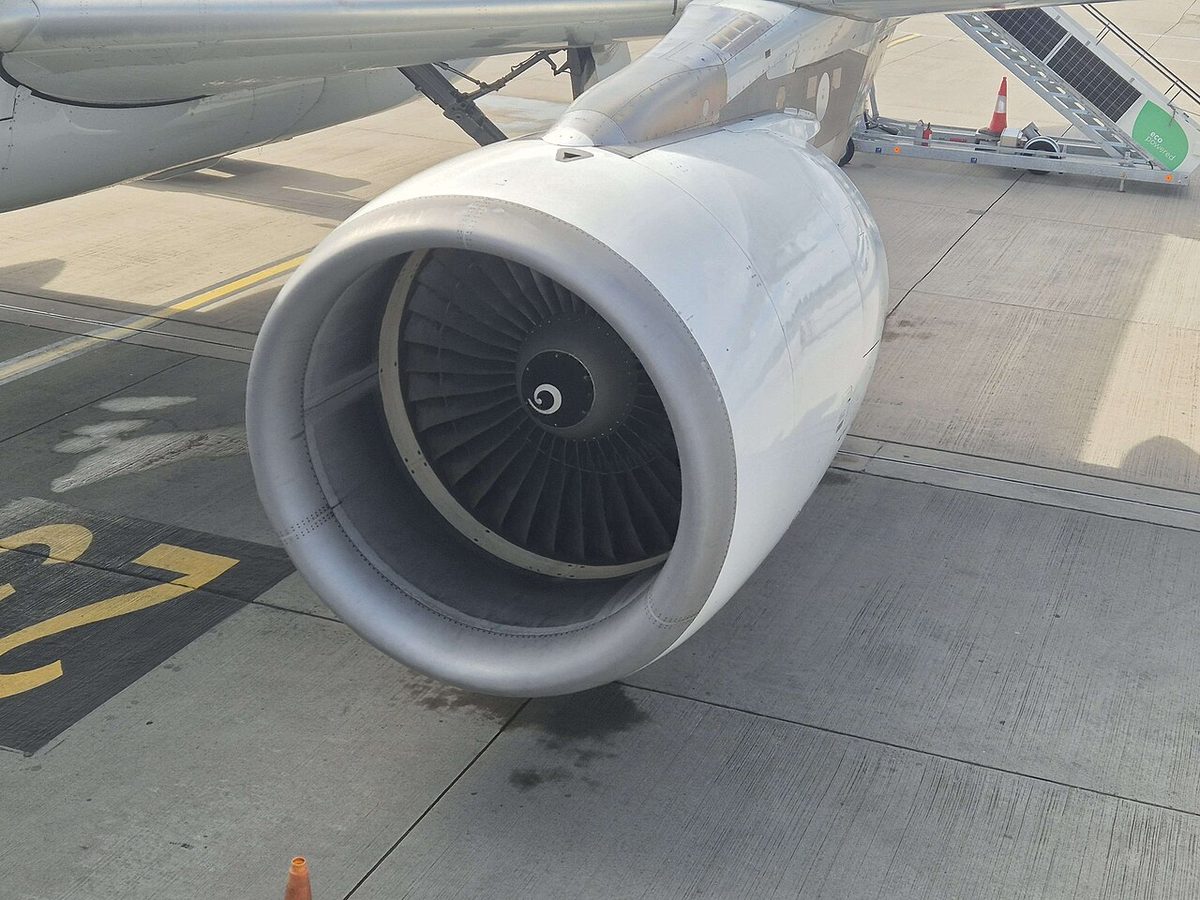
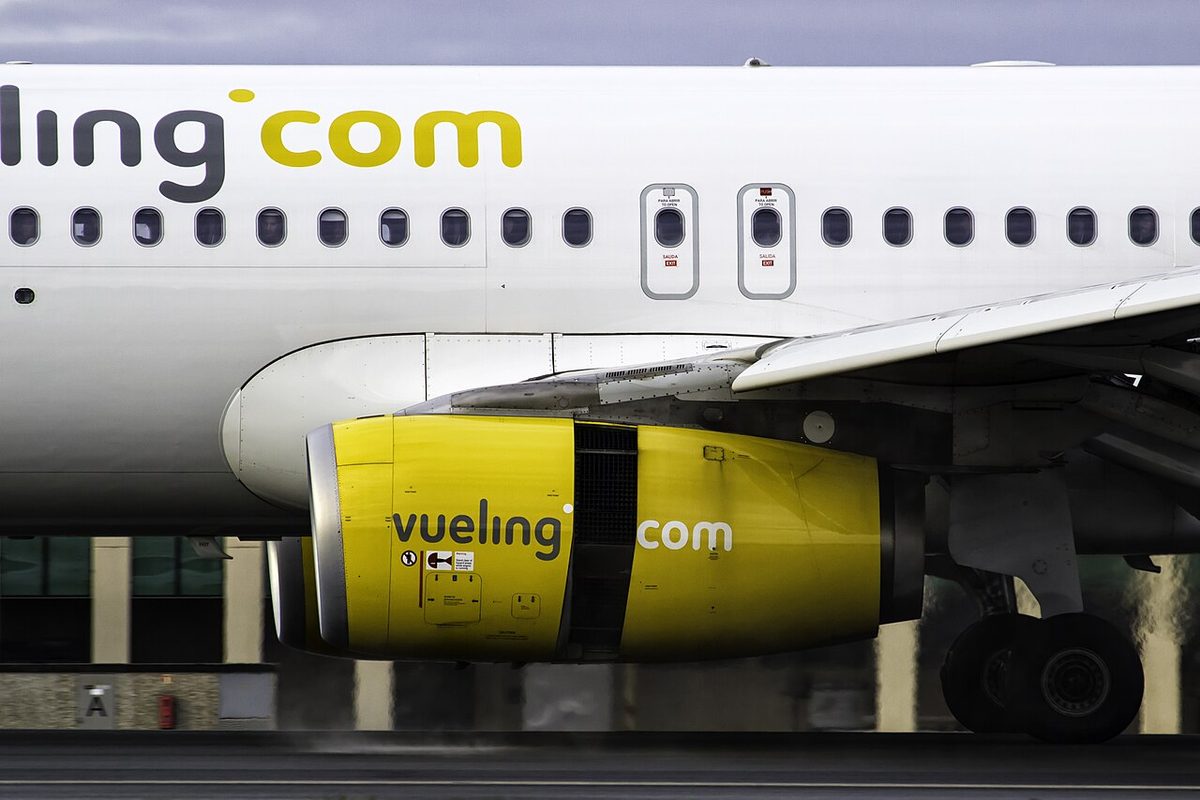
The current engine option (CEO) has two engine families, both high-bypass turbofans in the 22,000 to 27,000 lbf class: the CFM56-5A on the A320-211 and -212 and the CFM56-5B on the -214, -215 and -216, or the V2500-A1 on the A320-231 and the V2527-A5 on the -232 and -233. The new engine option (NEO) has the LEAP-1A or the PW1100G-JM, and only the PW1100G-JM is a geared turbofan. In the type certificate's engine lists the middle digit of the model number follows the maker, 1 for the CFM56, 3 for the V2500, 5 for the LEAP-1A and 7 for the PW1100G-JM, so an A320-272N has Pratt & Whitney engines. It is a consistent pattern, not a published rule.
| CFM56-5B | IAE V2500-A5 | |
|---|---|---|
| Thrust-setting parameter | N1 | EPR, N1 shown as a secondary indication |
| Bypass ratio | About 5.9 | About 4.6 |
| EGT limit at take-off | 950 °C | 635 °C |
| FADEC computer | Electronic control unit (ECU) | Electronic engine control (EEC) |
| Thrust reverser | Four pivoting doors | Cascades uncovered by a translating sleeve |
The lower V2500 figure does not mean the engine runs cooler: its EGT probes sit at a different station, and the limit belongs to the probe.

The CFM56-5B is a two-spool engine. Its N1 rotor is a single-stage fan and a four-stage LP compressor driven by a four-stage LP turbine; its N2 rotor is a nine-stage HP compressor driven by a single-stage HP turbine. The annular combustion chamber has 20 fuel nozzles and two igniters.
For the neo, EASA lists new pylons, engine mounts and nacelles, a new engine bleed air system and a new engine interface unit among the changes. Much of the cockpit logic is the ceo's, such as the oil temperature digits that pulse green above the steady limit and turn amber beyond the permitted time, but every number is engine-specific and comes from the neo FCOM. The FAA's Flight Standardization Board report requires differences training between engine makes, although the type rating does not change.
FADEC and EIU
Each engine has one FADEC, a two-channel computer on the engine fan case. Channels A and B process the same inputs; one controls the engine and the other stands by, ready to take over. The FADEC meters the fuel, positions the variable stator vanes and variable bleed valves, controls ignition and the start sequence, runs the reverser logic and protects the engine. The thrust levers send it only an electrical thrust lever angle, which it treats as the crew's demand.
N1 and N2 are protected against overspeed at all times, so the engines cannot be overboosted by pushing the levers to TOGA. EGT is protected only during automatic starts on the ground; in flight it is the crew's to watch. The FADEC acts through the hydromechanical unit (HMU), whose torque motors move the fuel metering valve, and on the CFM56-5B an overspeed governor independent of the FADEC opens the fuel bypass valve if N2 exceeds 107.2 %. Shutdown does not depend on the FADEC either: the ENG MASTER switch at OFF closes the LP and HP fuel valves directly and resets both channels, and releasing the ENG FIRE pushbutton closes the LP valve.
The FADEC becomes self-powered by its own engine-driven alternator at 15 % N2. Below that, or if the alternator fails, it uses aircraft 28 V DC, channel A of both FADECs coming from the DC ESS bus in the emergency electrical configuration. With the engine stopped, aircraft power reaches the FADEC for 5 minutes after the aircraft is first energised, for 5 minutes after the ENG MASTER is set OFF, and while the ENG MODE selector is at IGN/START; returning it to NORM before a start cuts the supply. The FADEC GND PWR pushbutton on the maintenance panel also powers it, but only while the ENG FIRE pushbutton has not been released.
The aircraft also has two engine interface units (EIUs), units separate from the FADECs. The cabin pressure controllers take EIU signals, and when low bleed pressure stops the packs meeting a cooling demand, the air conditioning controllers ask both EIUs to raise the engines' minimum idle. Idle is managed: modulated idle, set by bleed demand, in flight with the flaps retracted and on the ground with reverse not selected; approach idle, set by altitude, in flight with the flaps extended, so that the engines accelerate quickly to go-around thrust (see thrust levers, idle modes and engine handling).
ENG MASTER and ENG MODE controls
Each engine has an ENG MASTER switch on the pedestal, and one ENG MODE selector, with CRANK, NORM and IGN/START, serves both engines. The ENG panel on the overhead adds a MAN START pushbutton per engine. An ENG MASTER at ON opens the engine's LP fuel valve and, on the ground, resets the fuel used indication. In flight the pilots cross-check before touching an ENG MASTER.
The amber ENG MASTER FAULT light, with an ECAM caution, shows an automatic start abort or an HP fuel valve that disagrees with its command. IGN/START also gives continuous ignition, selected for take-off from a runway with standing water, in heavy rain or severe turbulence, and in an emergency descent. Continuous ignition comes on automatically with engine anti-ice ON and after a flameout in flight, and a green IGNITION memo shows it.
Engine 2 is usually started first, because its yellow hydraulic system pressurises the parking brake. The preferred air source is the APU bleed, then an HP ground cart, then crossbleed; APU bleed and the HP air start unit are never used together. The engines start whatever the thrust lever position, so a lever left forward gives a rapid thrust increase, and each engine runs at or near idle for at least 2 minutes before high power.
Automatic engine start
The automatic engine start is the normal method:
- Selecting IGN/START powers the FADECs, closes the pack valves and calls the ENG page. With the ENG MASTER ON, the FADEC opens the start valve and N2 rises.
- At 16 % N2 one igniter fires; the FADEC alternates channel and igniter over successive starts (channel A with igniter A, then B with A, A with B and B with B).
- At 22 % N2 the HP fuel valve opens, and light-off shows as a rising EGT.
- At 50 % N2 the start valve closes, the igniter stops, the APU returns to normal speed and the grey background behind N2 disappears.
- The pack valves reopen 30 seconds later, unless the other engine is being started.
If no ENG MASTER is set ON within 30 seconds of selecting IGN/START, the packs reopen. Up to three automatic attempts count as one starter cycle; ground cycles need a 20-second pause, four failed cycles 15 minutes of cooling, and the starter is not engaged with N2 above 20 %. In flight, both igniters fire as soon as the ENG MASTER is ON, the HP fuel valve opens at 15 % N2, and there is no automatic abort.
Manual engine start
In a manual engine start, with IGN/START selected, the MAN START pushbutton opens the start valve, which it does only below 20 % N2. At maximum cranking, at least 20 % N2, the crew set the ENG MASTER ON: both igniters fire, the LP and HP fuel valves open and the fuel used resets. The FADEC still meters the fuel, closes the start valve and cuts the ignition, but on the ground it aborts only if the start EGT limit is exceeded before 50 % N2.
A manual start stopped after the ENG MASTER is ON ends with MAN START and ENG MASTER OFF, then a dry crank to clear the fuel vapour: ENG MASTER OFF, ENG MODE at CRANK and MAN START ON, stopped by setting MAN START OFF.
Start protections and auto abort
An automatic start abort follows a hot start, an overtemperature, a stalled start or no light-off during an automatic ground start. The FADEC closes the HP fuel valve and the start valve, cuts the ignition, dry cranks the engine as long as the ENG MASTER stays ON, and manages any further attempt; the FAULT light comes on. The ENG START FAULT alert covers no light-up, a stall or an overtemperature above 725 °C, starter time exceeded, a thrust lever not at idle and low start air pressure. The start EGT limit is 725 °C on the CFM56-5B and 635 °C on the V2500-A5.
Warning: the automatic abort works only on the ground. In an in-flight start, and in a manual start except for an early overtemperature, the crew must monitor the parameters and abort the start themselves.
Thrust reversers
Reverse is selected by pulling up the reverser latching lever on the front of each thrust lever to pass the forward idle stop. The CFM56-5B reverser turns only the cold fan stream, with four pivoting blocker doors, each with its own actuator and latch, under a hydraulic control unit (HCU); the V2500 has a cascade reverser. Engine 1's reverser uses green hydraulic pressure and engine 2's yellow.
Deployment needs both main landing gear compressed, a reverse signal from at least one SEC and one FADEC channel operating. It takes less than 2 seconds, and until it is complete the FADEC holds reverse idle, which gives slightly more thrust than forward idle; the top reverse rating is maximum reverse (MREV). The REV indication is amber while a door is unstowed and green when all four are fully deployed.
The FADEC idle protection commands idle, with reverse not selected, if all four doors are unstowed, or if one door is unstowed or its position indefinite with pressure in the HCU. Auto restow is fully inhibited in flight and on the ground above 70 % N1. A door unlocked in flight gives ENG REVERSE UNLOCKED, with the REV indication flashing for 9 seconds, and pressure in a stowed reverser without a deploy order gives ENG REV PRESSURIZED. Reverse is prohibited in flight and for backing; maximum reverse is not used below 70 kt, idle reverse is allowed to a stop, and the reversers are stowed at taxi speed, or 25 kt on snow.
Engine indications and vibration monitoring
The engine/warning display permanently shows N1 (EPR on the V2500), EGT, N2 and fuel flow, the thrust limit mode, the N1 rating limit, the FLEX temperature and a green IDLE that flashes for 10 seconds when both engines reach idle. The ENG system page adds fuel used, oil quantity, pressure and temperature, vibration and, during a start, start valve, ignition and bleed pressure; nacelle temperature appears above 240 °C.
| Parameter (CFM56-5B) | Indication |
|---|---|
| N1 | Red above 104 %; a red mark keeps the highest value until a ground start or a maintenance action |
| N2 | Red, with a red cross, above 105 % |
| EGT | Amber index at 725 °C during start and 915 °C when running; red above 950 °C |
| Oil quantity | Pulses below 3 qt; at least 9.5 qt plus estimated consumption before flight |
| Oil pressure | ENG OIL LO PR warning at 13 psi |
| Oil temperature | Pulses above 140 °C; ENG OIL HI TEMP above 140 °C for 15 minutes or at 155 °C |
| Vibration | Pulses above 6 units for N1 and 4.3 units for N2 |
The EGT does not pulse above 915 °C during a FLEX take-off, with a lever above MCT, at maximum reverse or in alpha floor. Exceeding the N1, N2 or EGT red line triggers an ENG OVER LIMIT warning.
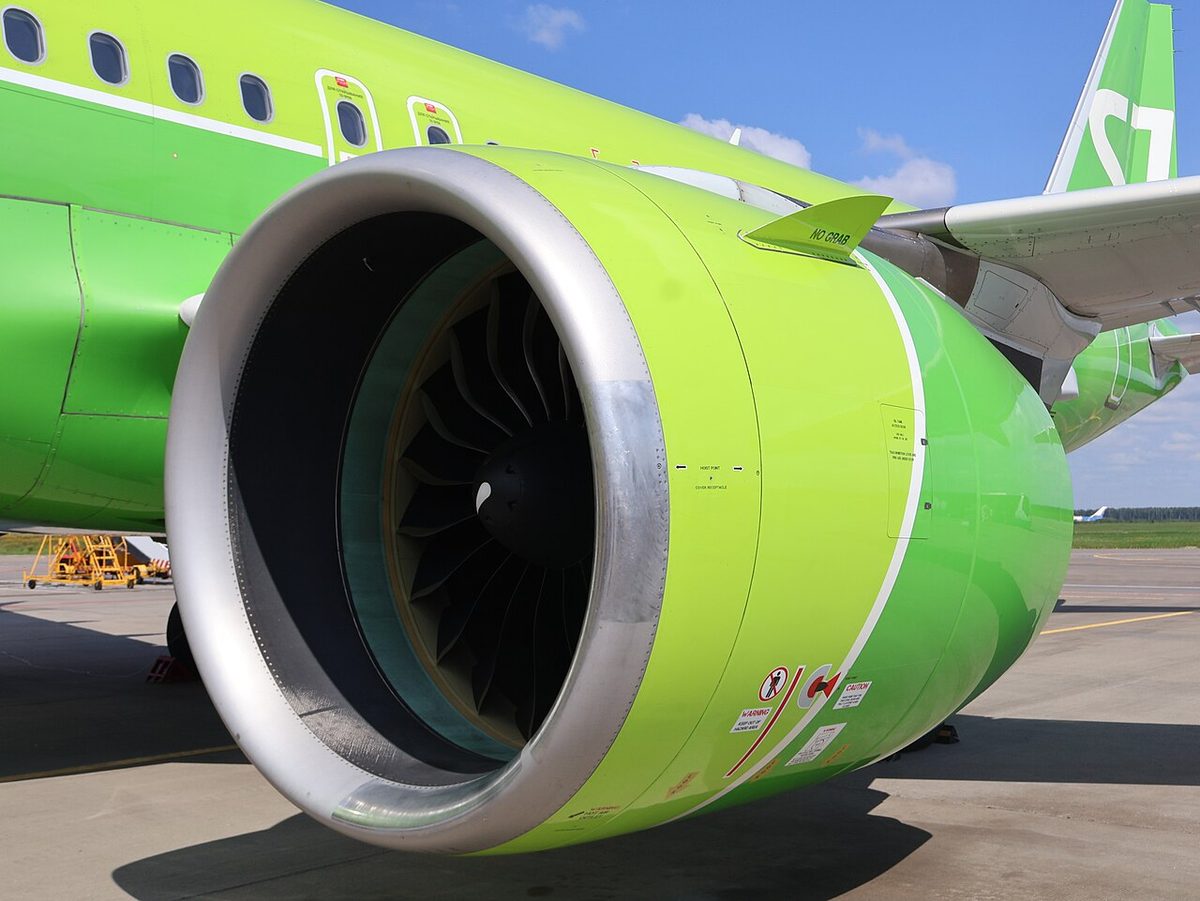
Accelerometers on the engine casing give VIB N1 and VIB N2. High N1 vibration points to the fan, through imbalance, foreign object damage or a damaged blade; high N2 vibration to the core. The engine vibration monitoring unit (EVMU) is another unit, separate from the FADEC, the EIU and the HMU. An MCDU procedure can lower the vibration advisory threshold to the last flight's level so that a gradual rise shows early, as part of engine condition monitoring.
Frequently asked questions
Which engines are fitted to the A320 family?
The A320ceo has either the CFM International CFM56-5, the -5A or -5B, or the IAE V2500, the -A1 or -A5, both high-bypass turbofans in the 22,000 to 27,000 lbf class. The A320neo has the CFM LEAP-1A or the Pratt & Whitney PW1100G-JM, of which only the PW1100G-JM is a geared turbofan. The CFM56 is set by N1, the V2500 by EPR, and each engine has its own limits.
What does the FADEC control on the A320?
Each engine has a two-channel FADEC, one channel active and the other in standby. It meters the fuel, positions the variable stator vanes and bleed valves, controls ignition and the start sequence, runs the reverser logic and protects N1 and N2 against overspeed at all times. It protects EGT only during automatic starts on the ground, so in flight the crew must watch the EGT.
How does an automatic engine start work on the A320?
With the ENG MODE selector at IGN/START and the ENG MASTER switch ON, the FADEC opens the start valve. On the ground one igniter fires at 16 % N2 and the HP fuel valve opens at 22 %. At 50 % N2 the start valve closes and ignition stops. On the ground the FADEC aborts the start by itself, and dry cranks the engine, for a hot start, overtemperature, stall or no light-off.
What is the difference between an automatic and a manual start on the A320?
In a manual start the crew opens the start valve with the MAN START pushbutton and sets the ENG MASTER ON at maximum cranking, at least 20 % N2, when both igniters fire and fuel flows. The FADEC still meters fuel and closes the start valve, but it aborts only on the ground if the start EGT limit is exceeded before 50 % N2. All other abnormal starts must be stopped by the crew.
When is the A320 FADEC powered on the ground?
Once N2 reaches 15 % the FADEC runs on its own engine-driven alternator. With the engine stopped it takes aircraft power for 5 minutes after the aircraft is first energised, for 5 minutes after the ENG MASTER is set OFF, whenever the ENG MODE selector is at IGN/START, and when maintenance uses the FADEC GND PWR pushbutton, which works only if the ENG FIRE pushbutton has not been released.
Test yourself on A320 Engines and FADEC
The v1prep banks cover this topic in the A320 type-rating bank, with a worked explanation for every answer. EASA ATPL, PPL, IR and CPL, the FAA written tests and A320/B737 type ratings.
Start practising →Sources and further reading
- EASA Type-Certificate Data Sheet EASA.A.064, Airbus A318/A319/A320/A321 (engines)
- EASA Type-Certificate Data Sheet EASA.A.064, Airbus A318/A319/A320/A321 (special condition P-01, FADEC)
- EASA TCDS EASA.A.064, Annex I, Special Conditions and Equivalent Safety Findings (P-1002 and P-3008 Thrust Reverser Autorestow, E-51 Oil Temperature Indication)
- EASA Easy Access Rules for Engines (CS-E)
- 14 CFR 25.933, Reversing systems
- FAA Aviation Maintenance Technician Handbook, Powerplant (FAA-H-8083-32B)
- EASA, Explanatory Note to ED Decision 2018/001/R, Part-FCL theoretical knowledge learning objectives (021 Powerplant)
Library articles are written for study and exam preparation. They do not replace your aircraft's approved documentation, your operator's procedures or the regulations themselves.