Workload Management
Workload management is the planning, prioritisation, distribution and deliberate shedding of tasks so that the mental and physical demands of a flight stay within the capacity of the pilot or crew, avoiding both overload and underload.
Workload is the total demand that a flight places on a pilot, physical and above all mental, set against the capacity the pilot has to meet it. Workload management is the set of habits and techniques that keep the two in balance: preparing tasks before they are needed, deciding what matters most, sharing work between crew members and outside agencies, using automation sensibly and, when necessary, deliberately dropping what can wait.
Workload is rarely the direct cause of an accident, but it is behind many of the errors that lead to one. An overloaded pilot misses a radio call, forgets a checklist item or stops monitoring the flight path; an underloaded one drifts into inattention. Workload management appears in the EASA Human Performance and Limitations (040) syllabus, in CRM training for commercial crews, as an element of the European NOTECHS framework and as one of the pilot competencies in ICAO's evidence-based training, and, as task management, in the FAA's single-pilot resource management.
What workload is
Workload is not a property of the task alone. The same holding pattern can overload a newly qualified instrument pilot while an experienced instructor flies it with capacity to spare. With practice, scanning and aircraft control become skill-based behaviour that runs almost automatically and uses little attention, whereas a beginner performs the same actions at the slower, capacity-hungry rule-based or knowledge-based level. Fatigue, illness, stress and unfamiliarity all reduce capacity, so a given task weighs more on a bad day.
Workload also varies through the flight. It peaks around take-off and during the approach and landing, where tasks are many, time is short and the aircraft is close to the ground, and it is usually lowest in the cruise. The spare capacity a pilot keeps in reserve is what allows an unexpected event, a runway change or a system failure, to be absorbed without something else being dropped. Chronic stress from money, work or family problems quietly consumes that reserve, so an ordinary in-flight problem can tip a stressed pilot into overload.
Cognitive load and the limits of attention
Cognitive load is the mental part of workload: the demand placed on attention, working memory and decision-making. Human information processing has three bottlenecks that set its limits:
- A single-channel decision-maker. The central decision-maker handles one decision at a time. Apparent multi-tasking, such as flying while talking, works only because well-practised skills run as motor programmes without conscious thought, and switching between tasks itself costs time.
- A small working memory. Working memory holds about 7 ± 2 unrelated items, fewer under load, and loses them within about 10 to 20 seconds unless they are rehearsed. A second radio call or a configuration change can empty it, which is why a long clearance is written down.
- Limited attention. Attention is either selective, sampling inputs for relevance, or divided, time-shared between tasks. The mind always attends to something; the danger is attending to the wrong thing at the wrong time.
When the visual and manual channels are saturated, for example by hand-flying an RNP approach, auditory messages are often simply not processed, so the pilot misses ATC calls without being aware of it. Cognitive overload takes two forms: qualitative overload, where a task is too difficult, and quantitative overload, where too many responses are needed in the time available.
Underload and overload
The link between workload and performance runs through arousal, a person's readiness to respond. The Yerkes-Dodson relationship describes performance against arousal as an inverted U: poor when arousal is low, best at a moderate level, and poor again when it is high. The peak moves to a lower arousal as a task becomes more complex, so a difficult task starts to degrade at a level of pressure that a simple, well-practised task still tolerates.

Underload sits on the left of the curve. A long, quiet, automated sector drives arousal down: the scan slows, attention wanders, and vigilance for rare events decays. Monotony, low workload, repetitive tasks, constant noise, low lighting, warmth and isolation all promote hypovigilance, brief lapses resembling micro-sleeps. Boredom on long automated sectors can also erode handling skills. The countermeasure is to create structured work: a fixed scan cycle, regular fuel and systems checks, log entries, position and weather updates, and planning for the descent.
Overload sits on the right. Its symptoms are a sharp drop in performance, a funnelling of attention onto one source of information, regression to old, over-learned habits and procedures, mental blocks, and in the extreme restlessness, trembling and panic. High arousal also shifts the balance between speed and accuracy: responses become faster but less accurate.
Exam tip: in EASA questions, performance against arousal is an inverted U, both extremes are bad, and the optimum arousal is lower for a complex task than for a simple one. Qualitative overload is a task too difficult; quantitative overload is too many responses for the time available.
Task saturation
Task saturation is the point at which the tasks in hand exceed the pilot's capacity in the time available. Because conscious processing is essentially single-channel, the surplus is shed without any deliberate choice, often without the pilot noticing, and the task dropped is not necessarily the least important. Pilots have flown serviceable aircraft into the ground while their whole attention was on a minor problem. Task saturation during the arrival is a recognised precursor to altitude deviations, runway incursions and unstable approaches.
Two attention failures often accompany it. Channelised attention (fixation) concentrates every resource on one source of information to the exclusion of the rest: a pilot uncertain of position spends minutes head-down with the chart and looks up to find the aircraft off heading and several hundred feet low. Cognitive lockup is the failure to switch to a more urgent task when priorities change, most likely when the current task is absorbing and partly succeeding.
On 29 December 1972 Eastern Air Lines Flight 401, a Lockheed L-1011, crashed into the Florida Everglades while the flight crew were preoccupied with a nose gear position light that had failed to illuminate. The aircraft had been levelled at 2,000 ft on autopilot; the altitude hold was disengaged, probably inadvertently, a slow descent began, and nobody was monitoring the flight path. The accident is still used to teach that one pilot must fly the aircraft whatever else is happening.
Getting behind the aircraft
Getting behind the aircraft, one of the FAA's listed operational pitfalls, describes a pilot whose actions are being dictated by events instead of the other way round. Its signs are familiar to any instructor: constant surprise at what happens next, hurried speech and actions, rushed or skipped checks, late configuration, radio calls answered late, and targets such as altitudes and speeds not met on time. A pilot who is behind cannot project ahead, so situational awareness is lost at the same time.
Staying ahead of the aircraft is mostly done before the busy phase begins. Workload during an approach cannot be reduced, but it can be moved: obtaining the ATIS, loading and checking the procedure, setting frequencies and minima, and briefing the missed approach during the cruise leaves only flying, monitoring and communicating for the approach itself. A late change from ATC then becomes a small edit to a prepared plan. When a pilot expects to be short of time, the best protection is to prepare the decision in advance, through thorough flight preparation and a briefing before each high-risk phase.
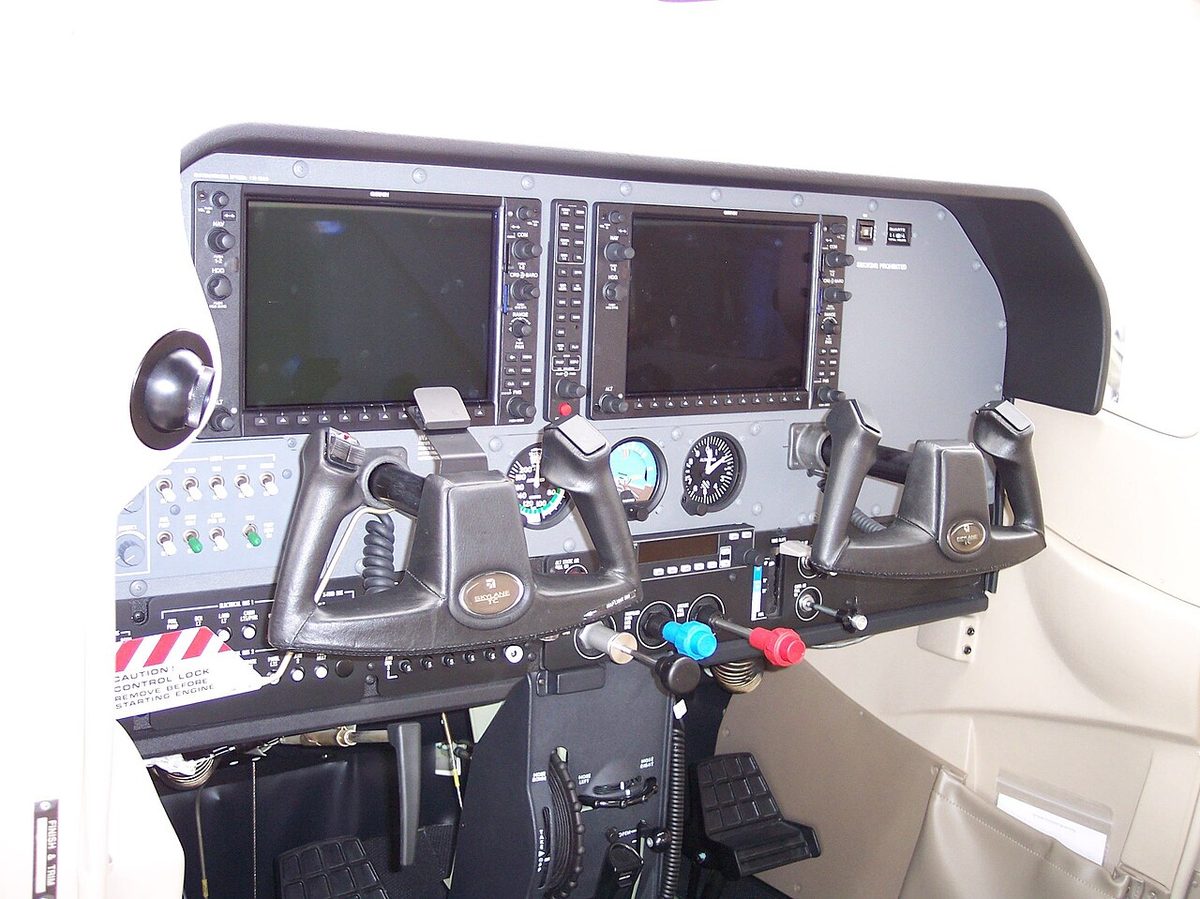
Task management and prioritisation
Task management decides which tasks are done, in what order and by whom. Its first rule is the priority aviate, navigate, communicate: control of the flight path comes first, because losing it kills faster than any navigation or communication lapse; navigation protects against terrain and airspace; and communication comes last, because ATC can wait.
Standard operating procedures reduce cognitive load by making routine actions habitual and by removing the question of how from critical phases, which frees capacity for threats. In a two-pilot crew, the pilot flying flies and the pilot monitoring handles radio, checklists and configuration, and either can take a task from the other. During the implementation of a decision the commander assigns tasks to the crew, and to outside agencies such as ATC for traffic information, holding or a diversion, then supervises the result. In high-workload phases short, closed questions transfer specific information quickly, and the FAA's sterile flight deck rule (14 CFR 121.542) bans non-essential activity during critical phases, including taxi, take-off, landing and flight below 10,000 ft except cruise.
Automation is a workload tool. Engaging the autopilot early on a busy single-pilot arrival releases capacity for briefing, checklists and threat assessment. But automation changes the nature of workload rather than removing it: active control is replaced by monitoring, a task humans perform badly, so mode changes and errors tend to be noticed late unless the pilot actively confirms what the aircraft is doing. When the automation does something unexpected under high workload, reverting to a lower level of automation is usually quicker than reprogramming (see flight deck automation).
Task shedding
Task shedding is the deliberate removal or deferral of tasks so that capacity is kept for the ones that matter. Deliberate shedding is safe; the unconscious shedding of task saturation is not, because it removes tasks at random. The aviate, navigate, communicate rule is useful precisely because it authorises a pilot to give tasks away. A single pilot in cloud whose alternator warning comes on while copying a complex re-route should keep control of the aircraft, tell ATC to stand by, and only then work the electrical problem.
Practical ways to shed or defer tasks include:
- asking ATC for a hold, delayed vectors, a longer final or a wider circuit;
- postponing paperwork, non-essential radio calls and cabin announcements;
- handing a task to the other pilot, or to a briefed passenger in single-pilot operations, for example a traffic lookout;
- making time: in flight, time rarely forces a very quick decision except close to the ground, and a crew can usually gain it by holding, going around, delaying the take-off, reducing speed or diverting.
A crew member who is overloaded can no longer process information, fly accurately or learn. The remedy is to reduce that person's workload, at least temporarily, until they are effective again. Because an overloaded pilot may also stop listening, a colleague may need to gain attention by changing the form of address, using the rank rather than the first name, or by touch.
Warning: the one task that can never be shed is flying the aircraft. Before working any problem, put the aircraft in a safe, stable state, at a safe altitude, on a known heading or in a hold, and make sure someone is clearly responsible for the flight path.
Frequently asked questions
What is workload management in aviation?
Workload management is the deliberate control of what a pilot or crew is trying to do at any moment, so that the demands of the flight never exceed their mental capacity. It means preparing tasks early, in quiet phases, prioritising in the order aviate, navigate, communicate, sharing tasks between crew members and with ATC, using automation sensibly, and shedding or deferring low-priority tasks when the load becomes too high.
What is task saturation?
Task saturation is the state in which a pilot has more tasks than can be handled in the time available. Because conscious attention works essentially as a single channel, the surplus tasks are dropped, often without the pilot noticing which ones, and the task dropped is not necessarily the least important. Task saturation on arrival is a common precursor to altitude deviations, runway incursions and unstable approaches.
What does getting behind the aircraft mean?
A pilot is behind the aircraft when events are dictating the pilot's actions instead of the pilot controlling events. Typical signs are surprise at what the aircraft does next, rushed or missed checklists, late configuration changes and radio calls answered late. The FAA lists it among its operational pitfalls. The cure is to reduce the demand, for example by asking for a hold or delay, and to prepare future tasks during low-workload phases.
Why is low workload dangerous for pilots?
Performance is poor at both ends of the arousal curve. A long, quiet, automated cruise lowers arousal, so the scan slows, attention wanders and rare events such as a missed radio call or a slowly developing fuel imbalance go unnoticed. Monotony and low workload also promote hypovigilance, brief sleep-like lapses. Pilots counter underload by creating structured work, such as regular fuel and systems checks, position updates and planning for the next phase.
What is task shedding?
Task shedding is the deliberate removal or deferral of lower-priority tasks so that capacity is kept for the tasks that matter most, above all flying the aircraft. Examples are telling ATC to stand by, asking for a hold, delayed vectors or a wider circuit, postponing paperwork or a cabin announcement, and handing a task to the other pilot. Done deliberately it protects safety; done unconsciously under overload it removes tasks at random.
Test yourself on Workload Management
The v1prep banks cover this topic in Human Performance and Limitations (040), with a worked explanation for every answer. EASA ATPL, PPL, IR and CPL, the FAA written tests and A320/B737 type ratings.
Start practising →Sources and further reading
- UK CAA CAP 737, Flight-crew human factors handbook
- FAA Pilot's Handbook of Aeronautical Knowledge (FAA-H-8083-25), Chapter 2, Aeronautical Decision-Making
- FAA Risk Management Handbook (FAA-H-8083-2A), single-pilot resource management and task management
- ICAO Doc 9683, Human Factors Training Manual
- EASA Easy Access Rules for Air Operations (ORO.FC.115, ORO.FC.215 and AMC on CRM training)
- NTSB AAR-73-14, Eastern Air Lines Flight 401, Miami, Florida, 29 December 1972
Library articles are written for study and exam preparation. They do not replace your aircraft's approved documentation, your operator's procedures or the regulations themselves.