Situational Awareness
Situational awareness (SA) is a pilot's or crew's accurate, up-to-date understanding of what is happening to the aircraft and around it: perceiving the relevant elements, comprehending what they mean, and projecting what they will do in the near future.
Situational awareness (SA) is the pilot's picture of what is going on: where the aircraft is, what it is doing and why, what is happening around it, and what is about to happen. Every decision in flight is made on the basis of that picture, so a decision can only be as good as the awareness behind it. When the picture is wrong, a competent crew can fly a serviceable aircraft into terrain, into another aircraft or out of fuel while believing that all is well.
The concept grew out of military aviation, where fighter crews came to see it as decisive in air combat, and was given its best-known structure by the human factors researcher Mica Endsley. It is examined in the EASA Human Performance and Limitations (040) syllabus and in FAA knowledge tests, it is one of the four NOTECHS categories used to assess European airline pilots (where it is called situation awareness), and it is one of the six components of the FAA's single-pilot resource management.
Defining situational awareness
Endsley's widely quoted definition describes SA as "the perception of the elements in the environment within a volume of time and space, the comprehension of their meaning, and the projection of their status in the near future" (Endsley, 1995). Two points follow from it. SA is a state of knowledge, distinct from the processes (scanning, listening, briefing) that build it. And it is always relative to the task: what a pilot needs to know on a night approach into a mountain airfield differs from what matters in the oceanic cruise.
For a flight crew the picture covers several domains:
- The aircraft: position, altitude, speed and energy, configuration, systems state, fuel, and the active automation modes.
- The environment: terrain and obstacles, weather, traffic, airspace, the airport and runway, and ATC instructions.
- Time: how long each task, each option and the remaining fuel will last.
- The crew: the other pilot's workload and understanding, and each crew member's own fatigue, stress and performance.
Human performance texts list the factors on which SA depends as vigilance, alertness, communication, overall comprehension and the briefing of the crew. NOTECHS breaks situation awareness into awareness of aircraft systems, of the external environment and of time.
Endsley's three levels
Endsley's model arranges SA in three levels, each built on the one below.
| Level | Question it answers | Example |
|---|---|---|
| 1. Perception | What is happening? | The ammeter shows a small discharge; ATC reports the destination visibility has dropped |
| 2. Comprehension | What does it mean? | The alternator has failed and the aircraft is running on the battery alone |
| 3. Projection | What will happen next? | The battery will not last until the destination, so a diversion is needed while radios and lights still work |
A failure can occur at any level. A pilot who never glances at the ammeter fails at level 1. One who reads the discharge correctly but does not connect it with the electrical system fails at level 2. One who understands the failure but does not work out how long the battery will last fails at level 3. Projection is where problems are cheapest to solve, because they are recognised before they exist. A pilot who compares fuel remaining with the groundspeed into a stronger-than-forecast headwind and concludes that arrival fuel will fall below final reserve has reached level 3 while there is still time to divert calmly. A pilot who stops at comprehension is accurate about the present but always late in acting.
Exam tip: the three levels are always perception, comprehension and projection, in that order. Questions usually describe a scenario and ask which level has been reached or has failed: reading an instrument is level 1, understanding its meaning is level 2, predicting the consequence is level 3.
Mental models
Pilots combine information from many sources, instruments, radio, the view outside, charts, briefings and experience, into a mental model: an internal picture of what they believe reality to be. A pilot with good SA has worked to build a model that matches reality. Experience, expectation and the briefing all shape it.
Mental models make fast, efficient flying possible, but they also resist change. Perception is not a passive recording: the brain completes incoming information from context and expectation, so a pilot expecting a clearance to 3,000 ft may hear 3,000 when the controller said 5,000, and read it back with complete conviction. Once a model is formed, confirmation bias leads the pilot to notice evidence that supports it and discount evidence that does not (see cognitive biases). Incomplete or inaccurate mental models are also a recognised source of knowledge-based errors in unfamiliar situations.
The standard guidance for keeping a model honest is summed up as "hope for the best, but plan for the worst": gather as much information as possible, consider all interpretations, check that the working hypothesis still fits the data, do not disregard contradictory information, and see the world as it is rather than as one would like it to be.
Shared mental models
In a multi-crew aircraft, awareness must be shared as well as individual. A shared mental model is a common understanding, across the crew, of the situation, the plan, the threats and the division of tasks. Briefings exist largely to build it: a good approach briefing turns two individual plans into one, covering the procedure, minima, missed approach, energy management, threats and what will trigger a go-around, so that either pilot can recognise a deviation.
Sharing matters because it is unlikely that two crew members will hold the same incorrect model. Constant communication to check and compare models is therefore one of the best ways to detect an error. Simulator research found that the crews who performed best systematically confirmed messages from ATC and from each other, and failed confirmation of messages can be the main cause of a gradual deterioration in SA. A leading question such as "that's the town down there, isn't it?" usually signals that the questioner's model is wavering and that confirmation, rather than independent assessment, is being sought. Standard callouts, closed-loop communication and crew resource management keep the models synchronised.
Monitoring failures
A monitoring failure occurs when relevant information is available but nobody is watching it. Monitoring is the process that feeds level 1 awareness, and in a two-pilot crew it is a defined job: FAA guidance introduced the term pilot monitoring to stress that the non-flying pilot's primary duty is to watch the flight path and configuration against the plan and to call deviations. A 1994 NTSB safety study of 37 major accidents and incidents involving the flight crews of US air carriers between 1978 and 1990 found inadequate monitoring or challenging in 84 % of them. Monitoring is also where most awareness failures begin: an analysis of reports to NASA's Aviation Safety Reporting System (Jones and Endsley, 1996) classed about three quarters of SA errors as level 1, and the largest single category was a failure to monitor or observe information that was available.
Monitoring fails for predictable reasons:
- Humans are poor at sustained monitoring of a system that is usually right. Trust grows, sampling slows and the pilot drifts out of the loop, so an error or a mode change is discovered from the flight path instead of from the annunciator.
- Automation complacency, an over-reliance on automation whose classic symptom is passive monitoring, and blinkered concentration, becoming so absorbed in one readout that the wider picture is lost.
- Loss of mode awareness, as when an autopilot is left in a navigation mode without the approach mode armed and the pilot notices only when the localiser has gone to full-scale deflection.
- Scanning errors in instrument flight: fixation on one instrument, omission of one from the scan, and emphasis on one instrument at the expense of the others.
- Workload and fixation, when both pilots turn to the same problem and nobody flies (see workload management).
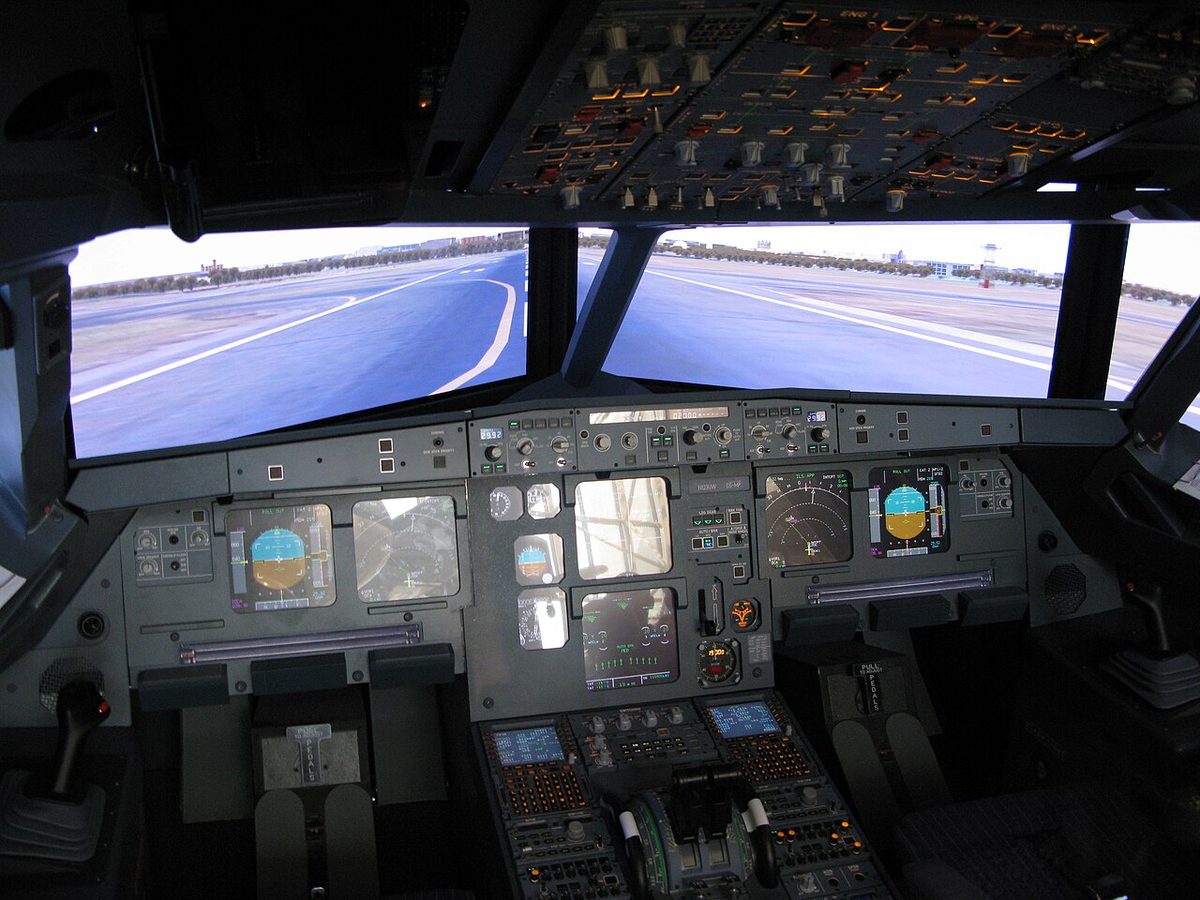
Eastern Air Lines Flight 401 is the classic case. On 29 December 1972 the Lockheed L-1011 was held at 2,000 ft on autopilot near Miami while the crew investigated a nose gear light that had not illuminated. The altitude hold was disengaged, probably inadvertently, and the aircraft began a slow descent that none of the crew noticed, even when an altitude alert sounded. It struck the Everglades. Every item of information needed to prevent the accident was displayed in the cockpit; nobody was looking at it.
Signs of lost awareness
Loss of SA rarely announces itself, because the pilot who has lost it feels no different. Crews are therefore taught to recognise behavioural cues, in themselves and in each other:
- confusion, ambiguity, or a feeling that something is not right;
- fixation on a single item, instrument or problem;
- unresolved discrepancies between instruments, charts or other sources;
- hurried speech and actions, rushed checks and abnormal impatience;
- departures from standard procedures and short cuts;
- targets such as altitudes, speeds, times and fuel figures not being met;
- leading questions to other crew members;
- nobody monitoring the flight path while a problem is worked, or nobody clearly flying the aircraft.
The FAA includes loss of positional or situational awareness among its operational pitfalls, describing it as the extreme result of getting behind the aircraft: the pilot may not know where the aircraft is, or may be unable to recognise that circumstances are deteriorating.

Maintaining situational awareness
SA is protected mainly by what happens before it is needed. Thorough preparation and briefing, including the threats of the day, give the crew a model to compare reality against. Good workload management keeps spare capacity for monitoring and projection, and preparing tasks in the cruise keeps the crew ahead of the aircraft.
In flight, useful habits include an active scan that never dwells on one display; confirming every automation mode change on the flight mode annunciator and saying it aloud; cross-checking the navigation computer against raw data; comparing progress with the plan at regular points; and periodically stepping back to ask what the aircraft is doing, why, what it should be doing, and what will matter in ten minutes' time. Low-workload phases are the time to update the picture, not to switch off.
When SA has been lost, or may have been, the recovery follows a fixed order:
- Fly the aircraft. Stabilise it at a safe altitude, on a heading away from terrain and controlled airspace, or in a hold. The picture cannot be rebuilt while nobody is flying.
- Accept the loss. Say so: a crew member who says "I'm not sure where we are" has already started the recovery.
- Look for disaffirmation. Seek information that could prove the current picture wrong, rather than evidence that confirms it.
- Rebuild the model from one reliable source at a time, using all resources: the other pilot, the navigation displays, and ATC, whose radar picture and terrain information are available for the asking.
Note: European texts, including NOTECHS, often say situation awareness, as Endsley does, while FAA texts mostly say situational awareness. The concept and Endsley's three levels are the same in both.
Frequently asked questions
What is situational awareness in aviation?
Situational awareness is an accurate, current picture of the flight in the pilot's mind, covering the aircraft's position, energy, configuration, systems and automation modes, the weather, terrain, traffic and ATC situation, time and fuel, and the state of the crew. It is usually described with Endsley's three levels, perception, comprehension and projection, and it is the basis on which every decision in flight is made.
What are the three levels of situational awareness?
In Mica Endsley's model, level 1 is perception of the relevant elements, such as an instrument reading or an ATC call. Level 2 is comprehension of what those elements mean together, for example that a stronger headwind has put the destination beyond the fuel reserve. Level 3 is projection of what the situation will be in the near future, which allows problems to be solved early and without haste.
What are the signs of losing situational awareness?
Common cues are confusion or a sense that something is not right, fixation on one instrument or problem, unresolved discrepancies between sources, hurried speech and actions, rushed or skipped checklists, departures from standard procedures, targets such as altitudes and times not being met, leading questions to other crew members, and nobody clearly flying the aircraft. Any one of them should prompt a deliberate check of the picture.
What is a shared mental model?
A shared mental model is a common understanding, held by all crew members, of the situation, the plan, the threats and who does what. Briefings, standard callouts and closed-loop communication build it. It matters because two pilots are unlikely to hold the same wrong picture, so comparing models exposes errors. When crew members stop confirming messages, their pictures drift apart and awareness degrades gradually.
How should a pilot recover lost situational awareness?
First fly the aircraft into a safe, stable state, at a safe altitude and on a heading away from terrain and controlled airspace, or in a hold. Then accept that awareness may have been lost, look for information that disproves the current picture rather than confirms it, and rebuild the picture one reliable source at a time, using every resource, including the other pilot and ATC. Asking for help is a normal professional action.
Test yourself on Situational Awareness
The v1prep banks cover this topic in Human Performance and Limitations (040), with a worked explanation for every answer. EASA ATPL, PPL, IR and CPL, the FAA written tests and A320/B737 type ratings.
Start practising →Sources and further reading
- M. R. Endsley, Toward a Theory of Situation Awareness in Dynamic Systems, Human Factors 37(1), 1995
- D. G. Jones and M. R. Endsley, Sources of Situation Awareness Errors in Aviation, Aviation, Space, and Environmental Medicine 67(6), 1996
- UK CAA CAP 737, Flight-crew human factors handbook
- FAA Advisory Circular 120-71B, Standard Operating Procedures and Pilot Monitoring Duties
- FAA Pilot's Handbook of Aeronautical Knowledge (FAA-H-8083-25), Chapter 2, Aeronautical Decision-Making
- NTSB AAR-73-14, Eastern Air Lines Flight 401, Miami, Florida, 29 December 1972
- NTSB Safety Study SS-94/01, A Review of Flightcrew-Involved Major Accidents of U.S. Air Carriers, 1978 through 1990
- SKYbrary, Situational Awareness
Library articles are written for study and exam preparation. They do not replace your aircraft's approved documentation, your operator's procedures or the regulations themselves.