Probe Heat, Window Heat and Rain Protection
Probe heat keeps pitot probes, static ports, angle of attack sensors and temperature probes free of ice so that the air data stay valid. Window heat warms the flight deck windscreens against ice and misting, while wipers, rain repellent and hydrophobic coatings keep them clear in rain.
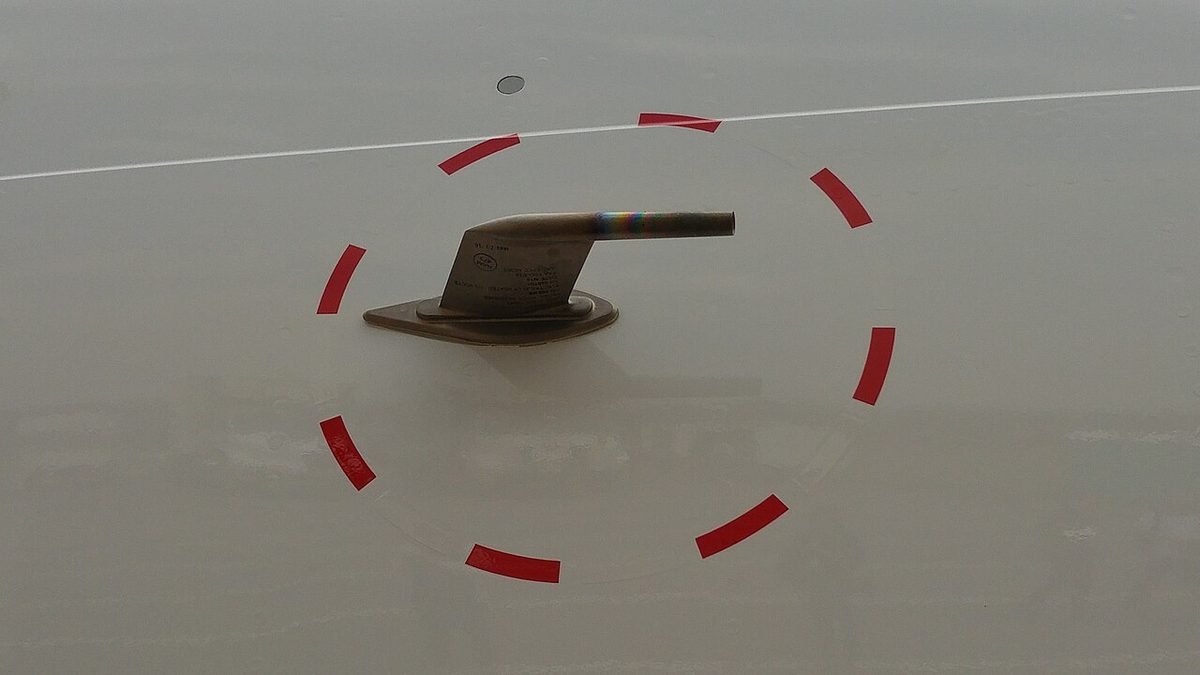
The smallest items on the outside of an aircraft are among the most important. A pitot probe a few centimetres long supplies the airspeed, and a static port the size of a coin supplies the altitude; if either ices over, the crew loses the information on which every other decision rests. The flight deck windows face a different problem: ice outside, mist inside and rain in front of the pilots' eyes at the moment they most need to see. Probe heat, window heat and the rain protection systems deal with all three.
All of them use electricity rather than bleed air, which is impractical for such small surfaces (see thermal anti-icing). Boeing groups them with the other systems of the 737 as anti-ice and rain systems: flight deck window heat, windshield wipers, engine and wing anti-ice, and probe and sensor heat. The wider picture is in ice protection and ice detection.
Probe heating
Small objects collect ice fastest. A probe has a small radius, so a large share of the droplets in its path strike it, and the same depth of ice is a large fraction of its size (see airframe icing). ATPL texts list the probes that are electrically heated on transport aircraft: pitot heads, angle of attack (alpha) probes, Q-feel probes for artificial feel, engine inlet pressure (P1) probes and total air temperature (TAT) probes. The heaters are elements inside the probe, and a caution warns the crew when a heater has failed or is off when it should be on.
The rules require it. CS 25.1323 and 14 CFR 25.1323 require each airspeed indicating system of a large aeroplane to have a heated pitot tube or an equivalent means of preventing malfunction due to icing (see pitot-static system). For light aeroplanes flown under IFR, the EU's Part-NCO calls for a means of preventing the airspeed indicating system from failing through condensation or icing, which in practice is a heated pitot. FAA approval for flight into known icing includes heated pitot and stall warning sensors.
How two common types do it:
| Airbus A320 | Boeing 737 NG | |
|---|---|---|
| Heated | 3 pitot probes, 6 static ports, 3 AOA sensors, 2 TAT probes | Pitot probes, TAT probe, alpha vanes; static ports not heated |
| Control | Automatic once one engine is running or in flight; the PROBE/WINDOW HEAT pushbutton forces it on before engine start | PROBE HEAT switches, ON before taxi; in AUTO both systems are powered when either engine is running |
| On the ground | Pitots at low power; TAT probes not heated | An amber light shows any probe not heated |
| Degraded power | Emergency electrical configuration: captain's probes only | Standby power: captain's pitot only, and its light does not show a failure |
The Embraer E190-E2 heats its four air data smart probes and two TAT probes with AC power. The A320's three probe heat computers, one each for the captain's, first officer's and standby probes, control and monitor the heaters. Its TAT probes are heated in flight only, so that the ground temperature indication stays accurate (see air data computer and air temperature). The A320 also heats its water drain masts, at low power on the ground and high power in flight, whenever electrical power is available.
Probe heat failures
A heater that fails in icing leaves the probe to ice like any unheated object. The consequences are those of a blocked pitot or static source. With the pitot inlet iced and the drain hole open, the trapped pressure leaks away and the airspeed falls towards zero. With inlet and drain both blocked, the airspeed indicator behaves like an altimeter, over-reading in a climb and under-reading in a descent. A blocked static port freezes the altimeter and returns the VSI to zero. The airspeed misbehaving while attitude and power are normal is the signature.
Heated probes can still be overwhelmed. On Air France 447 in 2009, ice crystals at FL350 obstructed the A330's pitot probes despite their heaters, the autopilot disconnected and the crew, who did not apply the unreliable airspeed procedure, stalled the aircraft (see unreliable airspeed). Procedures therefore check the heat early. In the A320's UNRELIABLE SPEED procedure the first action of the affected ADR identification is PROBE/WINDOW HEAT ON; in the 737 NG's Airspeed Unreliable checklist the first step after the recall items is to check the PROBE HEAT switches ON.
In a light aircraft, a pitot heat circuit breaker that trips and trips again after one reset is left out: the fault is real, and the pilot accepts the loss of the heater and leaves the icing conditions. Probe heaters are checked before flight, and a failed heater limits dispatch under the minimum equipment list.
Exam tip: pitot inlet blocked, drain open: airspeed falls to zero. Inlet and drain blocked: the ASI acts as an altimeter, over-reading in the climb. Pitot heat must be on before entering icing, not after the airspeed goes wrong.
Windshield heating
Flight deck windows are laminated: toughened glass panes bonded to a vinyl interlayer that stretches to absorb a bird strike (see bird strike and foreign object damage). Windshield heating, or windscreen heating, uses a transparent conductive film or coating within the laminate as a resistance element. A control element senses the glass temperature; when it reaches the normal operating value, the controller removes or reduces the power, and reapplies it when the glass cools. A separate overheat sensor, set higher, cuts the power and lights a warning if the controller fails, because excessive heat can delaminate or crack the panel; some systems then lock out until the switch is cycled.
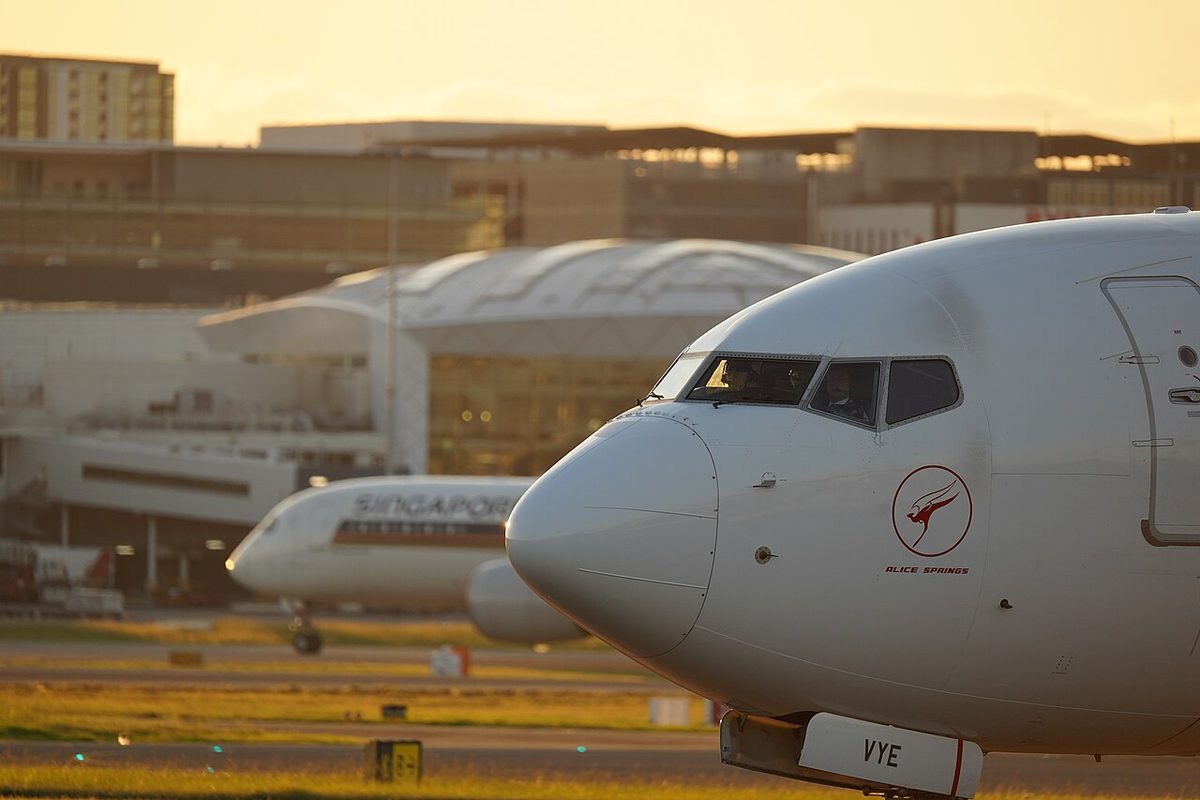
The heat does three jobs: it stops ice forming outside, prevents misting inside and, because warm glass is less brittle, keeps the panel at its strongest against a bird strike. On the 737 NG a conductive coating on the outer pane of windows 1 and 2 heats them against ice and fogging, and one on the inner pane of window 3 against fogging only. The FWD WINDOW HEAT switches control window 1 and the SIDE switches windows 2 and 3. A green ON light goes out when the window is at the correct temperature, and an amber OVERHEAT light comes on for an overheat, when power to windows 1 and 2 is removed automatically, or if the power is interrupted. A test switch can simulate an overheat (OVHT) or run a confidence test (PWR TEST).
On the A320 window heat computers heat the windshields at low power on the ground and normal power in flight, and the side windows at a single level. A windshield heat failure is a master caution, a side window failure only an advisory. On the E190-E2 each windshield has three heat sensors, for control, overheat detection and a spare, and WINDSHIELD 1 (2) HTR FAIL means a failure or an overheat. With only one AC source, windshield heat is inhibited on the ground and only the left windshield is heated in flight, or the right if the left has failed.
Windscreen demisting
Mist forms on the inside of a windscreen when warm, humid flight deck air meets glass chilled by the cold air outside. Windscreen demisting attacks it from both sides. The electrical heating keeps the glass itself warm, and warm conditioned air is ducted onto the inside of the windscreens. On the 737, pulling the WINDSHIELD AIR controls sends conditioned air to the No. 1 windows for defogging. Frost from a cold-soaked airframe descending into moist air can also cover the windscreen (see humidity and water vapour).
Windshield wipers
Transport aircraft have independent windshield wipers for each pilot, with their own motors and switches, so a single failure leaves one pilot a clear view. They have two speeds, and some add an intermittent setting:
| Airbus A320 | Boeing 737 NG | Embraer E190-E2 | |
|---|---|---|---|
| Selector | OFF, SLOW, FAST; INTMT on some aircraft | PARK, INT (every 7 seconds), LOW, HIGH | LOW 80 and HIGH 125 cycles a minute, TIMER every 8 seconds |
| Limits and cautions | Maximum 230 kt while sweeping | Scratching if run on a dry windshield | 28 V DC; not available in the electrical emergency; a wiper stopping on a dry windshield is reset by selecting OFF |
Rain repellent and hydrophobic coatings
In heavy rain wipers cannot clear the glass fast enough. Rain repellent is a liquid sprayed onto the outside of the windscreen that makes the water bead up instead of spreading as a film, and the airflow blows the beads away. Its supply is limited, so it is used only when needed. On the A320 it is for moderate to heavy rain only. Each press of the RAIN RPLNT pushbutton opens a time-controlled solenoid valve for one measured quantity, which covers the windshield after about 30 seconds, and the pushbutton is inhibited on the ground with the engines stopped. The bottle is replaced when its pressure indicator shows in the yellow sector or a REFILL float appears; there is no ECAM caution for it.
Modern aircraft increasingly use a hydrophobic coating applied to the glass in manufacture instead of sprayed fluid. The 737 NG's rain removal system for the forward windows consists of the wipers and a permanent rain repellent coating.
Water on the windscreen still distorts the view. The FAA's AIM lists rain on the windscreen among the atmospheric illusions: it can create an illusion of greater height, and a pilot who does not recognise it will fly a lower approach (see visual illusions). A glide path or approach slope indicator gives the cross-check.
Frequently asked questions
When should pitot heat be switched on?
Before flight in visible moisture where icing is possible, and on transport aircraft for every flight: many systems switch it on automatically once an engine is running or the aircraft is airborne. A pitot tube iced over because the heat was forgotten or failed gives a false airspeed while the other instruments look normal. In a light aircraft the heater's function is checked before flight and the switch is set on before entering cloud or rain near freezing, not when the airspeed starts to misbehave.
What happens if pitot heat fails in icing conditions?
Ice can block the probe. If the ram inlet ices but the drain hole stays open, the trapped pressure leaks away and the airspeed falls towards zero. If both are blocked, the airspeed indicator behaves like an altimeter, over-reading in a climb and under-reading in a descent, which has led pilots to pitch up towards a stall. The crew fly a known attitude and power, check the probe heat on and leave the icing conditions.
Why is the A320 TAT probe not heated on the ground?
Heating the probe on the ground would warm it and falsify the temperature it reads. The A320 therefore heats its two TAT probes in flight only, so that the ground temperature indication stays accurate, while the pitot probes, static ports and angle of attack sensors are heated as soon as one engine is running, the pitots at low power on the ground and full power in flight.
Why are airliner windscreens electrically heated?
For three reasons. Heat stops ice forming on the outside of the windscreen, it prevents misting on the inside, and it keeps the glass at the temperature at which it best resists a bird strike, because warm glass is less brittle. A transparent conductive film inside the laminated panel carries the current, a controller holds the temperature and a separate sensor cuts the power and lights a warning if the glass overheats.
What is rain repellent on an aircraft?
Rain repellent is a fluid sprayed onto the outside of the windscreen in heavy rain. It makes the water form beads instead of a film, and the airflow blows the beads away, so the view clears where wipers alone cannot keep up. On the A320 each press of the RAIN RPLNT pushbutton delivers one measured quantity, for use only in moderate to heavy rain. Many modern windscreens instead have a permanent hydrophobic coating applied in manufacture.
Test yourself on Probe Heat, Window Heat and Rain Protection
The v1prep banks cover this topic in Aircraft General Knowledge (021), with a worked explanation for every answer. EASA ATPL, PPL, IR and CPL, the FAA written tests and A320/B737 type ratings.
Start practising →Sources and further reading
- 14 CFR 25.1323, Airspeed indicating system
- 14 CFR 25.775, Windshields and windows
- EASA Easy Access Rules for Large Aeroplanes (CS-25), CS 25.775 and CS 25.1323
- FAA Pilot's Handbook of Aeronautical Knowledge (FAA-H-8083-25), Chapter 8, Flight Instruments
- FAA Aviation Maintenance Technician Handbook, Airframe (FAA-H-8083-31B), Chapter 15, Ice and Rain Protection
- BEA, Final Report on the accident on 1 June 2009 to the Airbus A330-203, flight AF 447
Library articles are written for study and exam preparation. They do not replace your aircraft's approved documentation, your operator's procedures or the regulations themselves.