Visual Illusions
A visual illusion is a false perception of an aircraft's height, distance, attitude or motion that arises when the visual scene is incomplete, degraded or different from the one the pilot's brain expects, so that correctly seen cues are wrongly interpreted.
A visual illusion is a false perception of the aircraft's height, distance, attitude or motion that arises when the eyes receive a scene that is incomplete, degraded or different from the one the brain expects. The eyes report correctly; the interpretation goes wrong. Human performance texts define an illusion as a mismatch between what is sensed and what is expected. Pilots trust vision above every other sense, so a visual illusion is rarely questioned while it is happening.
The FAA's Aeronautical Information Manual (AIM) ranks illusions among the most common factors cited in fatal accidents and sorts them into two groups. Some lead to spatial disorientation, such as the false horizon and autokinesis. Others lead to landing errors by distorting the apparent height above and distance from the threshold. Most landing-error illusions push the aircraft low, which is why they appear so often in approach-and-landing accidents and controlled flight into terrain.
Visual cues on approach
Stereopsis, the depth perception that comes from the slightly different images seen by the two eyes, is of little use beyond about 60 m (200 ft). A pilot on approach therefore judges height and distance from monocular cues learned by experience:
- Retinal size. The angle the runway subtends shrinks with distance, and the brain compares it with the size it expects.
- Linear perspective. The runway's outline converges towards the far end, and the shape of that trapezoid changes with the approach angle.
- Texture flow. On a correct approach, surface texture appears to stream outwards from the aiming point, which itself stays still.
- Aiming point. At constant speed and configuration, a steady path keeps the aiming point fixed on the windscreen, at a constant angle below the horizon. If speed decays, the nose rises and the point moves, which tempts the pilot to descend.
- Atmospheric perspective. Distant objects lose colour, contrast and sharpness, so a washed-out object is read as far away.
- Obscuration. Near objects hide those behind them.
Each cue rests on assumptions: a runway of familiar width, level ground around a level runway, air of normal clarity and a lit landscape. When one fails, the error is systematic, not random.
Runway slope and width illusions
The runway width illusion and the runway slope illusion are the classic landing errors:
| Condition | Pilot perceives | Tendency | Risk |
|---|---|---|---|
| Runway narrower than usual | Too high | Low approach, low flare | Obstacles on the approach, landing short |
| Runway wider than usual | Too low | High approach, high flare | Hard landing, landing long |
| Upsloping runway or rising terrain before it | Too high | Low approach | Undershoot |
| Downsloping runway or falling terrain before it | Too low | High approach | Long landing, less runway to stop in |
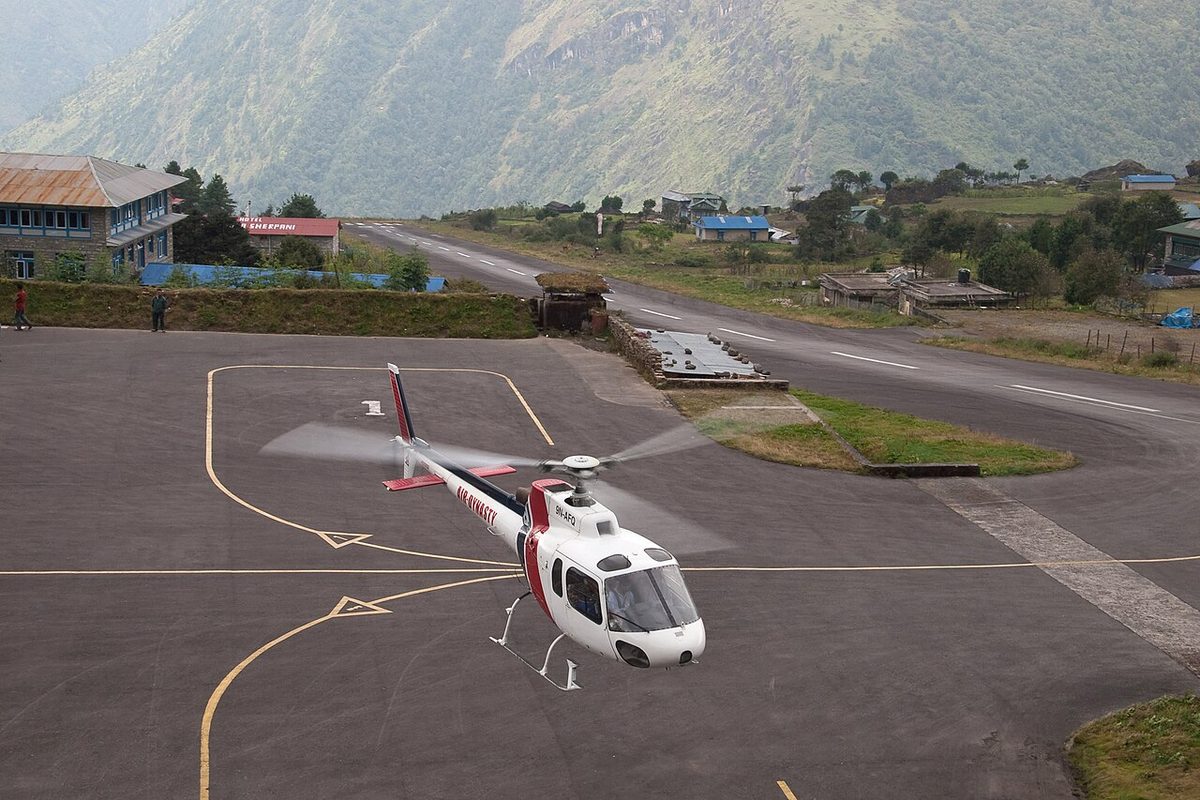
A narrow runway gives a thinner, smaller image, which the brain reads as further away and lower down. An upsloping runway looks like the picture from a steep approach, and appears shorter and closer than it is. A downsloping runway looks longer and further away, and the approach looks shallow. The AIM notes that upsloping or downsloping approach terrain has the same effect as runway slope, even when the runway itself is level.
Exam tip: in the AIM's scheme, a narrow or upsloping runway, featureless or dark terrain, rain on the windscreen and haze all lead to a low approach. A wide or downsloping runway and bright runway lights lead to a high approach.
Black hole approach
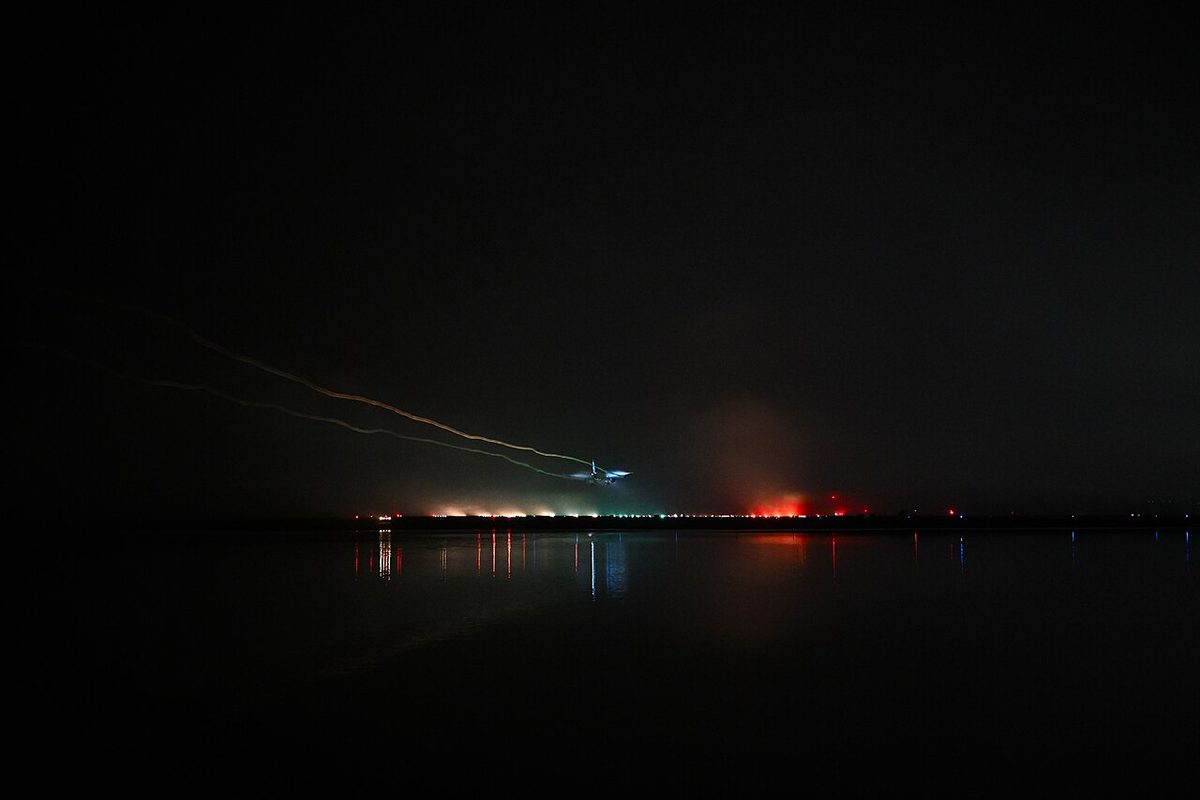
The black hole approach, also called the black hole illusion, the black-hole approach illusion or the Kraft illusion, occurs at night on an approach over unlit water, desert, jungle or countryside towards a lit runway, with no lights and no visible horizon in between. Upsloping terrain beneath the approach, which on its own makes the aircraft seem higher than it is, adds to the error. Only the runway lights remain, and they are a poor cue to approach angle. Pilots consistently perceive themselves as higher than they are, descend early and fly a low, flat, dragged-in approach that can end in terrain well short of the runway.
The AIM describes the same error more generally as the featureless terrain illusion: over water, dark areas or snow-covered ground, the absence of features makes the aircraft seem higher than it is, and the pilot flies a lower approach.
The defence is a vertical reference that was not judged by eye: an ILS or other vertically guided approach, or a PAPI or VASI. Without one, the pilot cross-checks height against distance. A 3° path descends about 318 ft per nautical mile, and its rate of descent in ft/min is about five times the groundspeed in knots. At night, FAA guidance recommends flying a normal traffic pattern rather than a long straight-in approach over dark terrain.
Rain, haze and lighting illusions
The AIM groups weather effects as atmospheric illusions:
- Rain on windscreen illusion. A film of water refracts the view so that the runway appears lower in the windscreen, which the brain reads as being too high. The pilot descends early and flies a low approach. At night the lights also bloom into larger halos.
- Haze illusion. Haze removes contrast and detail, so by atmospheric perspective the runway seems further away, and the AIM says the pilot flies a lower approach. Rain and haze together, the rain and haze approach illusion, both bias the pilot low, so the instrument profile should be flown as long as practicable.
- Fog. Entering fog can create an illusion of pitching up, and a pilot who does not recognise it steepens the approach, often abruptly.
- Very clear air. Atmospheric perspective fails the other way: distant objects keep their sharpness and seem closer than they are, so distances to terrain and landmarks are underestimated.
Ground lighting illusions are the AIM's last group. Lights along a straight road, or even a moving train, can be mistaken for runway or approach lights. Bright runway and approach lights with little other lighting around make the runway seem closer, so the pilot flies high; flying over terrain with few lights to give height cues invites a low approach.
Exam tip: some EASA ATPL human performance texts say that when fog, haze or pollution dims the runway lights, the runway seems further away and the pilot tends to fly a steeper approach, while bright lights make it seem closer. The FAA's AIM says haze makes the runway seem further away and leads to a lower approach, and bright lights make it seem closer and lead to a higher one. Answer each exam in its own terms.
Cockpit eye height illusion
The pilot's eye height above the ground differs widely between types: about 3.5 m in a DC-9 against about 8.7 m in a Boeing 747. From the higher seat the ground appears to move more slowly, so pilots converting to a large type tend to taxi too fast, and must learn a new picture on approach and in the flare.
The main wheels of a large aircraft are well below and behind the pilot's eye. A pilot who aims visually at the touchdown point brings the wheels down short of it, and the shallower the approach, the larger the gap. A low approach in a large aircraft is therefore doubly dangerous. Three-bar VASIs provide an upper glide path, normally 1/4° above the lower one, for high-cockpit aircraft, to give a sufficient threshold crossing height. Flight decks are designed around an eye reference position, and seats should be set to it so that the view over the nose matches the design view.

False horizon and autokinesis
A false horizon is any line the brain accepts as the horizon when the real one is hidden. The AIM lists sloping cloud formations, an obscured horizon, a dark scene spread with ground lights and stars, and certain geometric patterns of ground lights. A lit shoreline or a line of lights along rising ground can serve, and on a clear night stars can be taken for ground lights and ground lights for stars. The pilot aligns the wings or the nose with the false line and flies a dangerous attitude that feels level. When outside cues are fragmentary, the aircraft should be flown wholly on instruments.
Autokinesis is the apparent movement of a static light stared at in the dark. With nothing around it to act as a reference, small involuntary eye movements are read as movement of the light. FAA material says it appears after about 6 to 12 seconds. Pilots have followed stars believing them to be other aircraft, and the AIM warns that a pilot trying to align the aircraft with the light can lose control. The defence is to keep the eyes moving, relate the light to other references and check the attitude indicator.
Flicker vertigo and stroboscopic effects
Flicker vertigo is nausea, dizziness or disorientation caused by light flickering at about 4 to 20 times per second: sunlight through a turning propeller or rotor, or strobe lights reflecting from cloud. In rare cases it can trigger a seizure in susceptible people. EASA human performance material describes the same stroboscopic effect in helicopters, where sunlight flashing through the rotor blades causes problems at 5 to 20 Hz, with nausea, giddiness and, in extreme cases, an epileptic-type fit. The remedies are to remove the stimulus: change propeller rpm, turn out of the sun, wear sunglasses or shade the eyes, and switch off anti-collision strobes in cloud, which 14 CFR 91.209 allows when the pilot in command judges it in the interest of safety.
Night vision and the vestibular link
Vision normally overrides the balance organs of the inner ear. When the visual scene fails, the vestibular illusions take over, and the worst accidents combine the two. The otoliths cannot distinguish linear acceleration from gravity, so the somatogravic illusion turns a strong forward acceleration into a false sensation of pitching up; deceleration gives a false nose-down sensation. A night take-off or go-around over dark water or unlit ground, the same scene that produces the black hole approach, invites a push that flies the aircraft back into the surface. An air-driven attitude indicator briefly shows a false climb after an acceleration, reinforcing the error (see go-around and missed approach and the guide to spatial disorientation and visual illusions).
The eye itself changes at night. Full dark adaptation takes at least 30 minutes in darkness; a moderate degree can be reached in 20 minutes under dim red lighting, and any bright light destroys it within seconds. The AIM lists cabin altitudes above 5,000 ft, carbon monoxide from smoking or exhaust, a lack of vitamin A and prolonged bright sunlight as factors that impair it, and recommends supplemental oxygen above 5,000 ft at night (see hypoxia and hyperventilation). Fatigue narrows the scan and slows the recognition that the picture is wrong.
Countering visual illusions
The AIM's prescription is to anticipate illusions, inspect unfamiliar airports from the air before landing where practicable, use an electronic glide slope or VASI when available, and keep landing technique current. In practice:
- Brief the threats. Runway width, length and slope, surrounding terrain, approach lighting and the visual glide slope indicator available, especially at an unfamiliar airport at night.
- Fly vertical guidance to the last practicable moment. An ILS, an RNP approach with vertical guidance or a PAPI provides a path the eyes cannot distort. The PAPI's visual path typically gives safe obstruction clearance only within 10° either side of the extended centreline and to 3.4 NM from the threshold (4 NM for a VASI), and descent on it should not begin until the aircraft is aligned with the runway.
- Cross-check height against distance on every approach without a glide path, using DME or GNSS distance.
- Apply stabilised approach criteria and go around when they are not met (see stabilised approach).
- Share the task. In a two-pilot crew the pilot monitoring stays on the instruments and calls deviations while the pilot flying looks out.
Frequently asked questions
What is the black hole approach illusion?
It occurs on a night approach over unlit water, desert or countryside towards a lit runway, with no lights or horizon in between. With only the runway lights to judge by, pilots feel higher than they are, descend early and fly a low, flat approach that can end in terrain short of the runway. The defence is vertical guidance, a PAPI or VASI, or a height and distance cross-check.
Does a narrow runway make you feel high or low?
High. A runway narrower than the one a pilot is used to gives a smaller, thinner image, which the brain reads as further away and lower down, so the aircraft seems higher than it is. The pilot descends and flies a low approach, risking obstacles or a landing short. A wider-than-usual runway does the opposite, inviting a high approach and a high flare followed by a hard or long landing.
How does runway slope affect a visual approach?
An upsloping runway, or terrain rising towards it, looks like the picture from a steep approach, so the pilot feels high and flies too low, risking an undershoot. A downsloping runway, or terrain falling away before it, makes the approach look shallow, so the pilot feels low and flies a high approach, landing long with less runway left to stop in.
What is autokinesis?
Autokinesis is the illusion that a single stationary light, stared at against a dark and featureless background, begins to move. FAA material says it appears after about 6 to 12 seconds of fixation, because small involuntary eye movements have nothing to be judged against. Pilots have followed stars, or lost control trying to align the aircraft with them. Keep the eyes moving and relate the light to other references and to the instruments.
How do rain and haze affect the approach?
Water on the windscreen refracts the view so that the runway appears lower, making the pilot feel high, and at night the lights bloom into halos. Haze removes contrast, so the runway looks further away. The FAA's AIM says both lead to a lower approach than normal. Entering fog can create an illusion of pitching up, which makes pilots steepen the approach, often abruptly.
What is flicker vertigo?
Flicker vertigo is nausea, dizziness or disorientation caused by light flickering at roughly 4 to 20 times per second, such as sunlight through a turning propeller or rotor, or strobe lights reflecting from cloud. In rare cases it can trigger a seizure. The cure is to remove the flicker by changing propeller rpm, turning away from the sun, shading the eyes, or switching off the strobes in cloud.
Test yourself on Visual Illusions
The v1prep banks cover this topic in Human Performance and Limitations (040), with a worked explanation for every answer. EASA ATPL, PPL, IR and CPL, the FAA written tests and A320/B737 type ratings.
Start practising →Sources and further reading
- FAA Aeronautical Information Manual, Chapter 8 Section 1 (8-1-5 Illusions in Flight, 8-1-6 Vision in Flight)
- FAA Aeronautical Information Manual, Chapter 2 Section 1 (VASI and PAPI)
- FAA Pilot's Handbook of Aeronautical Knowledge (FAA-H-8083-25C), Chapter 17, Aeromedical Factors
- FAA Airplane Flying Handbook (FAA-H-8083-3C), Chapter 11, Night Operations
- FAA Pilot Safety Brochures (Spatial Disorientation, Visual Illusions)
Library articles are written for study and exam preparation. They do not replace your aircraft's approved documentation, your operator's procedures or the regulations themselves.