Medical Certification
A medical certificate is the document showing that a pilot meets the medical standards for the privileges of a licence. Issued after an examination by an approved aviation medical examiner or centre, it must be valid for the licence to be used, and it lapses on a schedule set by class and age.
A pilot licence can be used only with a valid medical certificate, the evidence that the holder meets the medical standards for its privileges. The licence itself does not expire; the medical does, on a schedule set by its class and the holder's age, and a pilot whose medical has lapsed may not exercise the privileges it supports. Medical fitness is also a daily question: between examinations the rules require pilots not to fly when their fitness has decreased.
ICAO Annex 1 sets the international medical standards. In Europe they are applied through Part-MED, Annex IV to the Aircrew Regulation (EU) No 1178/2011; in the United States through 14 CFR Part 67, which sets the standards, and 14 CFR 61.23, which says which class each privilege needs. This article describes the regulatory framework only. Decisions on an individual pilot's fitness are made by aviation medical examiners and the licensing authority, and a pilot with a question about his or her own health should ask them.
Medical certificate classes
Annex 1 defines three classes of medical assessment: Class 1 for the commercial licences (CPL, MPL and ATPL), Class 2 for the private pilot licence and other non-commercial licences, and Class 3 for air traffic controllers. EASA and the FAA both build on this pattern but divide the privileges differently:
| Privileges | EASA (Part-MED) | FAA (61.23) |
|---|---|---|
| Airline transport pilot, as pilot in command | Class 1 | First class |
| Commercial pilot | Class 1 | Second class |
| Private pilot | Class 2 | Third class, or BasicMed |
| Light aircraft pilot | LAPL medical | Sport pilots may use a US driver's licence, under conditions |
| Student pilot | The class for the licence sought, before the first solo | Third class |
A higher class always includes the privileges of the lower ones.
EASA Part-MED
Part-MED sets general requirements in Subpart A (MED.A), the medical requirements for each class, system by system, in Subpart B (MED.B), and further subparts for cabin crew and for the examiners and doctors who certify. The validity periods are set in MED.A.045:
| Certificate | Validity |
|---|---|
| Class 1 | 12 months; 6 months from age 60, and from age 40 for single-pilot commercial air transport carrying passengers |
| Class 2 | 60 months until 40, but one issued before 40 lapses at 42; 24 months from 40 to 50, but one issued before 50 lapses at 51; 12 months after 50 |
| LAPL medical | 60 months until 40, but one issued before 40 lapses at 42; then 24 months |
A revalidation examination may be taken up to 45 days before the expiry date without losing validity. When the Class 1 period of a certificate lapses, it continues to serve as a Class 2 for its longer period, so a CPL holder whose Class 1 has run out may still exercise PPL privileges, without remuneration. Some ratings add requirements of their own: an instrument rating added to a PPL requires hearing tested by audiometry to Class 1 standards, and a night rating on a LAPL or PPL requires the holder to be colour safe, able to identify the coloured lights used in aviation.
Age limits are a separate matter from medical fitness. Under FCL.065 a pilot aged 60 to 64 may fly in commercial air transport only as a member of a multi-pilot crew, and from 65 not at all, whatever the medical says. Older texts add that no other pilot in the crew may have reached 60; that condition was deleted in 2015.
FAA medical certificates
The FAA issues first-, second- and third-class medical certificates; glider and balloon pilots need none. A certificate does not simply expire but steps down, and all periods run to the end of a calendar month:
| Privileges | Pilot under 40 at the examination | Pilot 40 or older |
|---|---|---|
| First class (ATP privileges as pilot in command) | 12 calendar months | 6 calendar months |
| Second class (commercial privileges) | 12 calendar months | 12 calendar months |
| Third class (private, recreational, student) | 60 calendar months | 24 calendar months |
A second-class certificate issued to a 35-year-old on 10 March 2025 is therefore valid for commercial privileges until 31 March 2026 and for private privileges until 31 March 2030. US airlines require a first-class certificate at hiring. When flying, the pilot must have the medical certificate, or the BasicMed documents, together with the pilot certificate and photographic identification.
AMEs, AeMCs and GMPs
Under Part-MED three kinds of practitioner certify pilots:
- An aero-medical centre (AeMC) is an approved organisation able to examine for every class. The initial issue of a Class 1 certificate must be done at an AeMC.
- An aero-medical examiner (AME) is a doctor certified by the authority. An AME may make the initial issue of Class 2 and LAPL certificates and revalidate or renew Class 1 and Class 2.
- A general medical practitioner (GMP) may issue LAPL medical certificates only, and only where national law allows.
Holders of Class 1 and Class 2 certificates who need aeromedical advice consult an AeMC or AME; LAPL holders may also consult the GMP who signed their certificate. Difficult cases are referred to the licensing authority.
In the United States all classes are issued by Aviation Medical Examiners (AMEs), physicians designated by the FAA. The applicant first completes the application online in MedXPress (FAA Form 8500-8). After the examination the AME issues the certificate, defers the decision to the FAA, or denies it. Students aiming at an airline career are generally advised to obtain the first-class certificate before paying for training, so that a disqualifying condition is found early; European cadets apply the same logic to the Class 1.
The medical examination
The examination starts with the applicant's declared medical history, which must be complete and truthful: an omission can cost the certificate, and in the United States a false statement on the application is a federal offence. The physical examination then covers the systems whose failure could incapacitate a pilot or degrade performance:
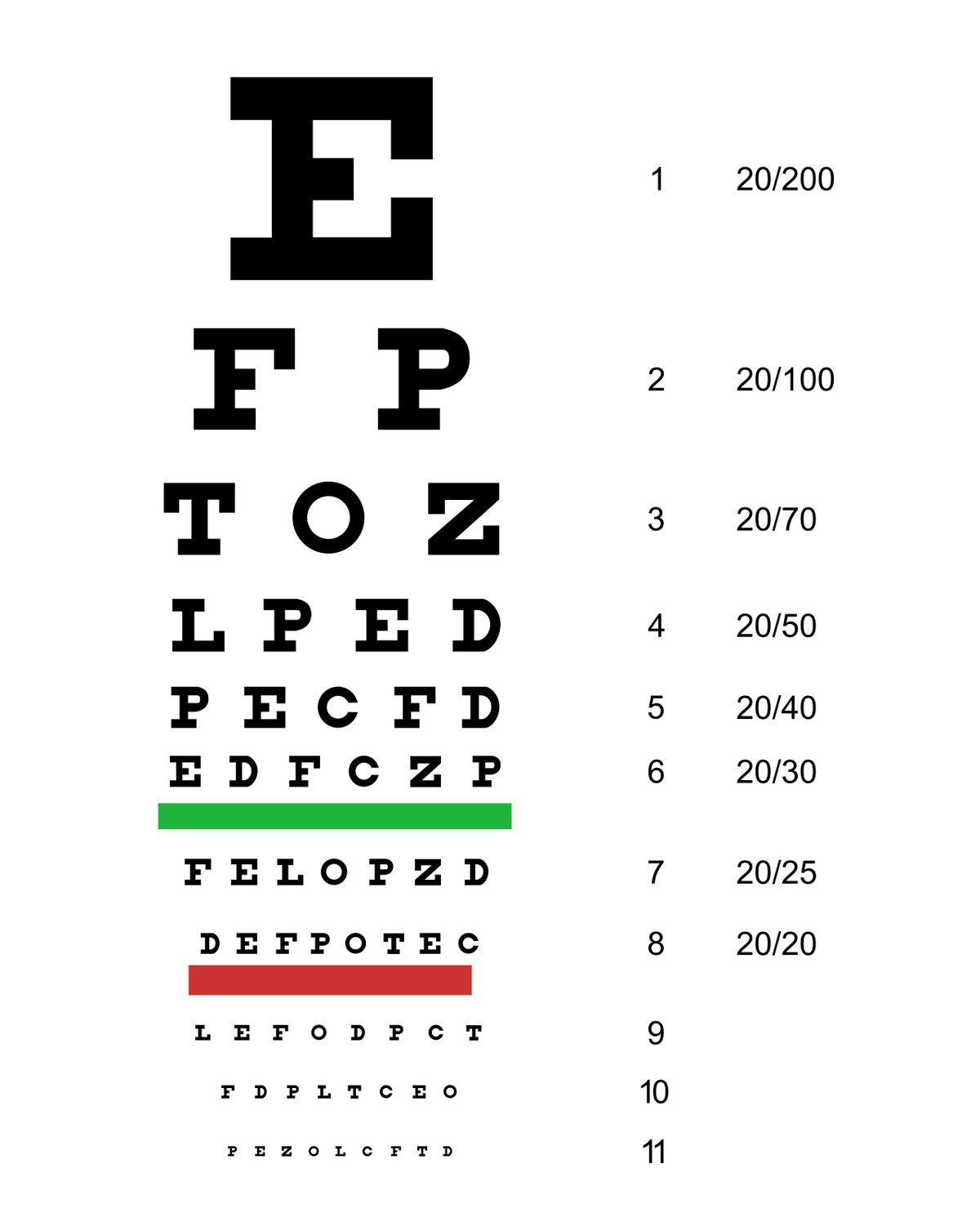
- Vision: distant, intermediate and near acuity, with or without correction. For the FAA, first and second class require 20/20 distant vision in each eye and third class 20/40. A pilot who needs glasses or contact lenses to meet the standard must wear them when flying.
- Colour vision, tested with pseudo-isochromatic plates and, for applicants who fail them, further tests.
- Hearing: conversational voice for most FAA applicants; audiometry for Class 1 and for an instrument rating on a PPL.
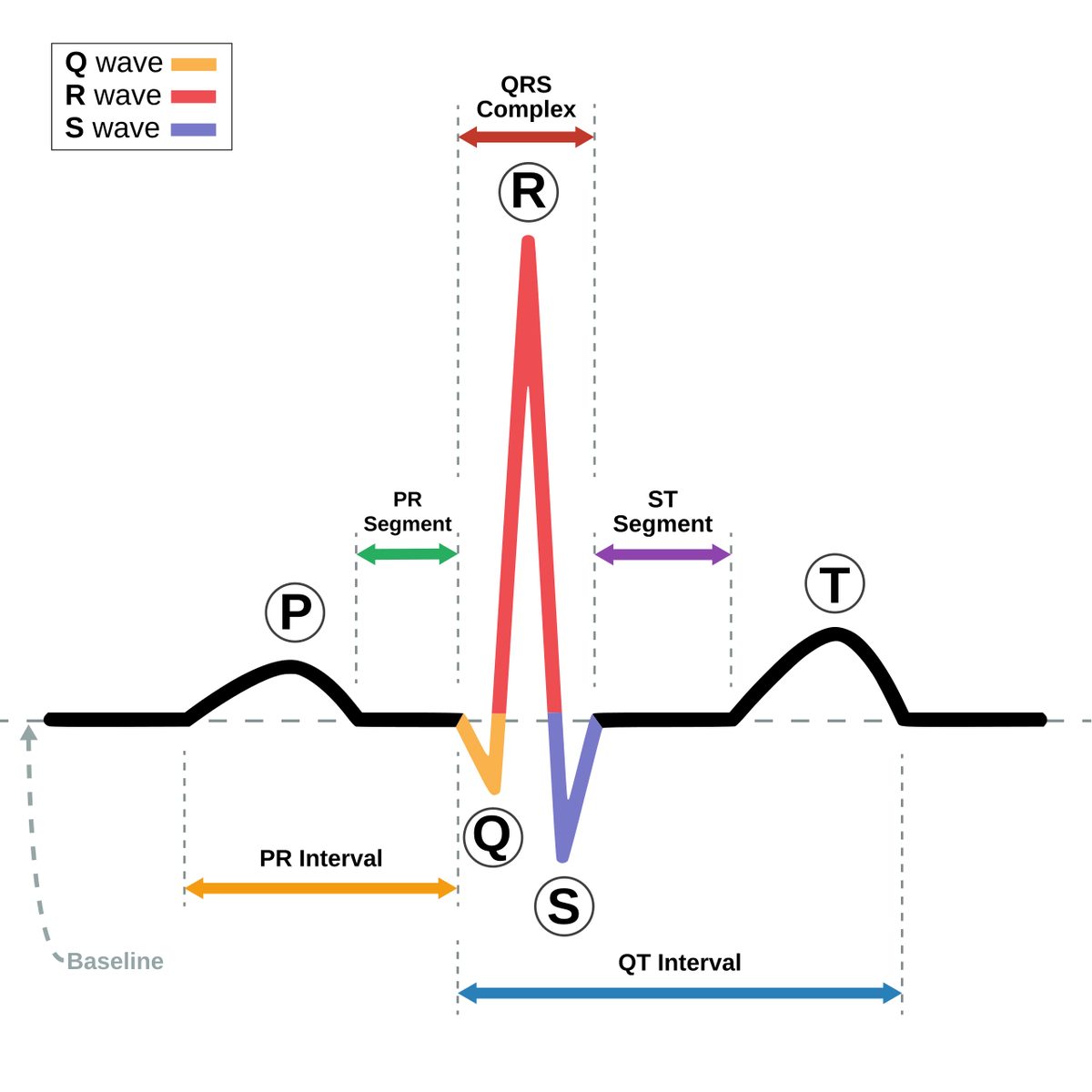
- Heart and circulation: blood pressure and a resting electrocardiogram (ECG), which records the heart's electrical impulses and shows irregular rhythm or conduction problems. Part-MED requires an ECG at the initial Class 1 examination and then at intervals that shorten with age; the FAA requires one for first class at the first examination after age 35 and annually from 40.
- A general physical examination and urinalysis, with further tests where the history calls for them.
A resting ECG has limits: in the 1972 Staines Trident accident, the captain's narrowed coronary arteries had not shown on his annual ECG, taken at rest.
Special issuance and limitations
A pilot who does not fully meet the standards is not always grounded. The FAA lists conditions that disqualify for standard issuance, among them psychosis, alcoholism, drug dependence, epilepsy, an unexplained disturbance of consciousness, myocardial infarction, angina pectoris and diabetes requiring insulin or other hypoglycaemic medication. Many can still be certificated by special issuance under 14 CFR 67.401: a time-limited authorisation granted after the FAA reviews the medical evidence, often with conditions such as periodic reports. For a static condition the FAA may instead grant a statement of demonstrated ability (SODA). Pilots treated for substance dependence can return to flying under the HIMS programme, supported by the FAA, airlines and unions, through evaluation, treatment, monitoring and a special issuance.
Part-MED reaches similar results through limitations on the certificate. Monocular vision is disqualifying at the initial Class 1 examination, but a Class 1 holder who loses the sight of one eye may be assessed fit at revalidation or renewal, after an adaptation period, with an operational multi-pilot limitation (OML): valid only as or with a qualified co-pilot. A monocular applicant may also be assessed fit for Class 2.
BasicMed
BasicMed, in force since 2017 under 14 CFR Part 68 and 61.113(i), lets US pilots fly without a current FAA medical certificate. The pilot must hold a US driver's licence and must have held an FAA medical certificate at some time after 14 July 2006; the most recent application must not have been denied, nor the most recent certificate revoked, suspended or withdrawn. The pilot then needs:
- a physical examination by any state-licensed physician, using the FAA's checklist, within the preceding 48 months;
- an online medical education course within the preceding 24 calendar months.
Since the FAA Reauthorization Act of 2024 the operating limits are an aircraft authorised to carry no more than 7 occupants, with a maximum take-off weight of no more than 12,500 lb, flown below 18,000 ft MSL at no more than 250 kt, within the United States, and not for compensation or hire, with narrow exceptions such as flight instruction. Older texts still quote the original limits of 6 occupants and 6,000 lb. BasicMed never supports commercial or ATP privileges. Europe has no equivalent; the nearest is the LAPL medical, which a GMP may issue where national law allows.
Decrease in medical fitness
Between examinations, the system relies on the pilot. Under MED.A.020 a licence holder must not exercise the privileges while aware of any decrease in medical fitness that might make those privileges unsafe, while taking medication likely to interfere with safe flight, or while receiving medical or surgical treatment that might. Aeromedical advice must be sought without undue delay after surgery or an invasive procedure, on starting regular medication, after a significant injury or illness, in pregnancy, on any admission to hospital or a clinic, whatever its length, and on first needing correcting lenses.
The FAA rule is 14 CFR 61.53, the medical deficiency prohibition. A pilot may not act as pilot in command or as a required crew member while knowing, or having reason to know, of a condition that would make him or her unable to meet the standards for the medical certificate held, or while taking medication or receiving treatment with that effect. A head cold that blocks the ears and sinuses is such a condition. The FAA's guidance on sedating over-the-counter medicines is to wait at least five times the maximum dosing interval after the last dose, and its IMSAFE checklist (illness, medication, stress, alcohol, fatigue, emotion) turns the rule into a pre-flight habit (see fitness to fly and pilot incapacitation and alcohol, drugs and medication).
Self-declaration has limits. After the 2015 Germanwings 9525 accident, in which the co-pilot deliberately crashed the aircraft, the French BEA recommended closer follow-up of pilots with a history of mental illness, measures to reduce the financial consequences of losing a licence, and peer support programmes, so that pilots seek help early instead of hiding a problem. The rules work only if pilots use them, and the pilot's own AME or AeMC is the right first call whenever health and flying meet.
Frequently asked questions
How long is an EASA Class 1 medical certificate valid?
Under Part-MED a Class 1 medical certificate is valid for 12 months. The period is reduced to 6 months once the holder reaches 60, and from age 40 for holders engaged in single-pilot commercial air transport carrying passengers. When the Class 1 period lapses, the certificate continues to serve for the longer Class 2 period, so private privileges can still be exercised.
What is the difference between a Class 1 and a Class 2 medical?
A Class 1 medical is required for the CPL, MPL and ATPL and has the stricter standards and shorter validity. Its initial issue must be done at an aero-medical centre. A Class 2 medical covers the PPL, can be issued by an aero-medical examiner, and lasts 60 months under 40, 24 months from 40 to 50 and 12 months after 50. A Class 1 holder also holds Class 2 privileges.
How long is an FAA first-class medical certificate valid?
For airline transport pilot privileges, 12 calendar months if the pilot was under 40 at the examination and 6 calendar months if 40 or older, counted to the end of the month. The certificate then steps down to second-class privileges for the rest of 12 calendar months, then to third-class privileges until 60 calendar months after the examination for a pilot under 40, or 24 for a pilot 40 or older.
What is BasicMed?
BasicMed, under 14 CFR Part 68 and 61.113(i), lets a US pilot fly without a current FAA medical certificate after an examination by a state-licensed physician using the FAA checklist within the preceding 48 months and an online medical course within the preceding 24 calendar months. Since the FAA Reauthorization Act of 2024 it covers aircraft of up to 7 occupants and 12,500 lb, below 18,000 ft MSL and at or below 250 kt, within the United States and not for hire.
What must a pilot do when medical fitness decreases?
Stop exercising the licence privileges and seek advice. Part-MED forbids flying while aware of any decrease in medical fitness, while taking medication likely to interfere with safe flight or while receiving treatment that might, and requires aeromedical advice without undue delay after events such as surgery, hospital admission, regular medication or pregnancy. The FAA rule, 14 CFR 61.53, likewise forbids flying with a known condition that would fail the medical standards.
Test yourself on Medical Certification
The v1prep banks cover this topic in Air Law (010), with a worked explanation for every answer. EASA ATPL, PPL, IR and CPL, the FAA written tests and A320/B737 type ratings.
Start practising →Sources and further reading
- EASA Easy Access Rules for Aircrew (Regulation (EU) No 1178/2011), Annex IV Part-MED
- ICAO Annex 1, Personnel Licensing
- 14 CFR Part 67, Medical Standards and Certification
- 14 CFR 61.23, Medical certificates, requirement and duration
- 14 CFR 61.53, Prohibition on operations during medical deficiency
- 14 CFR Part 68, Requirements for operating certain small aircraft without a medical certificate (BasicMed)
- FAA Aeronautical Information Manual, Chapter 8 Section 1, Fitness for Flight
- BEA Final Report BEA2015-0125, Germanwings flight 9525 (medical certification findings)
Library articles are written for study and exam preparation. They do not replace your aircraft's approved documentation, your operator's procedures or the regulations themselves.