Airbus A220 Engines: the PW1500G Geared Turbofan
The PW1500G is the Pratt & Whitney geared turbofan fitted to every A220: a twin-spool, high bypass ratio engine in which a three-stage low-pressure turbine drives the fan through a fan drive gear system. It is controlled by a FADEC, and its A220 versions are certified at take-off thrusts from 19,775 to 24,400 lbf.
Every Airbus A220 is powered by two Pratt & Whitney PW1500G engines, which the EASA aircraft type-certificate data sheet describes as "ultra-high bypass geared turbofan engines". The PW1500G is a twin-spool turbofan whose fan is driven through a reduction gear, and a full authority digital engine control (FADEC) controls it. Pratt & Whitney holds its type certificate; Pratt & Whitney Canada builds it.
For a type-rating candidate the engine raises three kinds of question: what the gear changes, which thrust rating goes with which A220 model, and the limits in the type certificate. This article answers them from the EASA engine and aircraft type certificates, the Transport Canada MMEL and evaluation report, the FAA Flight Standardization Board report and the Airbus Aircraft Characteristics. The general principles are in gas turbine engine types, FADEC and engine fuel control and gas turbine engine starting.
The geared turbofan idea
In a turbofan the fan is driven by the low-pressure turbine. A geared turbofan (GTF) places a reduction gear between the low-pressure shaft and the fan, so that the fan can turn slowly enough for its large diameter while the low-pressure compressor and turbine run at the higher speed that suits them. On the PW1500G the gear is the fan drive gear system: the engine type certificate states that the fan speed (NFAN) is directly proportional to N1 by a gear ratio of 1:3.0625, so the low-pressure spool turns a little over three times faster than the fan.
The PW1500G's bypass ratio is very high: Rücker and Scholz give it a bypass ratio of 12.0, with low specific fuel consumption, and note that the PW1100G of the A319neo, also a geared turbofan, reaches 12.5. Despite the gear, the pilot works with N1, the low-pressure spool speed: the type certificate states that power setting, power checks and thrust control in all operations are based on N1.
Exam tip: on the PW1500G, N1 is the low-pressure spool speed, not the fan speed. The fan turns at N1 divided by 3.0625, and thrust is set on N1.
PW1500G architecture
| Section | Construction (EASA engine type certificate) |
|---|---|
| Fan | Single stage, driven through the fan drive gear system |
| Low-pressure compressor | Three stages, on the low-pressure spool |
| High-pressure compressor | Eight axial stages |
| High-pressure turbine | Two cooled stages, driving the high-pressure compressor |
| Low-pressure turbine | Three stages, driving the low-pressure compressor and, through the gear, the fan |
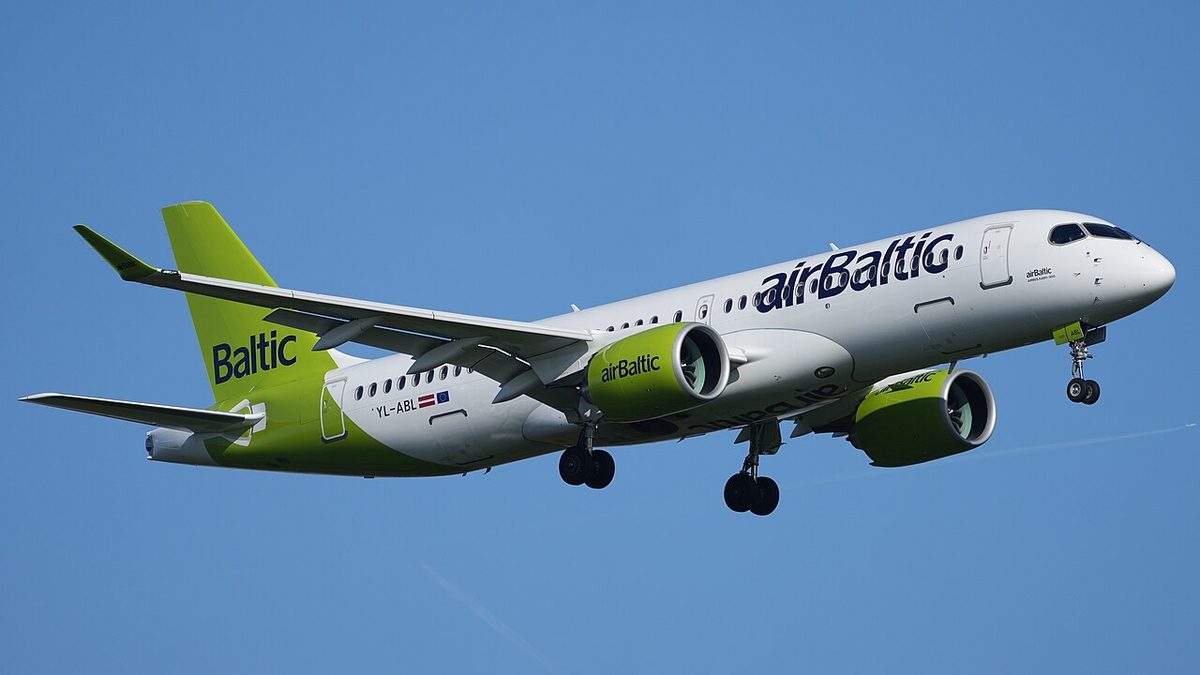
The engine is 3.045 m long flange to flange, its fan case has a nominal diameter of 2.006 m, and its basic dry weight is 2,177 kg (4,800 lb). Two aircraft accessory pads are geared to N2, the high-pressure spool: one for a hydraulic pump, at 0.1835:1, and one for a generator, at 0.8595:1, which the certificate labels for an integrated drive generator (IDG); the A220 MMEL calls the generators variable frequency generators (see A220 electrical system). The thrust reverser is not part of the engine type design: it is certified with the aircraft.
Thrust ratings by model
The ratings are sea level static thrusts, with no customer bleed or power extraction, flat rated up to 30 °C (86 °F) for take-off and 25 °C (77 °F) for maximum continuous thrust. Each engine model has its own data storage unit, or ratings plug.
| Engine | Take-off (5 min) | Maximum continuous | EASA aircraft type certificate |
|---|---|---|---|
| PW1519G | 8,796 daN (19,775 lbf) | 8,312 daN (18,685 lbf) | A220-100 |
| PW1521G, PW1521G-3 | 9,773 daN (21,970 lbf) | 9,235 daN (20,760 lbf) | A220-100; -3 on the A220-300 |
| PW1524G, PW1524G-3 | 10,854 daN (24,400 lbf) | 10,253 daN (23,050 lbf) | A220-100; -3 on the A220-300 |
| PW1525G, PW1525G-3 | 10,854 daN (24,400 lbf) | 10,253 daN (23,050 lbf) | Not listed |
The EASA aircraft type certificate lists three engine models for the A220-100 and two for the A220-300. The TCCA and FAA reports count four ratings on the A220-100 and three on the A220-300, adding the PW1525G and PW1525G-3. All sources agree on one point: the lowest rating, the PW1519G, is not available on the A220-300. TCCA and the FAA treat the different engine choices as Level A differences between the two models.
Limits from the type certificate
The EASA engine type certificate gives the same limits for all PW1500G models:
| Limit | Value |
|---|---|
| Indicated turbine temperature (ITT), take-off (5 min) | 1,054 °C (1,929 °F) |
| ITT, maximum continuous | 1,017 °C (1,863 °F) |
| ITT, starting | 1,054 °C (1,929 °F) |
| N1 maximum (take-off and continuous) | 10,600 rpm |
| N2 maximum (take-off and continuous) | 24,470 rpm |
| N1 ground idle, flight idle | 1,574 rpm, 1,991 rpm |
| N2 ground and flight idle | 13,264 rpm |
The take-off rating is nominally limited to 5 minutes, but may be used for up to 10 minutes with one engine inoperative. The minimum N1 certified for flight in icing conditions is 1,991 rpm, the flight idle value, and the electronic engine control prevents lower rotor speeds in flight. A temporary loss of oil pressure in negative g is limited to 7 seconds; normal pressure returns quickly once the negative g ends. The engine's temperature margin also appears in the MMEL: with an active clearance control valve inoperative closed, a PW1519G needs at least 14 °C of EGT margin, and the other models at least 12 °C.
For long-range operations, engines compliant with a Pratt & Whitney service bulletin are approved for ETOPS capability with a maximum diversion time of 180 minutes at maximum continuous thrust plus 15 minutes at hold power. The aircraft type certificate finds both A220 models capable of 120 and 180 minute ETOPS with every listed engine; neither finding is an operational approval.
FADEC and thrust control
Each engine is controlled by a FADEC, whose computer the MMEL and the type certificate call the electronic engine control (EEC). It has two control channels, A and B, and the aircraft supplies a 28 V DC backup to each channel: four supplies in all. Since Build 8.0A2 the loss of 28 V DC to a single channel posts an EEC 28VDC REDUND LOSS INFO message. The fly-by-wire computers also take FADEC inputs. EASA accepted digital-only display of the power-plant instruments and the indication of the automatic take-off thrust control system through equivalent safety findings.
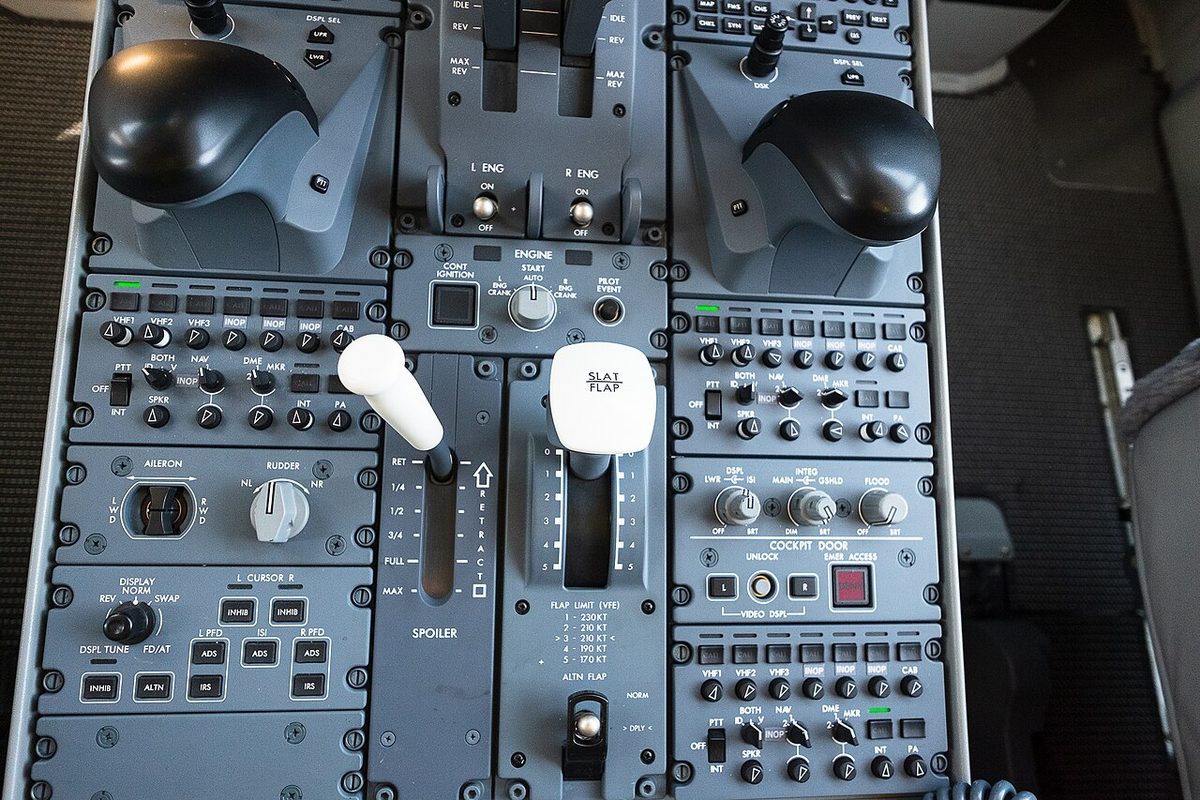
The thrust levers move. Rücker and Scholz see this as better feedback for the pilot than on the A320, whose levers sit in fixed detents. The levers carry TOGA switches, and autothrottle disconnect buttons are on the throttle quadrant. For take-off the crew may use derated thrust (TO-1, TO-2 or TO-3) or reduced (FLEX) thrust. Build 8.0A2 prohibited FLEX from a derated rating, because a display unit reset could lose the FLEX values; Build 8.0A3 lifted the prohibition. During a derated take-off the derated thrust setting is a limitation and the thrust levers should not be advanced. Build 8.0A2 also aligned the ENG SETTING MISMATCH take-off inhibition speed, previously 80 kt, with the FMS and FADEC lockout speed of 60 kt.
Reverse thrust is selected with a finger lift on each thrust lever, which lets it move into the reverse range. With a THROTTLE REV BALK INOP message, maximum reverse remains available with extra effort on the lever, at a nominal 25 lb.
Start and ignition
Each engine has an air turbine starter (ATS) fed through a starter air valve, with a starter speed sensor. On the ground the Airbus Aircraft Characteristics give the start air requirement as an inlet pressure of 45 psi and an airflow of 150 lb/min (68 kg/min) on an ISA day, with 90 seconds allowed to starter cutout, at least 45 seconds to reach idle and no bleed air extraction during the start. With a starter air valve inoperative closed, the engine can be started with alternate procedures, but its ATS is then considered inoperative for an in-flight relight.
The L ENG and R ENG run switches are on the throttle quadrant, and the ENGINE start panel is on the pedestal. Ignition redundancy is monitored (IGN REDUND LOSS), and EASA treated the engine ignition switches in an equivalent safety finding. In cold weather, Airbus requires free fan rotation to be confirmed before start, by turning the fan by hand or dry motoring, because water may freeze in the lower intake; ice on the spinner, fan or inlet may be removed only with heated air, never de-icing fluid.
Engine monitoring
Engine health is closely monitored, and the MMEL lists many of the monitoring items:
- A prognostics health monitoring unit (PHMU) for each engine, which supports the oil debris monitor and engine vibration monitoring.
- Vibration sensors, forward (N1) and aft (N2), and an ENG VIBRATION caution.
- Oil: an EICAS oil quantity indication with a sight glass on each oil tank, an oil filter delta pressure sensor for impending bypass, magnetic chip collectors and an oil debris monitor.
- Fuel: a fuel filter delta pressure sensor for impending bypass and a fuel flow indication per engine.
- Sensors: a P2/T2 sensor with a heater (dispatch with one heater inoperative excludes flight into known or forecast icing) and a T3 sensor.
The nacelle sits low: the Airbus ground clearance tables give a minimum height of about 50 cm on the A220-100 and 58 cm on the A220-300, varying with tyres, weight and balance. The pre-cooler exit (PCE) doors, listed with the engine items in the MMEL, have an L or R ENG PCE DOOR OPEN advisory.
Frequently asked questions
What engines does the Airbus A220 use?
Every A220 has two Pratt & Whitney PW1500G geared turbofans. The EASA type certificate lists the PW1519G, PW1521G and PW1524G for the A220-100 and the PW1521G-3 and PW1524G-3 for the A220-300; the TCCA and FAA reports also mention a PW1525G version. Take-off thrust ranges from 19,775 lbf for the PW1519G, available only on the A220-100, to 24,400 lbf for the PW1524G.
What is a geared turbofan?
A turbofan in which the fan is driven by the low-pressure turbine through a reduction gear instead of directly. On the PW1500G a three-stage low-pressure turbine drives a three-stage low-pressure compressor directly and the single-stage fan through the fan drive gear system, so the fan turns at N1 divided by 3.0625. Rücker and Scholz give the PW1500G a bypass ratio of 12.0, with low specific fuel consumption.
What are the PW1500G temperature and speed limits?
The EASA engine type certificate limits indicated turbine temperature (ITT) to 1,054 °C for take-off and starting and 1,017 °C at maximum continuous thrust. Maximum rotor speeds are 10,600 rpm for N1 and 24,470 rpm for N2. The take-off rating is limited to 5 minutes, extendable to 10 minutes with one engine inoperative, and oil pressure may drop for at most 7 seconds in negative g.
How is thrust set on the A220?
On N1. The engine type certificate states that power setting, power checks and thrust control in all operations are based on low rotor speed (N1), the fan speed following it through the gear ratio. A FADEC with two channels controls each engine. The thrust levers move rather than sitting in fixed detents, and the crew can use derated take-off thrust (TO-1, TO-2, TO-3) and reduced (FLEX) thrust.
How is the PW1500G started?
By an air turbine starter (ATS) on each engine, fed with compressed air through a starter air valve. On the ground, Airbus specifies an inlet pressure of 45 psi and an airflow of 150 lb/min (68 kg/min) on an ISA day, with 90 seconds allowed to starter cutout, at least 45 seconds to idle and no bleed extraction during the start. The L ENG and R ENG run switches are on the throttle quadrant.
Test yourself on Airbus A220 Engines: the PW1500G Geared Turbofan
The v1prep banks cover this topic in the A220 type-rating bank, with a worked explanation for every answer. EASA ATPL, PPL, IR and CPL, the FAA written tests and A320/B737 type ratings.
Start practising →Sources and further reading
- EASA Type-Certificate Data Sheet IM.E.090, Pratt & Whitney PW1500G series engines
- EASA Type-Certificate Data Sheet EASA.IM.A.570, BD-500 (A220-100 and A220-300), Issue 25
- Transport Canada, Master Minimum Equipment List BD-500 (A220-100/-300), Issue 015
- Transport Canada, Operational Evaluation Report BD-500 (A220-100 and A220-300), Revision 3
- FAA Flight Standardization Board Report, Airbus Canada (formerly Bombardier) BD-500-1A10/-1A11 (A220-100/-300), Revision 3 (draft)
- Airbus, A220 Aircraft Characteristics Publication (ACP), BD500-3AB48-13800-00
- J. Rücker and D. Scholz, Highlights of the Airbus A220 from a Pilot's Perspective, HAW Hamburg, 2024
Library articles are written for study and exam preparation. They do not replace your aircraft's approved documentation, your operator's procedures or the regulations themselves.