Flight Deck and Displays
Sitting down in a MAX is where the change feels biggest, yet the FSB grades the new display system Level B: functionally similar systems that need understanding and emphasis, trained in the classroom or by CBT. The FSB lists no change to the mode control panel; what changes are the screens, several panels and the gear lever. The MAX items and levels come from the FSB table from the 737-800 to the 737-8 (Rev 17 and the Rev 21 draft agree) and the FSB's optional-equipment notes, the NG side from the FSB's reverse table and the NG FCOM behind the v1prep 737 bank, and the display software changes from the FAA's review summary.
- From six display units to four
- Engine display control panel
- EFIS control panel, PFD and alerting
- Standby instruments, AUX display and panel lights
- The two-position landing gear lever
- FMC and CDU
- Key differences
From six display units to four
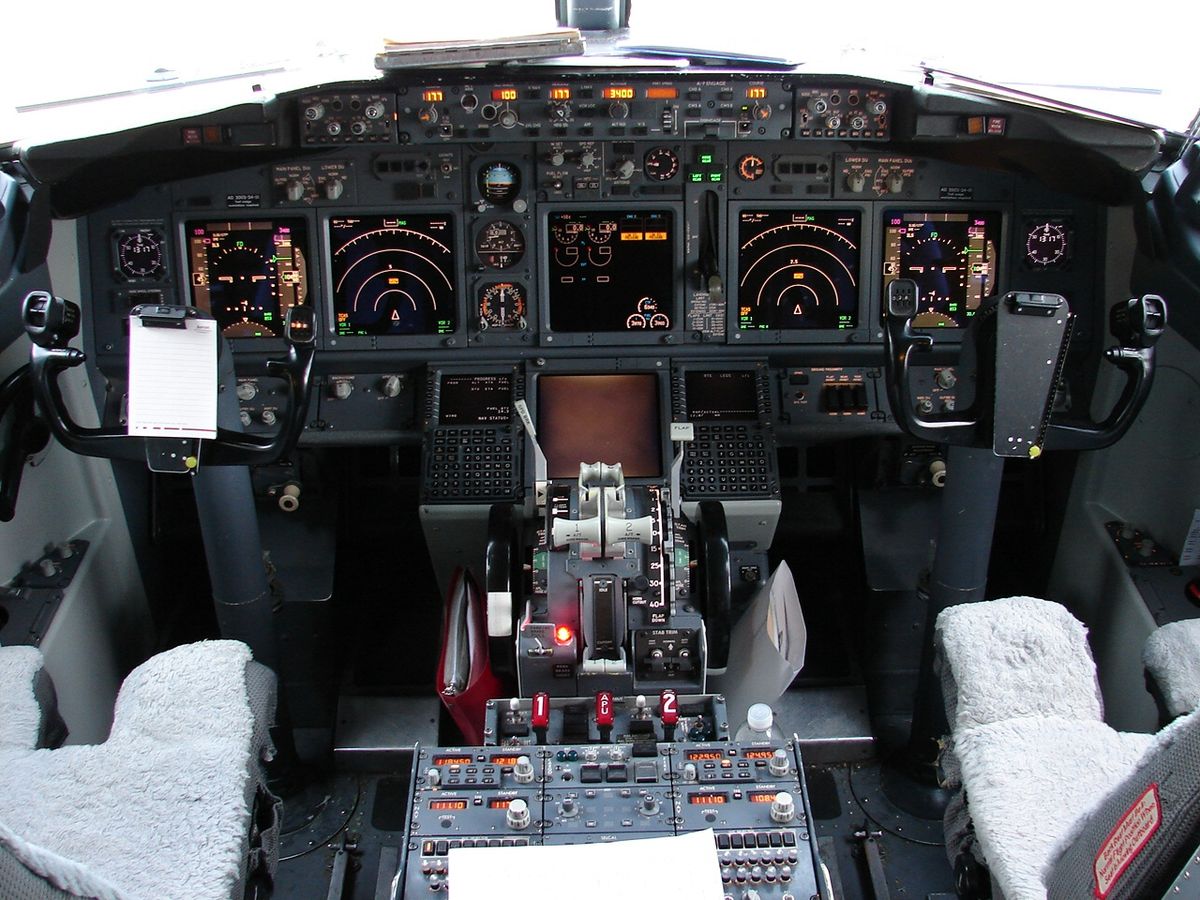
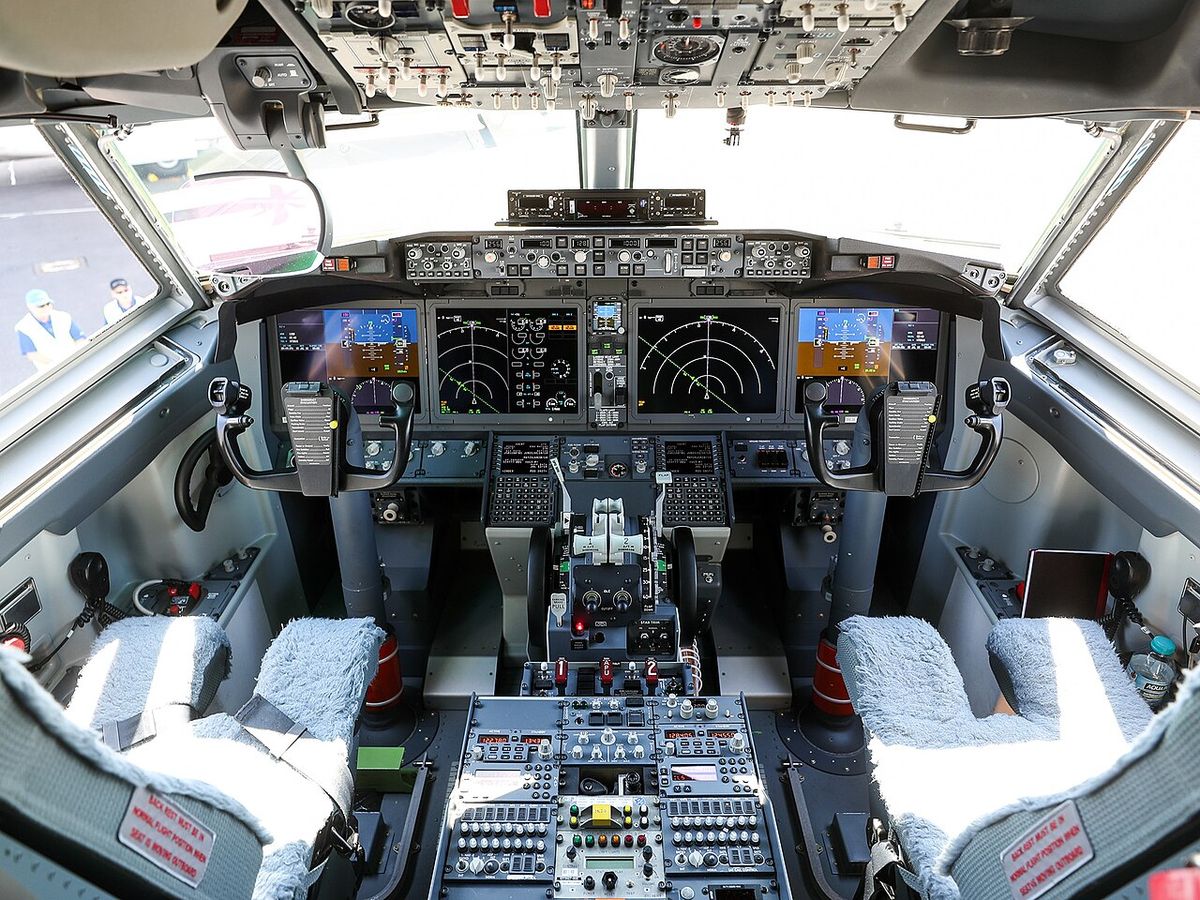
The NG's Common Display System (CDS) has six display units (DUs): an outboard and an inboard DU for each pilot, and an upper and a lower centre DU. Two display electronics units (DEUs) drive them, DEU 1 the captain's two DUs and the upper DU, DEU 2 the first officer's two and the lower DU (bank b737-flt 93). The MAX Display System (MDS) uses four large liquid crystal display units.
| Item | 737-800 (CDS) | 737-8 (MDS) | FSB level |
|---|---|---|---|
| Display units | Six | Four large LCD units | B/B |
| Engine display | Primary on the upper DU, secondary on the lower DU; compact format available | Revised format; no compact format | B/B; A/A |
| Hydraulic indications | Lower DU, via the MFD SYS switch | An MDS page | A/A |
| Flap position | Fixed mechanical indicator | On the MDS | B/B |
| PFD | Baseline | Expanded sky/ground and compass display | B/B |
| Standby instruments | Three standby instruments basic | Integrated standby flight display (ISFD) basic | B/B |
| AUX display | None | Added (see below) | B/B |
Hydraulics and flaps belong to modules 6 and 5; here they matter because the hydraulic indications become an MDS page and the flap position leaves its mechanical indicator for the screens.
Formats and reversion
On the NG you manage the screens from the display select panel. The MAIN PANEL DUs selector can put the PFD on the outboard DU alone (OUTBD PFD) or the primary engine display on the inboard DU (INBD ENG PRI); the LOWER DU selector can move the primary engine display to the lower DU (ENG PRI). Some switching is automatic: if an outboard DU fails the PFD moves inboard, and if the upper DU fails the primary engine display moves to the lower DU; a lower DU failure has no automatic switching (bank b737-flt 96 to 98, 112 to 114).
The MAX revises the display select switch panels, display brightness controls, master dim and test (B/B), and adds an engine transfer switch and an MFD INFO switch on the engine display control panel. The FSB does not describe the MAX reversion logic, so learn from your FCOM which screen shows what after a failure and which switch moves it. Do not reach for the NG selector positions from memory.
Unlock the rest of this module
Difference Training is part of PRO, with every question bank on v1prep. Or unlock the Boeing 737 NG to 737 MAX course and its quiz alone for €11.99, 12 months, no subscription, full refund within 14 days. Either way, Pilot CV Pro is included while it runs.
Continue in v1prep → See PRO plansAll modules
- The MAX Family and Your Type RatingThe 737 MAX models, why they share the B-737 type rating with the NG, the FAA differences levels A to E and what they require from NG to MAX, where the Appendix 7 special training fits, and the facts of the 2019 to 2020 grounding.MODULE 1 · 7 MIN READ
- Airframe, Dimensions and WeightsWhat changes on the outside of the MAX and on paper: engines, winglets, nose gear, tailskid and tail lights, dimensions, exits and seating by model, certified weights, and the altitude, speed and other limits in the type certificate.MODULE 2 · 7 MIN READ
- EnginesThe CFM LEAP-1B that replaces the NG's CFM56-7B: engine models in the type certificate, why the installation matters, the EEC, indication, alert and thrust reverser changes the FSB lists, thrust setting, starting and limitations.MODULE 3 · 6 MIN READ
- Flight Deck and DisplaysThe MAX Display System's four large screens against the NG's six display units, display formats and switching, the engine display control panel, EFIS panel, PFD and standby instruments, the two-position landing gear lever, and the FMC and CDU changes.MODULE 4 · 6 MIN READ
- Flight Controls, MCAS and Stabiliser TrimThe fly-by-wire spoilers and their new functions, how MCAS works after the 2020 return-to-service update, and the changes to speed trim, stabiliser trim, STAB OUT OF TRIM and AOA DISAGREE, with the FSB level for each.MODULE 5 · 7 MIN READ
- Systems by ATA ChapterThe remaining design differences in the FSB table from the 737-800 to the 737-8, grouped by ATA chapter with their training and checking levels, then the flight deck and procedure differences between the 737-8 and the 737-7, 737-9 and 737-8200.MODULE 6 · 6 MIN READ
- Procedures and Special TrainingWhat changes in normal and non-normal procedures on the 737 MAX, the special ground and simulator training of FSB Appendix 7, and the additional requirements EASA set for the return to service.MODULE 7 · 7 MIN READ
- Quick ReferenceOne side-by-side table of the main differences between the 737-800 and the 737-8 with their FSB training and checking levels, then a revision list of the facts and figures to know.MODULE 8 · 5 MIN READ
Sources
- FAA Flight Standardization Board Report, Boeing 737, Revision 17 (November 2020)
- FAA Flight Standardization Board Report, Boeing 737, Revision 21 (draft)
- Summary of the FAA's Review of the Boeing 737 MAX (November 2020)
- EASA Boeing 737 MAX Return to Service Report (January 2021)
- EASA Type Certificate Data Sheet IM.A.120, Boeing 737 (Issue 29, December 2025)
Difference Training on v1prep is for study, interview and exam preparation. It does not replace your operator's approved differences training, your AFM, FCOM and QRH, or the regulators' documents, which always govern.