VHF, HF and Satellite Communications
An aircraft's voice radios are VHF transceivers for line-of-sight contact on channels from 118.000 to 136.975 MHz, HF single-sideband sets that use sky waves to reach thousands of miles, and satellite communications that work almost anywhere, with SELCAL to alert the crew when a ground station calls.
An airliner crossing an ocean carries three kinds of voice radio. VHF sets handle nearly all communication within sight of a ground station; HF sets reach thousands of miles by using the ionosphere, at the cost of noise and fading; and satellite communications (SATCOM) give clear voice and data almost anywhere. A light aeroplane usually has one or two VHF sets only. The range, clarity and limits of each follow from the physics of radio wave propagation and from the way the crew choose frequencies and manage the sets.
The subject spans the EASA Communications and Radio Navigation syllabuses and the systems chapters of every type rating. Exam questions ask for the VHF band, the 8.33 kHz rules, the purpose of squelch, why HF uses single sideband, how the MUF and OWF are related and what SELCAL does.
The VHF communication radio
The VHF communication radio is a transceiver, a transmitter and receiver sharing one set, working in the aeronautical mobile band on channels from 118.000 to 136.975 MHz with amplitude modulation: double-sideband telephony, emission A3E (see radio waves, modulation and antennas). The band sits just above the radio navigation band, 108 to 117.95 MHz, used by VORs and ILS localisers.
Airliners normally carry three VHF systems; the Boeing 737 has three, and on the A320 the third is optional. On the A320, VHF 1 has its antenna on the upper forward fuselage, VHF 2 on the lower aft fuselage and VHF 3 on the upper aft fuselage, so that the fuselage cannot shadow both main sets from the same direction. Where ACARS is installed, VHF 3 is kept for data and is not used for ATC voice unless VHF 1 and VHF 2 have failed.
VHF travels by space wave and is therefore limited to line of sight, a little beyond the optical horizon. The maximum theoretical range in nautical miles is 1.23 × (√h₁ + √h₂), with the two aerial heights in feet: about 123 NM between an aircraft at 10,000 ft and a station at sea level, and roughly 200 NM at FL300. Terrain blocks the signal completely, which is why contact lost in a valley often returns after a climb. VHF is clear and little troubled by static, but out of reach over the open ocean.
Active and standby frequencies
A modern control head shows two frequencies for each radio: the active frequency, on which the set is transmitting and receiving, and the standby frequency, which the pilot preselects. A transfer key swaps them. The standby frequency becomes active and the radio retunes to it, while the old active frequency moves to standby, ready to return to if the new one does not answer. On the A320's radio management panel the ACTIVE window shows the frequency of the selected radio and the STBY/CRS window the standby; the Boeing 737's radio tuning panel works the same way and shows DATA when a radio is in data mode.
Good practice follows from the layout: set the next expected frequency in standby before it is needed, check it against the controller's instruction, and swap only when handed over. Tuning is not the same as listening. A radio can be tuned but unheard if its receiver is not selected on the audio control panel, and the pilot transmits on whichever radio is selected for transmission (see aircraft interphone and audio systems).
8.33 kHz and 25 kHz channel spacing
For decades the VHF band was divided into channels 25 kHz apart. Traffic growth in Europe exhausted them, and 8.33 kHz channel spacing, one third of 25 kHz, turned each 25 kHz channel into three. Europe has converted its VHF voice assignments to 8.33 kHz; the emergency frequency 121.500 MHz and the search and rescue frequency 123.100 MHz kept 25 kHz spacing so that any aircraft, including older 25 kHz-only installations, can use them.
An 8.33 kHz channel is identified by six digits, three after the decimal point, and all six are spoken: 132.905 is "one three two decimal nine zero five". The six digits are a channel designator, the name of the channel, and are not always the exact carrier frequency. A 25 kHz channel needs at most two digits after the decimal point, and a pilot whose radio is limited to 25 kHz spacing sets the first five digits of a frequency passed in full (see radiotelephony transmitting technique).
Controllers check capability with "CONFIRM EIGHT POINT THREE THREE", and the replies are "AFFIRM EIGHT POINT THREE THREE" or "NEGATIVE EIGHT POINT THREE THREE". An aircraft exempted from the carriage requirement states it with "AFFIRM EIGHT POINT THREE THREE EXEMPTED".
Exam tip: 8.33 kHz is one third of 25 kHz, so capacity triples. Six digits, all spoken, with DECIMAL; the capability phrase alone keeps the word POINT.
Squelch
Squelch is a circuit that mutes the receiver's audio output when no signal stronger than a set threshold is being received, so that the crew do not hear continuous background hiss between transmissions. Set too high, it can also silence a weak station; set too low, it lets the noise through. On the Boeing 737 the VHF TEST switch removes the automatic squelch, so that background noise can be heard: this tests the receiver and improves the reception of weak signals. Volume and squelch settings, with the frequency selected and the seating of plugs, are among the first things to check when a radio seems to have failed (see radio communication failure).
HF radio and single sideband
High frequency (HF) radio works between 3 and 30 MHz. Its sky waves are refracted back to earth by the ionosphere, often in several hops, so an aircraft can talk to a station thousands of miles away. HF is therefore the primary long-range voice link over the oceans, the polar regions and remote land, and in the North Atlantic aeradio stations relay HF messages to the oceanic control centres (see oceanic and North Atlantic operations). The price is quality: HF suffers from static, fading, skip zones and the daily cycle of the ionosphere, and listening to it for hours is tiring.
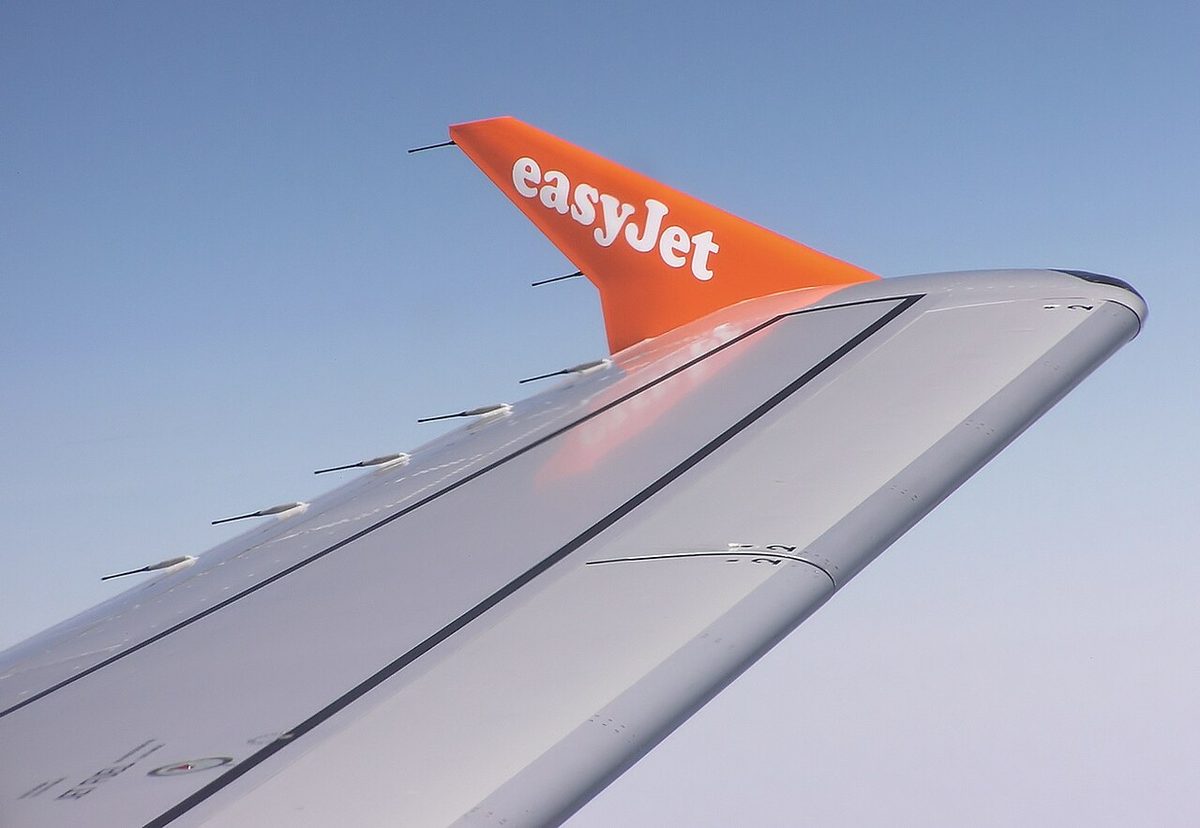
Aeronautical HF voice uses single sideband (SSB). An ordinary AM signal consists of a carrier and two identical sidebands; SSB suppresses the carrier and one sideband and transmits only the other, which roughly halves the bandwidth and puts the transmitter's power into the part that carries the voice. Aviation uses the upper sideband (USB). Airliner HF sets also offer AM: on the A320 SSB is the default and AM is selected with a pushbutton, and on the Boeing 737 a white AM light shows that AM rather than USB is selected.
HF is not used during refuelling: on the Boeing 737 this is a limitation, and the A320 procedures also require a check that nobody is near the antenna before HF is used on the ground. HF sets carry data as well as voice. HF data link (HFDL) is an alternative to VHF and satellite for ACARS messages, and the frequency is tuned automatically.
Choosing an HF frequency: MUF and OWF
The ionosphere returns an HF signal only if its frequency is low enough for the path; above that, the wave passes through into space. The maximum usable frequency (MUF) is the highest frequency the ionosphere will return over a given path. It gives the least attenuation but no margin: if ionisation falls, the signal is lost. Operators therefore work at the optimum working frequency (OWF), about 0.85 × MUF.
Ionisation builds after sunrise, peaks early in the afternoon and falls after dark, so the usable frequencies follow the sun: "the higher the sun, the higher the frequency". For the same range, roughly half the day frequency is needed at night. Oceanic HF frequencies are therefore assigned in families with frequencies in several bands; the North Atlantic families include frequencies in the 3, 5, 8, 11 and 13 MHz bands, among others. Crews move to higher frequencies after dawn and lower ones around dusk, and try another member of the family when reception fades. A higher frequency also lengthens the skip distance and widens the dead space in which nothing is received.
Exam tip: OWF = 0.85 × MUF. Night frequency ≈ half the day frequency. Higher frequency, longer skip distance.
The HF antenna coupler
An antenna works efficiently only when it is matched to the wavelength. HF wavelengths run from 10 m to 100 m, and no single aircraft antenna can be matched to all of them. The HF antenna coupler solves this electrically: for each frequency selected, it tunes the combination of antenna and coupler so that the transmitter's output is matched to the antenna. On the A320, where HF is fitted, the antenna is built into the leading edge of the fin and each system's coupler sits in the aft fuselage.
The coupler tunes when the transmitter is first keyed after a frequency change. On the Boeing 737 a tone is heard while it does so; it normally lasts up to 7 seconds, and a tone lasting longer, up to a maximum of 15 seconds, means that the system has failed to tune. The data for the last 100 tuned frequencies are stored, so retuning to one of them is so quick that the tone may not be noticed. The practical lesson is to key briefly after selecting a new HF frequency, wait for the tone to end and only then make the call, or the first words will be lost.

SELCAL
Listening continuously to a noisy HF frequency for hours is exhausting, so ground stations call aircraft selectively. SELCAL (selective calling) gives each aircraft a four-letter code. To call it, the ground station transmits four pre-selected audio tones, which take about two seconds. The aircraft's decoder, monitoring the frequencies selected on its HF and VHF radios, recognises its own code and alerts the crew with a chime and a light showing which radio is being called. The crew can then turn the HF volume down.
- The SELCAL code is entered in item 18 of the ICAO flight plan, after SEL/.
- Before entering an area where HF will be used, the crew makes a SELCAL check with the HF station, which confirms that the station can call the aircraft on that frequency.
- The receiver stays on and tuned. A SELCAL watch does not relieve the crew of any other listening watch, such as 121.5 MHz in oceanic airspace.
On the A320 the aural SELCAL alert is inhibited during take-off and landing. SELCAL is spoken as a word.
Satellite communications
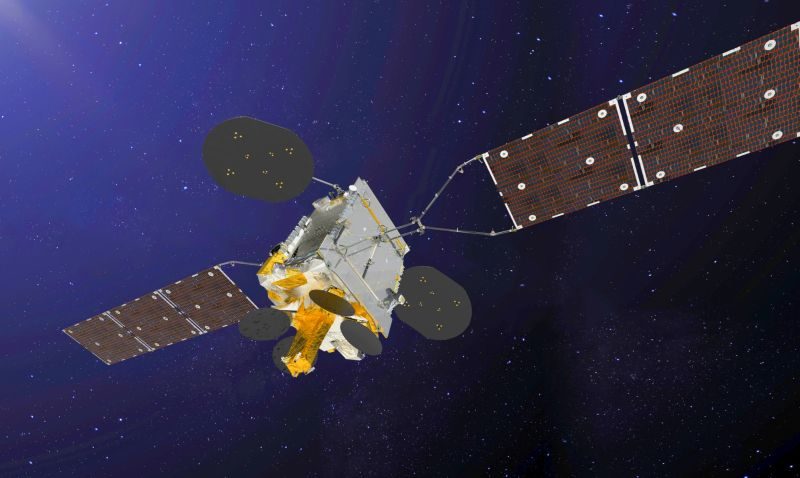
Satellite communications (SATCOM) carry voice and data from the aircraft to a satellite, down to a ground earth station and on through international telecommunication networks to any telephone or data address, including ATC and the airline. Quality is close to that of a telephone call and does not depend on the ionosphere. On the Boeing 737, where fitted, an incoming SATCOM call is announced by a SELCAL chime and a CALL light, and the system handles up to two simultaneous calls, a higher-priority incoming call pre-empting the lowest-priority one.
Two systems dominate. Inmarsat's satellites are geostationary, above the equator, and seen from very high latitudes they lie on or below the horizon, so their coverage ends around 80° of latitude. Iridium's satellites are in low Earth orbit and cover the polar regions as well; the same constellation carries the receivers for space-based ADS-B. In the flight plan, the data link codes J5 and J7 in item 10a declare FANS 1/A CPDLC over Inmarsat and Iridium SATCOM respectively; in the FAA's Oakland and New York oceanic FIRs CPDLC and ADS-C are permitted only through these two, and a logon is rejected if the code is missing.
In the North Atlantic HF voice through the aeradio stations is still the primary means of long-range communication, with satellite voice alongside it. There, a crew with a communication problem normally calls the aeradio station by SATCOM, not the oceanic control centre, unless urgency dictates otherwise. SATCOM data is also one of the paths that the aircraft's communications router selects automatically for airline and ATC data link messages, alongside VHF and HF data link (see ACARS and aircraft data link).
Frequently asked questions
What frequency range do aircraft VHF radios use?
Aeronautical VHF voice uses the band from 118.000 to 136.975 MHz, with amplitude modulation, just above the radio navigation band of 108 to 117.95 MHz used by VORs and ILS localisers. Channels are spaced 25 kHz apart, or 8.33 kHz apart in Europe, where six digits identify each channel. Range is limited to line of sight: about 123 NM for an aircraft at 10,000 ft and a station at sea level.
Why does HF radio use single sideband?
An ordinary amplitude-modulated signal consists of a carrier and two identical sidebands, and only the sidebands carry the voice. Single sideband suppresses the carrier and one sideband, which roughly halves the bandwidth and concentrates the transmitter's power in the useful signal, so more stations fit into the crowded HF band and range improves. Aviation HF uses the upper sideband, with AM available as an alternative mode on many sets.
What is the difference between MUF and OWF?
The maximum usable frequency (MUF) is the highest frequency that the ionosphere will return over a given path. It gives the least attenuation but no margin, because the signal is lost as soon as ionisation falls. The optimum working frequency (OWF) is about 0.85 times the MUF, leaving that margin. Both fall at night, when roughly half the day frequency is needed for the same range.
What is SELCAL and why is a SELCAL check made?
SELCAL, selective calling, lets a ground station alert one aircraft by transmitting its four-letter code as four audio tones, which take about two seconds. The aircraft's decoder sounds a chime and lights a call light, so the crew need not listen to noisy HF continuously. The check, made with the HF station before entering HF airspace, confirms that the station can call the aircraft on that frequency.
Why were 8.33 kHz VHF channels introduced?
VHF voice channels in Europe were exhausted by traffic growth. Dividing the spacing from 25 kHz to 8.33 kHz, one third, turns each old channel into three. Pilots are asked to confirm capability with the phrase EIGHT POINT THREE THREE, and all six digits of an 8.33 kHz channel are spoken. The emergency frequency 121.5 MHz and the search and rescue frequency 123.1 MHz kept 25 kHz spacing.
What does the squelch control on a radio do?
Squelch mutes the receiver's audio when no signal stronger than a set threshold is present, so the crew do not hear constant background hiss between transmissions. If set too high it can also cut out a weak station, so squelch, with volume and frequency, is one of the first things to check when a radio seems to have failed. On the Boeing 737 the VHF TEST switch removes the automatic squelch to test the receiver.
Test yourself on VHF, HF and Satellite Communications
The v1prep banks cover this topic in Communications (090), with a worked explanation for every answer. EASA ATPL, PPL, IR and CPL, the FAA written tests and A320/B737 type ratings.
Start practising →Sources and further reading
- EASA, Explanatory Note to ED Decision 2018/001/R, Part-FCL theoretical knowledge learning objectives (062 Radio Navigation, 090 Communications)
- ICAO Annex 10, Aeronautical Telecommunications, Volume II, Communication Procedures including those with PANS status (ICAO Store)
- Commission Implementing Regulation (EU) No 1079/2012, voice channel spacing requirements for the Single European Sky
- FAA Aeronautical Information Manual, Chapter 5 Section 3 (5-3-1, oceanic data link over Inmarsat and Iridium)
- ICAO NAT Doc 007, North Atlantic Operations and Airspace Manual (2026 edition)
- FAA Instrument Flying Handbook (FAA-H-8083-15B), Chapter 9, Navigation Systems (basic radio principles)
- UK CAA, CAP 413 Radiotelephony Manual
Library articles are written for study and exam preparation. They do not replace your aircraft's approved documentation, your operator's procedures or the regulations themselves.