Parallel Runway Operations
Parallel runway operations are the procedures under which two or more parallel or near-parallel instrument runways are used at the same time, in one of four ICAO modes: independent approaches, dependent approaches, independent departures or segregated operations, each with its own runway spacing and surveillance requirements.
A single runway can handle only one landing or one take-off at a time, and wake turbulence and runway occupancy set the interval between them. Busy aerodromes therefore build two or more parallel runways. In good visibility, pilots and controllers can keep aircraft on neighbouring runways apart by sight. In instrument conditions they cannot, and two aircraft flying side by side towards runways a kilometre apart are much closer than any normal radar separation minimum allows. Parallel runway operations are the special procedures that make this possible without losing safety.
ICAO sets out four modes of operation for parallel and near-parallel instrument runways in PANS-ATM (Doc 4444), with matching design criteria in PANS-OPS and runway spacing in Annex 14. The FAA uses different names and figures in feet, described later. Both systems rest on the same three ideas: enough distance between the runways, accurate guidance on each approach or departure path, and a surveillance picture good enough for a controller to see a deviation and act on it before it matters.
- Why parallel runway modes exist
- Independent parallel approaches (Mode 1)
- Dependent parallel approaches (Mode 2)
- Independent parallel departures (Mode 3)
- Segregated parallel operations (Mode 4)
- Normal operating and no transgression zones
- FAA simultaneous approaches
- Wake turbulence and visual approaches
- The pilot's part
- Frequently asked questions
Why parallel runway modes exist
Normal radar separation keeps aircraft a set distance apart laterally or longitudinally, or at least 1,000 ft apart vertically (see separation standards). Two aircraft on final approaches to parallel runways lose their vertical separation as they descend, and their lateral distance is only the spacing of the runways. The parallel runway modes replace normal separation with other protection: fixed spacing between the runways, published rules for vectoring and track divergence, and, for independent approaches, a monitored buffer zone between the two approach paths.
| Mode | Operation | Minimum distance between runway centre lines |
|---|---|---|
| 1 | Independent parallel approaches | 1,035 m |
| 2 | Dependent parallel approaches | 915 m |
| 3 | Independent parallel departures | 760 m |
| 4 | Segregated parallel operations | 760 m |
Every mode depends on surveillance radar, whatever the weather. If the radar fails, parallel operations stop and the aerodrome reverts to single-runway operations. Exam texts based on the ICAO procedures assume that aircraft on parallel approaches fly the ILS or MLS; the FAA also allows RNAV (GPS) and GLS approaches.
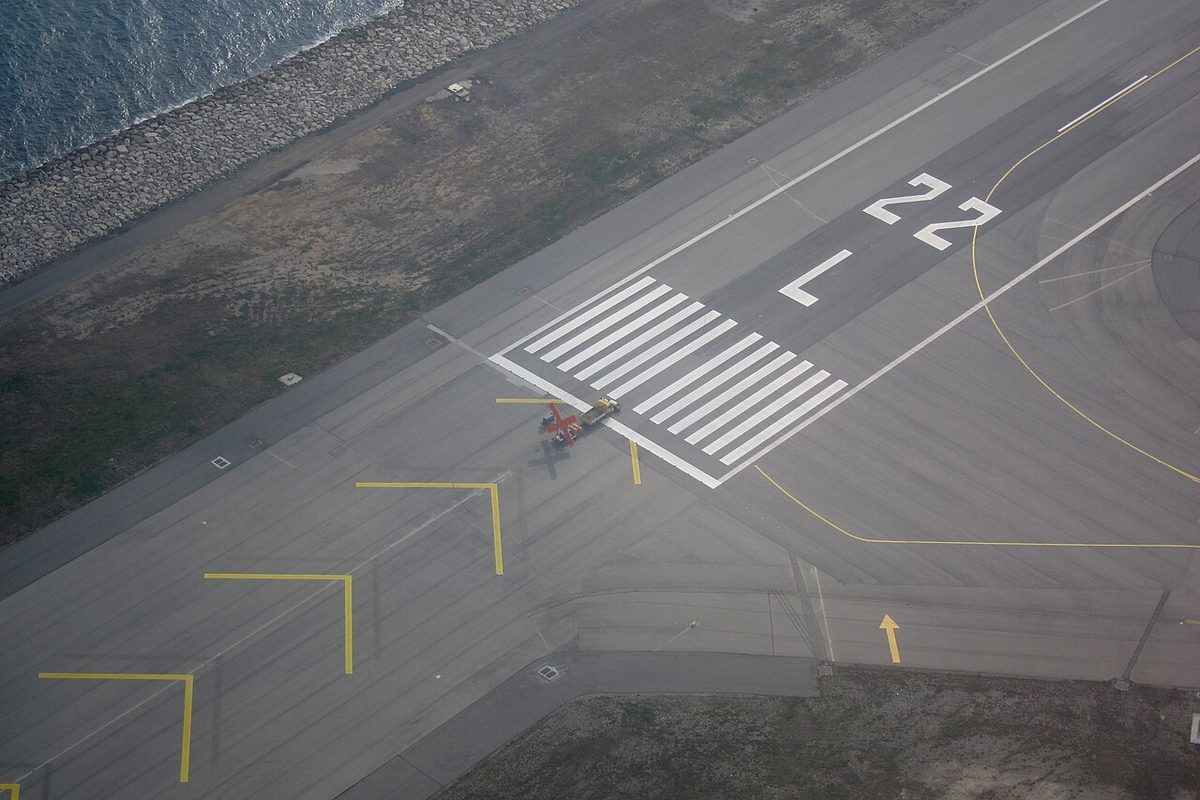
Runway designators show which parallel runway is which. Two parallels with the same magnetic direction become 09L and 09R, left and right as seen on the approach; three become 09L, 09C and 09R; with four, one pair takes the next number, giving 09L, 09R, 10L and 10R.
Independent parallel approaches (Mode 1)
In independent parallel approaches (Mode 1), aircraft fly simultaneous approaches to parallel runways, and radar separation minima are not applied between aircraft on adjacent localiser courses. The two streams of traffic are handled as if the other did not exist, which gives the greatest capacity. The price is the largest runway spacing, at least 1,035 m between centre lines, and continuous monitoring of both final approaches.
The protection is built up in stages:
- During the turn onto final. Until aircraft on adjacent approaches are both established on their localisers, they keep a normal separation minimum, typically 1,000 ft vertically. The closing heading onto the localiser is limited to 30°, instead of the 45° normally allowed for a single runway, and the aircraft flies straight and level for at least 1 NM before the intercept. The final vector should also let it fly level on the localiser for at least 2 NM before it meets the glide path.
- On final. Each aircraft stays in its own normal operating zone, and a no transgression zone separates the two (described below). Monitoring controllers watch the final approaches and intervene as soon as an aircraft drifts towards the zone between them.
- In the missed approach. The missed approach tracks of the two approaches diverge by at least 30°.
Exam tip: Mode 1 is the only mode in which radar separation is not applied between aircraft on the adjacent approaches. Its runways must be at least 1,035 m apart and its NTZ at least 610 m wide.
Dependent parallel approaches (Mode 2)
In dependent parallel approaches (Mode 2), aircraft also fly simultaneous approaches to parallel runways, but radar separation minima are applied between aircraft on adjacent localiser courses. The arrivals are staggered, so that each aircraft is separated from the one ahead on its own approach and from the nearest one on the other. Because the controller no longer relies on a buffer zone alone, the runways may be closer: at least 915 m apart. The vectoring rules are the same as in Mode 1, with a closing heading of no more than 30° and at least 1 NM of straight and level flight before the localiser.
Mode 2 gives less capacity than Mode 1 but more than a single runway, and it suits aerodromes whose parallels are too close for independent approaches.
Independent parallel departures (Mode 3)
In independent parallel departures (Mode 3), aircraft take off in the same direction from parallel runways at the same time. The runways must be at least 760 m apart, and:
- the nominal departure tracks diverge by at least 15° immediately after take-off;
- surveillance radar must be able to identify each aircraft within 1 NM of the end of the runway;
- ATS procedures ensure that the divergence is actually achieved.
PANS-OPS design criteria require the same 15° divergence between two instrument departure procedures used at the same time from parallel runways. France notifies that a smaller value may be used, depending on the runway spacing, once the supervisory authority has approved it. The pilot's part is simple and essential: fly the published departure or the assigned heading exactly, and turn as soon as the procedure calls for it.
Segregated parallel operations (Mode 4)
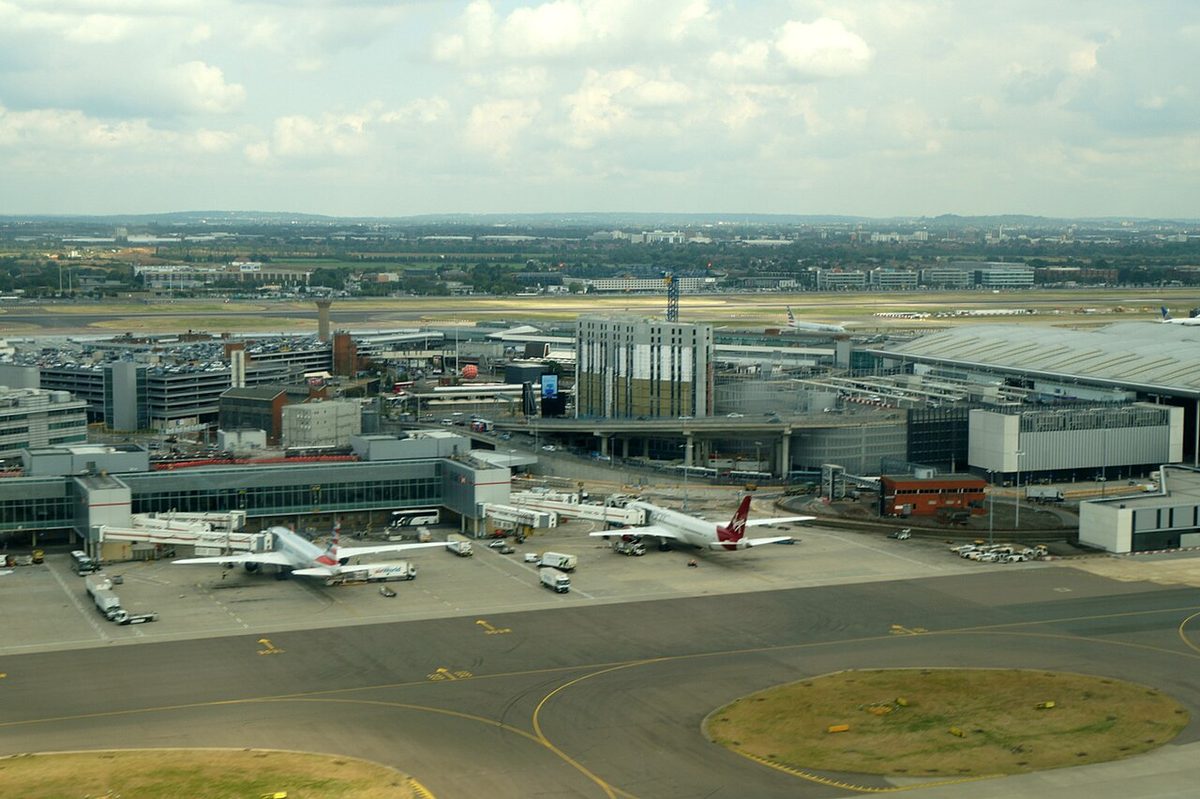
In segregated parallel operations (Mode 4), one runway is used only for approaches and the other only for departures. London Heathrow is the example usually quoted. The minimum spacing is again 760 m. The critical geometry is the missed approach: an aircraft going around from the landing runway must not turn into the path of an aircraft departing from the other. When an instrument departure and an instrument approach are used at the same time in the same direction on parallel runways, the missed approach track and the departure track must diverge by at least 30°, and as early as possible.
Normal operating and no transgression zones
The normal operating zone (NOZ) is the airspace either side of each localiser course, or MLS final approach track, in which an aircraft on that approach is expected to remain. Exam texts give its limit as half-scale deviation on the course deviation indicator. Only the inner half of each NOZ, the side facing the other runway, is taken into account in independent parallel approaches.
The no transgression zone (NTZ) is a corridor of airspace at least 610 m wide, located centrally between the two extended runway centre lines. An aircraft that penetrates it triggers immediate intervention. The monitoring controller first tells a deviating aircraft to return to its course. If it enters the NTZ, the aircraft on the adjacent approach is turned away and climbed, because it is now the one in danger. The NOZ keeps the normal tracking errors of each aircraft away from the NTZ, so that an intervention means a genuine blunder rather than ordinary turbulence or a slightly late intercept.
Note: a deviation towards the NTZ can come from an autopilot capturing the wrong localiser, an overshoot of the turn onto final, or a failed receiver. A crew who suspects any of these should tell ATC at once.
FAA simultaneous approaches
The FAA groups approaches to parallel runways into three classes, set by runway spacing and by the monitoring available:
- Simultaneous dependent approaches normally serve runways 2,500 ft to 9,000 ft apart. Aircraft on adjacent finals are staggered by a diagonal radar separation of at least 1.0 NM where the centre lines are 2,500 to 3,600 ft apart, 1.5 NM from over 3,600 ft to 8,300 ft, and 2 NM from over 8,300 ft to 9,000 ft. On the same final within 10 NM of the runway end the minimum is 3 NM, reduced to 2.5 NM in certain circumstances. No final monitor is needed.
- Simultaneous independent approaches serve runways at least 4,300 ft apart. Between 4,300 and 9,000 ft (9,200 ft at airports above 5,000 ft), final monitor controllers watch an NTZ and can override the tower frequency. Beyond 9,000 ft no NTZ is needed, although pilots receive the same alerts.
- Simultaneous close parallel (PRM) approaches serve approach courses less than 4,300 ft apart and as close as 3,000 ft. They carry PRM in the title and require pilot training, a briefing of the Attention All Users Page and a second PRM monitor frequency, which the crew listens to from the moment it is told to contact the tower. A simultaneous offset instrument approach (SOIA) extends the idea to runways at least 750 ft but less than 3,000 ft apart: one aircraft flies an offset course and must see the straight-in traffic before its offset missed approach point.
For independent and PRM approaches, aircraft turning onto the parallel finals are given 1,000 ft vertical or 3 miles radar separation, keep their assigned altitude until on the glide path, and are not vectored to intercept at more than 30°. Radar monitoring ends without notice when visual separation is applied, when the pilot reports the approach lights or runway in sight, or 1 NM from the threshold. RNAV approaches used simultaneously require GPS updating, and a note such as "LNAV NA during simultaneous operations" means vertical guidance is needed. At some airports an approach course is offset by up to 3°; an offset localiser loses CAT II and III capability and raises the decision altitude by 50 ft.
A breakout is an ATC vector off the final approach course for a threatened aircraft when another aircraft penetrates the NTZ. It begins with the words "TRAFFIC ALERT", followed by the call sign, an immediate turn onto a heading, and a climb or descent to an altitude. The crew gets no warning, because the blundering aircraft is on another frequency. The breakout is flown at once and by hand. A TCAS resolution advisory is followed for its vertical guidance even if it conflicts with the climb or descent in the breakout, while the turn is still flown.
Wake turbulence and visual approaches
Parallel runways close together behave, for wake turbulence, like a single runway. ICAO applies wake turbulence separation minima between aircraft using parallel runways less than 760 m apart. The FAA's equivalent threshold is 2,500 ft. Its departure intervals behind a heavy or super aircraft, two and three minutes respectively unless radar separation is applied, also cover a take-off from a parallel runway less than 2,500 ft away with less than 500 ft of threshold stagger, and the AIM advises a pilot landing behind a larger aircraft on a parallel runway closer than 2,500 ft to allow for its wake drifting across and to stay at or above its flight path (see wake turbulence and jet blast).
In visual conditions the FAA also uses runway spacing to decide when a visual approach relieves ATC of its separation duty. Below 2,500 ft, approved separation continues unless the following pilot sees the aircraft ahead on the adjacent parallel and visual separation is applied. From 2,500 ft to less than 4,300 ft, it is kept until one pilot has acknowledged a visual approach clearance, the other a visual or instrument approach clearance, and both are on headings or procedures that intercept the extended centre line at no more than 30°. At 4,300 ft or more, one acknowledged visual approach clearance is enough, with the same 30° condition. Sidesteps and close parallel visual procedures are covered in circling and visual approaches.
The pilot's part
Parallel operations work only if every crew flies the procedure accurately and listens closely:
- In the United States, expect the ATIS to announce simultaneous approaches, typically as "Simultaneous ILS runway 24 left and ILS runway 24 right approaches in use". The FAA does not use the words independent or parallel in that announcement.
- Tell approach control at once of a malfunctioning or inoperative receiver, or if a simultaneous approach is not wanted.
- Comply with assigned headings, speeds and altitudes without delay, intercept the correct localiser, and track it precisely; an autopilot coupled approach needs the crew to know how to leave it quickly.
- Keep strict radio discipline: use full call signs, avoid long transmissions, and treat a long silence or odd background noise as a possible stuck microphone blocking the monitor controller.
- If the go-around comes, fly the published missed approach, which is designed to diverge from the departures and the other approach (see go-around and missed approach).
Frequently asked questions
What are the four modes of parallel runway operation?
ICAO defines Mode 1, independent parallel approaches; Mode 2, dependent parallel approaches, in which radar separation is applied between aircraft on the adjacent approaches; Mode 3, independent parallel departures in the same direction; and Mode 4, segregated operations, in which one runway is used only for arrivals and the other only for departures. Each mode has a minimum distance between runway centre lines, and all of them need surveillance radar.
What is the no transgression zone in parallel approaches?
The no transgression zone, or NTZ, is a corridor of airspace at least 610 m wide, centred between the two extended runway centre lines, used in independent parallel approaches. A monitoring controller watches it. If an aircraft is about to enter it, the controller turns it back to its course; if it penetrates the zone, the aircraft on the adjacent approach is turned away and climbed at once.
What is the difference between independent and dependent parallel approaches?
In independent approaches, Mode 1, no radar separation is applied between aircraft on the two adjacent approaches once both are established; they are kept apart by accurate tracking and by the monitored no transgression zone. In dependent approaches, Mode 2, radar separation is applied between aircraft on the adjacent approaches, so arrivals are staggered, which allows the runways to be closer together: 915 m instead of 1,035 m.
How far apart must parallel runways be for independent approaches?
ICAO sets a minimum of 1,035 m between runway centre lines for independent parallel approaches, 915 m for dependent approaches and 760 m for independent departures and segregated operations. The FAA works in feet and sets 4,300 ft for simultaneous independent approaches, or as little as 3,000 ft between approach courses for PRM approaches with extra monitoring, and 2,500 ft for simultaneous dependent approaches.
What is a PRM approach?
In the United States, a PRM approach is a simultaneous close parallel approach to runways too close for ordinary independent approaches. It carries PRM in its title and needs pilot training, a briefing of the Attention All Users Page, and a second monitor frequency. If an aircraft on the other approach strays into the no transgression zone, the threatened crew receives a breakout instruction, which is flown immediately and by hand.
Test yourself on Parallel Runway Operations
The v1prep banks cover this topic in Air Law (010), with a worked explanation for every answer. EASA ATPL, PPL, IR and CPL, the FAA written tests and A320/B737 type ratings.
Start practising →Sources and further reading
- ICAO Doc 4444, Procedures for Air Navigation Services, Air Traffic Management (PANS-ATM), 16th edition, as published by Airservices Australia
- ICAO Doc 8168, Procedures for Air Navigation Services, Aircraft Operations (PANS-OPS), and related Annexes
- FAA Aeronautical Information Manual, Chapter 5 Section 4 (5-4-13 to 5-4-16 parallel approaches and PRM, 5-4-23 visual approaches)
- FAA Aeronautical Information Manual, Chapter 7 Section 4, Wake Turbulence
- AIP France, GEN 1.7, Differences from ICAO Standards, Recommended Practices and Procedures (PANS-OPS, departures from parallel runways)
Library articles are written for study and exam preparation. They do not replace your aircraft's approved documentation, your operator's procedures or the regulations themselves.