Alerting Service and Search and Rescue
The alerting service is the air traffic service that notifies search and rescue organisations of aircraft in need of help and assists them. It works through three emergency phases, uncertainty, alert and distress, and hands each case to the rescue coordination centre of the search and rescue region concerned.
An aircraft that crashes in a remote area, ditches or simply fails to arrive needs someone on the ground to notice and to start looking. That job belongs to the alerting service, the air traffic service that raises the alarm, and to the search and rescue (SAR) organisation that it alerts. The two are defined in different ICAO Annexes, the alerting service in Annex 11 and SAR in Annex 12, but they work as a single chain: an ATS unit notices that something is wrong, grades its concern through three emergency phases, and passes the case to a rescue coordination centre, which sends aircraft, helicopters and ships.
For the pilot, the subject has two sides. The first is avoiding false alarms, above all by closing flight plans. The second is knowing what to do on the other side of an accident, as a survivor laying out signals or as a crew arriving first on the scene. Distress beacons and radio calls, the other ways of starting the chain, are covered in emergency beacons and search and rescue signals and distress and urgency communications.
The alerting service
The alerting service is provided:
- to all aircraft provided with air traffic control service;
- as far as practicable, to all other aircraft that have filed a flight plan or are otherwise known to air traffic services;
- to any aircraft known or believed to be the subject of unlawful interference.
It is available throughout every flight information region, including uncontrolled Class G airspace, where it and flight information service are the only services given (see air traffic services). The flight information centre or area control centre serves as the central point for collecting information about an aircraft in a state of emergency in its FIR and forwarding it to the rescue coordination centre. Other units report to it: if an aircraft that has been handed over to the aerodrome controller fails to land within 5 minutes of its expected landing time and contact with it cannot be re-established, the tower reports this at once to the ACC or FIC, and the alert phase is declared.
Uncertainty, alert and distress phases
The alerting service grades an emergency in three emergency phases, each with a code word used in ATS messages. In increasing order of seriousness they are INCERFA, ALERFA and DETRESFA.
| Phase | Code word | Declared when |
|---|---|---|
| Uncertainty phase | INCERFA | No communication has been received from the aircraft within 30 minutes after the time a communication should have been received; or the aircraft fails to arrive within 30 minutes of the estimated time of arrival last notified to ATS |
| Alert phase | ALERFA | Following the uncertainty phase, further attempts to communicate and enquiries to other sources have brought no news; or an aircraft cleared to land fails to land within 5 minutes of the estimated time of landing and communication has not been re-established; or information shows that the aircraft's operating efficiency is impaired, but not to the extent that a forced landing is likely; or the aircraft is known or believed to be the subject of unlawful interference |
| Distress phase | DETRESFA | Following the alert phase, further unsuccessful attempts to communicate and more widespread unsuccessful enquiries point to the probability that the aircraft is in distress; or the fuel on board is considered exhausted, or insufficient to reach safety; or operating efficiency is impaired to the extent that a forced landing is likely; or information is received that the aircraft is about to make, or has made, a forced landing |
The uncertainty phase is not declared when there is no doubt about the safety of the aircraft and its occupants. The phases need not follow one another: a report that an aircraft is making a forced landing leads straight to the distress phase, and a hijacking to the alert phase. When a phase is declared, the ATS unit notifies the rescue coordination centre and passes on the information it holds about the flight.
Exam tip: INCERFA at 30 minutes (no communication, or late arrival); ALERFA at 5 minutes for an aircraft cleared to land that has not landed; unlawful interference means at least ALERFA; a forced landing means DETRESFA.
Overdue aircraft action
Most alerting cases start with an aircraft that is simply late, and most of those end with an aircraft found safe on the ground. Overdue action is the sequence of checks that follows: the ATS units try to call the aircraft and make enquiries to other relevant sources. At an aerodrome without air traffic control, an AFIS officer also alerts the rescue services and starts overdue action when an expected aircraft does not arrive.
The flight plan is the key. Under SERA.4020, an arrival report must be made at the earliest possible moment after landing for any flight for which a flight plan covering the whole flight was submitted. Where there is no ATS unit at the arrival aerodrome, the pilot makes it as soon as practicable, by the quickest means available, to the nearest ATS unit, giving the aircraft identification, the departure and arrival aerodromes and the time of arrival. In France a flight plan can be closed by telephone, for example to the regional information office (BRIA). Item 19 of the ICAO flight plan, which gives endurance, persons on board, emergency radio, survival equipment, dinghies and the aircraft's colour, is not transmitted with the plan but kept for exactly this case.
In the United States, a VFR flight plan is not closed by a tower; the pilot must close it with Flight Service after landing. If it is not closed within 30 minutes of the ETA, Flight Service begins its search procedure, first with an information request (INREQ) and then with an alert notice (ALNOT). Flight service stations provide search and rescue services and assistance to lost aircraft and aircraft in emergency.
Warning: an open flight plan for an aircraft already on the ground sends rescuers out for nothing and delays their response to a real emergency. Close it, and update the ETA en route if the flight is running late.
SAR organisation under Annex 12
ICAO Annex 12, Search and Rescue, requires each State to provide SAR services in its territory on a 24-hour basis, and to assist aircraft in distress and survivors of aircraft accidents regardless of their nationality. Each State publishes its SAR arrangements in its AIP, normally in section GEN 3.6.
The service is organised by search and rescue regions (SRR). States delineate them so that they do not overlap, and their boundaries should, as far as practicable, coincide with those of the corresponding flight information regions. The match means that the ACC or FIC declaring an emergency phase normally deals with a single rescue coordination centre.
Rescue centres and on-scene command
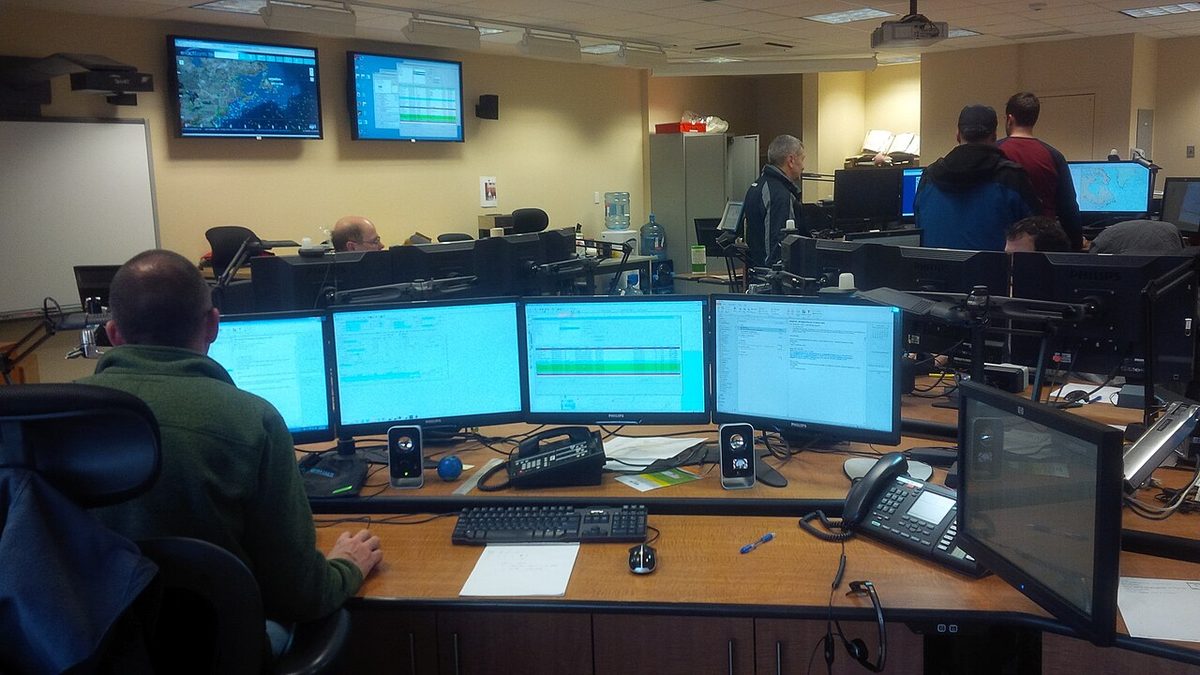
A rescue coordination centre (RCC) is the unit responsible for promoting the efficient organisation of the SAR service and for coordinating SAR operations within a search and rescue region. Each State establishes one in each SRR. Where it improves efficiency, a rescue sub-centre (RSC) can be set up under it to cover part of the region. The RCC receives alerts from ATS and from the Cospas-Sarsat beacon system, plans the search and tasks the rescue units.
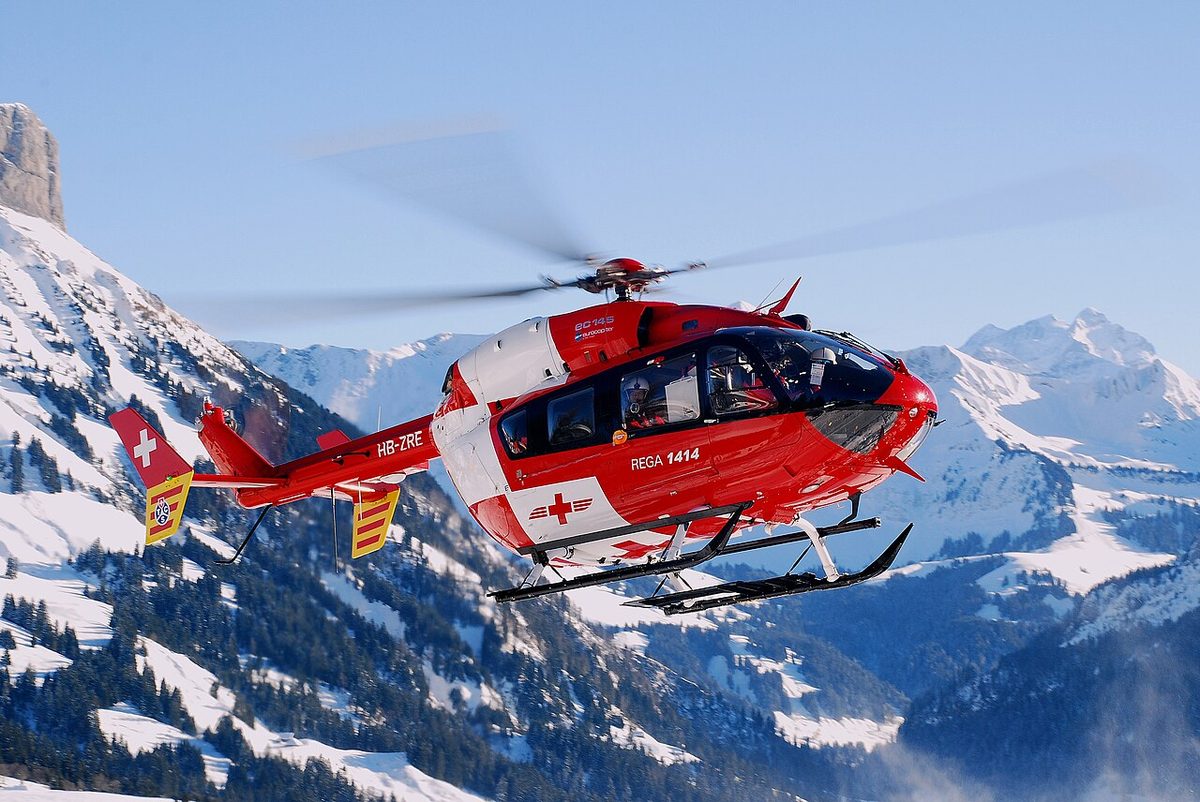
At the scene, command must be clear. If the first aircraft to reach the scene of an accident is not a SAR aircraft, its pilot-in-command takes charge of the on-scene activities of all aircraft arriving later, until the first dedicated SAR aircraft reaches the scene. If that pilot cannot communicate with the RCC, he or she may hand over, by mutual agreement, to an aircraft that can. With three aircraft, the first on scene without contact with the RCC, the second with good communications and the third a SAR aircraft, command passes from the first to the second by agreement and to the third when it arrives. The on-scene frequency is 123.1 MHz, alongside the emergency frequency 121.5 MHz.
Ground-air visual signal code
Survivors without a radio can talk to search aircraft with the ground-air visual signal code:
| Symbol | Meaning |
|---|---|
| V | Require assistance |
| X | Require medical assistance |
| N | No or negative |
| Y | Yes or affirmative |
| Arrow | Proceeding in this direction |
The symbols should be at least 2.5 m (8 ft) long and made as conspicuous as possible, in any form that contrasts with the surface, such as trampled snow, oil on sand or burned grass. Size and contrast matter more than neatness: smaller marks are effectively invisible from search height.
Air-to-ground acknowledgement
A search aircraft that has understood a ground signal says so with air-to-ground acknowledgement signals:
- by day, by rocking its wings;
- by night, by flashing its landing lights on and off twice, or, if it has none, its navigation lights.
There is no separate "not understood" signal in the current Annex 12: the absence of the acknowledgement tells the survivors that the message has not been understood. Rocking the wings is also the daytime acknowledgement of tower light signals, which gives pilots one gesture to remember.
Directing a surface craft
A ship or boat is often the fastest way to reach survivors at sea, but aircraft rarely carry marine radios. ICAO gives a visual procedure for directing a surface craft to the scene. The aircraft:
- circles the surface craft;
- crosses its projected course close ahead at low altitude, rocking its wings;
- heads in the direction in which the craft is to go.
Crossing low astern of the craft, rocking the wings, means the opposite: its assistance is no longer required. Aircraft do not normally carry the VHF FM radios used at sea, so talking to a vessel usually means relaying through a coastguard or coastal radio station.
Exam tip: ahead of the bow means follow me; astern means help no longer needed.
Droppable supplies colour code
Supplies dropped to survivors are packed in containers with coloured streamers, so that their contents are clear without opening them. The SAR droppable supplies colour code is:
| Streamer colour | Contents |
|---|---|
| Red | Medical supplies and first-aid equipment |
| Blue | Food and water |
| Yellow | Blankets and protective clothing |
| Black | Miscellaneous equipment, such as stoves, axes and cooking utensils |
The survival equipment an aircraft carries, and its use after a forced landing or ditching, is covered in forced landing and ditching.
Frequently asked questions
What are INCERFA, ALERFA and DETRESFA?
They are the code words for the three emergency phases of the alerting service, in increasing order of seriousness. INCERFA is the uncertainty phase, declared when there is doubt about an aircraft's safety; ALERFA is the alert phase, declared when there is apprehension about it; and DETRESFA is the distress phase, declared when there is reasonable certainty that the aircraft and its occupants are threatened by grave and imminent danger or require immediate assistance.
When is the uncertainty phase declared?
The uncertainty phase, INCERFA, is declared when no communication has been received from an aircraft within 30 minutes after the time a communication should have been received, or when an aircraft fails to arrive within 30 minutes of the estimated time of arrival last notified to air traffic services. The alert phase follows if enquiries bring no news, and an aircraft cleared to land that has not landed within 5 minutes goes straight to the alert phase.
What happens if you forget to close a flight plan?
Air traffic services assume the aircraft may be in trouble. If no arrival report is received, the uncertainty phase is declared 30 minutes after the estimated time of arrival, and the case can progress to the alert and distress phases and a search. In the United States, a VFR flight plan not closed within 30 minutes of the ETA starts an INREQ, then an ALNOT. Forgetting to close a flight plan is one of the commonest causes of needless search and rescue action.
What do V and X mean in the ground-air visual signal code?
In the ground-air visual signal code used by survivors, V means require assistance and X means require medical assistance. N means no or negative, Y means yes or affirmative, and an arrow means proceeding in this direction. The symbols should be at least 2.5 m (8 ft) long and made as conspicuous as possible against the ground, using any material that contrasts with it.
What do the coloured streamers on dropped supplies mean?
Supplies dropped to survivors carry streamers whose colour shows the contents. Red means medical supplies and first-aid equipment, blue means food and water, yellow means blankets and protective clothing, and black means miscellaneous equipment such as stoves, axes and cooking utensils. Survivors can therefore tell what each container holds without opening it, and find the medical supplies first.
Test yourself on Alerting Service and Search and Rescue
The v1prep banks cover this topic in Air Law (010), with a worked explanation for every answer. EASA ATPL, PPL, IR and CPL, the FAA written tests and A320/B737 type ratings.
Start practising →Sources and further reading
- ICAO Annex 11, Air Traffic Services (consolidated text, Chapter 5, Alerting service)
- ICAO Annex 12, Search and Rescue
- EASA Easy Access Rules for Standardised European Rules of the Air (SERA), SERA.4020 arrival reports
- AIP France, ENR 1.1, General rules (closing a flight plan)
- FAA Aeronautical Information Manual, Chapter 6 Section 2, Emergency Services Available to Pilots
- FAA Aeronautical Information Manual, Chapter 4 Section 1 (4-1-3, Flight Service Stations)
Library articles are written for study and exam preparation. They do not replace your aircraft's approved documentation, your operator's procedures or the regulations themselves.