Wing Planform and Design
A wing's planform is its shape seen from directly above, described by its span, area, chord distribution, taper and sweep. Together with the aerofoil section and any twist, it sets the wing's induced drag, lift curve, stall behaviour, structural weight and response to gusts.
The planform of a wing is its shape seen from directly above: how far it reaches from tip to tip, how its chord changes along the span, and how far its leading and trailing edges are swept. Planform, together with the aerofoil section and any twist built into the wing, decides how much induced drag the wing makes, how steep its lift curve is, where it stalls first, how heavy its structure must be and how it rides through gusts.
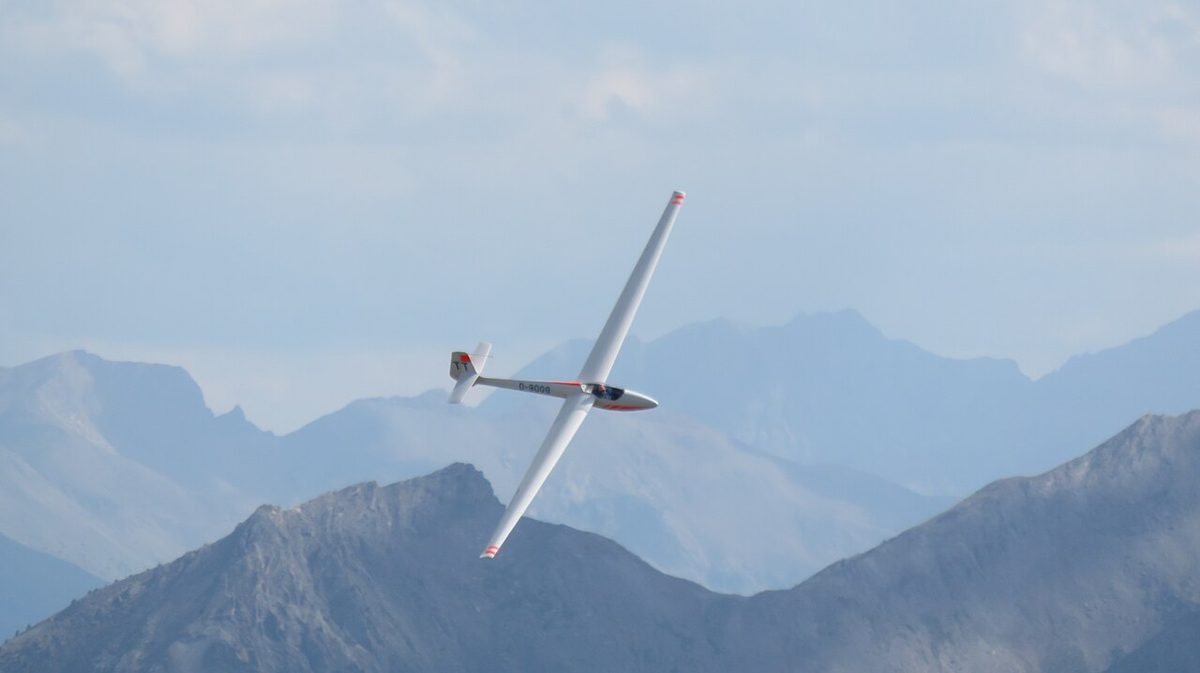
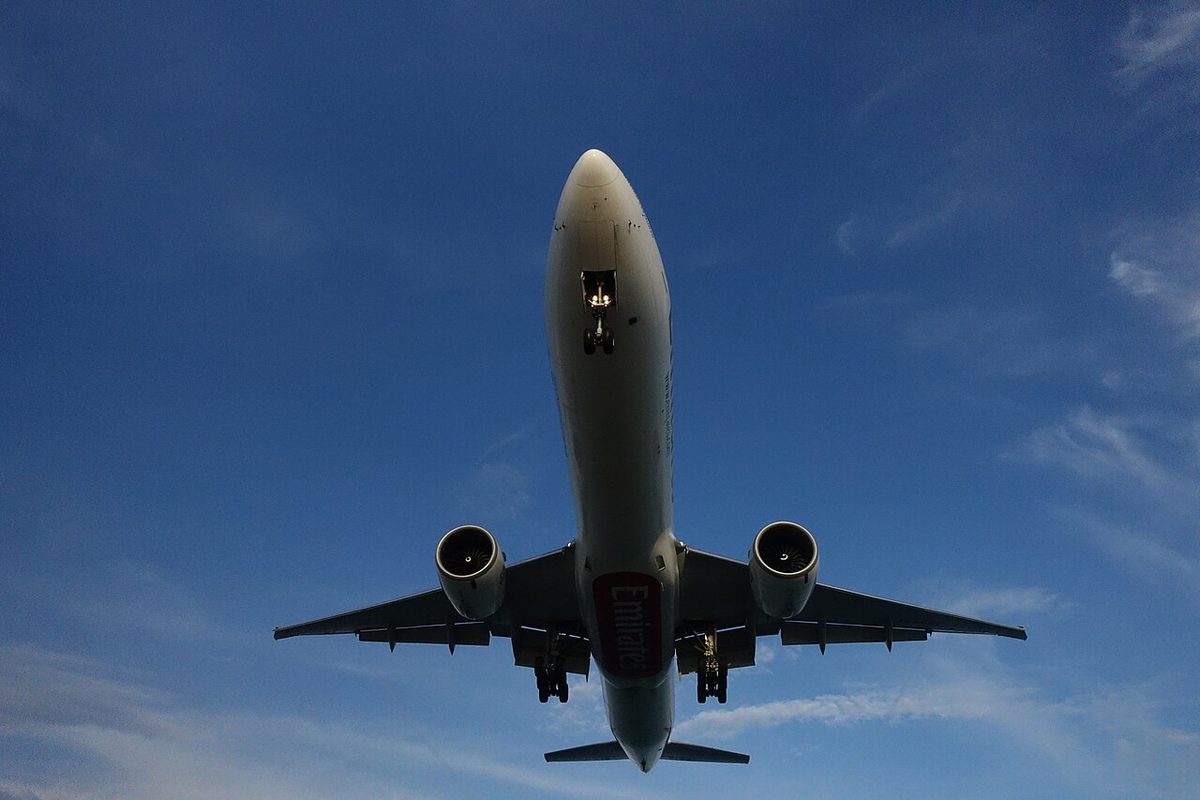
No planform is best for everything. A sailplane's long, slender wing minimises induced drag; an airliner's swept, tapered wing trades some low-speed efficiency for a high cruise Mach number and a lighter structure; a delta suits supersonic flight. Every wing is a compromise, and knowing which one explains why an aeroplane stalls, floats, rides turbulence or needs slats the way it does.
Wing planform shapes
The basic planforms, and the way each tends to stall without corrective design features, are:
| Planform | Where the stall starts | Main points |
|---|---|---|
| Rectangular (constant chord) | Root, spreading outboard | Simple and cheap; benign stall; more induced drag than the ideal; structurally inefficient |
| Tapered | Towards the tip | Lighter structure and a better lift distribution, but a tip-stall tendency |
| Elliptical | In theory, along the whole span together | Theoretically lowest induced drag; complex to build |
| Swept | Tip | Raises the critical Mach number; tip stall causes pitch-up |
| Delta | At very high angle of attack | Low aspect ratio; suited to supersonic flight |
The rectangular wing has the most desirable natural stall. The tip vortices reduce the effective angle of attack near the tips, so separation begins at the root and spreads outboard. The ailerons, outboard, stay in attached flow; the loss of lift inboard, ahead of the centre of gravity, lets the nose drop; the turbulent wake from the root buffets the tail as a warning; and there is no violent wing drop. Its penalty is poor structural efficiency, which is why it is found on light aircraft rather than transports.
The elliptical planform, in which the chord varies along the span like an ellipse, produces uniform downwash and the theoretical minimum induced drag for a given span and lift. In theory every section of an untwisted elliptical wing then works at the same effective angle of attack, so the whole span approaches the stall together, with no root-first progression to keep the ailerons working. The reasons are covered in induced drag and wingtip vortices.
Span, area and aspect ratio
The wingspan (b) is the distance from tip to tip. The wing area (S) used in the lift equation is the whole plan area, including the parts covered by the fuselage and engine nacelles, because the pressure field carries over those surfaces. Dividing area by span gives the mean chord.
The mean aerodynamic chord (MAC) is the chord of a rectangular wing that would have broadly the same pitching-moment characteristics as the real one. It is the reference for longitudinal stability, and centre of gravity positions are often given as a percentage of it: a CG 2.65 m aft of the datum, with the leading edge of the MAC at 2.20 m and a MAC of 1.50 m, lies at (2.65 − 2.20) ÷ 1.50 = 30 % MAC.
Aspect ratio (AR) measures slenderness: AR = span ÷ mean chord = b² ÷ S. The squared form is used when the chord varies along the span. Typical values are about 3 for a jet fighter, about 12 for a jet transport and about 35 for a high-performance sailplane.
A high aspect ratio has four main effects:
- Less induced drag. The induced drag coefficient is CL² ÷ (π × AR), so a slender wing raises the maximum lift/drag ratio and improves both climb and glide.
- A steeper lift curve. Less of the span is affected by the tip vortices, so each degree of angle of attack produces more lift. The wing stalls at a lower angle of attack, while CLmax changes little.
- More response to gusts. A steeper lift curve turns a given vertical gust into a larger change in lift and load factor.
- More structural weight. A long wing has to resist a larger bending moment at the root, which is the practical limit on aspect ratio.
A low aspect ratio does the opposite: a shallow lift curve, a very high stalling angle, less sensitivity to gusts and a large induced drag at high lift coefficients.
Taper ratio
Taper ratio is the tip chord divided by the root chord. A rectangular wing has a taper ratio of 1; a pointed delta, whose tip chord shrinks to nothing, has a taper ratio of 0. Most aeroplane wings lie in between.
Taper brings several benefits. Moving area and lift inboard reduces the bending moment the root must carry, so the structure can be lighter. The deep root leaves room for strong spars and fuel. And a moderately tapered wing's spanwise lift distribution is closer to the elliptical ideal than a rectangular wing's, so it makes less induced drag.
The cost is stall behaviour. On a tapered wing the local lift coefficient, and with it the effective angle of attack, is greatest towards the tip, so an untwisted tapered wing tends to stall at the tip first. That brings aileron buffet, a possible violent wing drop, no buffet on the tail, no natural nose-down pitch and poor aileron control, which are all undesirable at the stall.
Sweep adds to the problem. The sweep angle is measured between the line joining the 25 % chord points and a perpendicular to the root chord. Sweepback raises the critical Mach number, because the flow over the section depends mainly on the component of velocity perpendicular to the leading edge, and it flattens the lift curve, which smooths the ride in gusts. But it lowers CLmax, and the boundary layer drifts outboard towards the tips, which then stall first. The tips lie behind the root, so their loss of lift moves the centre of pressure forward and pitches the nose up, possibly into a deep stall. Wing fences, vortilons and saw-tooth leading edges are used to control the spanwise flow; see swept wings.
Washout
Washout is a twist built into the wing so that the angle of incidence decreases from root to tip. At any pitch attitude the tip meets the air at a lower angle of attack than the root, so the root reaches the critical angle first. The stall begins inboard, the ailerons stay effective, the nose tends to drop and the separated wake from the root buffets the tail. This is geometric washout. Aerodynamic washout achieves the same result by changing the aerofoil section along the span, fitting a tip section that stalls at a higher angle of attack than the root section.
Twist can also be chosen to give a nearly elliptical lift distribution at one design lift coefficient, though the distribution departs from it at other lift coefficients.
Designers have further tools for making the root stall first:
- Stall strips on the inboard leading edge trip the flow at high angle of attack, making that section stall early.
- Slots or slats on the outer wing re-energise the boundary layer there and keep the tips flying after the root has stalled.
- Krueger flaps on the inboard leading edge of some swept wings, less effective than the slats outboard, help the root stall first.
The progression that results, and the way a pilot recovers from a tip stall or wing drop, are covered in stall.
Delta wings
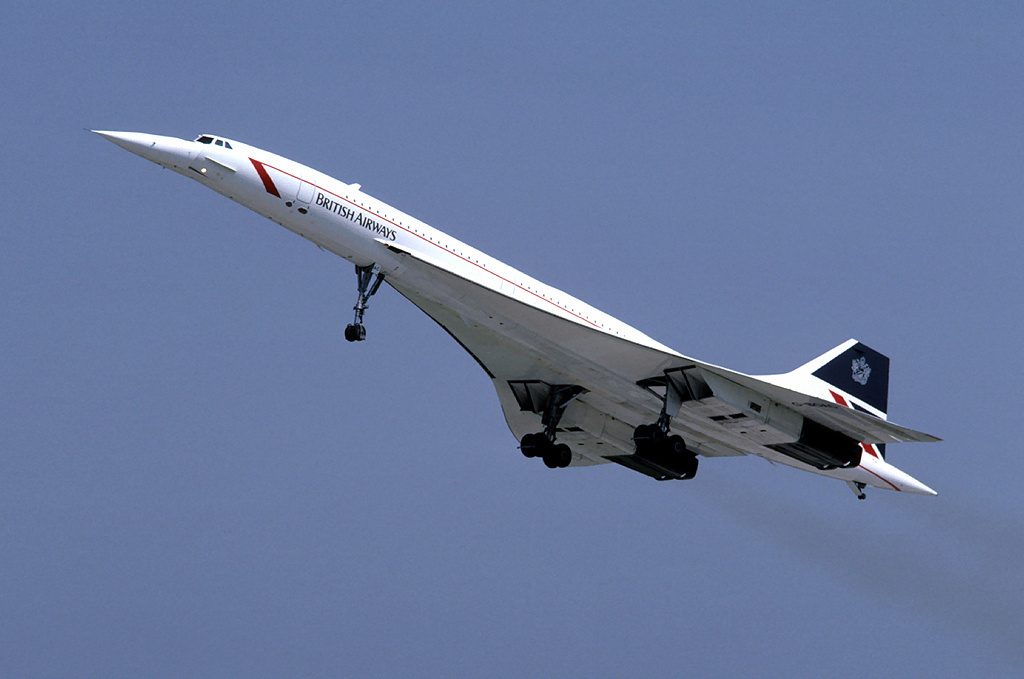
A delta wing is triangular in planform, with a sharply swept leading edge and, in its pure form, a taper ratio of 0. Its sharply swept leading edge suits supersonic flight, and its very long root chord allows a thin section that still leaves room for a deep, stiff structure.
The penalty is a low aspect ratio. The lift curve is shallow and the stall comes only at a very high angle of attack, so a delta approaches and lands markedly nose-high, and at those high angles of attack its induced drag is large, so drag rises steeply as it slows. At high angles of attack the flow separates at the sharp, swept leading edge and rolls up into a strong vortex above each wing; the low pressure beneath these vortices adds lift, which is how a delta keeps lifting to such high angles. A tailless delta has no separate tailplane, so it combines the elevator and aileron functions in elevons at the trailing edge.
Wing loading
Wing loading is the aircraft's weight divided by its wing area, W ÷ S, in N/m² in EASA material; FAA material gives it in pounds per square foot. Because the stall speed is √(2W ÷ (ρ × S × CLmax)), it varies with the square root of the wing loading.
- High wing loading: a small wing carries a lot of weight. Stall, take-off and landing speeds are higher, but the aircraft responds less to vertical gusts and gives a smoother ride in turbulence.
- Low wing loading: a large wing carries the same weight. Low-speed handling is better, but the ride in turbulence is bumpier.
The load factor produced by a vertical gust depends on both wing loading and lift-curve slope, which is why a lightly loaded, straight-winged aeroplane of high aspect ratio gives the roughest ride and a heavily loaded swept-wing jet the smoothest.
Wing loading changes in flight. It falls as fuel burns off, lowering the stall speed; it rises in effect with load factor, which is why the stall speed increases with the square root of the load factor in a turn; and a forward centre of gravity acts like extra weight, because the tail download must be carried by the wing. A higher wing loading requires a higher angle of attack at a given speed, which also lowers the critical Mach number and narrows the buffet margins at high altitude. Fowler flaps, which run aft before they deflect, increase the wing area as well as its camber.
Hard wings and leading-edge design
Wings designed for efficient high-speed cruise tend to have a low CLmax at low speed. Sweepback lowers it, and supercritical sections, with little or negative camber over their forward part, lower it further, so most jet transports carry leading-edge devices as well as trailing-edge flaps. A slat is a small auxiliary aerofoil that opens a slot ahead of the wing: air from the high-pressure lower surface flows through it and re-energises the upper-surface boundary layer, raising the stalling angle of attack from about 16° to as much as about 25° and raising CLmax. A Krueger flap hinges forward from the lower surface of the leading edge, and a droop nose turns the whole leading edge down with no gap. Leading-edge devices change drag and pitching moment far less than trailing-edge flaps do. See high-lift devices.
A hard wing is a wing without leading-edge high-lift devices. Its maximum lift depends entirely on the shape and condition of its fixed leading edge, which is where the boundary layer is most sensitive. FAA material notes that hard wings are the most sensitive to contamination: frost, ice or snow with the roughness of medium or coarse sandpaper on the leading edge and upper surface can reduce lift by as much as 30 % and increase drag by about 40 %, raising the stall speed and lowering the stalling angle, possibly without any stall warning. The clean aircraft concept therefore applies with full force: no take-off with frost, ice, snow or slush adhering to the wings, control surfaces, propellers or engine inlets unless the flight manual specifically allows it. See airframe icing.
Exam tip: aspect ratio = b²/S; taper ratio = tip chord ÷ root chord; washout = incidence decreasing from root to tip; rectangular wings stall at the root, tapered and swept wings at the tip; high wing loading means higher stall speed but a smoother ride in turbulence.
Frequently asked questions
What is the aspect ratio of a wing?
Aspect ratio is the span divided by the mean chord, or equivalently the span squared divided by the wing area. A long, slender wing has a high aspect ratio. Typical values are about 3 for a jet fighter, 12 for a jet transport and 35 for a high-performance sailplane. The higher the aspect ratio, the lower the induced drag and the steeper the lift curve, but the heavier the wing structure must be.
What is washout on a wing?
Washout is a twist built into the wing so that the angle of incidence decreases from root to tip. At any attitude the tip then meets the air at a lower angle of attack than the root, so the root reaches the critical angle first. The stall starts inboard, the ailerons stay in attached flow and remain effective, and the nose tends to drop. It is the usual cure for the tip-stall tendency of tapered wings.
What is taper ratio?
Taper ratio is the tip chord divided by the root chord. A rectangular wing has a taper ratio of 1 and a pointed delta a taper ratio of 0. Taper saves structural weight and leaves a deep root for spars and fuel, and moderate taper moves the lift distribution towards the elliptical ideal. But taper raises the local lift coefficient at the tips, so an untwisted tapered wing tends to stall at the tip first.
How does wing loading affect an aircraft?
Wing loading is the weight divided by the wing area. Stall speed varies with its square root, so a high wing loading means higher stall, take-off and landing speeds. In return the aircraft responds less to vertical gusts and rides turbulence more smoothly. A low wing loading gives good low-speed handling but a bumpier ride. Burning fuel reduces wing loading in flight, and a higher wing loading also lowers the critical Mach number.
What is a hard wing aircraft?
A hard wing is a wing without leading-edge high-lift devices such as slats, relying on the shape of its fixed leading edge alone for its maximum lift. FAA material notes that hard wings are the most sensitive to contamination. On any wing, frost, ice or snow as rough as medium or coarse sandpaper can cut lift by as much as 30 per cent and raise drag by about 40 per cent, so the clean aircraft concept is critical.
Test yourself on Wing Planform and Design
The v1prep banks cover this topic in Principles of Flight (081), with a worked explanation for every answer. EASA ATPL, PPL, IR and CPL, the FAA written tests and A320/B737 type ratings.
Start practising →Sources and further reading
- FAA Pilot's Handbook of Aeronautical Knowledge (FAA-H-8083-25), Chapter 5, Aerodynamics of Flight
- EASA, Explanatory Note to ED Decision 2018/001/R, Part-FCL theoretical knowledge learning objectives
- NASA Glenn Research Center, Wing Geometry Definitions
- FAA AC 20-117, Hazards Following Ground Deicing and Ground Operations in Conditions Conducive to Aircraft Icing
Library articles are written for study and exam preparation. They do not replace your aircraft's approved documentation, your operator's procedures or the regulations themselves.