Maximum Structural and Regulated Masses
Maximum structural masses are the certified upper limits on an aeroplane's mass on the ramp, at the start of the take-off run, at touchdown and without usable fuel. The regulated take-off and landing masses are the lower of each structural limit and the mass allowed by the day's performance.
Every aeroplane has a set of maximum masses that it may not exceed. Some are structural: the manufacturer designs and certifies the airframe, wing and landing gear for them, and they are printed in the limitations section of the flight manual. Others are performance limits that change with every runway, temperature and obstacle. The mass an aeroplane may actually have at take-off or landing on a given day is the lower of the two, the regulated mass.
Mass limits exist to keep adequate margins of strength and of performance, just as centre of gravity limits keep adequate stability and control. They are separate tests: an aeroplane can be inside every mass limit and still outside its CG envelope, or the reverse. How the individual masses are built up is covered in aircraft mass definitions.
Structural limits overview
Four structural limits cap the mass chain:
| Limit | Also called | Caps |
|---|---|---|
| Maximum ramp mass | Maximum taxi mass (MTM), maximum structural taxi mass, maximum ramp or taxi weight (MTW) | Mass at engine start and during taxi |
| Maximum take-off mass (MTOM) | Maximum structural take-off mass (MSTOM), maximum take-off weight (MTOW) | Mass at the start of the take-off run |
| Maximum landing mass (MLM) | Maximum structural landing mass (MSLM), maximum landing weight (MLW) | Mass at touchdown |
| Maximum zero fuel mass (MZFM) | Maximum zero fuel weight (MZFW) | Mass with no usable fuel |
The maximum certificated take-off mass (MCTOM) is the MTOM entered in the aircraft's certification documents, and it is the figure regulations use for thresholds: the ICAO wake turbulence categories (7,000 kg and 136,000 kg), the ACAS II mandate for turbine aeroplanes over 5,700 kg (or with more than 19 passenger seats), or the flight data monitoring requirement above 27,000 kg. British texts often call the maximum take-off limit the maximum all-up weight (MAUW).
One type can carry several sets of limits. The EASA type certificate data sheet for the A320 gives maximum certified weights for each model, for example 78,000 kg take-off, 66,000 kg landing and 62,500 kg zero fuel for the A320-214. Each aircraft is certified to a particular weight variant, and the flight manual gives its limits. One common A320ceo variant has:
| Limit | Mass |
|---|---|
| Maximum taxi weight | 77,400 kg |
| Maximum take-off weight (brake release) | 77,000 kg |
| Maximum landing weight | 64,500 kg |
| Maximum zero fuel weight | 61,000 kg |
Boeing notes that where its flight manual and flight crew operations manual differ on a weight limitation, the flight manual governs.
Maximum ramp and taxi mass
The maximum ramp mass, also called the maximum taxi mass or maximum structural taxi mass, is the heaviest the aeroplane may be for ground manoeuvring. It is higher than the MTOM by the fuel allowed for engine start and taxi: 400 kg in the A320 variant above, and often only a few pounds in a light single. That fuel must be burned before the take-off run, so that at brake release the aeroplane is at or below its maximum take-off mass. Ramp mass is the take-off mass plus the start and taxi fuel.
Maximum take-off mass
The maximum take-off mass (MTOM), or maximum take-off weight (MTOW) in FAA and manufacturer usage, is the maximum permissible total mass of the aeroplane at the start of the take-off run. As a structural limit it is set by the strength of the airframe in flight and on the ground: the structure is shown to carry the limit manoeuvre and gust loads at masses up to the maximum, so above it the same manoeuvre or gust loads the airframe beyond what it was designed for.
The structural MTOM is only a ceiling. It says nothing about whether the runway is long enough or the climb steep enough on the day, which is why it is combined with the performance limits below.
Maximum landing mass
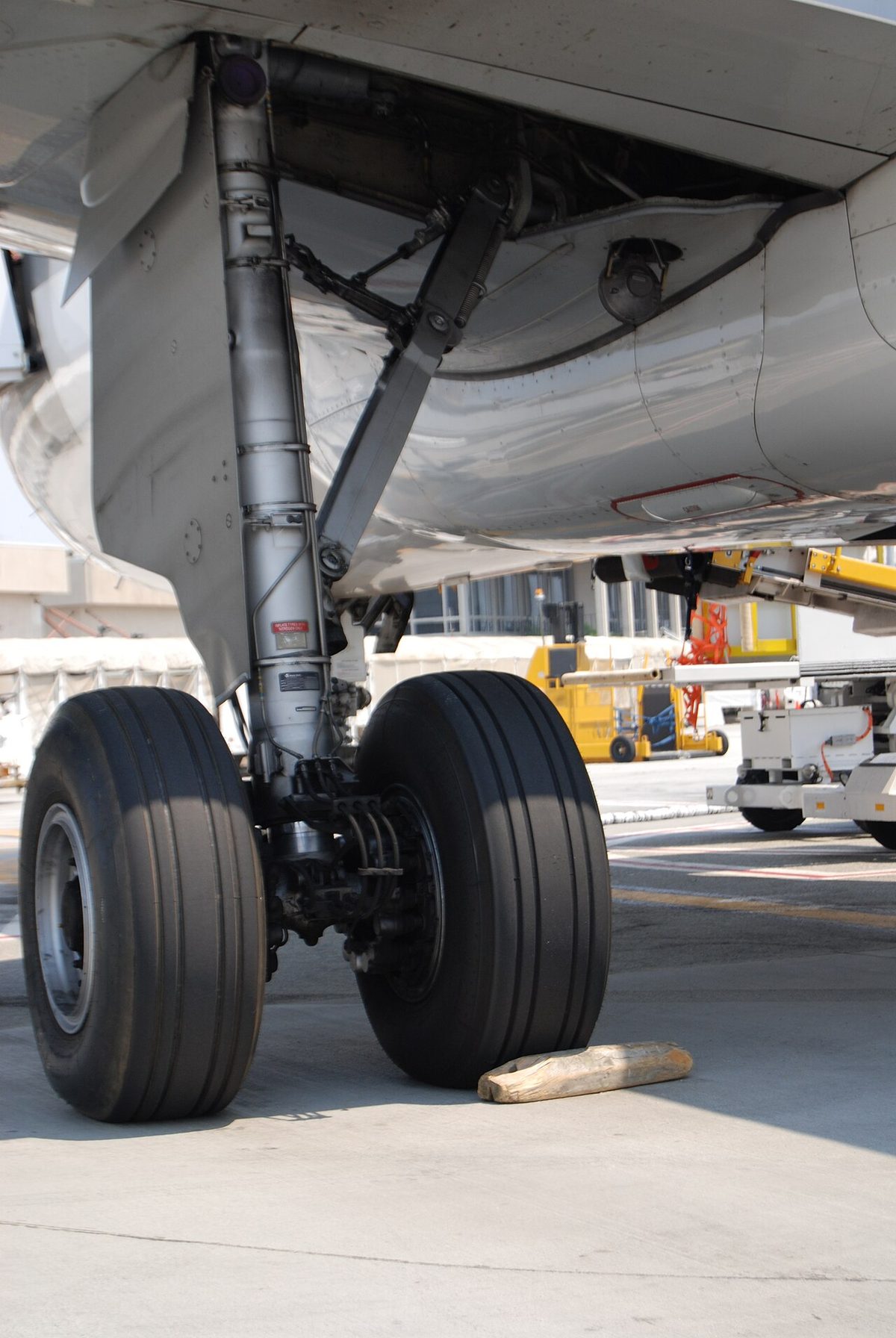
The maximum landing mass (MLM), or maximum structural landing mass (MSLM), is the maximum permissible total mass of the aeroplane at touchdown in normal circumstances. It is set by the ability of the landing gear, its attachments and the surrounding structure to absorb the loads of touchdown, and the designer assumes that fuel will have been burned before landing, so it is lower than the MTOM. In the A320 variant above the difference is 12,500 kg.
Because trip fuel is burned before landing, the MLM also limits the take-off: an aeroplane cannot take off heavier than its maximum landing mass plus the trip fuel it will burn. On a short sector, that landing-limited take-off mass is often the binding limit.
Maximum zero fuel mass
The maximum zero fuel mass (MZFM) is the maximum permissible mass of the aeroplane with no usable fuel. Every kilogram that is not fuel, the dry operating mass plus the traffic load, counts against it. Many light aeroplanes have no published MZFM; transport aeroplanes, whose fuel is in the wings and whose payload is in the fuselage, normally do.
It limits the take-off in the same way as the MLM: the take-off mass may not exceed the MZFM plus the take-off fuel. A light twin with an MTOM of 2,800 kg and an MZFM of 2,500 kg cannot be loaded to 2,800 kg with only 150 kg of fuel, because its zero fuel mass would then be 2,650 kg.
Wing bending relief
In flight the wing carries the aeroplane's weight as lift distributed along its span. Each part of that lift acts at a distance from the fuselage, so the wing root bending moment, the sum of lift times distance, is greatest at the root, and the wing structure is heaviest there. Mass carried in the wing pulls the other way. The weight of the wing structure, of the fuel in the wing tanks and of engines hung under the wing acts downwards along the span and reduces the net bending moment at the root. This is wing bending relief.
For a given total mass the lift is the same, so the less of that mass is in the wings and the more is in the fuselage, the greater the root bending moment. The worst case is a heavy fuselage load with little wing fuel, and the MZFM exists to cap it. Fuel management follows the same logic:
- outboard wing fuel is kept until last, because mass further out gives more relief, and it also helps to damp flutter;
- the A320 refuels its outer cells first and keeps that fuel until late in the flight, transferring it inboard only near the end;
- aeroplanes with engines on the rear fuselage lose the relief that wing-mounted engines give.
The penalty for exceeding the MZFM may not show at once. The wing root is overloaded on every such flight, and structural fatigue, which is cumulative and irreversible, eats into the life of the structure faster than designed.

Performance-limited masses
The performance-limited take-off mass (PLTOM) is the maximum mass at which the aeroplane can meet the take-off requirements from the actual departure runway in the actual conditions: runway length and surface state, slope, pressure altitude, temperature, wind and obstacles. For a performance class A aeroplane it is the lowest of several limits (see take-off mass limitations):
- field length: the take-off run, take-off distance and accelerate-stop distance required must fit the distances available;
- climb: the minimum gradients of the take-off climb segments, usually set by the second segment;
- obstacles: the net flight path must clear obstacles by the required margin;
- brake energy: the energy a rejected take-off puts into the brakes;
- tyre speed: the lift-off ground speed must not exceed the tyres' rated speed, a limit that bites at hot and high aerodromes and with a tailwind;
- runway strength: the aircraft classification against the pavement strength.
The performance-limited landing mass (PLLM) is the maximum mass at which the landing requirements can be met at the destination: the landing climb gradient, and a landing distance that fits the runway with the regulatory factors applied. For jets on a dry runway the demonstrated landing distance may use only 60 % of the landing distance available, a factor of 1.67, and a wet runway adds 15 %, about 1.92 in all (see landing distance). Brake energy can reduce the landing mass on hot and high days, because the true airspeed at touchdown is higher.
Regulated take-off and landing mass
The regulated take-off mass (RTOM) is the lower of the maximum structural take-off mass and the performance-limited take-off mass. The regulated landing mass is likewise the lower of the maximum structural landing mass and the performance-limited landing mass. The load sheet compares the actual masses with these regulated figures, not with the structural ones alone.
The maximum take-off mass for a particular flight is then the lowest of three figures, and the traffic load follows from it. Using the A320 variant above, with a performance-limited take-off mass of 74,800 kg, a dry operating mass of 42,500 kg, 12,000 kg of take-off fuel, 8,000 kg of trip fuel and no performance limit at the destination below the structural landing mass:
| Candidate | Calculation | Mass (kg) |
|---|---|---|
| Regulated take-off mass | lower of 77,000 and 74,800 | 74,800 |
| Landing-limited take-off mass | 64,500 + 8,000 | 72,500 |
| Zero-fuel-limited take-off mass | 61,000 + 12,000 | 73,000 |
The landing limit governs at 72,500 kg. The operating mass is 42,500 + 12,000 = 54,500 kg, so the maximum traffic load is 72,500 − 54,500 = 18,000 kg. Checks: zero fuel mass 60,500 kg, within the MZFM; landing mass 64,500 kg, exactly the MLM; ramp mass with 200 kg of taxi fuel 72,700 kg, within the maximum taxi mass.
Exam tip: always test all three limits. Working from the maximum take-off mass alone gives a traffic load that is too high, and the aeroplane would arrive above its maximum landing mass or exceed its zero fuel limit.
Overloading
Overloading means operating above a limiting mass, and its effects are the same whatever the cause: a longer take-off run and distance, higher V1, VR and V2, a smaller climb gradient and rate of climb, a lower ceiling, a higher stall speed, narrower buffet margins, higher fuel consumption and less range, a longer landing distance and more brake energy. The performance data in the flight manual no longer apply. Stall speed rises with the square root of the mass, so 10 % more mass raises it by about 5 %. The structure pays too: greater mass loads every member more heavily on every flight, accelerating fatigue.
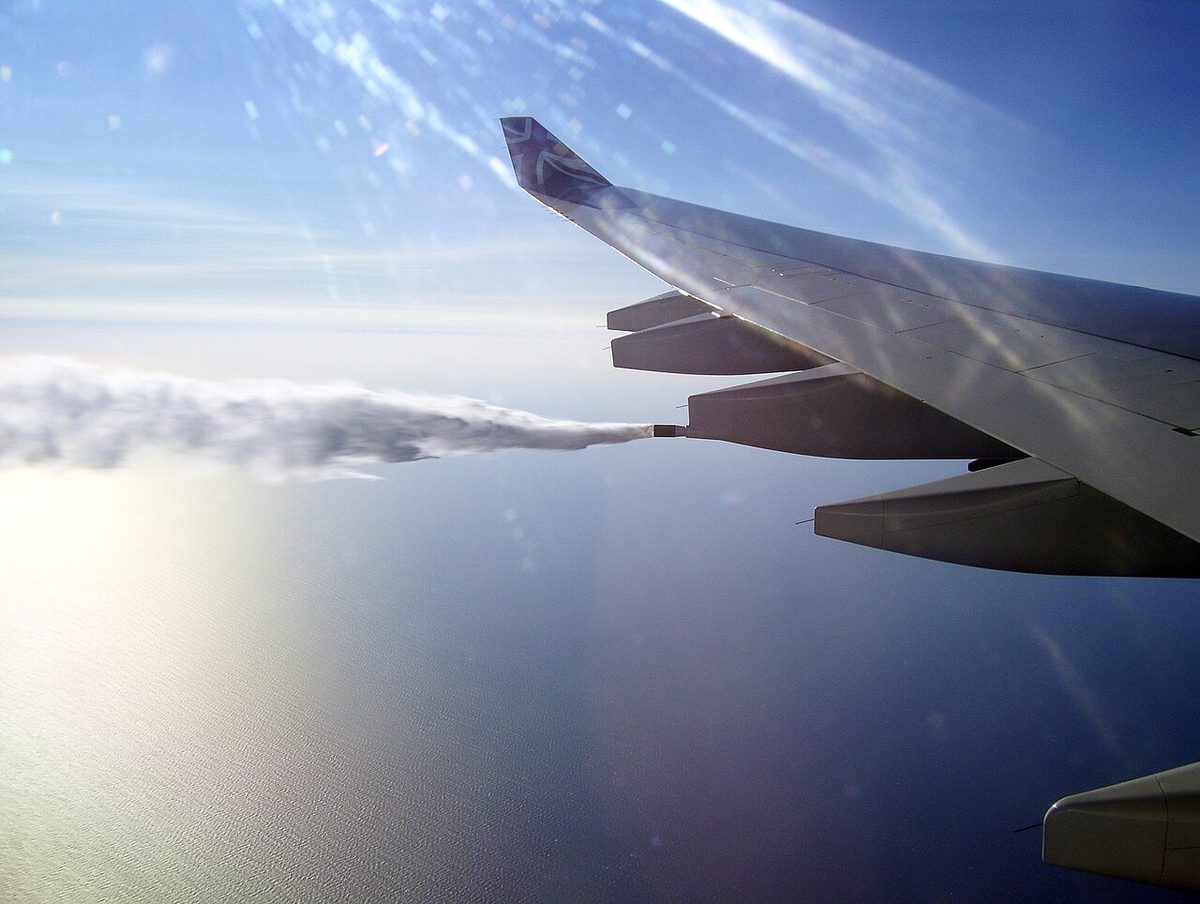
The recognised exception is the overweight landing. When an aeroplane must return or divert soon after take-off, for example after a technical failure or a fire, manufacturers permit a landing above the MLM in exceptional cases; the A320 limitations allow an immediate overweight landing after an in-flight turn-back or diversion provided the crew follow the overweight landing procedure. The aeroplane is then inspected in accordance with the maintenance manual before it flies again. Crews can instead reduce the mass by holding to burn fuel, or by fuel jettison, an emergency procedure to reduce mass quickly where an overweight landing could damage the aeroplane. Where a jettison system is fitted, CS-25 requires it to be able to jettison enough fuel within 15 minutes for the aeroplane to meet the CS-25 climb requirements.
Warning: with a fire or a similar emergency on board, landing quickly matters more than landing light. An overweight landing followed by an inspection is far preferable to delaying for fuel burn.
Frequently asked questions
Why is the maximum landing mass lower than the maximum take-off mass?
The landing gear and the structure it is attached to are designed to absorb touchdown loads only up to the maximum landing mass, on the assumption that fuel will have been burned before landing. A heavier landing also needs more runway and more brake energy. An aeroplane that must return soon after taking off near its maximum take-off mass has to burn or jettison fuel, or make an overweight landing followed by an inspection.
What is the maximum zero fuel mass and why does it exist?
It is the maximum permissible mass of the aeroplane with no usable fuel on board. In flight, fuel in the wing tanks hangs along the span and relieves the upward bending of the wing at its root. Mass carried in the fuselage gives no such relief, so the maximum zero fuel mass caps the mass that may be carried outside the wing tanks and protects the wing roots.
What is the regulated take-off mass?
The regulated take-off mass is the lower of the maximum structural take-off mass and the performance-limited take-off mass for the departure runway and conditions. The performance limit comes from field length, climb gradient, obstacle clearance, brake energy, tyre speed and runway strength. The actual take-off mass at the start of the take-off run must not exceed it.
What is the difference between maximum ramp mass and maximum take-off mass?
Maximum ramp mass, or maximum taxi mass, is the heaviest the aeroplane may be for ground manoeuvring. It exceeds the maximum take-off mass by the fuel expected to be burned during start-up and taxi. That fuel must be used before brake release, so that the aeroplane is at or below its take-off limit when the take-off run begins.
How do you find the maximum traffic load for a flight?
Find three candidate take-off masses: the regulated take-off mass, the maximum landing mass plus the trip fuel, and the maximum zero fuel mass plus the take-off fuel. The lowest of them is the maximum take-off mass for that flight. Subtract the operating mass, that is the dry operating mass plus the take-off fuel, and the result is the largest traffic load that may be carried.
Test yourself on Maximum Structural and Regulated Masses
The v1prep banks cover this topic in Mass and Balance (031), with a worked explanation for every answer. EASA ATPL, PPL, IR and CPL, the FAA written tests and A320/B737 type ratings.
Start practising →Sources and further reading
- EASA Easy Access Rules for Air Operations (Regulation (EU) No 965/2012), CAT.POL.MAB and CAT.POL.A
- EASA Easy Access Rules for Large Aeroplanes (CS-25)
- EASA Type Certificate Data Sheet A.064, Airbus A318, A319, A320, A321 (maximum certified weights)
- FAA Pilot's Handbook of Aeronautical Knowledge (FAA-H-8083-25), Chapter 10, Weight and Balance
- FAA Aviation Handbooks and Manuals, Aircraft Weight and Balance Handbook (FAA-H-8083-1B)
- FAA AC 120-27F, Aircraft Weight and Balance Control
Library articles are written for study and exam preparation. They do not replace your aircraft's approved documentation, your operator's procedures or the regulations themselves.