Aer Lingus Pilot Interview Prep: Process, Sim, Questions (2026 Guide)
LAST UPDATED: 30 AUGUST 2026
Aer Lingus flies an all-Airbus fleet out of Dublin — the A320 family, the A321neo LR/XLR and the A330 — and publishes its full selection sequence on its own careers pages. It also publishes far less than the job boards claim: no minimum total hours, no hours on type, no upper age limit, and no simulator stage. This guide sticks to what the airline actually states, says plainly where it states nothing, and gives you thirteen technical questions with real answers for the types it operates.
As at 25 August 2026, both published Aer Lingus pilot routes — Direct Entry Pilot and the Future Pilot Programme — were closed to applications with no reopening date, candidate pool or expression-of-interest facility published; that is a snapshot of one day, so check our airline pilot jobs page for the current position.
About Aer Lingus
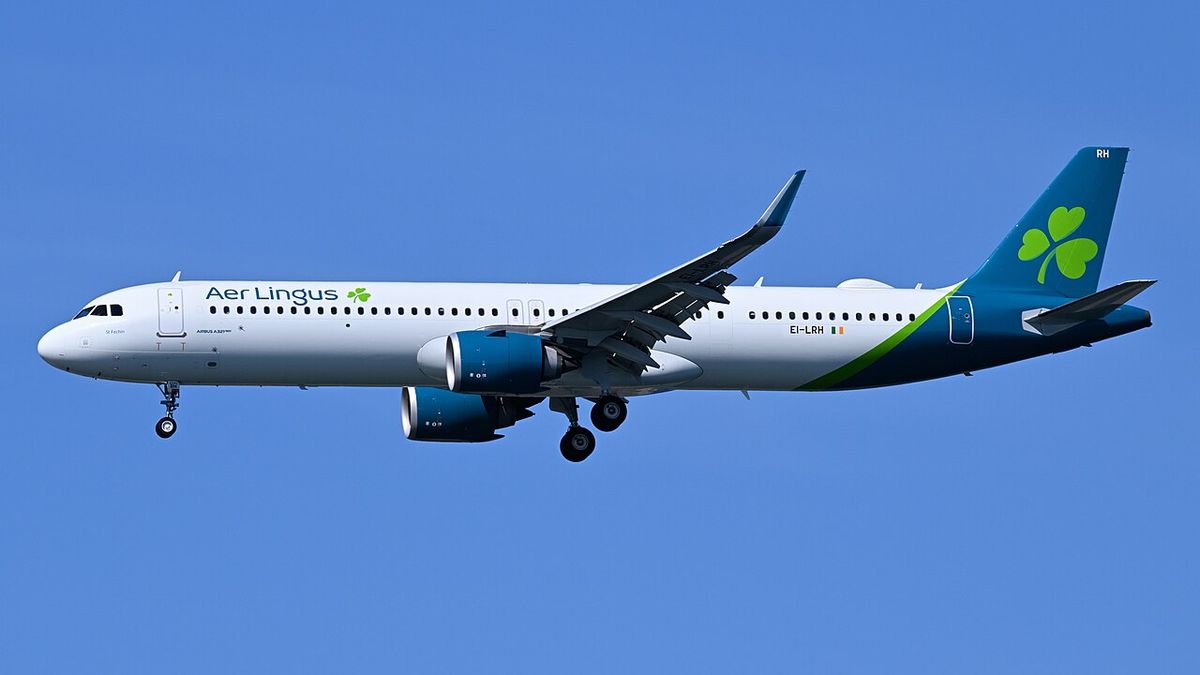
Aer Lingus is an Irish carrier and, for recruitment purposes, an all-Airbus operator based at Dublin. The fleet spans three groups: the A320 family (A320 and A321), the A321neo LR/XLR, and the A330. Its Direct Entry page says flying is "ex Dublin" on the A320 family after the Operator Conversion Course, with preferential bidding and a 5 on / 3 off roster, and puts the A330 within reach with seniority, after several years. One FAQ mentions assignment to one of the airline's bases, but no second pilot base is named anywhere — Dublin is the only base Aer Lingus publishes, and whether any other exists is unresolved.
It also publishes a flying volume: typically 800–900 hours per year, starting on UK and European sectors and moving onto transatlantic work.
The mixed fleet shapes your preparation. A Direct Entry First Officer joins a short-haul narrowbody operation, so your technical depth must be A320-family depth. But the same operator has A321neo LR/XLR and A330 aircraft on strength, and publishes that your flying moves from UK and European sectors onto transatlantic work — Aer Lingus does not publish which type you would fly it on. Be fluent on A320 systems and clear about extended-range planning and critical fuel.
Published requirements
This is what Aer Lingus published on its own pages as read on 25 August 2026. Both still carry the last campaign's criteria, so the next could change any line.
| Requirement | Direct Entry Pilot | Future Pilot Programme (cadet) |
|---|---|---|
| Licence | A valid EASA-issued ATPL or frozen ATPL | None — ab initio, qualifying with an MPL. CPL/MPL/ATPL holders are overqualified and ineligible; PPL holders case by case |
| Total hours | Not published. No total-time figure is stated at all | Not applicable |
| Hours on type | Not published. No figure is given | Not applicable |
| Type rating | Criteria list an existing Airbus rating — A320, A330, A340, A350 or A380 — but see below | Not applicable |
| Medical | EASA Class 1, plus a company medical and intoxicant screening | EASA/IAA Class 1 including colour vision, plus a pre-course medical |
| English | Fluent written and spoken — EASA ELP Level 5 or greater | Fluent written and spoken; no ELP level published |
| Right to work | Permanent right to live and work in the EU/Ireland, plus an unrestricted worldwide passport. No visa sponsorship is offered or mentioned; non-Irish citizens need a home-country police disclosure certificate if successful | Same, plus a police certificate for any country lived in six months or more (both routes require a home-country police disclosure certificate for non-Irish citizens) |
| Age | Minimum only — 18 by the deadline. No upper age limit is published | Same — 18 by the deadline, no upper limit |
The type-rating question is unresolved. The criteria list an Airbus rating, yet the benefits FAQ on the same page publishes two starting packages: approximately EUR 87,500 for Airbus Type Rated, including around EUR 16,000 of average variable flight-associated pay, and approximately EUR 63,500 for Airbus non-Type Rated, including around EUR 10,000 variable. A published pay band for pilots without the rating sits awkwardly beside a criterion demanding one. Aer Lingus does not reconcile them, so a non-type-rated ATPL holder should assume neither exclusion nor eligibility — read the criteria published when the next campaign opens, or ask the airline directly.
The same FAQ publishes the rest of the package: a contributory pension at 21% employer and 11% employee, 35 days annual leave including public holidays, staff travel concessions, and free parking at Dublin Airport.
Also published: aviation security vetting with an enhanced background check for Direct Entry, airport security vetting with a five-year background check for cadets, two verifiable references, and a Leaving Certificate minimum for cadets, with GCSE/A-Level equivalents or a Level 7 degree instead. Conversion training and the funded cadet course are both bonded on a reducing balance — no bond value or duration is published, only that the final details are confirmed to each successful candidate.
The selection process
Aer Lingus publishes its selection sequence on its own careers pages — worth using. Here it is, and then what it does not say.
Direct Entry, published by Aer Lingus:
- Online application by the deadline with all specified documents. An acknowledgement email confirms a valid application — if none arrives, chase it rather than assume you are in.
- Screening. Applications are thoroughly screened.
- Online assessments, with a 72-hour window to complete once the link is issued.
- Group assessment stage in Dublin. You may be asked to retake the online assessments there, and no flexibility on dates is offered.
- Background check, company medical and intoxicant screening, plus two verifiable references.
Future Pilot Programme: online application by deadline; screening, then online assessments on the same 72-hour clock; a Dublin group assessment stage where school qualifications are verified; then the EASA/IAA Class 1 and pre-course medical.
Reported by third parties, unverified: the existence, length and content of a simulator assessment; a panel HR interview as a distinct stage; the online test provider; the number of positions; any pass rate. All appear confidently on job boards; none appears on an Aer Lingus page. Prepare for them — a group stage ending in an offer almost certainly involves an interview — but do not plan around numbers nobody published.
Two published details do the practical work: the 72-hour window means you cannot schedule tests around a pairing, and Aer Lingus publishes no flexibility on the Dublin assessment dates.
The simulator assessment
The honest position first: Aer Lingus does not publish a simulator assessment in either selection process. Claims about sim length, device and profile are not sourced to the airline; if a campaign includes one, your invitation is the only reliable description. What does not change is what any airline assessor looks for, and the short-haul fleet is the A320 family, so prepare in that environment.
- Scan. Raw-data flying without a flight director, holding heading, altitude and speed while something else demands attention. A scan that collapses as workload rises is what assessors are watching for.
- Manual handling. Small, smooth inputs; pitch, power and trim as habit. In Normal Law the aeroplane holds the flight path for you — a centred sidestick commands 1g and the aeroplane maintains the flight path, not the attitude — so over-controlling shows a candidate who does not trust it.
- Standard calls. Correct terminology at the correct moment, and a clear statement of who is flying. Silence reads as a CRM failure even when the flying is good.
- CRM. Brief out loud, delegate, use the other pilot. Assessors want a crew, not a soloist.
- Recovery from an unstable approach. The point is not a perfect approach — it is recognising the gate is not met and going around early, without negotiating with yourself.
Prepare on any honest device. Drill raw-data level-offs, a hand-flown ILS to minima, a low go-around, and an abnormal that forces you to talk while flying.
Thirteen technical questions, with answers
Aer Lingus publishes no technical question list. What is certain is which aeroplanes the answers must concern: the A320 family, the A321neo LR/XLR and the A330. Work these thirteen, then widen with our top 50 A320 interview questions.
Walk me through the A320 flight control laws.
Normal Law gives full protection — high angle-of-attack, high speed, pitch attitude, bank angle and load factor — with pitch as a load-factor demand and roll as a rate demand. Release the sidestick and the aeroplane holds the flight path, not the attitude. Multiple failures, typically dual ADR or dual ELAC faults, drop you into Alternate Law: load-factor protection remains, the others are lost, roll becomes direct, and low- and high-speed stability replace the hard limits. Gear down, Alternate reverts to Direct Law — stick deflection maps to surface deflection, and you trim manually. Below that, mechanical backup. FCOM DSC-27, and our flight control laws guide.
Describe the three hydraulic systems and what the PTU actually does.
Green, Blue and Yellow, each at 3,000 psi, independent so no single failure takes more than one. Green is driven by the engine 1 pump, Yellow by the engine 2 pump plus an electric pump and a cargo-door hand pump, Blue by an electric pump with the RAT as backup. The PTU transfers power, not fluid: when the Green/Yellow differential exceeds roughly 500 psi, one system drives the other's pump, so a single-engine case leaves both pressurised. FCOM DSC-29, and our hydraulic guide.
What is a FLEX takeoff, and when may you not use one?
FLEX is the assumed-temperature method: you tell the FADEC the air is hotter than it is, it commands less thrust, and the real runway still meets the requirement at that temperature. The point is engine life — every degree of derate is EGT margin you keep. The published limits are the ones to quote: FLEX TEMP must exceed the actual OAT, and operators typically require at least 5 degrees C above it; it cannot exceed the certified maximum of ISA+53 degrees C, roughly 68 degrees C at sea level; and the aeroplane must still meet every CS-25 requirement at the actual conditions, not the assumed ones. FLEX is prohibited on a contaminated runway and where windshear is anticipated, and TOGA stays available at the levers throughout. FCOM DSC-70 and FCTM, and our FLEX guide.
Define V1, VR and V2 — and tell me what moves them.
V1 is the latest speed at which the first stopping action must be taken and the earliest from which the takeoff can be continued with the critical engine failed. VR is the rotation speed. V2 is the takeoff safety speed, the engine-out climb target, at or above 1.13 VSR and above VMCA. What moves them: weight, flap configuration, pressure altitude and temperature, runway length, slope and surface condition, wind component, and any obstacle in the climb-out. A wet or contaminated runway drives V1 down towards the stop case; a limiting obstacle drives the flap setting and the speeds the other way. Our V-speeds guide and performance calculation guide.
Engine failure at V1 — take me from the failure to acceleration altitude.
At or after V1 you go. Rudder to hold the centreline, rotate at VR at the normal rate and fly the SRS bar — the engine-out reference attitude is around 12.5 degrees, but you fly the bar, not a memorised number. Gear up on a positive rate. Target speed is V2 if the failure was before V2, or the speed at failure if between V2 and V2+15. Below 400 feet you fly the aeroplane and nothing else — cancel the warning, keep the configuration, touch nothing on the failed engine. Treat 400 feet as the floor rather than the trigger: most operators hold ECAM actions until the flight path is secure at acceleration altitude, where you also accelerate and clean up. Fly whichever your operator publishes, and say which one you mean. FCTM abnormal and emergency procedures (engine failure after V1), and our V1 engine failure guide.
How do you handle an abnormal on ECAM, and where does ECAM stop helping?
Memory items first if the failure has them; then fly, navigate, communicate, and only then manage the failure. Work ECAM top down, clearing each line, and read STATUS before planning the approach. The limits matter more: ECAM treats the symptom it detects, not the failure you have, it cannot see everything — unreliable airspeed is a memory-item event for that reason — and it will not say whether continuing is wise. FCOM PRO-ABN and FCTM; our ECAM guide and memory items.
Describe the electrical system and emergency electrical configuration.
Two engine-driven generators, an APU generator able to replace either on the ground and in flight, and external power feed AC BUS 1 and 2, with the essential busses beneath; two batteries and a static inverter are the last resort. Lose AC BUS 1 and AC BUS 2 and the RAT deploys automatically above 100 kt, driving the emergency generator through the Blue system, with the static inverter bridging from the batteries until the emergency generator is up to speed. Below 100 kt, or with the RAT unavailable, the batteries and static inverter carry the essential busses alone. Either way you keep standby instruments, a radio, and enough to fly an approach. FCOM DSC-24, and our electrical guide.
Talk me through the bleed air system.
Each engine bleeds from the intermediate-pressure port, with the high-pressure valve opening to top it up when IP pressure is low — idle, descent — and closing again as thrust recovers. A pressure-regulating valve controls the delivery and a precooler drops the temperature using fan air. Downstream the air feeds the packs, wing and engine anti-ice, engine start and pressurisation. The cross-bleed valve joins the two manifolds so one engine or the APU can supply both sides, and the bleed monitoring computers shut a valve on overpressure, overtemperature or a detected leak. The point interviewers want is the consequence chain: lose a bleed and you lose that pack, that side's anti-ice, and the ability to feed across unless the cross-bleed is open. FCOM DSC-36, and our pneumatic guide.
Cabin altitude warning in the cruise — figures, and what do you do?
Maximum differential pressure is about 8.6 psi, with the safety valves set there, and the cabin altitude warning triggers at 9,550 feet. The response is a memory-item sequence: crew oxygen masks on and communication established first, signs on, then the emergency descent — thrust idle, speedbrakes out, at or near VMO/MMO, off track if terrain allows. Level at 10,000 feet or MEA, whichever is higher, then diagnose. FCOM DSC-21 (air conditioning, pressurisation and ventilation).
What does the APU give you, and where are its limits?
Electrical power and bleed air, on the ground and in flight. The APU generator can replace either engine generator across the whole envelope; APU bleed drives the packs and starts an engine. The bleed ceilings are what gets asked: air conditioning to roughly 22,500 feet, engine start to about 20,000 feet, electrical supply to the aeroplane's ceiling. It has its own start envelope and an automatic shutdown logic for fire, overspeed and low oil pressure. The practical point is what it buys you — a serviceable APU is what turns a generator or bleed failure into an inconvenience rather than a diversion. FCOM DSC-49, and our APU guide.
What is different about the A321neo LR/XLR compared with a standard A321?
Range, and everything it brings. The LR carries additional centre tanks in the hold; the XLR replaces those with a permanent rear centre tank built into the fuselage, freeing hold volume and pushing range well beyond conventional narrowbody sectors. Operationally: longer duty periods, fuel management across more tanks with the sequencing that implies, CG movement through the cruise, and, for any operator approved for it, a narrowbody on oceanic tracks under an extended-range approval. The airframe is familiar; the planning is not.
Explain ETOPS, and what a critical fuel scenario is.
ETOPS lets a two-engine aeroplane operate beyond the threshold time — 60 minutes at one-engine-inoperative cruise speed under EASA Part-CAT — from an adequate aerodrome, once the operator holds an approval defining a maximum diversion time. That approval fixes the area of operation, the entry point, and the aerodromes that must be adequate and forecast suitable when needed. The critical fuel scenario is the planning case: at the most critical point, fuel to divert after a simultaneous engine failure and decompression — drift down, hold, land. EASA Part-CAT (CAT.OP.MPA.140) and its AMC.
What is the A330's trim tank for?
The A330 carries fuel in a tank inside the horizontal stabiliser and moves it to control the centre of gravity in the cruise. Shifting fuel aft drives the CG towards the aft limit, reducing the download the tailplane must produce and therefore cutting trim drag and fuel burn on a long sector. Fuel transfers forward again for descent and landing, and automatically on certain failures, so the aeroplane lands within a conventional CG range. FCOM DSC-28.
Competency and motivation questions
Aer Lingus publishes no description of its interview format, so treat any claimed structure as unverified. What is safe to assume is that a group stage ending in an offer involves people judging you, and that the usual competency framework applies. Prepare one real example per competency — situation, task, action, result — weighted to what you did and what changed.
- Why Aer Lingus? Anchor it in what the airline publishes: an all-Airbus Dublin operation, a career starting on the A320 family and reaching the A330 with seniority, 800–900 hours a year moving onto transatlantic work. Why that shape suits you beats admiring the brand.
- Are you committed to Ireland? Dublin is the only pilot base named, and the published pattern is 5 on / 3 off — be concrete about living arrangements in Ireland, not vague about flexibility.
- A time you disagreed with a captain or instructor. They want graded assertiveness: how you raised it, what you did when it was not accepted, where your line was.
- A decision made with incomplete information. Show structure — gather, generate options, weigh against time and fuel, decide, communicate.
- A mistake you made. A real one with a real consequence, finishing on what you changed. A safe answer reads as low self-awareness.
- Long duty days and fatigue. Rest planning, in-flight strategy, and when you would call fatigued.
Aer Lingus publishes nothing about how cadets are assessed beyond the group assessment stage and verification of school qualifications — with no licence to test, expect the emphasis to sit on capacity and coachability, but treat that as an assumption, not a published fact. Our interview prep guide covers the framework in depth.
Seven ways candidates lose this one
- Quoting an hours minimum from a job board. Aer Lingus publishes no total-time or hours-on-type figure at all — state what you hold and let the airline apply its bar.
- Assuming you are out without a type rating — or that you are in. The essential criteria demand an Airbus rating while the benefits FAQ publishes an Airbus non-Type Rated starting salary of about EUR 63,500 beside the rated band of about EUR 87,500; the two contradict each other, so check what is published when the campaign opens.
- Naming Cork, Shannon, Belfast or Heathrow as your base preference. Dublin is the only pilot base Aer Lingus names — build your answer around it.
- Treating the timetable as negotiable. The assessment link runs on a 72-hour clock and Aer Lingus offers no flexibility on the Dublin dates — line up a laptop and a free evening before you apply, and clear whatever assessment dates the next campaign publishes.
- Applying to the cadet programme holding a CPL, MPL or ATPL. The FPP FAQ calls licence holders overqualified and ineligible — Direct Entry is your route when a campaign next opens.
- Preparing generic short-haul technical answers. This operator publishes transatlantic flying and has A321neo LR/XLR aircraft on strength — extended-range planning and critical fuel belong beside A320 systems.
- Planning around a campaign that is not open. Both routes were closed on 25 August 2026 with no reopening date — bank the licence, medical and practice now, and watch our jobs page.
Practice the technical bank
v1prep covers 9,600+ A320 and ATPL questions.
Practice the full bank →