Nose Wheel Steering
Nose wheel steering turns the nose wheels to steer an aircraft on the ground, through a tiller or hand wheel for large angles and the rudder pedals for small ones. On transport aircraft it is powered, usually hydraulically, centres the wheels before retraction and is disconnected for towing.
Nose wheel steering turns the nose wheels so that an aircraft with a tricycle undercarriage can be steered on the ground. Light aircraft link the nose wheel to the rudder pedals, or let it castor freely and steer with the brakes. Transport aircraft use powered steering, usually hydraulic, commanded by a tiller or hand wheel for tight turns and by the rudder pedals for small corrections during the take-off and landing roll.
The system has to do more than steer. It must let the wheels follow a tug when the aircraft is towed, straighten them before the gear retracts, and suppress the violent oscillation called shimmy. On the largest aircraft some of the main wheels are steered as well.
Ground steering methods
The simplest nose gear castors: the wheel pivots freely and follows the direction of motion. The pilot steers by braking one main wheel harder than the other, differential braking, helped by the rudder once there is enough airflow, and the nose wheel follows. A castoring wheel also follows any outside force, such as a ground tug.
The standard light-aircraft arrangement links the nose wheel to the rudder pedals instead. Spring struts in the linkage let the nose leg compress over bumps without kicking the pedals back at the pilot's feet, and differential braking tightens a turn when needed.
Large aircraft need powered nose wheel steering. Without it, turning a heavy aeroplane would take asymmetric thrust and hard differential braking. European training texts list the gains: the engines can stay at minimum taxi thrust, which saves fuel and noise; turns are more accurate; and tyres and brakes wear less.
Tiller and rudder pedal steering
Powered steering has two inputs. The nose wheel steering tiller, a small wheel or handle beside the pilot, called the hand wheel by Airbus and the nose wheel steering wheel by Boeing, gives large angles for tight turns, parking and lining up. Rudder pedal steering gives only a few degrees: enough for directional control on straight taxiways and during the take-off and landing roll, where a large, sudden nose wheel angle would be dangerous.
| Tiller or hand wheel | Rudder pedals | Hydraulic power | |
|---|---|---|---|
| Airbus A320 | ±75° | ±6° at low speed, nil by 130 kt | Yellow system |
| Boeing 737 NG | ±78° | ±7° | System A, alternate system B |
| Embraer E190-E2 | ±76° at 10 kt or less, ±20° at 26 kt, ±7° above 100 kt | ±7° | System 2 |
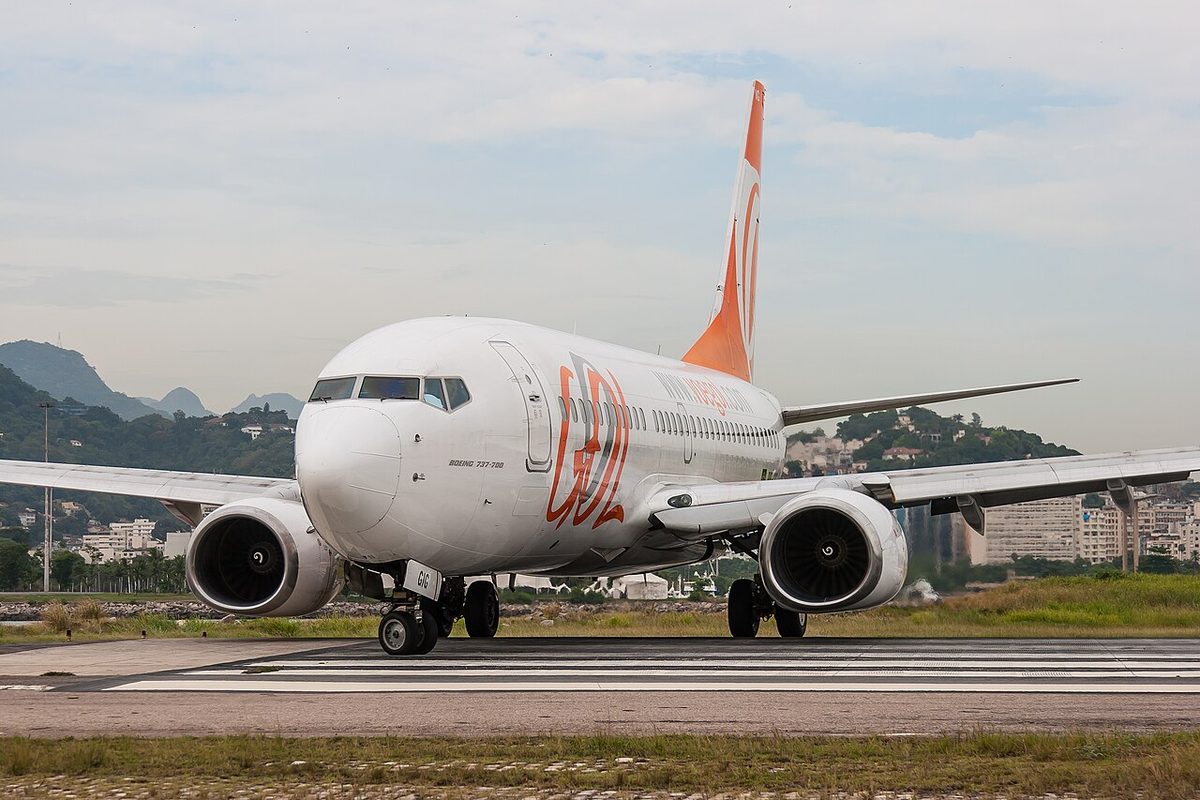
Authority falls as speed rises. The A320's computer limits the angle according to ground speed and the source of the order, and at 130 kt wheel speed the link between pedals and nose wheel is removed; in a strong crosswind more rudder is then needed to stop the aircraft turning into wind. Airbus advises against using the tiller during the take-off roll, because its high authority invites over-control. On the 737, pedal steering is cut out as the nose gear strut extends.
The A320's two hand wheels are interconnected and their orders are added together. A PEDALS DISC pushbutton on either hand wheel disconnects the pedals from the steering, which lets the crew check full rudder travel on the ground without turning the nose wheels. On an automatic landing the autopilot also sends steering orders during the roll-out.
Certification does not count on the nose wheel. The minimum control speed on the ground, VMCG, is demonstrated with the rudder alone, without nose wheel steering, so that it remains valid on a slippery runway where the nose tyres have little grip (see minimum control speeds).
Hydraulic steering actuation
In a classic hydraulic system the tiller moves a steering control valve, which Boeing calls the steering metering valve. It sends fluid to steering jacks acting on a steering collar around the nose leg. A follow-up linkage feeds the actual wheel angle back to the valve and closes it when the wheels reach the angle commanded. A balanced, double-acting jack, with equal piston areas, suits the job because it gives the same force in both directions. The pressure is commonly taken from the landing gear down line, so steering is available only with the gear down.
Modern aircraft command the steering electrically:
- Airbus A320. The brake and steering control unit (BSCU) turns the orders from the hand wheels, the pedals and the autopilot into a nose wheel angle and drives a hydraulic actuator supplied by the yellow system. Steering works only with the A/SKID & N/W STRG switch ON, the towing lever in its normal position, at least one engine running and the aircraft on the ground.
- Embraer E190-E2. A nose wheel steering control module (NWSCM) controls the steering, which is powered by hydraulic system 2 and DC bus 2. It needs the weight-on-wheels signal, so steering is disabled in flight.
- Boeing 737. Normal steering uses hydraulic system A and works when the nose gear is down and compressed by the aircraft's weight; selecting the gear lever down makes system A pressure available to the steering metering valve. If system A fails, the NOSE WHEEL STEERING switch at ALT supplies system B pressure, provided the system B reservoir holds its normal quantity and the aircraft is on the ground. A leak downstream of the landing gear transfer valve makes a sensor close that valve, and alternate steering is then lost.
Castoring and self-centring
With steering pressure removed, or a fault detected, a powered nose wheel castors. A hydraulic system would otherwise trap fluid in its jacks and resist any outside force, so a steering bypass valve opens a path between the two sides of the jacks and lets the fluid pass freely. When steering is selected, hydraulic pressure closes the bypass again. The E190-E2 reverts to free castor when steering is disengaged or faulty, or when the angle exceeds 76°, and can castor through ±170°; the pilot then steers with differential braking and rudder.
Before retraction the nose wheels must be straight. The wheel well is sized for a centred wheel, and a wheel left turned could jam in the bay or damage the structure as the gear retracts. The usual answer is a nose wheel centring cam inside the oleo: as the weight comes off after lift-off the strut extends, and the cams rotate the wheel to the fore-and-aft position whatever the pedals are doing. Other designs use a self-centring jack or a hydraulic dashpot in the steering system. The A320 uses an internal cam and its steering system, and its gear lever is locked in the down position while the nose wheel is not centred.
Exam tip: the nose wheel is centred for retraction by cams in the oleo as the strut extends, not by the pilot. Castoring for towing is made possible by the bypass valve, and VMCG is set without nose wheel steering.
Shimmy and shimmy dampers
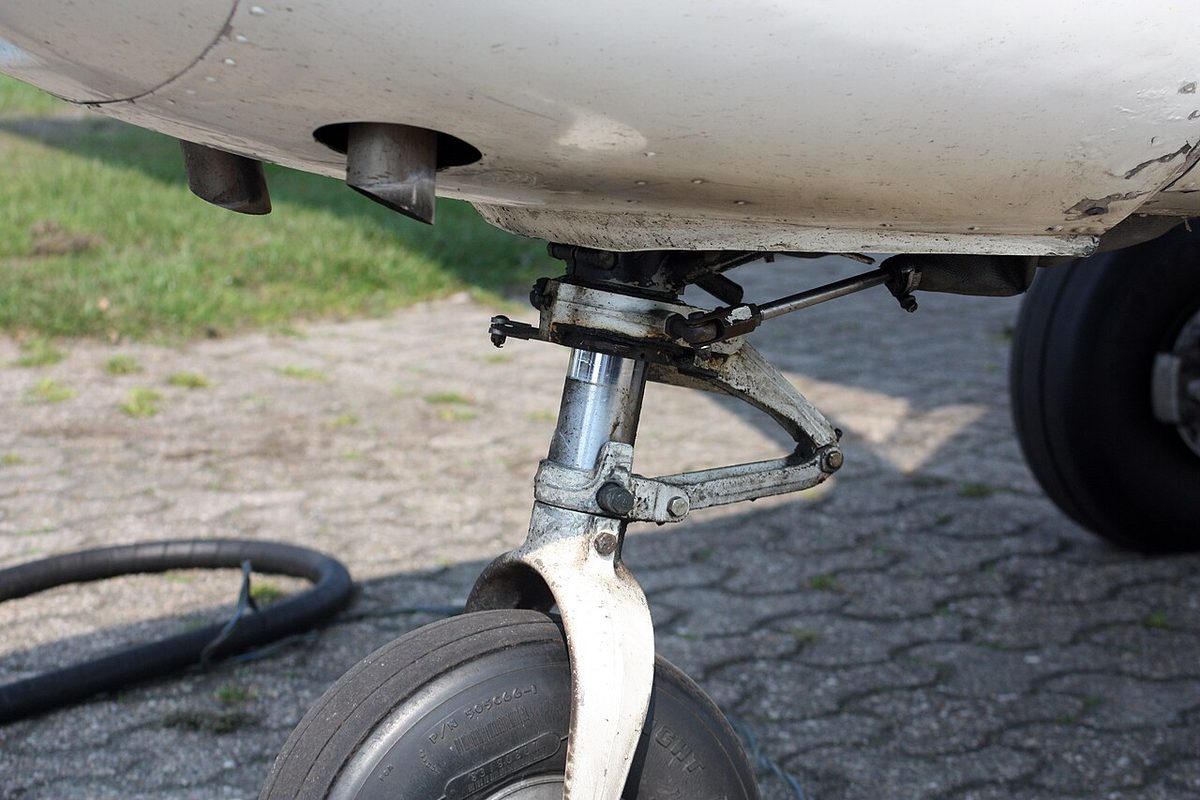
Nose wheel shimmy is a rapid, unstable side-to-side oscillation of the nose wheel during taxi, take-off or landing. It comes from the flexibility of the tyre sidewalls combined with the castor geometry of the leg. Once established it can shake the whole airframe, endanger the structure and wear out or damage the tyre. Wear and play make it worse: worn or broken torque links, worn wheel bearings, unequal pressures in a pair of nose tyres and an unbalanced or unevenly worn tyre are the usual causes.
A shimmy damper suppresses it. It is a small hydraulic damper attached to the steering collar that resists rapid oscillation, absorbing its energy as heat, while letting the slower steering movements pass. Low fluid or worn seals let shimmy return, so the damper needs periodic inspection and servicing, and the walk-round looks for obvious defects in the torque links and the nose leg.
Towing and steering bypass
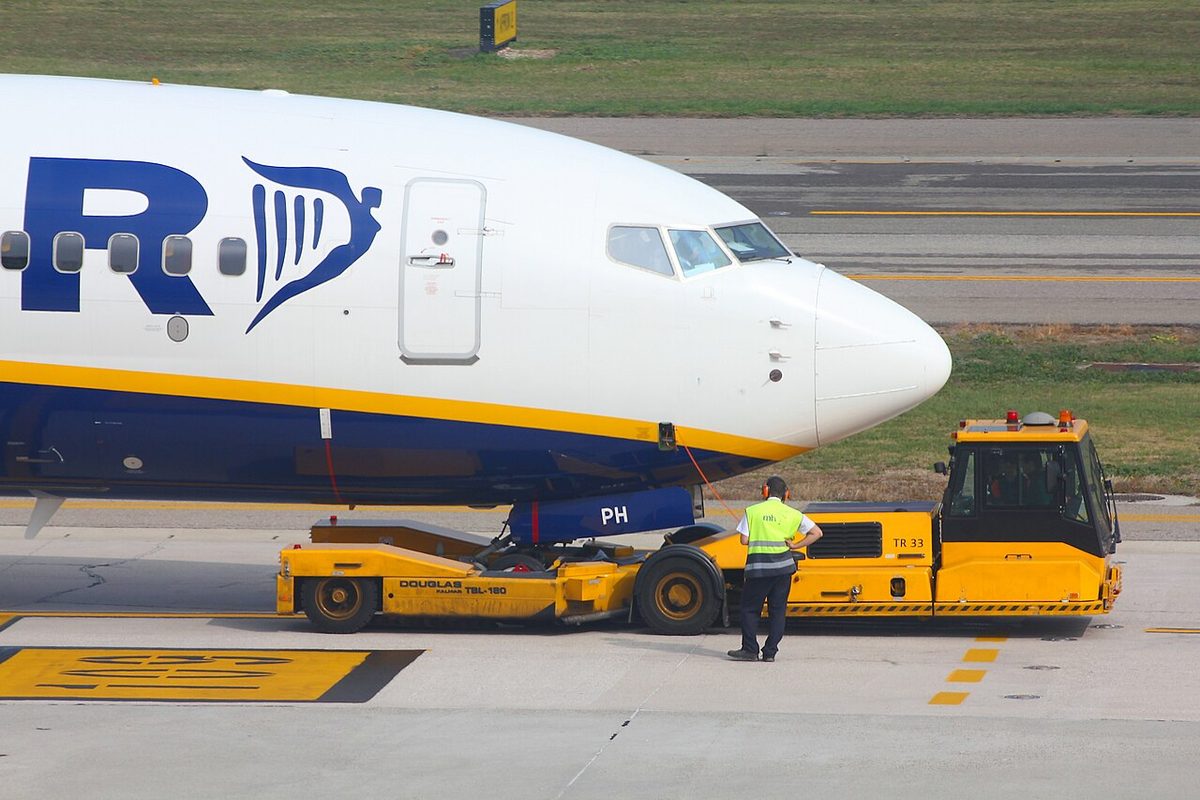
For pushback and towing the nose wheels must follow the tug, so the steering is disconnected.
- On the A320, ground staff move a towing lever on the nose gear, which deactivates the steering and lets the wheels turn up to 95° either way; the ECAM then shows an NW STRG DISC memo. Towbarless towing, in which the tug cradles the nose wheels, is approved only with accepted tugs and a maximum steering angle of 85°.
- On the 737, a lockout pin inserted in the towing lever depressurises the nose wheel steering, so the aircraft can be pushed without depressurising the hydraulic systems. If the pin is not used, hydraulic system A must stay unpressurised: with the tow bar connected, any change of electrical or hydraulic power could otherwise make it move unexpectedly.
The flight crew's role is to keep their hands and feet still. Boeing's procedures forbid holding or turning the nose wheel steering wheel, and using the brakes to stop the aircraft, during pushback or towing, because either can damage the nose gear or the tow bar (see ground handling, pushback and engine start).
Body gear steering
A nosewheel aircraft turns about a point on the line through its main gear. On a large swept-wing aircraft that point lies outboard of the inner main gear, and the swept wings make the wingtips sweep a wider circle than the pilot expects, the effect called wing growth. Types such as the Boeing 747 and the Airbus A380 therefore also steer their body gear, the main gear units under the fuselage, in tight turns. Steering those wheels reduces the space the aircraft needs to turn and keeps their tyres from being dragged sideways across the pavement (see taxiing and runway incursion prevention).
Steering failures
A steering failure is handled with what remains: the rudder at speed and differential braking at low speed. On the E190-E2 a steering runaway is a recall item: the steer disconnect switch is pressed, which leaves the nose wheel castoring, and the aircraft is steered with differential braking and rudder. On the A320, loss of steering shows as an amber N/W STEERING indication on the WHEEL page. Setting the A/SKID & N/W STRG switch OFF also removes steering, but differential braking remains available through the pedals.
Damage to the tyres limits the steering too. When taxiing with a deflated tyre, the A320's nose wheel steering angle is limited to 30°.
Warning: the tiller's authority is what makes it dangerous at speed, which is why Airbus advises against using it in the take-off roll. Tight turns are flown slowly: on the A320, below 10 kt for turns of 90° or more.
Frequently asked questions
What is the difference between tiller and rudder pedal steering?
The tiller, or hand wheel, gives large nose wheel angles for tight turns at low speed: up to 75° on the A320 and 78° on the Boeing 737. The rudder pedals give only a few degrees, 6° on the A320 and 7° on the 737, for small corrections while taxiing and during the take-off and landing roll. Pedal steering fades as speed rises and the rudder takes over.
What causes nose wheel shimmy?
Shimmy is a rapid side-to-side oscillation of the nose wheel. It comes from the flexibility of the tyre sidewalls combined with the castor geometry of the nose leg, and is made worse by worn or broken torque links, worn wheel bearings, unequal pressures in twin nose tyres, an unbalanced tyre or a faulty shimmy damper. The damper, a small hydraulic unit on the steering collar, absorbs the oscillation.
Why must the nose wheel be centred before retraction?
The nose wheel well is shaped for a straight wheel, so a wheel left turned could jam in the bay or damage the structure as the gear retracts. Cams inside the nose oleo turn the wheel straight as the strut extends after lift-off, whatever the pedals are doing, and some designs add a centring jack. On the A320 the gear lever is also locked down while the nose wheel is not centred.
Why is nose wheel steering disconnected for towing?
A hydraulic steering system traps fluid in its jacks and would fight the tug, which could damage the nose gear or the tow bar. Disconnecting it lets the fluid bypass the jacks so that the wheels castor freely. On the A320 a towing lever on the nose gear allows 95° either way; on the Boeing 737 a lockout pin in the towing lever depressurises the steering.
Is nose wheel steering used during the take-off run?
Only through the rudder pedals, and only while the speed is low. Pedal steering helps keep the aircraft straight early in the roll and fades as the rudder becomes effective; on the A320 it has no effect by 130 kt, and the tiller is not used during the take-off roll because of its high authority. Certification does not rely on it: VMCG is demonstrated with the rudder alone.
Test yourself on Nose Wheel Steering
The v1prep banks cover this topic in Aircraft General Knowledge (021), with a worked explanation for every answer. EASA ATPL, PPL, IR and CPL, the FAA written tests and A320/B737 type ratings.
Start practising →Sources and further reading
- FAA Aviation Maintenance Technician Handbook, Airframe (FAA-H-8083-31B), Chapter 13, Aircraft Landing Gear Systems
- EASA Easy Access Rules for Aircrew (Part-FCL), theoretical knowledge syllabus, 021 Airframe, Systems, Electrics, Power Plant
- EASA Easy Access Rules for Large Aeroplanes (CS-25), CS 25.149 Minimum control speed
- 14 CFR 25.149, Minimum control speed
- FAA Airplane Flying Handbook (FAA-H-8083-3C), Chapter 2, Ground Operations
Library articles are written for study and exam preparation. They do not replace your aircraft's approved documentation, your operator's procedures or the regulations themselves.