Fitness to Fly and Pilot Incapacitation
Fitness to fly is a pilot's physical and mental ability to carry out flying duties safely on the day, judged by the pilot before every flight. Pilot incapacitation is any loss of that ability in flight, from sudden collapse to a subtle decline in performance that the pilot affected may not notice.
A medical certificate shows that a pilot met the medical standards on the day of the examination. It says nothing about the morning of a flight. Between examinations fitness to fly is a daily judgement that only the pilot can make, and both European and US rules place it on the licence holder: EASA's Part-MED (MED.A.020) forbids exercising licence privileges while aware of any decrease in medical fitness that might make the pilot unable to exercise them safely, and 14 CFR 61.53 forbids acting as pilot in command, or as a required pilot flight crewmember, while knowing or having reason to know of a medical condition that would make the pilot unable to meet the requirements of their medical certificate.
Pilot incapacitation is what happens when fitness fails in the air. Flight crew incapacitation is among ICAO Annex 13's examples of serious incidents, and in the United States it must be reported immediately to the NTSB. ICAO's Manual of Civil Aviation Medicine (Doc 8984) describes the "1 % rule": for a pilot in a multi-crew operation, a medical risk of incapacitation of up to about 1 % per year is treated as acceptable, because the other pilot can take over. That reasoning only works if the other pilot notices the problem and is trained to act, and it offers nothing to the single pilot, for whom prevention is the only defence.
Fitness for duty and IMSAFE
The FAA's personal checklist, printed in AIM 8-1-1 and the Pilot's Handbook of Aeronautical Knowledge, is IMSAFE: Illness, Medication, Stress, Alcohol, Fatigue and Emotion, with Eating replacing or joining Emotion in some versions. The AIM notes that accident statistics show pilot impairment contributing to many more accidents than failures of aircraft systems, so the pilot should be checked as carefully as the aeroplane.
- Illness. Even a minor illness brings fever and distracting symptoms that impair judgement, memory, alertness and calculation. A medicine may control the symptoms and still reduce performance, and a cold that blocks the ears or sinuses invites barotrauma however well the pilot feels on the ground. The AIM's safest rule is not to fly while suffering from any illness, and to ask an aviation medical examiner when that seems too strict.
- Medication and alcohol are covered in alcohol, drugs and medication.
- Stress and emotion. The AIM lists a serious argument, the death of a family member, separation or divorce, loss of a job and financial catastrophe as events that can leave a pilot unable to fly safely. See stress.
- Fatigue. See fatigue. Under 14 CFR 117.5 each airline flightcrew member affirmatively states before the flight that they are fit for duty, and under the EU air operations rules (CAT.GEN.MPA.100) a crew member must not perform duties when unfit through fatigue, injury, medication, sickness or similar causes.
Part-MED adds a duty to seek aeromedical advice without undue delay after surgery or an invasive procedure, on starting regular medication, after a significant illness or injury, when pregnant, on any admission to hospital, whatever its length, and on first needing corrective lenses. Class 1 and class 2 holders consult an aero-medical centre (AeMC) or aeromedical examiner (AME). See medical certification.
Exam tip: ATPL texts list the internal physiological stressors as hunger, thirst, fatigue, lack of sleep and pain. All except pain are normally within the crew's control, and no duty should begin with any of them unresolved.
Obvious and subtle incapacitation
Obvious incapacitation is sudden and unmistakable: collapse, loss of consciousness, a fit or a heart attack. It is dramatic but, with a second pilot on board, usually recognised at once. Coronary disease is the dominant medical threat to pilots; ATPL texts attribute about 70 % of pilot deaths during their careers to it.
Subtle incapacitation is partial. The pilot keeps flying and answering the radio but becomes slow, makes uncharacteristic errors, misses calls or responds inappropriately. The degraded judgement is not available to diagnose itself, so the pilot affected is often the last to know. Developing illness, hypoxia, low blood sugar and a medical event can all cause it, and it is more dangerous than sudden collapse because there is no moment when failure becomes obvious.
EASA human performance texts give acute gastroenteritis, from food poisoning or contaminated water, as the most common cause of in-flight incapacitation, with gastro-intestinal disorders making up almost half of all cases. Its insidious onset is exactly what makes it dangerous. A UK CHIRP report quoted in ATPL texts shows the cost of missing the signs: a junior first officer received no responses to the approach checks from a senior captain, did not challenge, and the aeroplane flew into the ground short of the runway. The captain had died during the approach.
Handling crew incapacitation
Detection comes first. Standard callouts tell each pilot that the other is taking part; Boeing's procedures note that the absence of a standard callout at the appropriate time may indicate a system malfunction or incapacitation of the other crew member, and in E190-E2 procedures the 80 kt call on the take-off roll also checks that both pilots are capable. The two-challenge rule turns suspicion into action: if a pilot fails to respond appropriately to two clear challenges about a significant deviation, the other pilot assumes incapacitation and takes control. See crew resource management.
The fit pilot then works through a simple sequence taught in airline training:
- Take control, announce it ("I have control") and fly the aeroplane: attitude, flight path and speed first.
- Engage the autopilot where available to reduce workload.
- Declare an emergency to ATC and ask for priority.
- Call the cabin crew to the flight deck to secure the incapacitated pilot clear of the controls, for example by moving the seat back, and to give first aid; a cabin crew member may help from the observer seat.
- Plan a landing at the nearest suitable aerodrome and prepare to fly the rest of the flight alone, using the autopilot, ATC and the cabin crew to share the workload.
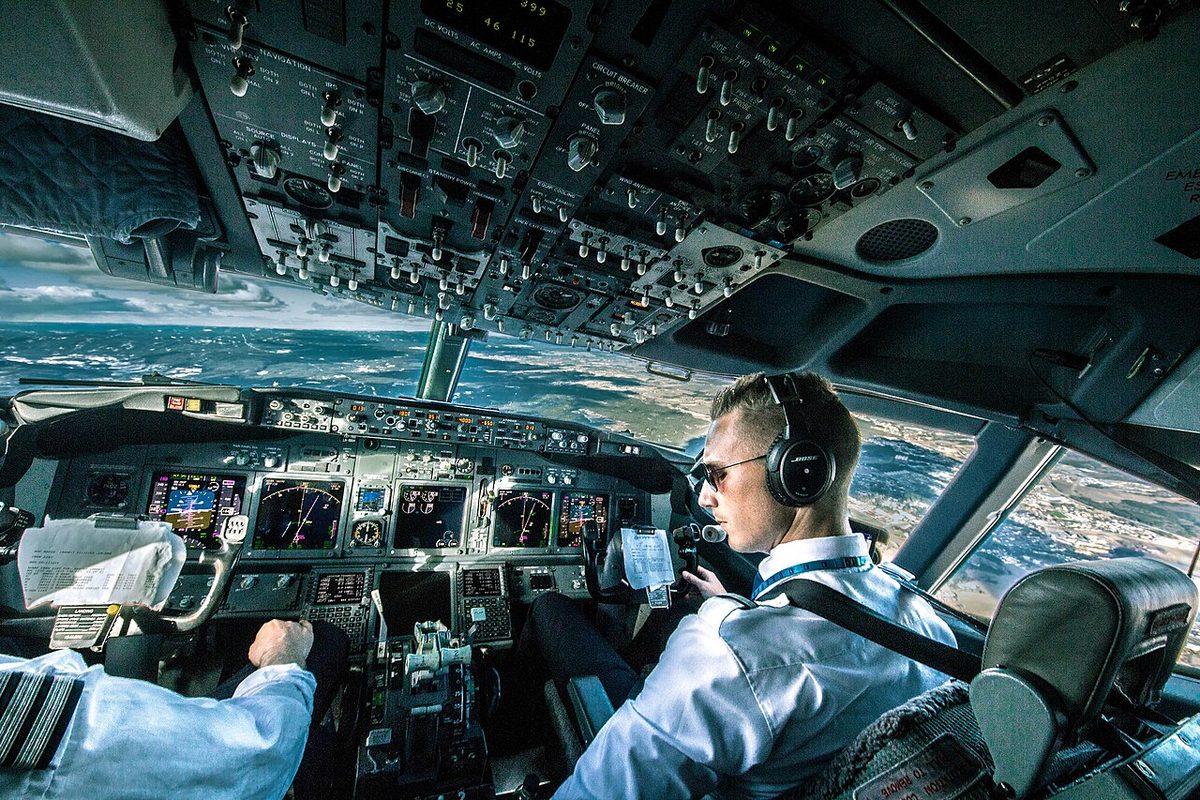
Timing matters on the runway too. In one E-Jet operator's procedures, pilot incapacitation is one of the few reasons to reject a take-off above 80 kt. Incapacitation is not always physical. After the Germanwings accident of March 2015, in which the co-pilot deliberately crashed the aircraft while alone on the flight deck, the BEA pointed out that a second pilot protects against a colleague's physical incapacitation but is no guaranteed defence against psychological incapacitation.
Fainting and seizures
A faint (syncope) is a brief loss of consciousness caused by a sudden reduction in the blood supply to the brain, for example after standing up quickly, from shock, from blood loss or from lack of food. ATPL texts state that, unlike a fit, a faint has no sinister significance for future flying as long as its cause is clearly understood.
An epileptic fit implies an unpredictable loss of consciousness, and ATPL texts treat a fit, major or minor, as a bar to holding a flying licence; people with epilepsy often show an abnormal EEG. The AIM lists epilepsy and an unexplained disturbance of consciousness among the conditions that are mandatorily disqualifying under 14 CFR Part 67, while noting that a pilot who does not meet the standards may still qualify through special issuance or exemption. Any history of seizures is a matter for the aeromedical examiner, not for self-assessment. Flickering light, such as sunlight through a slowly turning propeller or rotor, or strobes reflected from cloud, can cause nausea, disorientation and, rarely, a seizure in a susceptible person. The remedy is to remove the flicker: change the RPM, turn the strobes off in cloud or shade the eyes.
Blood sugar and diabetes
The brain runs almost entirely on glucose. Hypoglycaemia, which ATPL texts define as blood glucose below about 50 mg per 100 ml, follows skipped meals or fasting and brings headache, shakiness, sweating, nervousness, sleepiness, poor concentration and eventually fainting. The picture closely resembles early hypoxia, so a pilot may treat the wrong problem or dismiss it altogether. A snack relieves it in the short term; the ATPL texts' advice is never to fly on an empty stomach and to make breakfast about a quarter of the day's calories. Low blood sugar also reduces tolerance to g.
Diabetes mellitus is a failure of blood sugar control. In type 1 diabetes, usually starting in youth, the pancreas makes little or no insulin and regular insulin injections are needed. In type 2 diabetes, usually in adults and linked to obesity, poor diet and inactivity, the pancreas makes too little insulin or the body cannot use it effectively. The AIM lists diabetes requiring medication for its control among the conditions that are mandatorily disqualifying under Part 67, subject to the same special issuance provisions; under Part-MED, starting regular medication for any condition triggers the duty to seek aeromedical advice.
Food poisoning
Because gastro-intestinal illness heads the incapacitation list, crews manage food deliberately. ATPL texts recommend about 90 minutes between eating and flying, long enough for the first symptoms of food poisoning to appear, and some airlines apply this to crew meals in flight. Pilots should eat different meals from the menu so that one contaminated dish cannot disable both. A pilot with vomiting or diarrhoea should not fly at all: the risks of dehydration and sudden incapacitation are too great.
Dehydration and heat stress
Cabin humidity in modern airliners is typically 5 to 15 %, against the 40 to 60 % needed for comfort, and caffeine and alcohol add to fluid loss. Thirst appears only once a deficit already exists, and even mild dehydration brings headache, reduced concentration, slower reactions and fatigue, and lowers tolerance to heat and to g. Fluid should therefore be drunk to a plan through the duty, water in preference to diuretic drinks such as coffee.
ATPL texts give normal oral temperature as 36.1 to 37.2 °C and state that performance becomes significantly impaired at an internal temperature of about 38 °C, that at about 41 °C the body can no longer regulate its temperature (heat stroke) and that 43 °C is fatal; acclimatisation to a hot, humid climate takes about two weeks. FAA training material notes that a light aircraft cockpit on the ramp can reach 100 °F (about 38 °C) or more, and advises carrying water, wearing light clothing, keeping the cabin ventilated and avoiding caffeine and alcohol.
Blood donation
A donated unit is about 10 % of the blood volume. The plasma is replaced within a day or two, but the red cells take weeks, so the blood carries less oxygen and tolerance to hypoxia falls. The EU air operations rules (CAT.GEN.MPA.100) bar a crew member from duty until a reasonable time has elapsed after blood donation, and European human performance training advises about 24 hours. FAA guidance to aviation medical examiners is at least 24 hours after a unit and 48 hours after a double red cell donation. Feeling well on the ground is no guarantee, because light-headedness may only appear under the mild stresses of flight.
Travel health and vaccinations
Crews who night-stop in the tropics face infections rarely seen at home. ATPL texts cover six:
| Disease | Spread by | Protection |
|---|---|---|
| Malaria | Bites of mosquitoes carrying the parasite | Avoiding bites and preventive tablets, continued after leaving the area |
| Yellow fever | Mosquitoes in tropical regions; incubation 3 to 8 days | A single vaccine dose gives lifelong protection; the certificate has been valid for life since 2016 (older texts say 10 years) |
| Hepatitis A | Contaminated food and water | Food and water hygiene |
| Hepatitis B | Blood: shared needles, transfusion, tattooing, sexual contact | Vaccination; more serious than hepatitis A, with a risk of chronic liver disease |
| Rabies | Saliva of infected animals, usually through a bite | A course of vaccine injections after a bite |
| Tetanus | Contaminated wounds | An initial course of three doses, then revaccination every 10 years |
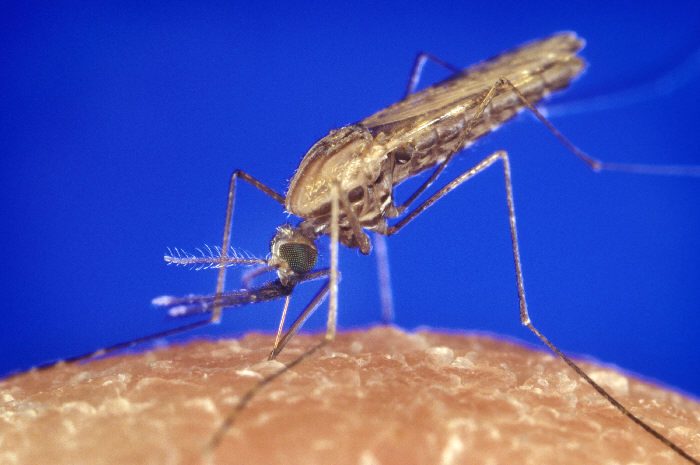
For malaria, ATPL texts quote starting prophylaxis a week before departure and continuing it for four weeks after leaving, but the actual schedule depends on the drug prescribed. Under Part-MED, beginning regular medication is itself a reason to seek aeromedical advice, and a course of antimalarial tablets is no exception.
Frequently asked questions
What does IMSAFE stand for?
IMSAFE is a personal checklist a pilot runs before every flight. It stands for Illness, Medication, Stress, Alcohol, Fatigue and Emotion; some versions use Eating for the E. A yes to any item, such as a cold, a sedating medicine, a sleepless night or a family upset, is a reason to delay the flight or to seek aeromedical advice. The FAA publishes it in the AIM and the Pilot's Handbook of Aeronautical Knowledge.
What is subtle incapacitation?
Subtle incapacitation is a partial loss of function in which a pilot keeps flying and talking but performs badly, responds slowly or inappropriately, or misses actions, often without realising it. Developing illness, hypoxia, low blood sugar or a medical event can cause it. It is more dangerous than sudden collapse because there is no unmistakable moment of failure, which is why crews use standard callouts and the two-challenge rule to detect it.
What is the most common cause of in-flight incapacitation?
EASA human performance texts give acute gastroenteritis, caused by food poisoning or contaminated water, as the most common cause, with gastro-intestinal disorders accounting for almost half of in-flight incapacitations. Its onset is often gradual, so the pilot may not realise how impaired they are. Crews reduce the risk by eating different meals, allowing about 90 minutes between eating and flying and taking care over food and water hygiene abroad.
How long after donating blood can a pilot fly?
European human performance training advises not flying for about 24 hours after donating blood, and EU air operations rules keep crew off duty until a reasonable time has passed after a donation. FAA guidance to aviation medical examiners is at least 24 hours after one unit and 48 hours after a double red cell donation. A unit is about 10 per cent of the blood volume, and the red cells take weeks to be replaced, so tolerance to hypoxia is reduced.
Can a pilot fly after fainting?
A faint is a brief loss of consciousness caused by a sudden fall in the blood supply to the brain, for example after standing up quickly, shock, blood loss or lack of food. ATPL texts state that it has no sinister significance for flying as long as the cause is clearly understood, and the pilot should seek aeromedical advice. An epileptic fit implies unpredictable loss of consciousness, so ATPL texts treat it as a bar to holding a licence and the AIM lists epilepsy as disqualifying.
Test yourself on Fitness to Fly and Pilot Incapacitation
The v1prep banks cover this topic in Human Performance and Limitations (040), with a worked explanation for every answer. EASA ATPL, PPL, IR and CPL, the FAA written tests and A320/B737 type ratings.
Start practising →Sources and further reading
- FAA Aeronautical Information Manual, Chapter 8 Section 1 (8-1-1, Fitness for Flight)
- FAA Pilot's Handbook of Aeronautical Knowledge (FAA-H-8083-25), Chapter 17, Aeromedical Factors
- EASA Easy Access Rules for Aircrew, Part-MED (MED.A.020, Decrease in medical fitness)
- 14 CFR 61.53, Prohibition on operations during medical deficiency
- 14 CFR Part 117, Flight and Duty Limitations and Rest Requirements (117.5, Fitness for duty)
- ICAO Doc 8984, Manual of Civil Aviation Medicine
- BEA Final Report BEA2015-0125, Germanwings Airbus A320-211 D-AIPX, 24 March 2015
Library articles are written for study and exam preparation. They do not replace your aircraft's approved documentation, your operator's procedures or the regulations themselves.