Vision Defects and Eye Protection
Vision defects are conditions that reduce the eye's ability to focus, see detail or distinguish colours, from correctable refractive errors to diseases such as cataract and glaucoma. Aviation medical standards set the vision a pilot needs, with or without correction, and the choice of lenses and sunglasses for flying.
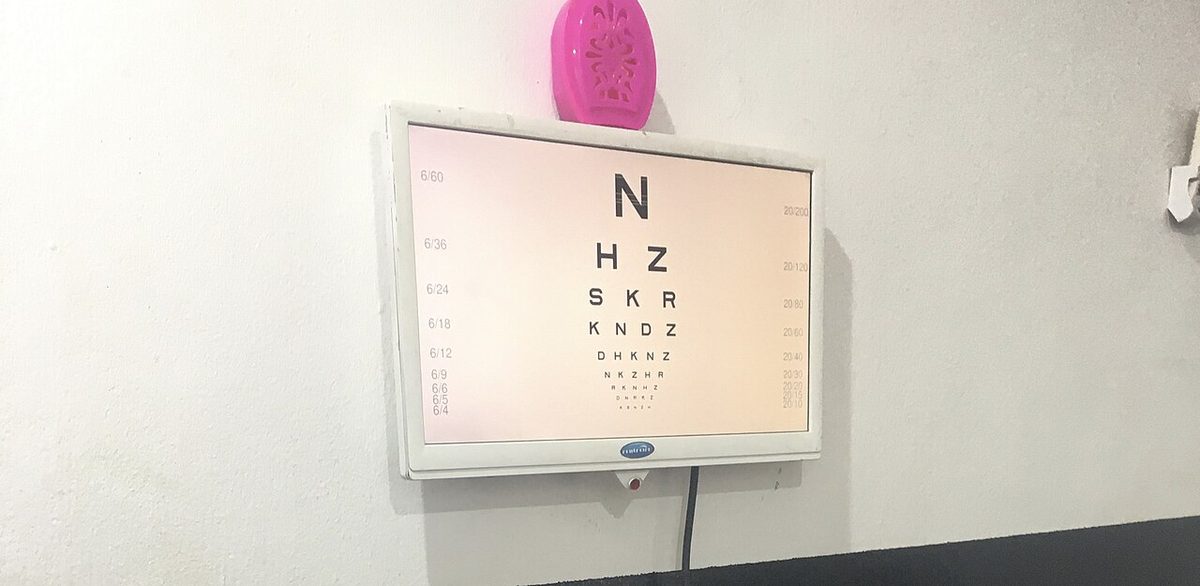
Good vision is a medical requirement for every pilot's licence, but perfect eyes are not. The medical standards of EASA Part-MED (MED.B.070 for the visual system, MED.B.075 for colour vision) and of the FAA (14 CFR Part 67) set minimum acuity with or without correction, so many pilots fly with glasses or contact lenses. What the standards look for is vision good enough, once corrected, to read the instruments, see other traffic and identify coloured lights and signals, and no eye disease that threatens those abilities.
The common defects fall into four groups. Refractive errors blur the image because the eye focuses it in the wrong place. Presbyopia is the loss of near focus with age. Eye diseases such as cataract and glaucoma damage the lens or the optic nerve. Colour vision deficiency is usually inherited. Protection from glare, ultraviolet light and blue light is the other half of the subject, and the choice of sunglasses for the flight deck is less obvious than it looks. The structure of the eye is covered in the eye and vision.
Refractive errors
The cornea and lens bend, or refract, the incoming light so that it comes to a focus on the retina. In a refractive error the focus falls in front of or behind it, or is not a point at all:
| Defect | Cause | Effect | Correction |
|---|---|---|---|
| Myopia (short sight) | Eyeball longer than normal; image forms in front of the retina | Distant objects blurred, near vision usually good | Concave (diverging) lens |
| Hypermetropia (long sight) | Eyeball shorter than normal; image forms behind the retina | Near objects blurred | Convex (converging) lens |
| Astigmatism | Cornea misshapen, oblong instead of evenly curved | Objects appear distorted or irregularly shaped | Cylindrical (toric) lens, or laser reshaping of the cornea |
Myopia matters most for lookout, because distant traffic is exactly what a short-sighted pilot sees poorly. It should not be confused with empty-field myopia, the normal eye's tendency to relax to a near focus when there is nothing outside to look at.
Laser reshaping of the cornea is surgery. Under EASA rules any surgery or invasive procedure is one of the events after which a licence holder must seek aeromedical advice before flying again.
Presbyopia and ageing
From about 40 to 50 years of age the lens loses its elasticity. The ciliary muscles can no longer thicken it enough to focus on near objects, so accommodation fails. Presbyopia is therefore a form of long sight that comes with age. Small print becomes hard to read, especially in poor light: approach charts, a checklist or a display at arm's length on a dim flight deck. The correction is a weak convex lens, often as half-lenses or look-over spectacles that leave the distant view through the top of the frame clear. Older pilots also need higher cockpit lighting levels.
Age also raises the risk of the two eye diseases pilots meet most in exam questions, cataract and glaucoma.
Cataract and glaucoma
A cataract is a clouding of the lens. It is usually associated with ageing, though some diseases can cause it at any age, and it causes a marked loss of vision. In severe cases surgery removes the cloudy lens and replaces it with an artificial one. After successful treatment and aeromedical assessment, pilots normally return to flying.
Glaucoma is damage to the optic nerve, usually caused by a rise in the pressure of the aqueous humour, the fluid in the front of the eye, above its normal 10 to 20 mmHg. If untreated, it leads to loss of vision and eventually blindness. It is treated with eye drops or surgery to improve the drainage of the fluid.
Both are certification matters. Under EASA rules a licence holder must not exercise the privileges of the licence while aware of any decrease in medical fitness, and must seek aeromedical advice after surgery or on starting regular medication, such as glaucoma drops.
Colour vision deficiency
Colour vision deficiency, commonly called colour blindness, results from a defect in the colour-sensitive cones of the retina, often the absence of one group. The most common form by far is red-green deficiency, in which red and green are seen as shades of yellow, brown or grey. It is congenital and incurable, and many people with it do not know they have it. It is rare in women, who are mainly carriers. Colour deficiency does not affect visual acuity. Total colour blindness is extremely rare and bars the issue of a flying licence.
Colour matters in aviation because so much information is coded in it:
- navigation lights
- aerodrome lighting and PAPI
- light signals from air traffic control
- warnings and indications on flight deck displays.
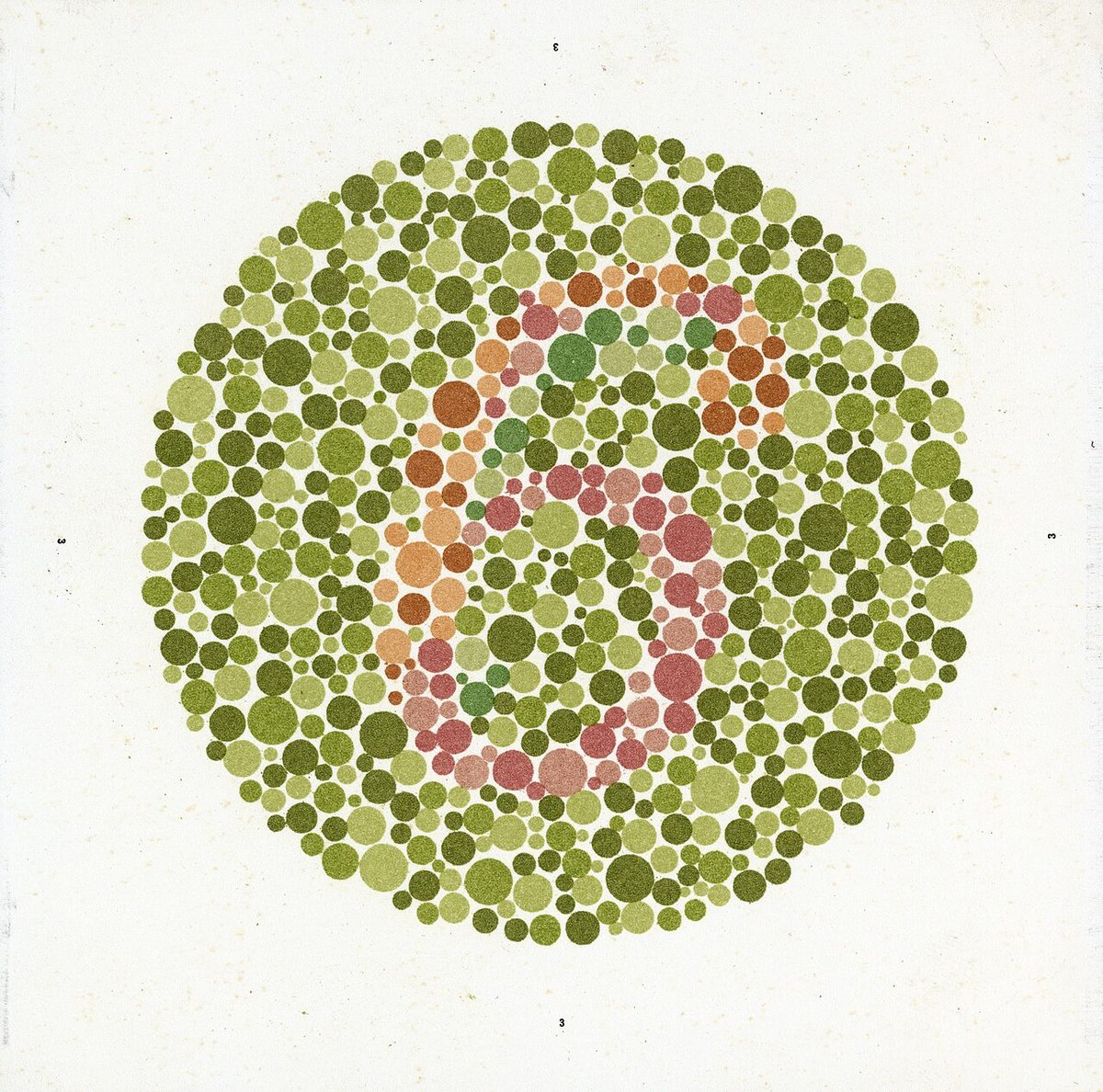
Colour vision is first screened with Ishihara plates, pseudo-isochromatic plates in which a number is drawn in dots of one colour among dots of another. A pilot who fails them can be assessed with further colour vision tests. The question these tests answer is whether the pilot is colour safe: able to readily distinguish the colours used in air navigation and to identify aviation coloured lights correctly. Under EASA rules a night rating added to a PPL or LAPL requires the holder to be colour safe. In the United States a colour-deficient pilot who cannot pass the FAA's alternative tests receives a limitation on night flying.
Corrective and contact lenses
Both systems allow correction:
- FAA. First and second class require distant acuity of 20/20 in each eye separately, with or without correction; third class requires 20/40. If glasses or contact lenses are needed to meet the standard, the certificate requires them to be worn while flying.
- EASA. Part-MED sets its distant, intermediate and near acuity standards with or without correction. The first time a licence holder needs correcting lenses is one of the events that require aeromedical advice.
Contact lenses are permitted under authorised medical supervision. ATPL texts state that bifocal contact lenses are prohibited, and that a pilot who wears contact lenses must carry a spare pair of ordinary spectacles at all times when exercising the privileges of the licence.
Monocular vision
Monocular vision means useful sight in one eye only. Binocular vision is not essential for flying. Stereopsis, the depth perception that comes from two eyes, is useful only to about 60 m, so judgements of height and distance on an approach rest on monocular cues in any case. A pilot who loses the sight of one eye still needs time to adapt, which is why the rules include a period of adaptation.
EASA Part-MED does not bar a one-eyed pilot outright:
- Class 2. An applicant with monocular vision may be assessed as fit if the monocular visual field is acceptable, subject to conditions such as a period of adaptation.
- Class 1. Monocularity is disqualifying at the initial examination. A holder who loses the sight of one eye may be assessed as fit at revalidation or renewal with an operational multi-pilot limitation (OML), valid only as or with a qualified co-pilot. This follows an adaptation period and requires 6/6 in the good eye, an acceptable visual field and a satisfactory medical flight test.
Older texts say that EASA cannot accept a one-eyed pilot at all; that is no longer the rule.
Sunglasses for pilots
At altitude the light is harsher than on the ground. There is less scattering by haze and pollution, cloud tops reflect strongly, and sunlight contains more high-energy blue and ultraviolet light. Blue light causes cumulative damage to the retina. Ultraviolet damages the lens, although cockpit windows filter most of it. The AIM describes glare from light reflected off the canopy, cloud, water, snow and desert. It causes squinting, watering eyes and even temporary blindness. Prolonged exposure to bright sunlight also impairs dark adaptation later, which matters before a night flight.
Pilot sunglasses should meet these criteria:
- Transmittance. The AIM says they should absorb at least 85 per cent of visible light, a transmittance of 15 per cent; ATPL texts quote 10 to 15 per cent.
- Neutral tint. They should absorb all colours equally (neutral transmittance), so that lights, signals and displays keep their true colours; grey is the usual choice.
- Optical quality. Distortion from refractive and prismatic errors should be negligible, which rules out cheap sunglasses.
- Impact resistance. Polycarbonate lenses and thin metal frames that obstruct the view as little as possible are recommended.
Sunglasses are for daylight only. At dusk and at night they throw away the light the rods need.
Polarised and photochromic lenses
Polarised lenses filter out light polarised in one plane, which removes much of the glare reflected from flat surfaces. That is useful on the road but a problem in the air:
- combined with the laminated windscreens of many aircraft they produce distortion patterns
- they change the appearance of cloud
- they reduce reflections from the ground that a VFR pilot uses
- FAA guidance also warns that they can reduce or eliminate the visibility of instruments that incorporate anti-glare filters, and can mask the glint of sunlight off another aircraft.
Polarised sunglasses are therefore discouraged for flying.
Photochromic lenses darken in bright light and clear again in dim light, but they clear slowly. A pilot entering cloud, turning away from the sun or looking down into a shaded cockpit may be left with lenses that are still too dark. The darkening is triggered by ultraviolet light, and the FAA notes that the reduced ultraviolet exposure in a cockpit further limits their effectiveness. ATPL texts list them with polarised lenses among the types to avoid; a fixed, neutral tint of known transmittance behaves predictably.
Exam tip: The correct answer for pilot sunglasses combines a neutral (grey) tint, a transmittance of 10 to 15 per cent, good optical quality and impact resistance. Polarised and photochromic lenses are the wrong answers.
Frequently asked questions
Can you become a pilot if you wear glasses?
Yes. EASA Part-MED and the FAA's Part 67 both set their visual acuity standards with or without correction, so pilots commonly fly with glasses or contact lenses. The FAA requires 20/20 distant vision in each eye for first and second class and 20/40 for third class, and a certificate issued with correction requires the lenses to be worn. Under EASA rules a pilot who first needs correcting lenses must seek aeromedical advice.
Can you be a pilot if you are colour blind?
It depends on the degree. Total colour blindness bars the issue of a licence, but it is extremely rare. The common red-green deficiency is assessed with further tests after a failed Ishihara plate test, to find out whether the pilot is colour safe, that is, able to distinguish the colours used in air navigation and identify aviation coloured lights. Under EASA rules a night rating on a PPL or LAPL requires the holder to be colour safe, and the FAA restricts night flying for a deficient pilot.
Are polarised sunglasses suitable for flying?
They are generally discouraged. Polarised lenses cut reflected glare, but combined with the laminated windscreens of many aircraft they produce distortion patterns. They also change the appearance of cloud, reduce ground reflections that are useful to a VFR pilot, and can reduce the visibility of instruments that incorporate anti-glare filters. A fixed neutral grey tint transmitting about 10 to 15 per cent of the light is the usual recommendation.
Can pilots fly with contact lenses?
Yes, under authorised medical supervision. ATPL texts state that bifocal contact lenses are prohibited, and that a pilot who flies with contact lenses must carry a spare pair of ordinary spectacles whenever exercising the privileges of the licence. The contact lenses must correct the vision well enough to meet the medical standard, and the first need for correcting lenses is itself a reason to seek aeromedical advice.
Can a pilot with only one eye fly?
Binocular vision is not essential for flying, and EASA Part-MED does not bar a one-eyed pilot outright. A Class 2 applicant with monocular vision may be assessed as fit if the visual field is acceptable, after a period of adaptation. For Class 1, monocularity is disqualifying at the initial examination, but a holder who loses the sight of one eye may be assessed as fit at revalidation or renewal with a multi-pilot limitation, after adaptation and a medical flight test.
Test yourself on Vision Defects and Eye Protection
The v1prep banks cover this topic in Human Performance and Limitations (040), with a worked explanation for every answer. EASA ATPL, PPL, IR and CPL, the FAA written tests and A320/B737 type ratings.
Start practising →Sources and further reading
- EASA Easy Access Rules for Aircrew (Regulation (EU) No 1178/2011), Annex IV Part-MED (MED.B.070 Visual system, MED.B.075 Colour vision)
- 14 CFR Part 67, Medical Standards and Certification
- FAA Guide for Aviation Medical Examiners
- FAA Aeronautical Information Manual, Chapter 8 Section 1 (8-1-6 Vision in Flight)
- FAA Civil Aerospace Medical Institute, Pilot Safety Brochures (Pilot Vision; Sunglasses for Pilots)
- FAA Pilot's Handbook of Aeronautical Knowledge (FAA-H-8083-25), Chapter 17, Aeromedical Factors
Library articles are written for study and exam preparation. They do not replace your aircraft's approved documentation, your operator's procedures or the regulations themselves.