Boeing 787 Fuel System
The Boeing 787 fuel system stores 33,340 US gallons (787-8) or 33,380 US gallons (787-9 and 787-10) of usable fuel in two main tanks and a centre tank, feeds the engines with two pumps in each main tank and two centre override/jettison pumps, and inerts the tanks with a nitrogen generation system.
The Boeing 787 carries its fuel in three tanks: a left and a right main tank and a large centre tank, which holds about two thirds of the total. Two pumps in each main tank and two centre tank pumps supply the fuel; the centre pumps double as the jettison pumps, and a scavenge system is needed to use the last of the centre tank fuel. A single crossfeed valve and a fuel balance function help keep the two main tanks balanced, and a nitrogen generation system inerts the tanks.
The FAA Flight Standardization Board (FSB) report rates the 777-300ER to 787-8 fuel differences, in tanks, pumps, the fuel balance system and controls, at level B, aided instruction. The original 2011 report listed one crossfeed valve, a fuel balance switch, minor differences in centre tank pump operation and a fuel tank inerting system.
The figures here come from the EASA type-certificate data sheet (TCDS), the FAA Master Minimum Equipment List (MMEL), the FSB reports and Boeing's airport planning document. Where they differ, the TCDS is used for certified capacities. General principles are in fuel feed, boost pumps and crossfeed and fuel tanks, venting and inerting.
Tanks and capacities
The TCDS gives the usable fuel by model, based on a fuel density of 6.7 lb per US gallon and 0.8 kg per litre:
| Tank | 787-8 | 787-9 and 787-10 |
|---|---|---|
| Main tank, left or right | 5,570 US gal (21,085 l; 37,319 lb; 16,868 kg) | 5,520 US gal (20,895 l; 36,984 lb; 16,716 kg) |
| Centre tank | 22,200 US gal (84,036 l; 148,740 lb; 67,229 kg) | 22,340 US gal (84,566 l; 149,678 lb; 67,653 kg) |
| Total usable | 33,340 US gal (126,206 l; 223,378 lb; 100,965 kg) | 33,380 US gal (126,356 l; 223,646 lb; 101,085 kg) |
| Unusable (drainable plus trapped) | 104.8 US gal (396.7 l; 317 kg) | 73.2 US gal (276.9 l; 221.6 kg) |
The 787-9 and 787-10 therefore hold slightly less in each main tank and more in the centre tank, for a slightly larger total; the current FSB differences tables give the same pound figures and call it "increased fuel capacity". The original 2011 FSB report quoted slightly higher capacities for the 787-8; the later TCDS figures are used here.
Besides the main and centre tanks there are surge tanks: the MMEL lists sump drain valves for the surge tanks as well as for the main and centre tanks. The original FSB report states that the design has no provision for fuel tanks in the passenger or baggage compartments. The EASA certification basis includes, for all three models, special conditions on composite wing and fuel tank fire protection and on tyre and wheel debris penetrating the fuel tanks.
The TCDS lists the acceptable fuels: Jet A and Jet A-1 to ASTM D-1655, JP-8 to MIL-DTL-83133 and the Russian TS-1 to GOST 10227-86 as kerosene, and JP-5 to MIL-DTL-5624 as a high flash point fuel. The GEnx engine data sheet prohibits Class B fuels (Jet B, JP-4) and the fuel biocide Kathon FP 1.5. Fuel types in general are covered in aviation fuel grades and properties.
Main and centre pumps
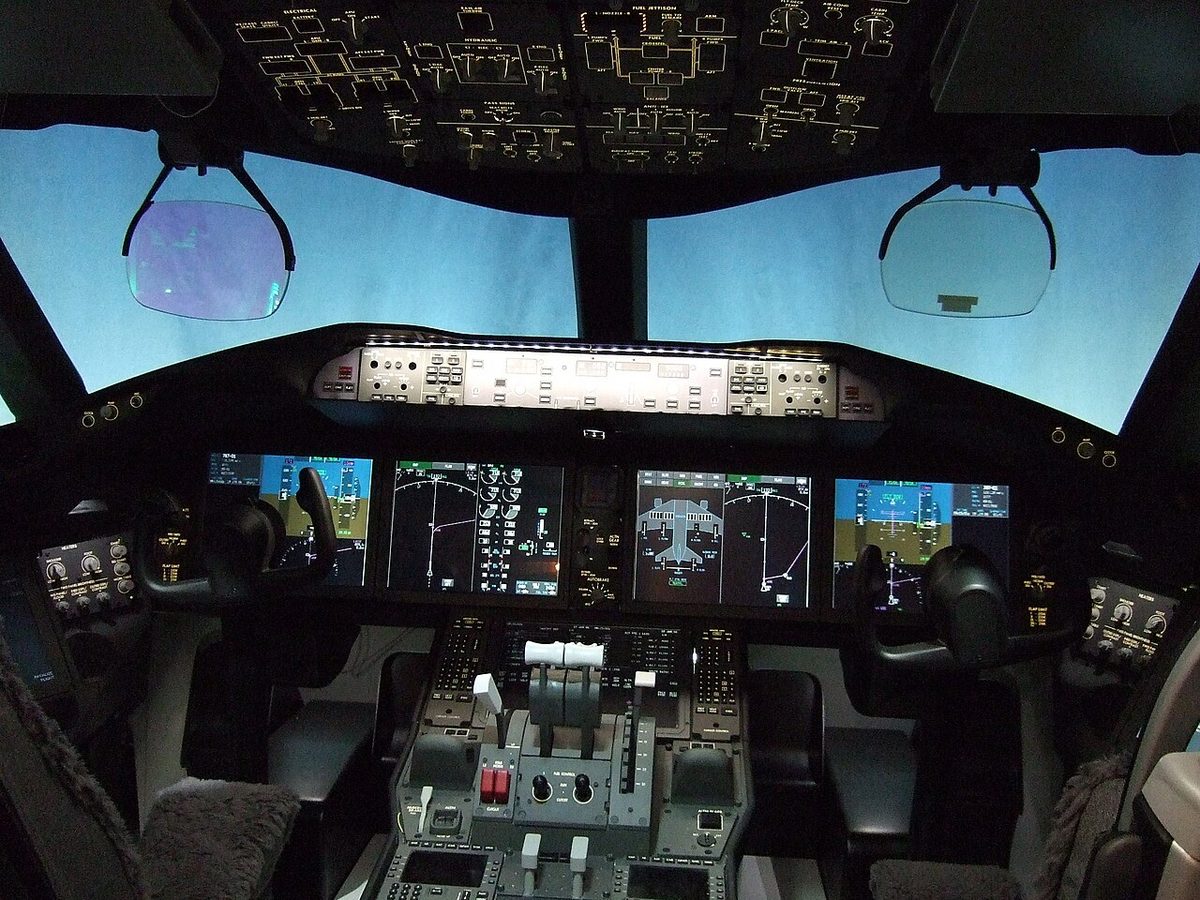
The MMEL lists four main tank fuel pumps, two in each main tank, and two centre tank override/jettison pumps. Each pump switch has a PRESS light and an ON light. The centre pumps' name describes their two roles: they deliver the centre tank fuel and they serve the jettison system.
A scavenge system, with two scavenge pumps and two scavenge valves, is needed to use all of the centre tank fuel. The MMEL makes its role clear: with the scavenge pumps inoperative, an appropriate amount of centre tank fuel must be counted as unusable; and with both centre pumps inoperative, centre tank fuel may still be counted on only if the scavenge system works and the main tanks hold enough fuel to reach a suitable airport should it fail; otherwise it is treated as unusable. The APU draws its fuel through a separate APU DC fuel pump and an APU fuel shutoff valve.
Crossfeed and fuel balance
The 787 has a single crossfeed valve, whose switch has a VALVE light and an ON bar, and a fuel balance switch with FAULT and ON lights. The FSB differences tables list a "fuel balance system" as a difference from the 777.
The MMEL shows which parts take part in balancing fuel. The crossfeed valve, the fuel balance switch, the inboard refuel valve in each main tank and two defuel/isolation valves are linked in its provisos:
- With the crossfeed valve inoperative and locked closed, the fuel balance switch and the main tank inboard refuel valves must operate normally.
- With the fuel balance switch inoperative, the crossfeed valve must be checked before each departure and alternate procedures used for fuel balancing.
- With an inboard refuel valve or a defuel/isolation valve inoperative, the crossfeed valve must be checked and alternate procedures used for fuel balancing.
Exam tip: one crossfeed valve, two pumps in each main tank, two centre override/jettison pumps, a scavenge system for the last of the centre tank fuel, and a fuel balance switch.
Fuel jettison
The centre tank override/jettison pumps, as their name says, serve the fuel jettison system. The MMEL lists:
- a jettison ARM switch with FAULT and ARMED lights;
- two centre tank jettison isolation valves;
- two fuel jettison nozzle valves, whose switches have VALVE and ON lights.
Jettison rates and the logic that stops jettison are not given in the public documents used here. More on jettison in general is in refuelling systems and fuel jettison.
Nitrogen generation system
The 787 inerts its fuel tanks with a nitrogen generation system (NGS). The EASA certification basis for the 787-8 and 787-9 includes a special condition titled "Flammability Reduction System (Nitrogen Generation System)", and the original FSB report lists the fuel tank inerting system as a difference from the 777. Boeing's pre-service 2007 description places the NGS compressor among the large adjustable-speed motors supplied by the ±270 V DC system, alongside the cabin air compressors, so its compressor is electrically driven.
The MMEL lists the NGS performance as an item of its own, with a ground cooling valve and an NGS cabin shutoff valve. The FAA's 777 report lists the NGS controls and indicators among the 787-8 to 777-300ER differences.
Fuel quantity and temperature
The MMEL lists a fuel quantity data concentrator (FQDC) with six channels, two for each tank, and allows one channel per tank to be inoperative. It also lists three fuel quantity sensor systems, quantity indication systems for both main tanks and the centre tank, two fuel flow indications and a fuel synoptic display. For the 787-8 and 787-9 the EASA certification basis includes a special condition on the fuel quantity indicating system.
Fuel temperature is indicated for the centre tank and for both main tanks. The fuel temperature limits themselves are engine limits, described in the next section.
Fuel feed to the engines
The engine data sheets set the fuel temperature limits at the engine inlet. The GEnx-1B is limited to fuel inlet temperatures between −53.8 °C and 65.5 °C at the engine fuel pump inlet. The Trent 1000 TEN models need at least −54 °C before start and −45 °C for acceleration, with a maximum of 65 °C; the earlier Trent 1000 models have a minimum of −45 °C and the same maximum.
The GEnx data sheet makes a specific allowance for the 787. Its general minimum fuel pressure at the pump inlet is true vapour pressure plus 34.5 kPa, but on the 787 the limit is extended down to 24.1 kPa for up to 60 minutes, followed by up to 600 minutes at 3.5 psia, with limits on the vapour-to-liquid ratio. For ETOPS, the same data sheet requires the engine fuel pump to be replaced before the next ETOPS flight after any single period of suction feed lasting more than 30 minutes, suction feed being defined by a low pump inlet pressure.
Fuel cleanliness is monitored at the engines. The MMEL lists engine fuel filter bypass warning systems and fuel/oil heat exchanger sensors for both engine makes. The EASA TCDS records, for the 787-8, time-limited deviations on the indication of gross fuel contamination for the Rolls-Royce and the GEnx engines, under which aircraft must incorporate an indication of impending bypass of the fuel/oil heat exchanger. Fuel contamination in general is covered in fuel additives and contamination.
The TCDS also reminds operators that the maximum certified weights may be further limited by centre of gravity, fuel density and fuel loading limits given in the flight manual, and the MMEL notes that the flight manual fuel loading and usage limitations apply to usable fuel.
Refuelling
Boeing's airport planning document shows one underwing pressure refuelling connector with two fuelling ports, on the left side, 49 ft (14.8 m) from the centreline:
| Model | Distance aft of the nose | Maximum height above ground |
|---|---|---|
| 787-8 | 90 ft (27.5 m) | 18 ft (5.4 m) |
| 787-9 | 100 ft (30.5 m) | 18 ft (5.4 m) |
| 787-10 | 110 ft (33.6 m) | 18 ft (5.5 m) |
The fuel vents are 78 ft (23.7 m) either side of the centreline. The MMEL describes the pressure refuelling system: two refuel adapters, four main tank refuel valves and two centre tank refuel valves, six refuel valve lights and an overfill light, a refuel control panel with three fuel quantity indicators and a load select system, three manual fuelling valve switches, a power switch, a defuel switch and test features. Refuelling safety in general is covered in refuelling safety and fuel emergencies.
Frequently asked questions
How much fuel does the Boeing 787 hold?
According to the EASA type-certificate data sheet, the 787-8 holds 33,340 US gal (126,206 litres) of usable fuel and the 787-9 and 787-10 hold 33,380 US gal (126,356 litres). At the data sheet's density of 0.8 kg per litre that is 100,965 kg and 101,085 kg. The centre tank holds about two thirds of the total: 22,200 US gal on the 787-8 and 22,340 US gal on the later models.
How many fuel pumps does the 787 have?
The MMEL lists four main tank fuel pumps, two in each main tank, and two centre tank override/jettison pumps, which also serve the jettison system. A scavenge system with two scavenge pumps lets the last of the centre tank fuel be used, and the APU has its own DC fuel pump. Each main and centre pump switch has PRESS and ON lights.
Can the Boeing 787 jettison fuel?
Yes. The MMEL lists a fuel jettison system with a jettison ARM switch carrying FAULT and ARMED lights, the two centre tank override/jettison pumps, two centre tank jettison isolation valves and two fuel jettison nozzle valves whose switches have VALVE and ON lights. Jettison rates and the logic that ends jettison are not given in the public documents used for this article.
What does the nitrogen generation system do on the 787?
It inerts the fuel tanks, reducing their flammability. The EASA data sheet lists a special condition for the 787-8 and 787-9 titled Flammability Reduction System (Nitrogen Generation System), and Boeing's pre-service 2007 description places the NGS compressor among the large motors on the ±270 V DC supply. The MMEL lists the NGS with a ground cooling valve and a cabin shutoff valve.
Where is the 787 refuelled?
Through one underwing pressure connector with two fuelling ports on the left side, 49 ft (14.8 m) from the aircraft centreline, according to Boeing's airport planning document. It sits 90 ft (27.5 m) aft of the nose on the 787-8, 100 ft (30.5 m) on the 787-9 and 110 ft (33.6 m) on the 787-10. The MMEL lists two refuel adapters and a refuel control panel with three quantity indicators.
Test yourself on Boeing 787 Fuel System
The v1prep banks cover this topic in the 787 type-rating bank, with a worked explanation for every answer. EASA ATPL, PPL, IR and CPL, the FAA written tests and A320/B737 type ratings.
Start practising →Sources and further reading
- EASA Type-Certificate Data Sheet EASA.IM.A.115, Boeing 787-8, 787-9 and 787-10, Issue 30
- FAA Master Minimum Equipment List, Boeing 787, Revision 19 (20 May 2025)
- FAA Flight Standardization Board Report, Boeing 787, Revision 7 (8 May 2019)
- FAA Flight Standardization Board Report, Boeing 787 (original report, 25 August 2011)
- Boeing, 787 Airplane Characteristics for Airport Planning (D6-58333), Rev Q, October 2025
- Boeing AERO magazine, Q4 2007, M. Sinnett, 787 No-Bleed Systems: Saving Fuel and Enhancing Operational Efficiencies
- EASA Type-Certificate Data Sheet IM.E.102, General Electric GEnx series, Issue 12
- EASA Type-Certificate Data Sheet E.036, Rolls-Royce Trent 1000 series, Issue 24
Library articles are written for study and exam preparation. They do not replace your aircraft's approved documentation, your operator's procedures or the regulations themselves.