Point of Equal Time and Point of No Return
The point of equal time (PET), or critical point, is the position on a route from which continuing and turning back take the same time. The point of no return (PNR), or point of safe return (PSR), is the furthest point from which the aircraft can return within its safe endurance.
On a long leg with few places to land, two questions must be answered before departure. If something goes wrong on the way, is it quicker to press on or to turn back? And how far out can the aircraft go and still get home with its reserves intact? The first is answered by the point of equal time (PET), also called the critical point (CP); the second by the point of no return (PNR), called the point of safe return (PSR) when it is based on safe endurance.
The two are easily confused because their formulas look alike, but they measure different things. The PET is a question of time and depends only on distance and groundspeeds; the fuel on board does not move it. The PNR is a question of fuel and depends only on safe endurance and groundspeeds; the distance to the destination does not move it. Both matter most over oceans, polar regions, deserts and other remote areas, and both are examined in EASA 033 Flight Planning and Flight Monitoring. EASA material uses PET and PSR; the FAA and ETOPS practice speak of the equal time point (ETP).

Critical point / point of equal time
Let D be the distance between departure A and destination B, O the groundspeed on towards B and H the groundspeed home towards A. At a distance X from A the time to continue is (D − X) ÷ O and the time to return is X ÷ H. Setting them equal gives:
distance from A to the PET, X = D × H ÷ (O + H)
The time to reach the PET is X divided by the outbound groundspeed actually being flown.
In still air O equals H and the PET lies exactly halfway. A wind component along the track moves it into wind:
- A headwind outbound means a tailwind home, so turning back is quick and the aircraft can press on beyond halfway before continuing becomes the faster option.
- A tailwind outbound means a slow return, so the PET lies before halfway.
- A pure crosswind slows both legs equally and leaves the PET at halfway.
| Case | D | TAS | Wind component | O / H | PET from A | Time to PET |
|---|---|---|---|---|---|---|
| Headwind out | 500 NM | 150 kt | 30 kt head | 120 / 180 kt | 300 NM | 2 h 30 min |
| Tailwind out | 640 NM | 160 kt | 40 kt tail | 200 / 120 kt | 240 NM | 1 h 12 min |
| Still air | 420 NM | 120 kt | Nil | 120 / 120 kt | 210 NM | 1 h 45 min |
Exam tip: check the answer before choosing it. With a headwind outbound the PET must be more than halfway, with a tailwind less. Putting O instead of H in the numerator, or placing the point at mid-distance, are the classic errors.
The same method gives a PET between any two aerodromes, not only departure and destination. On a long route the planned PETs usually lie between pairs of en-route alternates, with D the distance between them and "home" the one behind.
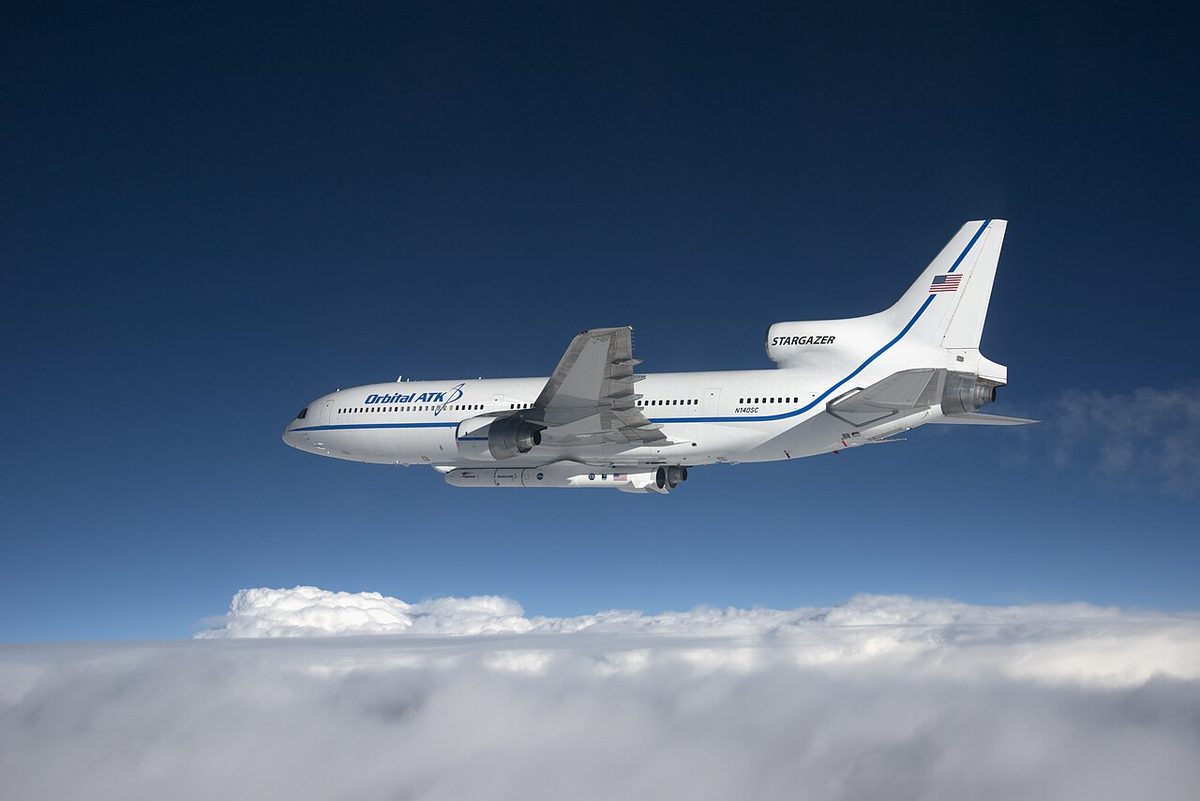
PET with engine failure or depressurisation
A PET is only valid for the circumstances it was calculated for. If it is to be used after an engine failure, the groundspeeds in the formula must be those the aircraft will achieve after the failure, at the lower one-engine-inoperative TAS and at the level it can then maintain, with the wind at that level. The time to reach the point is still worked out at the normal, all-engine outbound groundspeed, because the aircraft flies normally until the failure occurs.
Take a route of 3,000 NM with a 50 kt tailwind component, a normal TAS of 450 kt and a one-engine-inoperative TAS of 350 kt:
| PET | O / H used | Distance from A | Time from A (at 500 kt) |
|---|---|---|---|
| All engines | 500 / 400 kt | 1,333 NM | 2 h 40 min |
| Engine failure | 400 / 300 kt | 1,286 NM | 2 h 34 min |
The engine-failure PET lies further into wind, here closer to departure, because the same wind is a larger share of a lower airspeed.
A depressurisation PET is worked the same way with the TAS and wind at the lower level to which the aircraft must descend. There, fuel rather than time can become the limit: burn at low level is far higher than in the cruise. EASA fuel planning therefore requires additional fuel, where the other components do not already cover it, for an engine failure or loss of pressurisation at the most critical point of the route, allowing the aircraft to descend as necessary, fly to an adequate alternate, hold for 15 minutes at 1,500 ft above its elevation in standard conditions, and make an approach and landing (see fuel planning and fuel reserves and decompression).
Extended-range twin operations formalise the idea. Under 14 CFR 121.7 the ETOPS entry point is the first point on the route more than 60 minutes' flying time, at one-engine-inoperative cruise speed in still air, from an adequate airport for a two-engine aeroplane; for passenger aeroplanes with more than two engines the figure is 180 minutes. Equal time points between ETOPS alternates tell the crew which way to divert, and the critical fuel scenario of 14 CFR 121.646 requires enough fuel to reach an ETOPS alternate from the most critical point after a rapid decompression, a decompression with an engine failure, or an engine failure alone, whichever needs most, plus allowances including 5% for wind errors, icing, 15 minutes of holding at 1,500 ft and an approach and landing. See ETOPS and extended diversion time operations.
Point of no return and point of safe return
The point of no return (PNR) is the furthest point along the track from which the aircraft can return to its departure aerodrome, or another nominated aerodrome, within its endurance. When the calculation uses safe endurance, the total endurance less the reserves that must remain on landing, the point is the point of safe return (PSR), the term used in EASA material. Using total fuel instead would give a point that could only be reached by landing with dry tanks.
If T is the time out to the point and E the safe endurance, the time out at O plus the time back at H must equal E, so T × O = (E − T) × H, which gives:
time to the PSR, T = E × H ÷ (O + H)
distance to the PSR = T × O = E × O × H ÷ (O + H)
In still air the PSR lies at half the safe endurance and at its greatest possible distance, E × TAS ÷ 2. Any wind component, head or tail, reduces the distance, because the product O × H falls whenever one groundspeed rises and the other falls by the same amount. Head and tail components of equal strength give the same distance but different times.
| Safe endurance | TAS | Wind component outbound | Time to PSR | Distance |
|---|---|---|---|---|
| 4 h | 150 kt | Nil | 2 h 00 min | 300 NM |
| 4 h | 150 kt | 30 kt head (O 120, H 180) | 2 h 24 min | 288 NM |
| 4 h | 150 kt | 30 kt tail (O 180, H 120) | 1 h 36 min | 288 NM |
| 5 h total, 1 h reserve | Various | O 280, H 320 kt | 2 h 08 min | 597 NM |
If the calculated PSR lies beyond the destination, the aircraft could reach the destination and still return. If it lies short of the destination, the crew must decide before reaching it whether to continue, because once past it they are committed. The PET and the PSR are independent: with generous fuel the PSR can lie beyond the PET or even beyond the destination.
Warning: the endurance in the formula is flying time left after the reserves have been set aside, not the fuel in the tanks. Take the reserve out first, then divide.
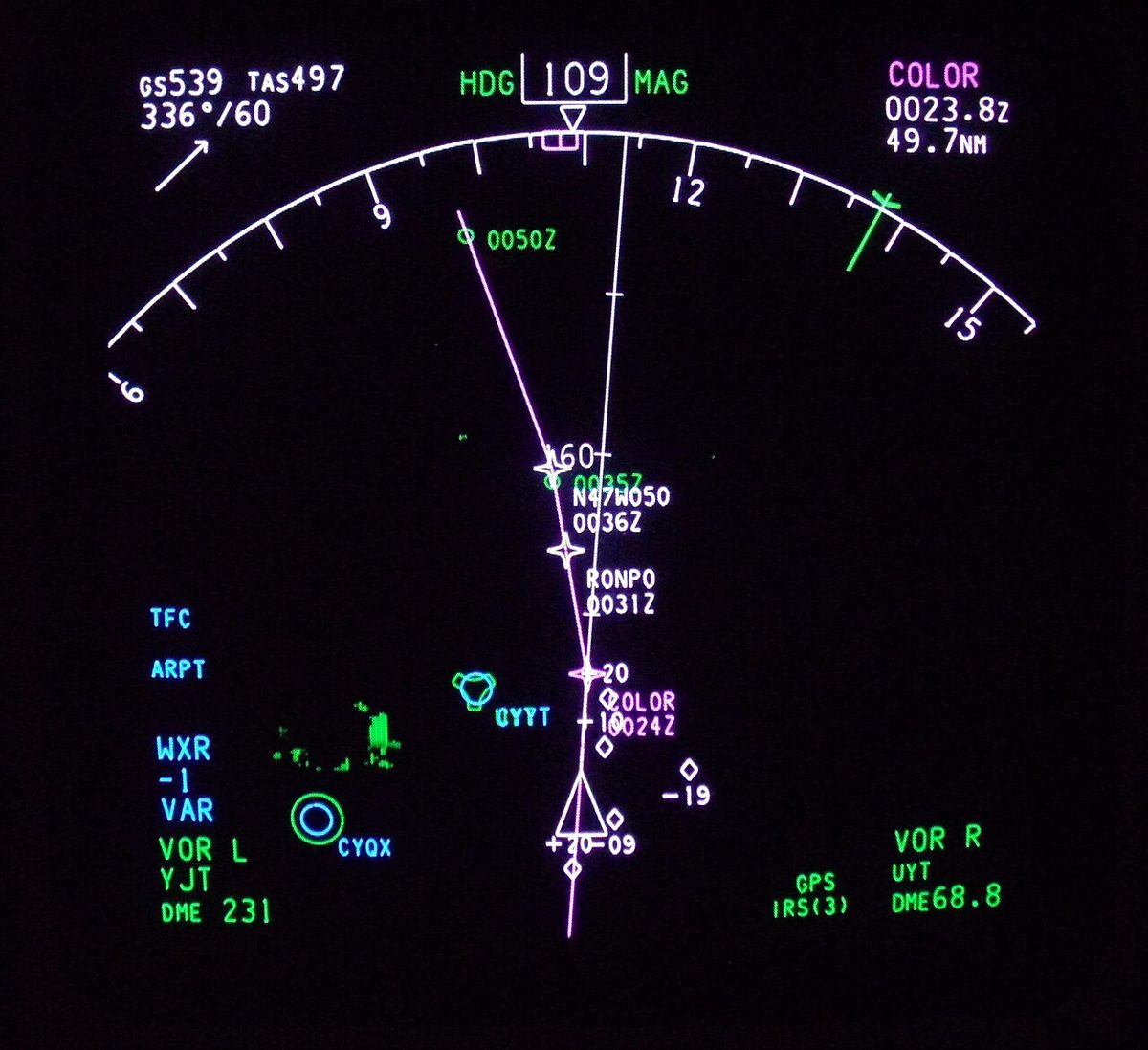
Radius of action
The radius of action is the greatest distance an aircraft can fly out from its base and still return within its safe endurance. On a single outbound track it is the distance to the PSR, and it matters most to flights that must return to their starting point: surveys, searches, patrols and flights to offshore installations. On an aerial survey with a safe endurance of 4 h 30 min, a TAS of 125 kt and a 25 kt headwind component outbound, the radius of action is 4.5 × 150 ÷ (100 + 150) × 100 = 270 NM, compared with about 281 NM in still air.
The same rules apply. The still-air radius is half the safe endurance at TAS, and any wind reduces it. A component along the track reduces it most; a crosswind of the same strength, which lowers both groundspeeds only slightly, reduces it less. The radius of action is therefore not a circle but depends on the direction flown relative to the wind.
Operational use and in-flight updating
Computerised operational flight plans for remote and over-water routes typically show the equal time points between the chosen diversion aerodromes, with their positions and times, worked out by the flight planning system from the forecast winds for each failure case. Light-aircraft pilots on remote or over-water legs work them by hand, as the exams require. In both cases the figures are only as good as the winds behind them.
In flight the crew compare actual groundspeeds and fuel with the plan at each waypoint. If the wind differs significantly from the forecast, the PET and PSR move, and they must be recalculated, often with the help of the flight management system or an electronic flight bag (EFB), the portable or installed flight-deck computer that now carries charts, performance tools and the flight plan. Before an ETOPS entry point the crew confirm that the ETOPS-significant systems are working, that the fuel still covers the critical fuel scenario and that the alternates' weather remains suitable.
The PET gives a starting point, not a decision. At the moment of a failure the crew also weigh the weather and facilities at each aerodrome, the terrain and the fuel remaining; for a medical emergency, the hospital at each end may matter more than a few minutes' difference in time. Flights to an isolated aerodrome, with no destination alternate, are planned around a point of safe return beyond which the aircraft is committed, so the crew confirm the destination weather and the fuel remaining before passing it. Under Part-CAT such operations need the competent authority's prior approval, while Part-NCO, since 30 October 2022, no longer contains the separate isolated-aerodrome exemption from the destination alternate requirement that it once had.
Frequently asked questions
What is the point of equal time?
The point of equal time (PET), also called the critical point or equal time point (ETP), is the position on a route from which it takes the same time to continue to the destination as to return to the departure aerodrome, or between any two chosen aerodromes. Its distance from departure is D × H ÷ (O + H), where D is the total distance and O and H are the groundspeeds on and home.
Which way does the wind move the point of equal time?
The point of equal time always moves into wind. With a headwind outbound the return leg is faster, so the PET lies beyond halfway, towards the destination. With a tailwind outbound it lies before halfway, towards departure. In still air or a pure crosswind the two groundspeeds are equal and the PET is exactly halfway. A lower true airspeed, after an engine failure for example, moves it further into wind.
How do you calculate the point of no return?
Time to the point of no return or point of safe return is E × H ÷ (O + H), where E is the safe endurance and O and H are the groundspeeds out and home. The distance is that time multiplied by the outbound groundspeed. With 4 hours of safe endurance, a TAS of 150 kt and a 30 kt headwind outbound, the time is 2 h 24 min and the distance 288 NM.
What is the difference between the PET and the PNR?
The PET answers a time question, which direction gets the aircraft on the ground sooner, and depends only on distance and groundspeeds, not on fuel. The PNR answers a fuel question, how far out the aircraft can go and still return with its reserves, and depends on safe endurance and groundspeeds, not on the distance to the destination. They coincide only by chance.
Does wind reduce the point of no return?
Yes. Any wind component along the track, head or tail, shortens the distance to the point of no return compared with still air, because time lost on the into-wind leg is never fully regained on the downwind leg. Head and tail components of the same strength give the same distance, but reached at different times, later with a headwind outbound and earlier with a tailwind.
Test yourself on Point of Equal Time and Point of No Return
The v1prep banks cover this topic in General and Radio Navigation (061/062), with a worked explanation for every answer. EASA ATPL, PPL, IR and CPL, the FAA written tests and A320/B737 type ratings.
Start practising →Sources and further reading
- EASA Easy Access Rules for Air Operations (Regulation (EU) No 965/2012), fuel/energy scheme and additional fuel
- EASA, Explanatory Note to ED Decision 2018/001/R, Part-FCL theoretical knowledge learning objectives (033 Flight Planning and Flight Monitoring)
- 14 CFR 121.7, Definitions (ETOPS entry point)
- 14 CFR 121.646, En-route fuel supply, flag and supplemental operations (ETOPS critical fuel)
Library articles are written for study and exam preparation. They do not replace your aircraft's approved documentation, your operator's procedures or the regulations themselves.