Fuel Planning and Fuel Reserves
Fuel planning is the pre-flight calculation of the usable fuel a flight needs, built up from defined components. Fuel reserves are the parts of that figure carried for deviations, diversion and a final reserve that should still be in the tanks on landing.
Fuel planning decides how much usable fuel an aircraft carries before it leaves the stand. The figure is not a single guess but a stack of defined components. Each one covers a particular need: getting to the runway, flying the planned route, absorbing the unexpected, diverting, and still landing with a protected reserve. Too little fuel leaves no room for delays or a diversion. Too much costs money and payload and can reduce performance margins.
Fuel exhaustion remains one of the most avoidable causes of accidents. In 1978 a United Airlines DC-8 ran out of fuel near Portland, Oregon, while its crew worked on a landing gear problem, and the investigation helped launch modern crew resource management. ICAO Annex 6 sets the international framework. EASA applies it through Part-CAT for commercial air transport, and the FAA through Parts 91 and 121. The EASA rules were restructured in October 2022, and many exam questions still use the older wording.
- The EASA fuel scheme
- Taxi and trip fuel
- Contingency fuel and 3% ERA
- Alternate and final reserve fuel
- Additional, extra and discretionary fuel
- Block fuel and take-off fuel
- Decision point procedure
- Isolated aerodrome planning
- In-flight fuel management and fuel emergencies
- FAA fuel reserve rules
- Frequently asked questions
The EASA fuel scheme
Commission Implementing Regulation (EU) 2021/1296, applicable from 30 October 2022, replaced the former EASA fuel policy with a fuel/energy scheme. The word energy anticipates electric and hybrid aircraft. For aeroplanes, CAT.OP.MPA.180 requires the scheme, which has three parts:
- a fuel planning and in-flight re-planning policy (CAT.OP.MPA.181);
- an aerodrome selection policy (CAT.OP.MPA.182);
- an in-flight fuel management policy (CAT.OP.MPA.185).
The acceptable means of compliance (ED Decision 2022/005/R) offer three levels. The basic fuel scheme uses fixed figures close to the traditional ones. The basic fuel scheme with variations allows approved reductions, such as a smaller contingency. The individual fuel scheme lets an operator with a mature management system derive its own figures from data on its routes and fleet, with the competent authority's approval.
Exam tip: questions set before 2022 refer to "fuel policy" under EU-OPS 1.255 or CAT.OP.MPA.150. CAT.OP.MPA.150 now carries no text. Those component names and basic-scheme figures are still examined, but cite the current rules as CAT.OP.MPA.180 to .185.
Taxi and trip fuel
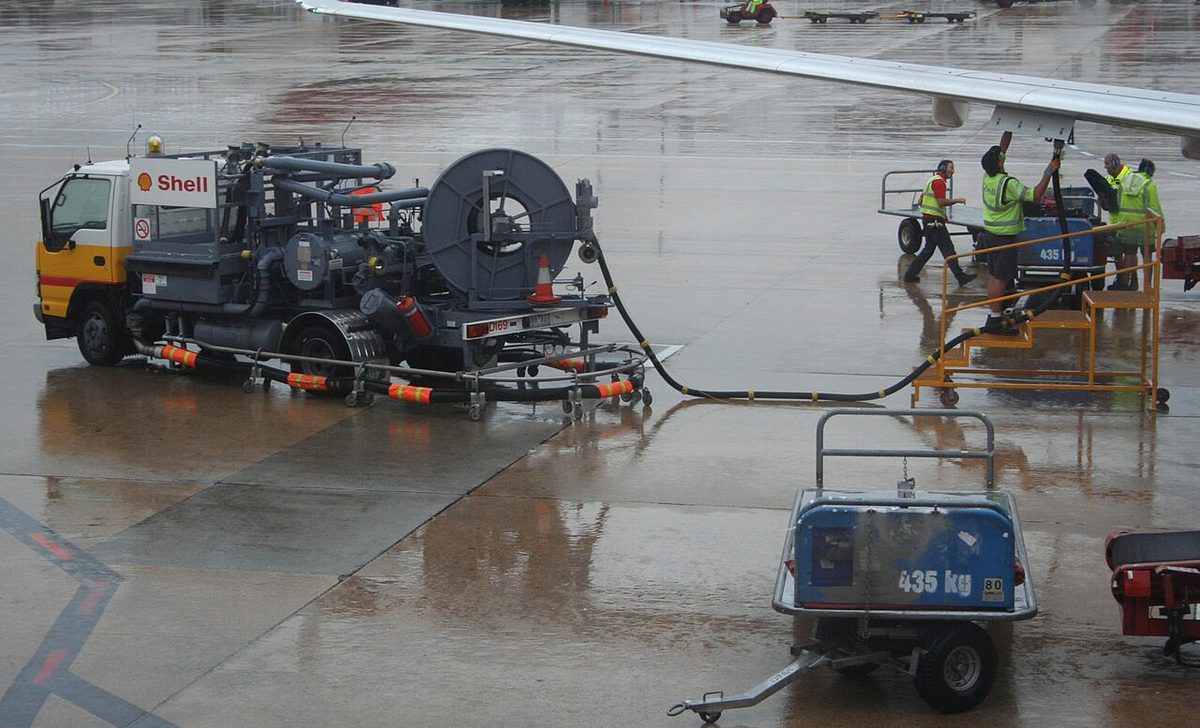
Taxi fuel is the fuel expected to be used before take-off. It covers engine start, APU running and taxiing, and takes account of local conditions such as long taxi routes, departure queues and de-icing.
Trip fuel is the fuel from take-off to landing at the destination. It includes the take-off and the climb from aerodrome elevation to the initial cruising level along the expected departure routing, the cruise including any step climbs or descents, the descent and arrival, and the approach and landing. It should be based on the most likely routing, levels, winds and mass, not on the most favourable ones.
Contingency fuel and 3% ERA
Contingency fuel absorbs the unforeseen: forecast wind or temperature errors, a different routing or level from ATC, a heavier aeroplane than planned, or an individual airframe burning more than the book figure. In the basic scheme it is the higher of 5 per cent of the planned trip fuel, or of the remaining trip fuel when re-planning in flight, and the fuel to fly for 5 minutes at holding speed at 1,500 ft above the destination in standard conditions. It is calculated on trip fuel only, not on alternate fuel.
With approval, the contingency may be cut to 3 per cent of trip fuel when an en-route alternate is available within a defined area near the later part of the route. That aerodrome is the fuel ERA, or 3% en-route alternate (3% ERA). Other variations rest on the operator's own fuel-consumption monitoring or statistical analysis. Contingency fuel is planned to be used if needed. Unlike the final reserve, burning it is normal.
Alternate and final reserve fuel
Alternate fuel (destination alternate fuel) takes the aeroplane from a missed approach at the destination to a landing at the alternate. It covers the missed approach from the decision altitude or minimum descent altitude, the climb, the cruise, the descent, and the approach and landing at the alternate. Where two destination alternates are required, the one that needs more fuel sets the figure. How alternates are chosen is covered in alternate aerodromes.
Final reserve fuel is the fuel the crew plan to still have in the tanks on landing. For aeroplanes with turbine engines it is the fuel to fly for 30 minutes at holding speed at 1,500 ft (450 m) above aerodrome elevation in standard conditions, calculated at the estimated mass on arrival at the destination alternate, or at the destination when no alternate is required. For aeroplanes with reciprocating engines it is 45 minutes. Because it is defined as time, its mass changes with the aeroplane's mass.
Reserve fuel is the umbrella term used in EASA exam texts for contingency, alternate, final reserve and additional fuel together. In FAA usage "reserve" normally means the fixed time left after reaching the destination and alternate. Holding fuel is not a separate EASA block. The final reserve is itself expressed as holding time, and fuel for expected holding, for example at a congested destination, is carried as extra fuel.

Additional, extra and discretionary fuel
Additional fuel is added only when the components above would not cover the most demanding foreseeable failure. The classic case is an engine failure or loss of pressurisation at the most critical point of the route, whichever needs more fuel. The aeroplane must then be able to descend as necessary, fly to an adequate alternate, hold there for 15 minutes at 1,500 ft above aerodrome elevation, and make an approach and landing. It also covers an isolated destination and a flight planned without a destination alternate. Long-range twins meet the same idea through ETOPS critical fuel.
Extra fuel and discretionary fuel are added on top of the required minimum, and the words vary by rule set. ICAO calls the amount carried at the pilot-in-command's discretion discretionary fuel, while EU-OPS called anything above the minimum extra fuel. Current EASA material separates the two. Additional fuel and extra fuel are easily confused: additional fuel is required by rule, whereas extra fuel is planned for delays the operator can foresee and discretionary fuel is the commander's own margin. Fuel carried for economic reasons, known as tankering, also sits above the minimum.
Block fuel and take-off fuel
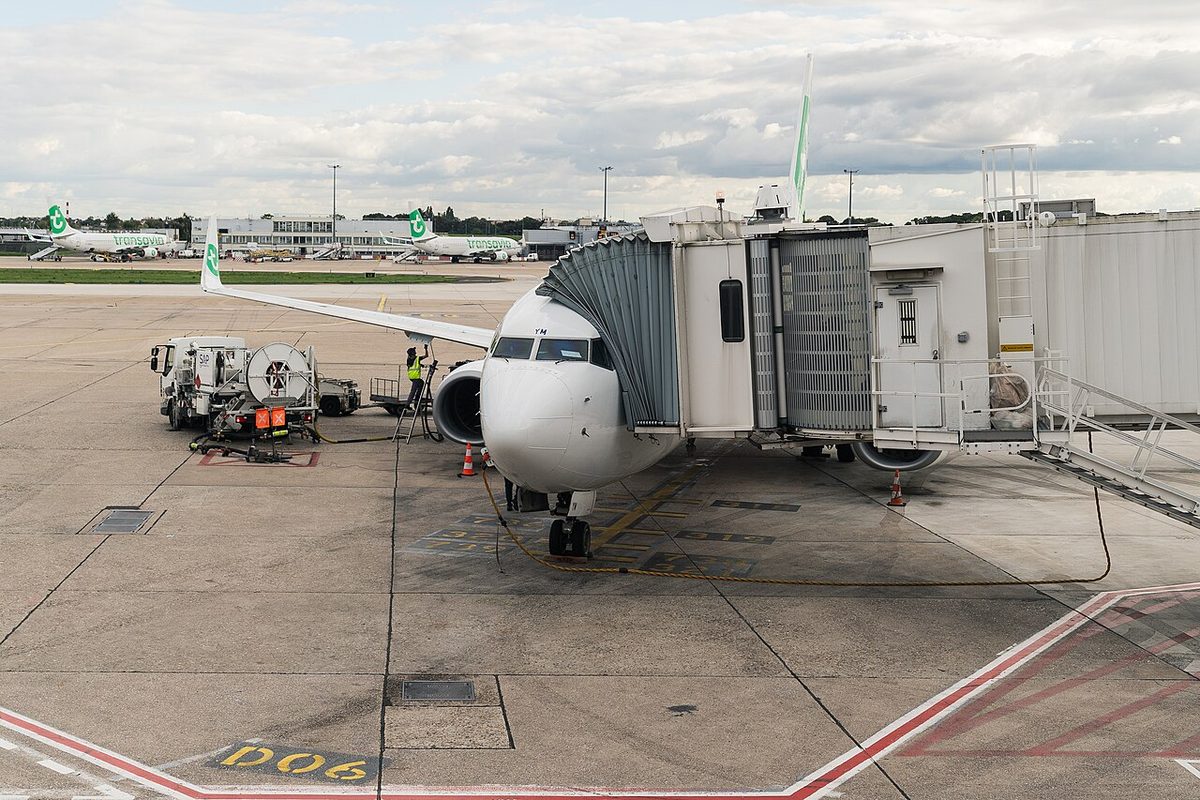
Block fuel, also called ramp fuel, is the total on board at engine start: taxi, trip, contingency, alternate, final reserve, any additional fuel, and any extra or discretionary fuel. Take-off fuel is block fuel minus taxi fuel. Ramp mass is therefore take-off mass plus taxi fuel. A simple example:
| Component | Mass |
|---|---|
| Taxi fuel | 200 kg |
| Trip fuel | 6,000 kg |
| Contingency, 5 % of trip | 300 kg |
| Alternate fuel | 1,200 kg |
| Final reserve fuel | 1,100 kg |
| Extra fuel | 400 kg |
| Block fuel | 9,200 kg |
| Take-off fuel | 9,000 kg |
If all goes to plan, the aeroplane lands at the destination with 3,000 kg: the unused contingency, alternate, final reserve and extra fuel. Block fuel is capped by tank capacity, by the performance-limited and structural take-off masses, and by the maximum landing mass at the destination.
Decision point procedure
When the required fuel would limit payload, the decision point procedure reduces contingency fuel. The flight is planned via a decision point on the route from which it can still reach a suitable en-route alternate. Contingency fuel for the destination is calculated only for the part of the trip from the decision point onwards. The fuel carried must also cover the alternative plan: flying via the decision point to the en-route alternate with its own reserves. At the decision point the crew compare the fuel on board with what the onward leg needs. If it is enough, the flight continues. If not, it diverts. The saving is the contingency that would have been carried for the leg from departure to the decision point. An operator may use the procedure only where its approved fuel scheme includes it.
Isolated aerodrome planning
An isolated aerodrome is a destination for which no destination alternate is available within a reasonable diversion. Using one as a destination requires the competent authority's prior approval (CAT.OP.MPA.106). The long-standing EU-OPS criterion, still common in exam questions, treated a turbine aeroplane's destination as isolated when the fuel to divert to the nearest adequate alternate plus final reserve exceeded 2 hours at normal cruise consumption above the destination. The planning figure mirrored it: no alternate fuel, but additional fuel so that additional plus final reserve fuel lasts 2 hours at normal cruise consumption above the destination. For piston aeroplanes EU-OPS used 45 minutes plus 15 per cent of the planned cruise time, or 2 hours, whichever was less.
Because there is nowhere to go once committed, such flights rely on point of safe return / critical point planning (isolated aerodrome). The point of safe return is the last point from which the aeroplane can turn back to the departure aerodrome, or reach an en-route alternate, with the required reserves. EU-OPS built its procedure around a similar predetermined point on the route. Beyond it the aeroplane is committed, so the crew confirm the destination weather and the fuel remaining before passing it. The critical point, or point of equal time, is where continuing and turning back take the same time, and it is used to plan for an engine failure or decompression.
In-flight fuel management and fuel emergencies
The crew check fuel at regular intervals against the plan (see in-flight fuel management). ICAO Annex 6 and the EASA in-flight fuel management rules add two defined messages. MINIMUM FUEL is declared when the aircraft is committed to land at a specific aerodrome and any change to the existing clearance may lead to landing with less than the planned final reserve. It is not an emergency and gives no priority. ATC tells the crew of any expected delay. MAYDAY MAYDAY MAYDAY FUEL is declared when the fuel predicted on landing at the nearest aerodrome where a safe landing can be made is less than the planned final reserve.
The FAA's AIM (5-5-15) treats minimum fuel the same way and asks a crew that needs priority to declare an emergency and report the fuel remaining in minutes. Crews should use the defined words rather than descriptions such as "short of fuel".
FAA fuel reserve rules
FAA rules state reserves as fixed times rather than as holding fuel.
| Rule | Applies to | Fuel beyond the destination (and alternate if required) |
|---|---|---|
| 14 CFR 91.151 | VFR, aeroplanes | 30 min by day, 45 min at night, at normal cruising speed |
| 14 CFR 91.167 | IFR, Part 91 | 45 min at normal cruising speed |
| 14 CFR 121.639 | Domestic airline | Most distant alternate, then 45 min at normal cruising fuel consumption |
| 14 CFR 121.645 | Flag and supplemental turbojets | 10 % of the flight time to the destination, then the alternate, then 30 min holding at 1,500 ft |
The VFR fuel reserve requirements (14 CFR 91.151) apply to the first point of intended landing: 30 minutes by day and 45 minutes at night for aeroplanes, and 20 minutes for rotorcraft. EASA's nearest equivalent for non-commercial flights in non-complex aircraft, AMC1 NCO.OP.125, gives 30 minutes by day and 45 minutes at night or under IFR, at holding speed at 1,500 ft above the destination.
The IFR fuel requirements (14 CFR 91.167) give the IFR fuel reserve (45-minute rule): fuel to the destination, then to the alternate when one is required, then 45 minutes at normal cruising speed. Helicopters need 30 minutes. An aeroplane needs no alternate when the destination has an instrument approach and, from 1 hour before to 1 hour after the estimated arrival, the ceiling is forecast to be at least 2,000 ft above airport elevation and the visibility at least 3 statute miles (91.169).
Under Part 121, domestic flights need fuel to the destination, then to the most distant alternate, then 45 minutes at normal cruising fuel consumption (121.639). The flag operation fuel reserve (10 percent rule) in 121.645 applies to turbojets on flag and supplemental operations outside the 48 contiguous states. It adds fuel for 10 per cent of the flight time from departure to destination, then fuel to the most distant alternate, then 30 minutes of holding at 1,500 ft above the alternate, or above the destination when no alternate is required. 121.647 requires the calculation to allow for wind and weather, forecast traffic delays, one instrument approach and a possible missed approach at the destination, and anything else that may delay landing.
Frequently asked questions
What is final reserve fuel for a jet?
Under EASA rules the final reserve for an aeroplane with turbine engines is the fuel to fly for 30 minutes at holding speed at 1,500 ft above aerodrome elevation in standard conditions, calculated at the expected mass on arrival at the alternate, or at the destination when no alternate is required. For aeroplanes with reciprocating engines it is 45 minutes. It is the fuel the crew should still have on landing.
How is contingency fuel calculated?
In the EASA basic fuel scheme contingency fuel is the higher of 5 per cent of the planned trip fuel and the fuel to fly for 5 minutes at holding speed at 1,500 ft above the destination in standard conditions. With approval, an operator can reduce it, for example to 3 per cent of trip fuel when a suitable en-route alternate, the 3% ERA, is available.
What is the difference between MINIMUM FUEL and MAYDAY FUEL?
MINIMUM FUEL tells ATC that the aircraft is committed to a specific aerodrome and that any change to its clearance may leave it landing below its planned final reserve. It is not an emergency and gives no priority. MAYDAY MAYDAY MAYDAY FUEL is a distress call, made when the fuel expected on landing at the nearest suitable aerodrome is less than the planned final reserve.
What are the FAA IFR fuel requirements?
Under 14 CFR 91.167 an aircraft flying IFR must carry enough fuel to reach the first airport of intended landing, then fly to the alternate if one is required, and then fly for 45 minutes at normal cruising speed. Helicopters need 30 minutes. Airlines under Part 121 have their own rules, such as 121.639 for domestic operations.
What changed in the EASA fuel rules in 2022?
Regulation (EU) 2021/1296, applicable from 30 October 2022, replaced the old fuel policy rules with a fuel/energy scheme. Operators now choose a basic scheme with fixed figures, a basic scheme with approved variations, or an individual scheme built on their own data. The main fuel components and the basic figures stayed largely the same.
Test yourself on Fuel Planning and Fuel Reserves
The v1prep banks cover this topic in Flight Planning (033), with a worked explanation for every answer. EASA ATPL, PPL, IR and CPL, the FAA written tests and A320/B737 type ratings.
Start practising →Sources and further reading
- Commission Implementing Regulation (EU) 2021/1296 (fuel/energy planning and management)
- EASA, Explanatory Note to ED Decision 2022/005/R (fuel/energy planning and management)
- EASA, AMC and GM to Part-CAT, Issue 2, Amendment 20
- 14 CFR 91.151, Fuel requirements for flight in VFR conditions
- 14 CFR 91.167, Fuel requirements for flight in IFR conditions
- 14 CFR 121.645, Fuel supply for turbine-engine powered airplanes in flag and supplemental operations
- FAA Aeronautical Information Manual, Chapter 5 Section 5 (5-5-15, Minimum fuel advisory)
Library articles are written for study and exam preparation. They do not replace your aircraft's approved documentation, your operator's procedures or the regulations themselves.