Wizz Air Pilot Interview Prep: Process, Sim, Questions (2026 Guide)
LAST UPDATED: 28 SEPTEMBER 2026
Wizz Air flies an all-Airbus narrowbody fleet — A320ceo, A321ceo, A320neo, A321neo and the A321XLR, 269 aircraft at 30 June 2026 — from about 40 bases centred on Central and Eastern Europe, with Italy and the UK as its selected Western European markets. This guide separates what Wizz Air publishes about recruitment from what candidates report, and says where a figure is not published. The circulated descriptions of its assessment day are candidate reports, not airline documents.
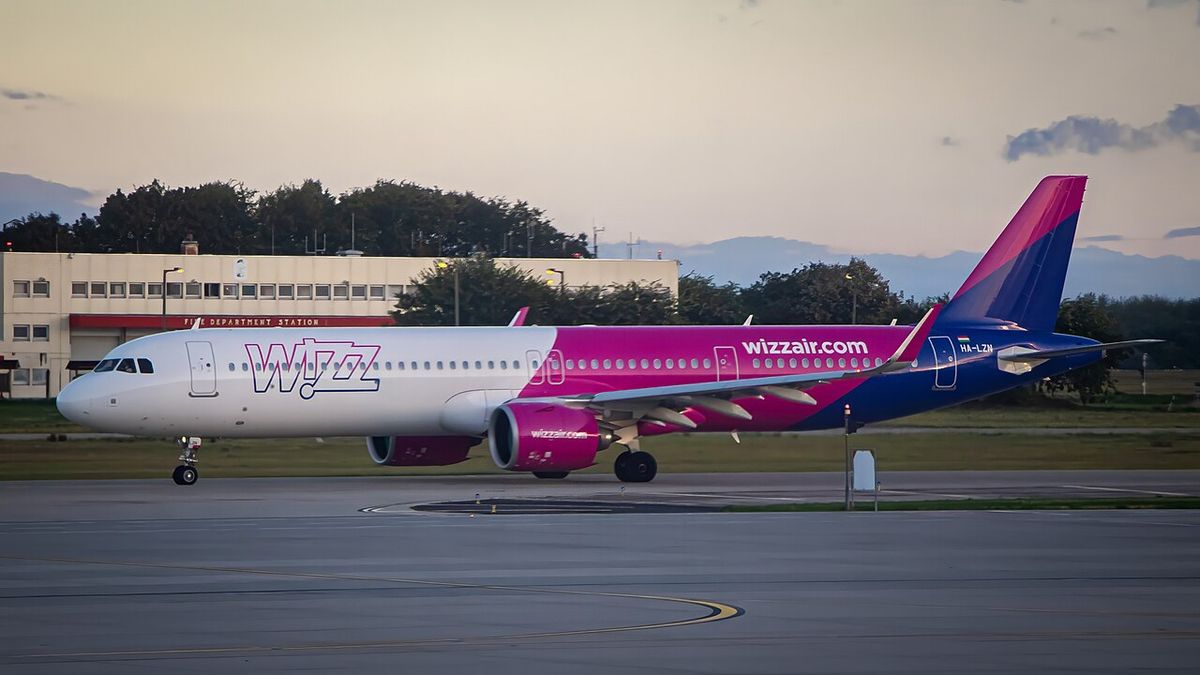
Wizz Air opens assessment events by pilot category and AOC: when events open for your category you are invited to book a slot. Because this moves week to week, check the careers portal and our airline pilot jobs page for the position today.
About Wizz Air's pilot operation
Wizz Air operates an all-Airbus narrowbody fleet: A320ceo, A321ceo, A320neo, A321neo and the A321XLR — 269 aircraft at 30 June 2026, 78% of them neos (Q1 F27 results). The A321neo is the backbone, and Wizz Air is widely described as its largest operator. The retirement of the 41 A321ceos began on 24 March 2026 and is due to finish by March 2029, and at 31 March 2026 firm orders stood at 250 A321neos and 4 A321XLRs.
The spread should shape your preparation. One A320 rating covers the family, but the aeroplanes are not interchangeable in the way that implies. Wizz Air's neos, XLRs included, have Pratt & Whitney PW1100G geared turbofans. Powder-metal inspections on that engine had grounded 27 Wizz Air aircraft at 30 June 2026 (41 a year earlier), with all aircraft expected back by the end of 2027 — the chief executive calls it the airline's single biggest issue. The A321 is longer, so its tail-strike margin at rotation and touchdown is markedly smaller than the A320's — and most of your sectors will be on it. The A321XLR plan has changed twice: cut from 47 to 11 aircraft in November 2025, then all 11 kept for longer routes in June 2026, while the press reported them flying mainly short and medium routes in mid-2026. Asked what you know about the fleet, give the operational consequence, not the list, and overstate neither the plan nor the reality.
In April 2026 Wizz Air announced its fortieth base, Turin — its seventh in Italy — and a Pristina base was announced for November 2026. The UAE routes announced in September 2026 depart from Budapest, Bucharest, Katowice, Kraków, Cluj, Sofia and Larnaca, a fair map of the core network. Bases also close: Debrecen was reported closed in 2024, and Wizz Air Abu Dhabi stopped flying on 1 September 2025. The careers pages carry a table of bases and roster patterns; use it for the current list, and ask how new joiners are allocated.
One structural point catches applicants out: the application form asks you to choose Wizz Air Hungary, Malta or UK. Decide before you submit, and assume the choice is binding unless the form says otherwise. Hungary and Malta want EASA papers; Wizz Air UK, based at London Luton and London Gatwick, needs a UK CAA licence and medical. Wizz Air Abu Dhabi is not a hiring route: the return to Abu Dhabi and Dubai from 25 October 2026 is flown from the European AOCs.
Published requirements
What Wizz Air publishes on its careers pages, as published and summarised by third parties in 2026. Confirm every line against the live form for your AOC.
| Item | What Wizz Air publishes |
|---|---|
| Licence | EASA ATPL, or CPL/IR with ATPL theory credit (Hungary and Malta); UK CAA equivalents for Wizz Air UK |
| Type-rated FO | Current A320 type rating with 500 h on type |
| Non-type-rated FO | Summaries disagree on the minimum: one gives 500 h on multi-pilot multi-engine aircraft in commercial air transport, another 1,500 h on multi-pilot jets over 50 t. A jet orientation or APS MCC course may be required |
| Cadet routes | The cadet First Officer entry and the Wizz Air Pilot Academy have lower minimums and a different assessment — outside this page's scope |
| Type rating | Provided for non-rated direct entry — cost, bond and repayment terms are not published |
| Bonuses | Retention bonus up to EUR 25,000 (First Officer) or EUR 40,000 (Captain) after three years, and sign-on bonuses up to EUR 5,000 and EUR 10,000 respectively — selected bases only, terms apply |
| Medical | Class 1 (UK CAA licence and medical on the UK AOC) |
| English | ICAO Level 4 or above |
| Right to work | Conditions depend on the AOC — confirm them on the live form |
If you are non-rated, prepare a short, confident account of how you will make the move to Airbus: what you have studied, how your last type change went, and why your experience transfers. If you have a recency gap, prepare an equally short explanation without apology.
Bonuses depend on base and on staying three years, and the non-rated type rating terms are not published. Ask for the cost, bond and repayment terms in writing, and read the bond clauses before you sign.
The selection process
Wizz Air publishes the administrative shape of its process. It does not publish what happens inside the assessment event for experienced pilots. Keeping those apart is the difference between preparing and guessing.
Published by Wizz Air
- Submit the Pilot Application Form on the careers portal, choosing your AOC — Hungary, Malta or UK. Assume the choice is binding unless the form says otherwise.
- Upload your documents with the application.
- Complete the separate Pilot Scoring Form sent by email. It will not submit until every mandatory field is complete, so confirm it went through.
- Recruitment screens your profile against the minimums.
- When events open for your category you are invited to book a slot — registration is mandatory.
- Attend the event: events for the Hungarian AOC are advertised as two-day events in Budapest. Check the format for your AOC in your invitation.
- If unsuccessful you get a "freezing period" set by the assessors, and must contact Wizz Air to reactivate afterwards.
The cadet routes — the cadet First Officer entry and the Wizz Air Pilot Academy — have lower minimums and a different assessment; the Academy route is reported to screen online with TestAir360. Never quote one route's figures to another.
Reported by third parties — unverified
Candidates describe an eliminatory event in which each stage can end your day, in varying order: a briefing with a document check and company presentation (bring every original document); a multiple-choice written test reported to cover ATPL theory and aircraft knowledge; a timed, non-flying group exercise; interviews covering competency, motivation and a technical element, with panels of two pilots reported; and an A320 full-flight simulator session for those who progress, reported at 40–60 minutes. For aptitude testing, Symbiotics lists Wizz Air as an ADAPT-certified company and reported running ADAPT report-interpretation training for its pilot recruitment team in November 2024; some preparation providers say experienced candidates see TestAir360 too. None of this is published by Wizz Air. Confirm which test system your invitation names, prepare as though all of it could happen, and assert none of it.
Simulator preparation — no Wizz Air profile is published
Wizz Air publishes no simulator profile for the experienced-pilot assessment; candidates report an A320 full-flight simulator session of 40–60 minutes. Anyone selling you "the Wizz Air sim profile" is selling you someone's recollection. What is safe to prepare is what a line captain assesses in any A320 operator's sim.
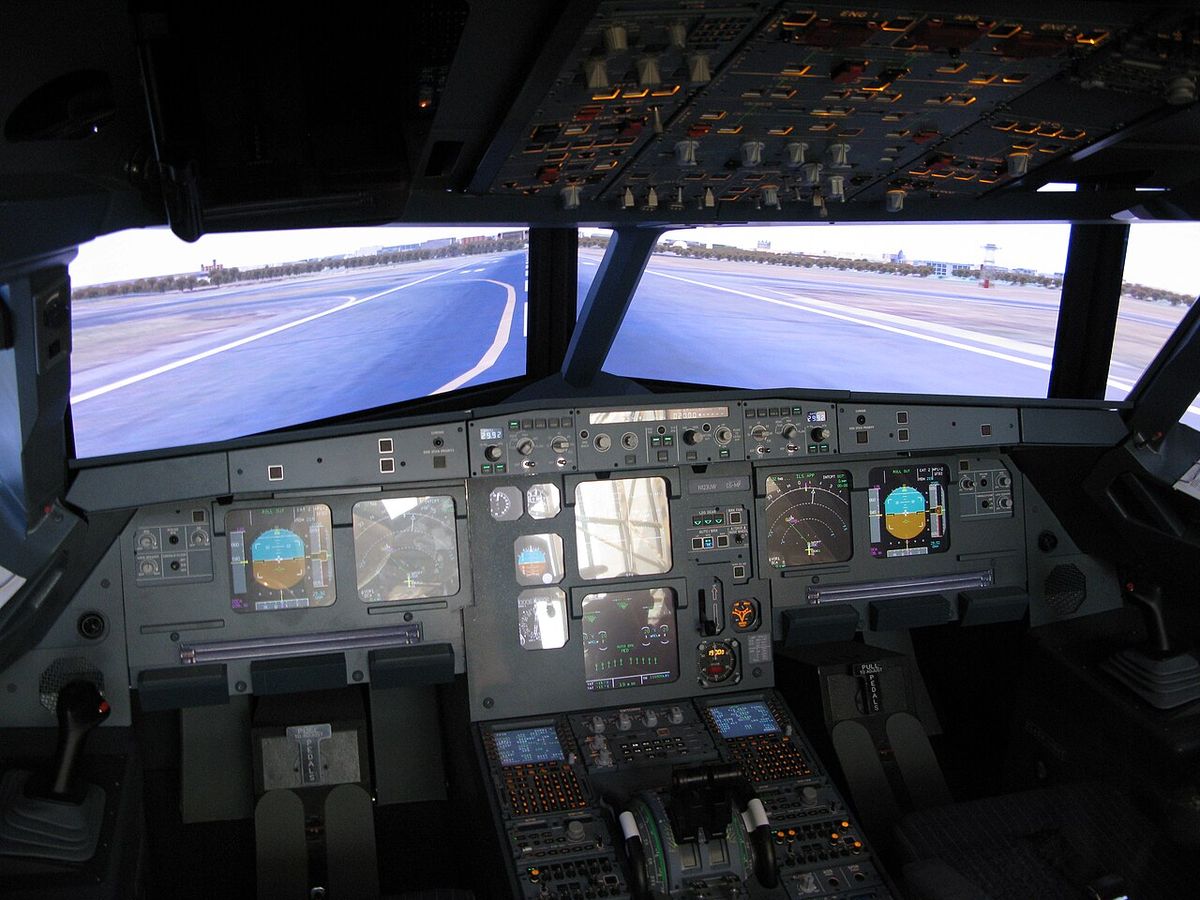
- Scan. Raw data, no flight director, no autothrust. Can you hold heading, altitude and speed while your attention is elsewhere?
- Manual handling. Small, smooth inputs. In Normal Law the sidestick is a load-factor demand — release it and the aeroplane holds the flight path, while the THS auto-trims so you never trim by hand. Candidates who fly it like a conventional aeroplane end up chasing it.
- Standard calls. Say what you are doing. Silent competence reads as absent CRM.
- CRM with the other seat. If an assessor occupies the other seat as PM — normal practice at many operators, though Wizz Air publishes nothing about it — use them: ask, read back, cross-check.
- Recovery from an unstable approach. Do you correct, or press on? A go-around flown early scores better than a rescued landing.
Practise a departure, steep turns, a hand-flown raw-data ILS to minima, a go-around, and an engine failure with single-engine handling — talking while you fly. If you are non-rated, book an hour in an A320 device first to learn the sidestick and the thrust-lever detents.
Competency and motivation questions
Wizz Air does not publish the interview content for experienced pilots. Candidates report competency, motivation and a technical element, with the technical depth matched to your experience and base preference asked early and directly. Prepare the competency structure every European operator uses and take the airline-specific material from what Wizz Air does publish.
- "Why Wizz Air?" Be specific and checkable: the AOC you chose and why, which bases you would live in, and what a 250-aircraft A321neo backlog means for command — fleet growth creates upgrade slots, so ask about the upgrade criteria rather than quoting a timeline. Not "you are growing".
- Geographic flexibility. The core network is Central and Eastern Europe, with Italy and the UK as selected Western European markets, and bases open and close. Give your first choices, the others you would accept, and any you would not, with reasons — an offer you will not take costs everyone.
- A disagreement with a captain. One real example: what you said, what changed, what the outcome was.
- A decision with incomplete information. Show structure — assess, options, constraints, decide, communicate, review. Naming threat and error management explicitly lands well.
- Sustained pressure. The model is high utilisation, early starts and quick turns; the careers pages list roster patterns by base, with fixed patterns (introduced from October 2022) where your base offers them. Answer from your own experience of sustained pressure, and check the pattern for your likely base rather than asserting what their day looks like.
Ninety seconds an answer, one example each. Our interview preparation guide has the full framework.
Technical questions, with answers
Real questions of the kind a type-rated candidate should answer on the aeroplanes Wizz Air operates — not a list of what Wizz Air asks, which it does not publish.
Describe the A320 hydraulic system, and what does the PTU do?
Three independent systems — Green, Blue and Yellow — at 3,000 psi. Green is driven by an engine-driven pump on engine 1, Yellow by one on engine 2 plus an electric pump and a hand pump for the cargo door. Blue is electric, with the RAT as its in-flight backup. The PTU transfers power, not fluid: a bidirectional pump lets Green drive Yellow or the reverse once the differential exceeds roughly 500 psi. Inhibited during first engine start and cargo door operation. FCOM DSC-29; our hydraulic system guide.
What are the flight control laws, and what moves you between them?
In Normal Law the sidestick is a load-factor demand in pitch and a roll-rate demand in roll, with auto-trim and the full protection set: high angle of attack, high speed, pitch attitude, bank angle, load factor. Alternate Law follows most double air data or inertial failures. Pitch stays a g-demand with auto-trim and load factor protection is retained; high AoA protection is replaced by low-speed stability, high speed protection by high-speed stability, and pitch attitude and bank angle protections are lost — roll becomes direct. The aeroplane can be stalled. If USE MAN PITCH TRIM appears on the PFD, auto-trim has gone: that is direct law (or abnormal attitude law). Direct Law is stick-to-surface with no automatic trim; from alternate law the aircraft reverts to it when the landing gear is extended. Mechanical backup leaves the trim wheel and rudder. FCOM DSC-27; our flight control laws guide.
What is a FLEX takeoff, and when may you not use one?
FLEX is the assumed-temperature method: you give the FADEC a temperature higher than the actual OAT and it delivers the thrust available on that hotter day. Certification caps the reduction at 25% below full rated takeoff thrust, and the assumed temperature must be above both the actual OAT and the flat-rating temperature (TREF), or no reduction results, and no higher than the maximum FLEX temperature (ISA + 53°C). FLEX is not permitted on a contaminated runway, and the FCTM directs full thrust where windshear is suspected. TOGA stays available. A derate is different — a lower certified rating with its own VMCG. Our FLEX takeoff guide.
Engine failure at V1 on the A321neo — talk me through it.
At or after V1 you go. Directional control with rudder, rotate at VR at about three degrees per second towards the SRS target — deliberately, because the A321's tail-strike margin is tight. Positive rate, gear up. Below 400 ft you fly the aeroplane and nothing else: there is no memory drill for an engine failure. At 400 ft you may begin ECAM; at engine-out acceleration altitude you accelerate, clean up on the F and S speeds in our V-speeds guide, and set MCT. Our engine failure at V1 guide and memory items guide.
You lose both engine generators in the cruise with no APU. What happens?
The RAT extends automatically and pressurises the Blue hydraulic system, which drives the emergency generator. That restores AC ESS and, through the essential TR, DC ESS — captain's instruments, standby instruments, one VHF, essential flight controls. Batteries cover the seconds before the emergency generator comes on line, the static inverter supplying AC ESS from DC. Below roughly 100 kt the RAT can no longer sustain it, so on rollout you are back on batteries. FCOM DSC-24; our electrical system guide.
Where does bleed air come from, and what uses it?
Engine bleed is tapped from an intermediate compressor stage, with a high-pressure stage valve opening at low power settings — the same architecture across the A320 family in both generations, because the neo is still a bleed aeroplane whichever engine is fitted. The alternatives are the APU load compressor and a ground connector. Engine bleed feeds the packs, wing anti-ice, engine start, hydraulic reservoir and water pressurisation. APU bleed can feed the packs and engine start but is never permitted for wing anti-ice — insufficient pressure. The cross-bleed valve links the manifolds for a cross-bleed start. Our pneumatic system guide.
What are the APU's operating limits?
The APU supplies electrical power and bleed air on the ground and in flight. Its generator is rated like an engine generator and can replace either or both engine generators, in flight or on the ground. APU bleed has three separate altitude limits: to assist engine start, 20,000 ft; for air conditioning and pressurisation, 22,500 ft with one pack but only 15,000 ft with two — two packs draw roughly twice the flow. APU bleed is never permitted for wing anti-ice — there is not enough pressure. Confirm the figures and the APU start envelope against your operator's FCOM Limitations. It can start on the aircraft batteries alone, which is what makes it your way back from a total loss of ground power. Our APU guide.
What does the ECAM do for you, and where does it stop?
ECAM prioritises alerts, drives the master warning and caution, and gives you an ordered action list, the affected system page and a STATUS page of the consequences. What it does not do: it does not replace memory items, which you action first; it does not reason about two unrelated failures at once; and it never tells you whether to divert. Airbus Golden Rule 1 still governs — fly, navigate, communicate, in that order — and management of the failure comes after all three. Both pilots confirm the affected engine before anything irreversible moves. Our ECAM practical guide.
Talk me through a rejected takeoff. Who calls it, and where is the line?
The captain makes the stop-or-go decision and is the only pilot who calls "STOP", whoever is flying. Below 100 kt the threshold is low — reject for any ECAM caution, an unusual noise or a configuration warning. Between 100 kt and V1 the list narrows to fire or fire warning, engine failure, loss of thrust, anything indicating the aeroplane will not fly, or a takeoff configuration alert. At V1 you go: V1 is the last speed at which stopping in the remaining distance is assured, and it is calculated assuming no reverse credit on a dry runway. On rejecting, thrust levers to idle, full reverse, maximum braking to a stop, and remember brake energy — check the cooling requirement before you consider taxiing on. Our V-speeds guide and top 50 A320 interview questions.
How does A320 cabin pressurisation work, and what would you do about a rapid depressurisation?
Two cabin pressure controllers alternate on each flight, each driving the outflow valve automatically from the FMGC cruise level and landing elevation; a third motor drives it manually if both fail. Two safety valves on the rear bulkhead are the mechanical backstop, opening at about 8.6 psi against a maximum positive differential of 9.0 psi — take the exact figures from your operator's FCOM Limitations. Cabin altitude warning comes at 9,550 ft, and the masks drop automatically at around 14,000 ft cabin altitude. On a rapid depressurisation the memory drill comes first — crew oxygen masks on and communication established, seat belt signs on, then a controlled emergency descent to FL100 or the minimum safe altitude if higher, with thrust levers to idle if autothrust is not active (let it manage thrust if it is), full speed brakes, and the turn away from the airway if you are in the cruise. Then, and only then, ECAM. Our memory items guide.
What changes when you move from the A320 to the A321XLR?
Same type rating, a different aeroplane in practice. The A321 is substantially longer, so rotation rate and pitch attitude discipline matter — the tail-strike margin is markedly smaller. Higher maximum weights change runway- and climb-limited performance, so the assumed temperature you are used to often will not be available. And on longer XLR sectors — the 11 aircraft are kept for longer routes — a narrowbody moves into planning that looks long-haul: fuel policy, alternates at range, crew duty, and what a diversion really costs. Our performance calculation guide.
Where candidates lose the application
- Applying under the wrong AOC. Candidates pick Hungary, Malta or UK without reading the licence and medical implications — decide before submitting, and assume the choice is binding.
- Guessing the non-rated minimum. Summaries disagree — 500 h on multi-pilot multi-engine aircraft in commercial air transport, or 1,500 h on multi-pilot jets over 50 t — so read the live form, not a forum.
- Preparing a third-party "sim profile". Drilling a profile the airline never published leaves you brittle when the exercise differs — practise raw data, ILS, go-around, one abnormal.
- Confusing bonuses with training terms. The EUR 25,000 and EUR 40,000 figures are retention bonuses after three years at selected bases; the non-rated type rating's cost, bond and repayment are not published — say you want them in writing.
- Claiming flexibility you do not have. A candidate who turns down a base after training has been planned is exactly what they are trying to avoid — be honest about bases.
- An incomplete Pilot Scoring Form. It does not submit unless every mandatory field is filled — confirm it landed rather than reading silence as progress.
- Ignoring the freezing period. Rejected candidates wait to be re-contacted, but you must contact Wizz Air once it expires — diary it.
Drill the technical bank before your sim
v1prep covers 9,600+ A320 and ATPL questions with FCOM-sourced explanations. Use the bank to make your answers reflexive.
Practice the full bank →