Standard Masses for Passengers and Baggage
Standard masses are fixed values for passengers and baggage that an operator may use on the load sheet instead of weighing each person and bag. EASA sets them in tables that depend on the number of seats and the type of flight; the FAA approves average weights within each carrier's weight and balance programme.
Standard masses are fixed values for passengers and their baggage that an operator may enter on the load sheet instead of weighing every person and bag. They make it possible to close a load sheet for a full airliner in minutes, and they rest on a statistical assumption: over a large enough group, the real masses average out close to the standard.
That assumption is also their weakness. The smaller the aeroplane, the more a single heavy passenger departs from the average, and a group of heavy passengers can defeat it on any size of aeroplane. The rules therefore say when standard masses may be used, which values apply, and when the operator must fall back on actual masses. EASA publishes the values in tables; the FAA approves average weights in each carrier's own programme.
When standard masses apply
Under the EASA rules, carried over from EU-OPS 1 Subpart J into CAT.POL.MAB of the Air Operations Regulation, the operator establishes the mass of the traffic load either by actual weighing or by using the standard masses in the tables, which now sit in the acceptable means of compliance to that rule. The choice applies to passengers and to their baggage, which in these rules means personal belongings, whether carried in the cabin or checked into the hold. Freight is different: its mass varies too much from one consignment to the next, so it is normally weighed.
Some conventions apply whichever table is used:
- The standard passenger masses include personal belongings and hand baggage.
- A child is anyone aged two years or more but under twelve, with a standard mass of 35 kg.
- An infant under two carried by an adult is included in that adult's standard mass. An infant occupying a seat of its own is counted as a child.
- Where the operator has reason to believe that passengers' masses differ significantly from the standard, actual masses must be used.
The standard values themselves come in three tables: Table 1 for passengers on aeroplanes with 20 or more seats, Table 2 for passengers on aeroplanes with 19 seats or fewer, and Table 3 for checked baggage.
Standard passenger mass tables
Table 1 applies to aeroplanes with 20 or more passenger seats. It gives separate standard masses for males and females, so the load sheet counts the two separately, plus the 35 kg child value. Table 2 applies to aeroplanes with 19 passenger seats or fewer. Its values vary with both gender and the number of seats, because on a small aeroplane each passenger is a larger share of the load and there are fewer people over whom errors can average out.
Aeroplanes with fewer than 10 passenger seats have a further option. The passenger mass may be taken from a statement made by or on behalf of each passenger, to which a predetermined constant is added for hand baggage and clothing. This is the verbal mass declaration.
| Aeroplane | Passenger masses | Checked baggage |
|---|---|---|
| 30 seats or more | Table 1 male and female values, or the all-adult value | Table 3 or actual |
| 20 to 29 seats | Table 1 male and female values | Table 3 or actual |
| 10 to 19 seats | Table 2 values by gender and seat count | Actual, by weighing |
| Fewer than 10 seats | Table 2, or a verbal statement plus a constant | Actual, by weighing |
| Any size | Actual masses, weighed | Actual masses, weighed |
Exam tip: Table 1 is for 20 seats or more, Table 2 for 19 or fewer, and Table 3 is the baggage table. Standard baggage masses are available only with 20 or more seats.
All-adult and holiday charter values
On aeroplanes with 30 or more passenger seats, the operator may use an all-adult standard mass instead of counting males and females. The all-adult value is 84 kg. Children are still entered at their own standard mass. Table 1 gives a separate, lower set of holiday charter masses:
| Table 1 (20 or more seats) | Male | Female | All adult (30 or more seats) | Child |
|---|---|---|---|---|
| All flights except holiday charters | 88 kg | 70 kg | 84 kg | 35 kg |
| Holiday charters | 83 kg | 69 kg | 76 kg | 35 kg |
All these values include hand baggage and any infant carried by an adult. A holiday charter is a charter flight that forms part of a holiday travel package, with the whole passenger capacity hired by one or more charterers; EU-OPS described it as a charter solely intended as an element of a holiday travel package. The lower values still apply when no more than 5% of the seats are used for non-revenue passengers such as company staff or tour operators' representatives. The condition is strict: a scheduled flight to a holiday destination uses the normal values, however many holidaymakers it carries.
EASA surveyed passengers and baggage again in 2022 and found no significant change from its previous survey: an adult with hand baggage still averaged about 84 kg, so the values were kept.
The difference is large on a full aeroplane. With 180 adults on board, the all-adult value gives 180 × 84 = 15,120 kg; on a qualifying holiday charter the same passengers are 180 × 76 = 13,680 kg, a difference of 1,440 kg, which becomes available for fuel or freight whenever the flight is limited by mass.
Standard baggage masses
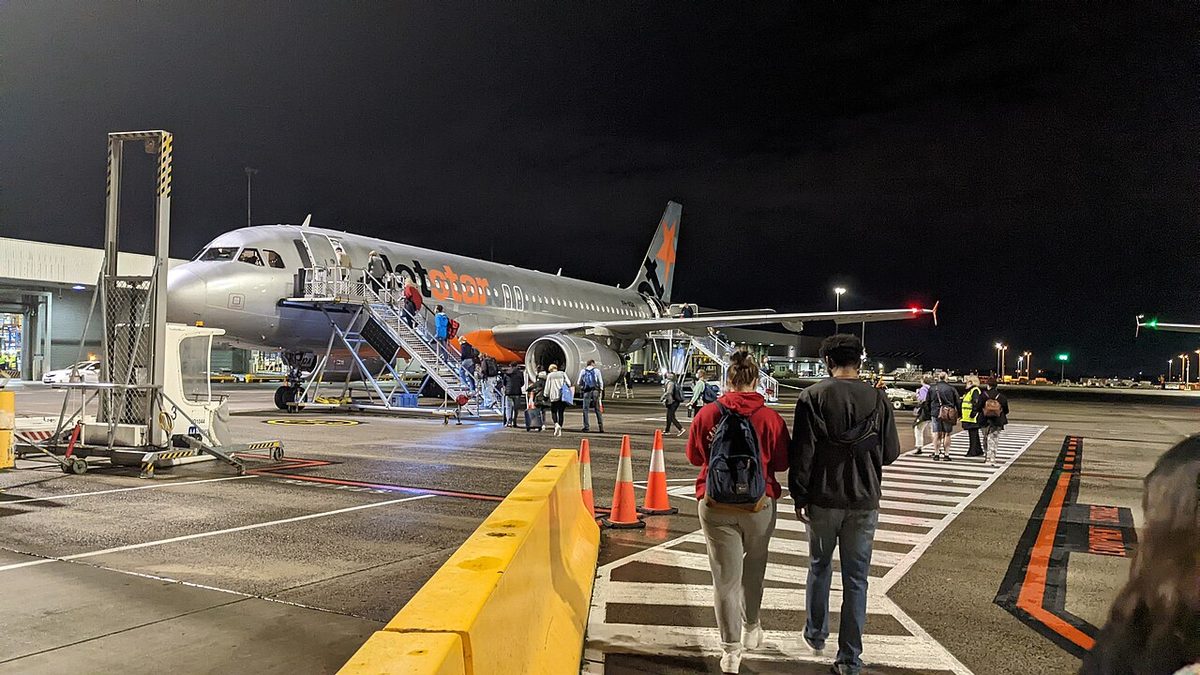
Table 3 gives standard masses for each piece of checked baggage on aeroplanes with 20 or more passenger seats. Its values depend on the type of flight, grouped by destination into categories such as domestic, European and intercontinental, with the heaviest value for intercontinental flights, whose travellers carry more.
On aeroplanes with 19 seats or fewer there are no standard baggage masses: checked baggage is weighed. The tables contain no standard masses for freight, which is normally weighed. Mail, like freight, is part of the traffic load and appears on the load sheet by compartment like any other hold load (see cargo loading and floor limits).
Carry-on baggage
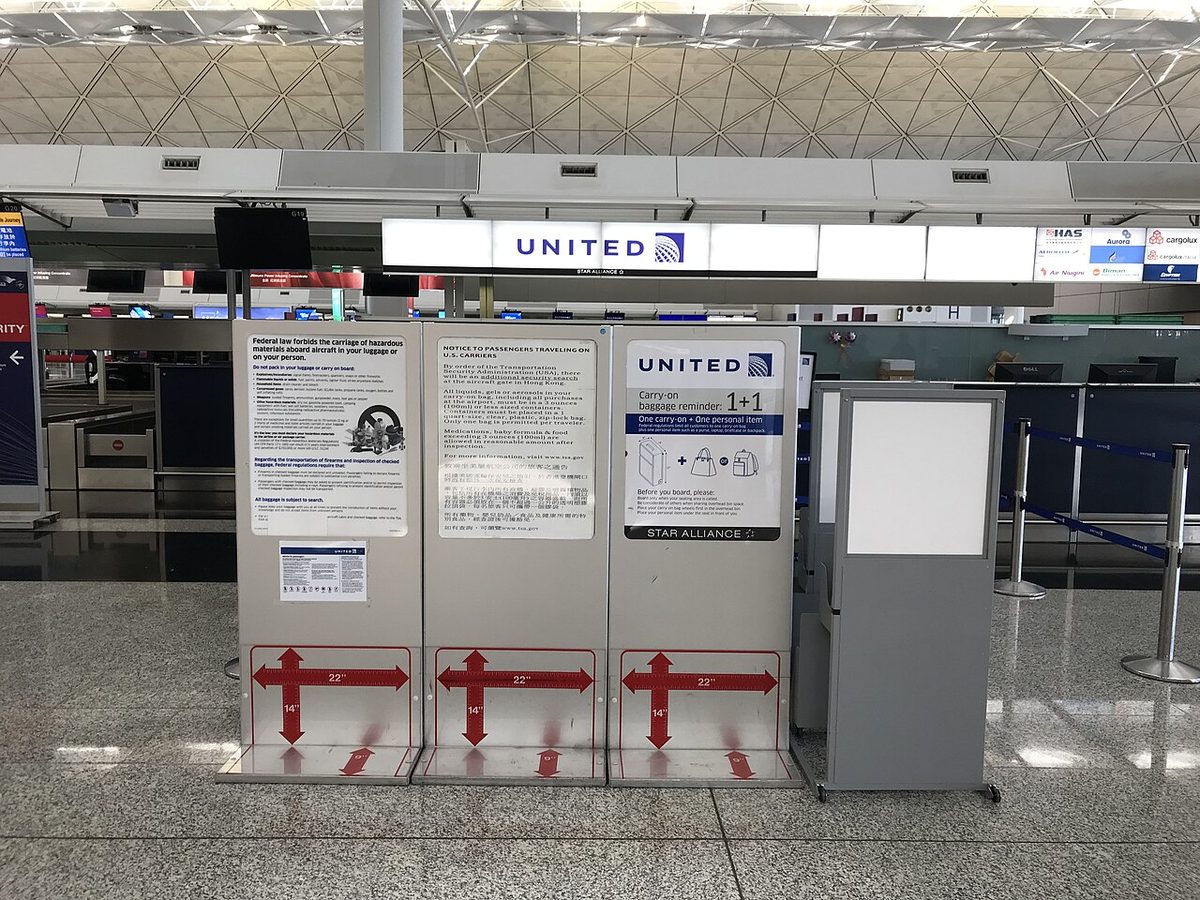
Cabin bags are not counted separately when standard masses are used, because the standard passenger masses already include hand baggage. On aeroplanes with 19 seats or fewer, where no hand baggage is carried in the cabin, or where it is accounted for separately, 6 kg may be deducted from each Table 2 passenger mass. Otherwise the same bag would be counted twice, once inside the passenger's standard mass and once on its own.
The FAA's old fixed standard weights also included carry-on baggage: AC 120-27E set 190 lb in summer and 195 lb in winter for an adult with a carry-on bag. Where carry-on items go in the cabin is a separate matter, covered by the operator's stowage procedures and, in the United States, by 14 CFR 121.589.
Verbal declarations and increments
The standard masses are an average, so the rules require action whenever a flight is clearly not average. On any flight identified as carrying a significant number of passengers whose masses are expected to exceed the standard, such as a sports team or a military group, the operator must either determine the actual masses of those passengers or add an adequate standard mass increment to the table value for each of them.
The same rule applies to checked baggage. If a number of passengers check in bags expected to be heavier than the Table 3 value, the operator must weigh those bags or add an adequate mass increment to each. Either way, the difference may not simply be ignored.
The verbal declaration on aeroplanes with fewer than 10 seats rests on the same principle from the other side. On a small aeroplane a table value can be badly wrong for a particular passenger, so the passenger's own statement, plus a constant for clothing and hand baggage, is accepted as a better estimate. As with any standard value, actual masses must be used where there is reason to believe the figure is significantly wrong.
Warning: a load sheet built on standard masses is only as good as its assumption. A full cabin of heavier than average passengers can put an aeroplane over its limits and shift its CG without anyone noticing, which is why the increment rule exists.
FAA weight and balance control program
The FAA does not publish a standard mass table in its regulations. A Part 121 carrier works under a weight and balance control program approved in its operations specifications and described in Advisory Circular 120-27F, Aircraft Weight and Balance Control. The carrier may use:
- average passenger and bag weights derived from a survey of its own passengers or from published government data;
- or actual weights.
The averages allow for seasonal differences in clothing, and non-standard groups such as sports teams and military units need actual or special weights. The carrier then produces a load manifest under 14 CFR 121.665 and 121.693 showing the passenger, crew, baggage, cargo and fuel weights and the CG (see load and trim sheet).
This replaced the fixed standard weights of AC 120-27E, which are no longer published. The weakness of fixed averages had been shown in 2003, when Air Midwest flight 5481, a Beech 1900D, pitched up uncontrollably after take-off from Charlotte, North Carolina. The NTSB found a mis-rigged elevator combined with a CG well aft of the certified limit, and cited the FAA's average weight assumptions then in use as a contributing factor (see centre of gravity).
Terminology differs as usual: the FAA speaks of weights, EASA of masses, and the FAA's average weights play the part of EASA's standard masses. What both systems share is the idea that a statistical value is acceptable only where the numbers make it reliable, and that actual weights must be used whenever a flight departs from the average.
Frequently asked questions
What is the EASA standard mass for a passenger?
It depends on the aeroplane. With 20 or more passenger seats, Table 1 gives 88 kg for a male and 70 kg for a female, and with 30 or more seats an all-adult value of 84 kg may be used instead, or 76 kg on a holiday charter. A child aged two to under twelve counts as 35 kg. Aeroplanes with 19 seats or fewer use Table 2, whose values vary with gender and seat count. All of them include hand baggage.
Do standard passenger masses include hand baggage?
Yes. The EASA standard passenger masses include the passenger's personal belongings and hand baggage, so cabin bags are not added separately. On aeroplanes with 19 seats or fewer, where no hand baggage is carried in the cabin or it is accounted for separately, 6 kg may be deducted from the Table 2 values. Checked baggage is always counted separately, from Table 3 or by weighing.
How is an infant counted on the load sheet?
An infant under two years old carried on an adult's lap is already covered by that adult's standard mass and adds nothing. An infant who occupies a seat of their own is counted as a child, at the child standard mass of 35 kg. Children aged two and over but under twelve are always counted at 35 kg when standard masses are used.
When must actual masses be used instead of standard masses?
When the operator can see that a significant number of passengers, such as a sports team or a military group, will be heavier than the standard, it must either use their actual masses or add a standard increment to each. The same applies to checked baggage expected to be heavier than its standard value. Freight is normally weighed, and aeroplanes with 19 seats or fewer weigh checked baggage.
What does the FAA use instead of standard passenger weights?
FAA Advisory Circular 120-27F lets Part 121 carriers use approved average passenger and bag weights, taken from a survey or from published government data, or actual weights, within a weight and balance control program approved in their operations specifications. The averages allow for seasonal differences in clothing. The fixed standard weights of the earlier AC 120-27E, 190 lb in summer and 195 lb in winter for an adult with carry-on, are no longer published.
Test yourself on Standard Masses for Passengers and Baggage
The v1prep banks cover this topic in Mass and Balance (031), with a worked explanation for every answer. EASA ATPL, PPL, IR and CPL, the FAA written tests and A320/B737 type ratings.
Start practising →Sources and further reading
- EASA Easy Access Rules for Air Operations (Regulation (EU) No 965/2012), CAT.POL.MAB
- Commission Regulation (EC) No 859/2008 (EU-OPS), Subpart J, Mass and Balance
- FAA AC 120-27F, Aircraft Weight and Balance Control
- 14 CFR 121.693, Load manifest, all certificate holders
- EASA, Review of standard passenger weights in 2022 shows no significant change
- NTSB AAR-04/01, Loss of Pitch Control During Takeoff, Air Midwest Flight 5481
Library articles are written for study and exam preparation. They do not replace your aircraft's approved documentation, your operator's procedures or the regulations themselves.