Dangerous Goods
Dangerous goods are articles or substances capable of posing a significant risk to health, safety or property when carried by air. ICAO Annex 18 and its Technical Instructions (Doc 9284) classify them and set how they must be packed, labelled, documented, accepted, loaded and reported.
Dangerous goods are articles or substances that could endanger the aircraft or the people in it if they leaked, reacted, caught fire or exploded in flight. The United States calls them hazardous materials, or hazmat. Fuel in a can, a cylinder of compressed gas, a car battery, a pot of paint and a spare laptop battery are all dangerous goods, and so are less obvious items such as dry ice and magnetised equipment.
Most of them travel safely by air every day. What makes that possible is a single chain of rules: the shipper classifies, packs and labels the goods, the operator checks and accepts them, the loaders stow them where they belong, and the commander is told in writing what is on board and where. A break anywhere in that chain has caused fatal accidents, which is why dangerous goods are part of every pilot's theory syllabus and every airline's recurrent training.
- What are dangerous goods
- Hazard classes and divisions
- UN numbers, shipping names and packing groups
- Labels and Cargo Aircraft Only items
- Transport document and acceptance checklist
- The NOTOC
- Will-carry and will-not-carry operators
- Passengers, crew and lithium batteries
- Dry ice, magnetised material and mercury
- Dangerous goods incidents and accidents
- Frequently asked questions
What are dangerous goods
ICAO Annex 18 contains the Standards and Recommended Practices, and its Technical Instructions for the Safe Transport of Dangerous Goods by Air (Doc 9284) hold the detail: the list of dangerous goods, packing, labelling, documentation, training, and what may travel in the cabin or on the flight deck. The exam definition describes dangerous goods as articles or substances capable of posing a significant risk to health, safety or property when transported by air. The airline industry works from the IATA Dangerous Goods Regulations, which are based on the Technical Instructions.
In Europe, an operator needs a specific approval under Part-SPA, Subpart G to transport dangerous goods. The rules are not limited to commercial flying: under Part-NCO a private pilot may not carry a can of spare petrol in the baggage compartment either. In the United States the Hazardous Materials Regulations, 49 CFR Parts 171 to 180, apply to every operator whatever part of 14 CFR it flies under.
Two groups of items are excepted from the full provisions. The first is what the aeroplane needs to operate: the fuel in its own tanks, its installed batteries, its fire extinguishers and oxygen, and the items provided for catering and passenger service. The exception rests on the function the item serves, not on its being harmless, so an item carried as a replacement, such as a spare medical oxygen bottle for a patient, is dangerous goods and travels under the Technical Instructions. The second group is the limited range of items that passengers and crew may carry under Part 8 of the Technical Instructions.
Hazard classes and divisions
Every dangerous substance is assigned to one of nine hazard classes, several of them split into divisions. The order is fixed and worth knowing by heart, because a NOTOC gives the class number and nothing else to explain it.
| Class | Covers | Hazard label |
|---|---|---|
| 1 Explosives | Explosive articles and substances | Exploding bomb, black on orange; Divisions 1.1 and 1.2 not normally permitted by air |
| 2 Gases | 2.1 flammable, 2.2 non-flammable non-toxic, 2.3 toxic | 2.1 flame on red; 2.2 gas cylinder on green; 2.3 skull and crossbones on white |
| 3 Flammable liquids | Liquids such as fuels, paints and solvents | Flame, black or white, on red |
| 4 Flammable solids | 4.1 flammable solids, 4.2 spontaneously combustible, 4.3 dangerous when wet | 4.1 black flame on white with seven red stripes; 4.2 upper half white, lower half red; 4.3 flame on blue |
| 5 Oxidisers | 5.1 oxidising substances, 5.2 organic peroxides | 5.1 flame over a circle on yellow; 5.2 flame, upper half red, lower half yellow |
| 6 Toxic and infectious | Toxic substances; infectious substances | Skull and crossbones on white; three crescents on a circle, on white |
| 7 Radioactive | Radioactive material, by category | Category II-Yellow: black trefoil, upper half yellow, lower half white, two red bars |
| 8 Corrosives | Acids, alkalis and similar | Liquids from two vessels attacking a hand and a metal; upper half white, lower half black |
| 9 Miscellaneous | Goods not covered elsewhere, for example lithium batteries | Class 9 label |
The divisions matter to the crew. Division 4.3 substances release flammable gas on contact with water, so water is the wrong first agent on a damaged 4.3 package. The infectious substance label carries the instruction to notify the public health authority at once if the package is damaged or leaking.
UN numbers, shipping names and packing groups
A UN number is a four-digit number assigned by the United Nations Committee of Experts on the Transport of Dangerous Goods to a single substance or a group of substances. It is always used with the proper shipping name, the standard name of the entry in the list, so that anyone from the shipper to a fire officer can look up the same entry and its emergency response.
Within a class, substances are ranked by a packing group: I for high danger, II for medium and III for low. The packing group sets how strong the packaging must be and how much may go in one package. It says nothing about which type of aircraft may carry the package; that is decided by the quantity limits for passenger and cargo aircraft.

Labels and Cargo Aircraft Only items
Each package carries its UN number and shipping name and a hazard label for its class or division, coloured and with the class symbol, as in the table above. Handling labels add information that is not a hazard class. Two are examined often:
- Cargo Aircraft Only (CAO): black on orange, 120 mm by 110 mm. The package may travel only on a freighter, because the permitted quantity is larger than is accepted on an aeroplane carrying passengers. It must never be loaded on a passenger flight, whatever the circumstances.
- Magnetised material: blue on white, 110 mm by 90 mm. The contents produce a magnetic field strong enough to disturb the aircraft's compasses, so the package is stowed with that in mind.
Transport document and acceptance checklist
Responsibility is split. The shipper must offer the goods correctly classified, packed, marked, labelled and documented. The operator remains responsible for their being carried, packed and labelled as the Technical Instructions require, and it checks rather than trusts.
An operator may not accept dangerous goods unless they come with two copies of the dangerous goods transport document, the shipper's declaration, except where the Technical Instructions say otherwise. Acceptance staff then work through a dangerous goods acceptance checklist, item by item, to confirm that the document, markings, labels and packaging of each consignment comply. Packages are inspected for leakage and damage before loading, and a leaking or damaged package is not loaded. Dangerous goods are kept out of the passenger cabin and the flight deck unless the Technical Instructions specifically allow them there, and packages whose contents could react with each other are segregated in the hold (see cargo loading and floor limits).
The NOTOC
When dangerous goods are carried, the operator must give the commander written information about them before departure, commonly called the NOTOC (notification to captain). For each consignment it gives the proper shipping name, the class or division, the UN number, the quantity and the loading position. Under 49 CFR 175.33 the US version also confirms that no damaged or leaking packages were loaded; the pilot in command keeps it readily available in flight, and a copy stays on the ground.
Commercial details have no place on it, because the NOTOC exists for one moment: an emergency. If one occurs in flight, the commander informs the appropriate air traffic services unit, as soon as the situation permits, of the dangerous goods on board, so that the rescue and fire-fighting services know what they will face and exactly where it is stowed before the aircraft lands.
Exam tip: the operator provides the written information to the commander; the commander passes dangerous goods information to ATS in an in-flight emergency. Dangerous goods incident reports go to the authority within 72 hours, and dangerous goods training records are kept for 3 years.
Will-carry and will-not-carry operators
In the United States, a Part 121 carrier's operations specifications state whether it is a will-carry or a will-not-carry operator. A will-carry operator accepts hazardous materials as cargo and complies with the full 49 CFR requirements for acceptance, packaging, labelling, loading and notification. A will-not-carry operator does not accept them, and trains its staff to recognise hazardous materials so that they can be refused, because undeclared items in cargo and baggage are a leading cause of cargo fires. Under Part 121 Subpart Z every carrier needs an approved hazardous materials training programme, whichever it is. The European equivalent of the distinction is simply whether the operator holds the Part-SPA approval.
Passengers, crew and lithium batteries
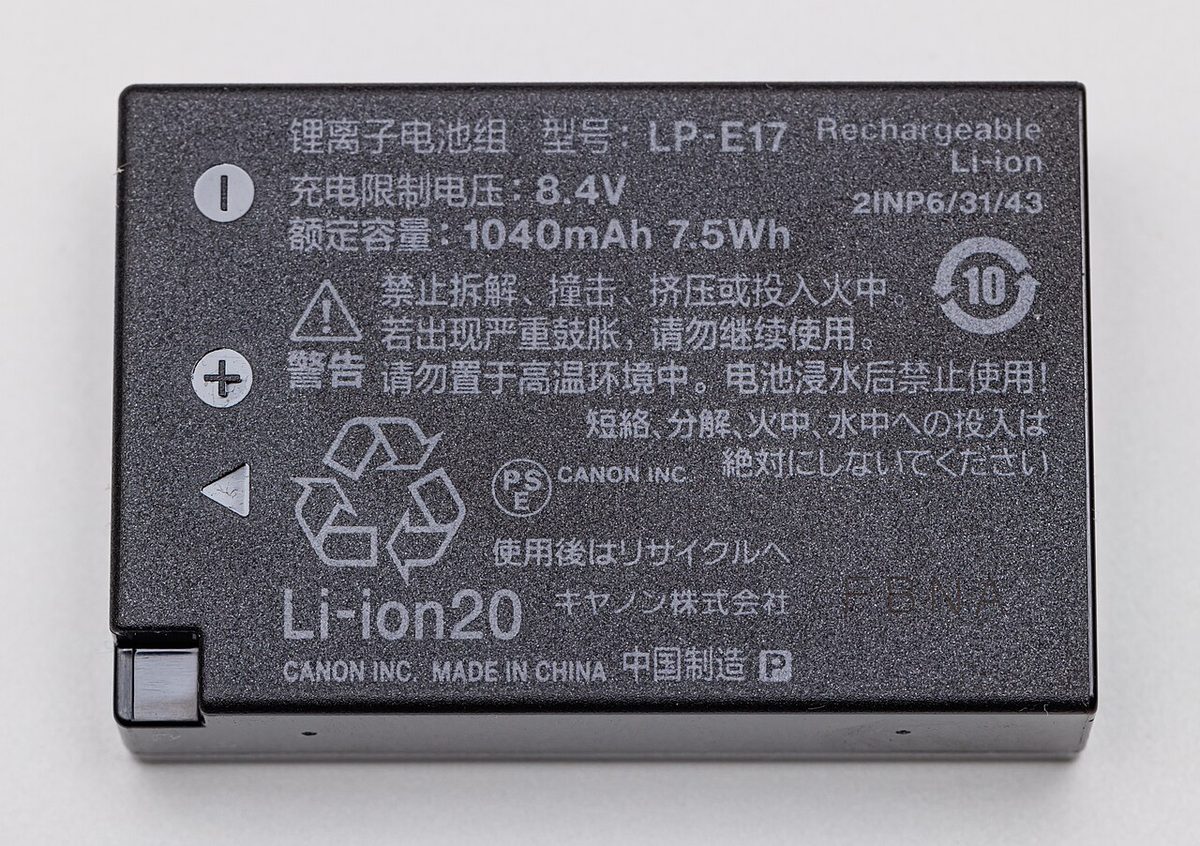
What passengers may carry is set out in Part 8 of the Technical Instructions and in the airline's own rules, which may be stricter. Lithium batteries, both lithium-ion and lithium metal, are Class 9 dangerous goods, and the carriage rules for passengers turn on the battery's rating in watt-hours, which is usually printed on it.
| Lithium-ion battery rating | Passenger carriage |
|---|---|
| Up to 100 Wh | Permitted without approval |
| Over 100 Wh, up to 160 Wh | Operator's approval; no more than two spares per person |
| Over 160 Wh | Not as passenger baggage; carried as fully regulated cargo |
Spare batteries, including power banks, go in the cabin only, with the terminals protected against short circuit, because a battery fire must be seen and fought at once and that is impossible in a hold. Batteries installed in a device may travel in the cabin or in checked baggage; the US rules add that a device in checked baggage must be switched off and protected from accidental activation. As cargo, lithium batteries are packed and declared under the Technical Instructions like any other dangerous goods. A lithium battery fire can exceed the capability of a cargo hold's fire suppression system, one reason these shipments receive so much regulatory attention.
Dry ice, magnetised material and mercury
Dry ice is solid carbon dioxide used to keep perishables and medical shipments cold. It sublimates into carbon dioxide gas, which displaces oxygen in a confined cabin or hold, so the packaging must let the gas vent. A passenger may carry up to 2.5 kg, with the operator's approval; the limit applies per person, not per package.
Magnetised material is a hazard to navigation rather than to people: a strong enough field deflects the compasses and the heading reference. The blue-on-white label warns the loaders to keep it away from them.
Mercury is the aviation example of a corrosive spill. Carried in instruments such as barometers, it attacks aluminium alloys by amalgamation, penetrating the grain of the alloy and destroying it in a very short time. It runs through small cracks to the lowest points of the structure. A mercury spillage must therefore be reported and cleaned up at once: the mercury is collected, typically by vacuum, and never blown about with compressed air, which scatters it, and the structure is then inspected.
Dangerous goods incidents and accidents
Dangerous goods incidents and accidents, from a leaking package to a fire on board, must be reported to the authority, with the first report despatched within 72 hours of the event unless exceptional circumstances prevent it. In this context a serious injury includes hospitalisation for more than 48 hours beginning within seven days of the injury.
The loss of ValuJet Flight 592 in 1996 shows why the chain matters. Chemical oxygen generators were carried in the cargo hold without being declared or packed as dangerous goods. Once activated, such a generator cannot be stopped and its surface can reach 232°C, and the fire that followed brought the aircraft down. Undeclared dangerous goods remain one of the main causes of cargo fires, and in flight the crew's defence is the procedure described in in-flight fire, smoke and fumes.
Frequently asked questions
What counts as dangerous goods on an aircraft?
Dangerous goods are articles or substances that could endanger health, safety or property in flight: explosives, gases, flammable liquids and solids, oxidisers, toxic and infectious substances, radioactive material, corrosives and miscellaneous items such as lithium batteries. They are listed in, or classified under, the ICAO Technical Instructions. Many are carried legally every day, but only when correctly packed, labelled, documented and accepted by an approved operator.
How many classes of dangerous goods are there?
There are nine. Class 1 explosives, Class 2 gases, Class 3 flammable liquids, Class 4 flammable solids, Class 5 oxidising substances and organic peroxides, Class 6 toxic and infectious substances, Class 7 radioactive material, Class 8 corrosives and Class 9 miscellaneous dangerous goods. Several classes are split into divisions, such as 2.1 flammable gas or 4.3 substances that give off flammable gas when wet.
Can I take a power bank on a plane?
Yes, in carry-on baggage only, never in checked baggage, with the terminals protected against short circuit. A power bank is a spare lithium battery. Up to 100 Wh no approval is needed; above 100 Wh and up to 160 Wh the airline must approve it and each person may carry no more than two spares; above 160 Wh it cannot travel as passenger baggage at all.
What is a NOTOC in aviation?
The NOTOC, or notification to captain, is the written information the operator gives the commander before departure about the dangerous goods on board. For each consignment it gives the shipping name, class or division, UN number, quantity and loading position. Its purpose is practical: in an emergency the commander passes it to air traffic services so that the fire crew know what is burning and where.
What does a Cargo Aircraft Only label mean?
The black-on-orange Cargo Aircraft Only label marks a package whose contents or quantity are permitted on a freighter but not on an aeroplane carrying passengers. It is an absolute bar, not a stowage instruction: such a package may not be loaded on a passenger flight, and no repacking or paperwork on the ramp can change that.
Test yourself on Dangerous Goods
The v1prep banks cover this topic in Operational Procedures (070), with a worked explanation for every answer. EASA ATPL, PPL, IR and CPL, the FAA written tests and A320/B737 type ratings.
Start practising →Sources and further reading
- ICAO Annex 18, The Safe Transport of Dangerous Goods by Air, and Doc 9284, Technical Instructions (ICAO Store)
- EASA Easy Access Rules for Air Operations (Regulation (EU) No 965/2012), Part-SPA Subpart G, transport of dangerous goods
- 49 CFR 175.33, Shipping paper and information to the pilot-in-command
- 49 CFR 175.10, Exceptions for passengers, crewmembers, and air operators
- 14 CFR Part 121, Subpart Z, Hazardous Materials Training Program
- FAA PackSafe, Lithium Batteries and Lithium Battery-Powered Devices
- NTSB AAR-97/06, In-flight Fire and Impact with Terrain, ValuJet Airlines Flight 592
Library articles are written for study and exam preparation. They do not replace your aircraft's approved documentation, your operator's procedures or the regulations themselves.