B737 Flight Deck and Operating Documentation
The Boeing 737 operating documentation is the set of manuals a 737 crew works from: the flight crew operations manual with its limitations and normal procedures, the quick reference handbook of non-normal checklists, the dispatch deviation guide to which the FCOM refers for defects found on the ground, and the performance data that feeds the flight management computer.
The Boeing 737's successive series include the original 737, the 737 Classic, the Next Generation (NG) and the 737 MAX, all on one type certificate and all flown on a single type rating. A pilot moving between them learns the differences, not a new aeroplane.
A 737 crew works from a set of documents: the flight crew operations manual (FCOM), with its limitations, normal procedures and system descriptions; the quick reference handbook (QRH) of non-normal checklists; the dispatch deviation guide (DDG) or the operator's equivalent, to which the FCOM refers when a fault is found on the ground; and the performance data the crew enter into the flight management computer. Systems detail in this article follows the 737 NG FCOM; where the MAX differs, it says so. For the general framework see operations manual and flight crew documentation.
737 generations: Classic, NG and MAX
The FAA Flight Standardization Board (FSB) gives every 737 model, from the -100 to the MAX, the single type rating B-737, because they are related aircraft on one type certificate. In the EASA type certificate data sheet the MAX flight crew data carry the same Boeing document number as the NG's, though the wording of the licence endorsement is for each authority to confirm. Between older series, such as the original 737 and the Classic, the FSB requires supervised line flying of two legs and at least 5 hours; between the NG and the MAX it requires none, in either direction.
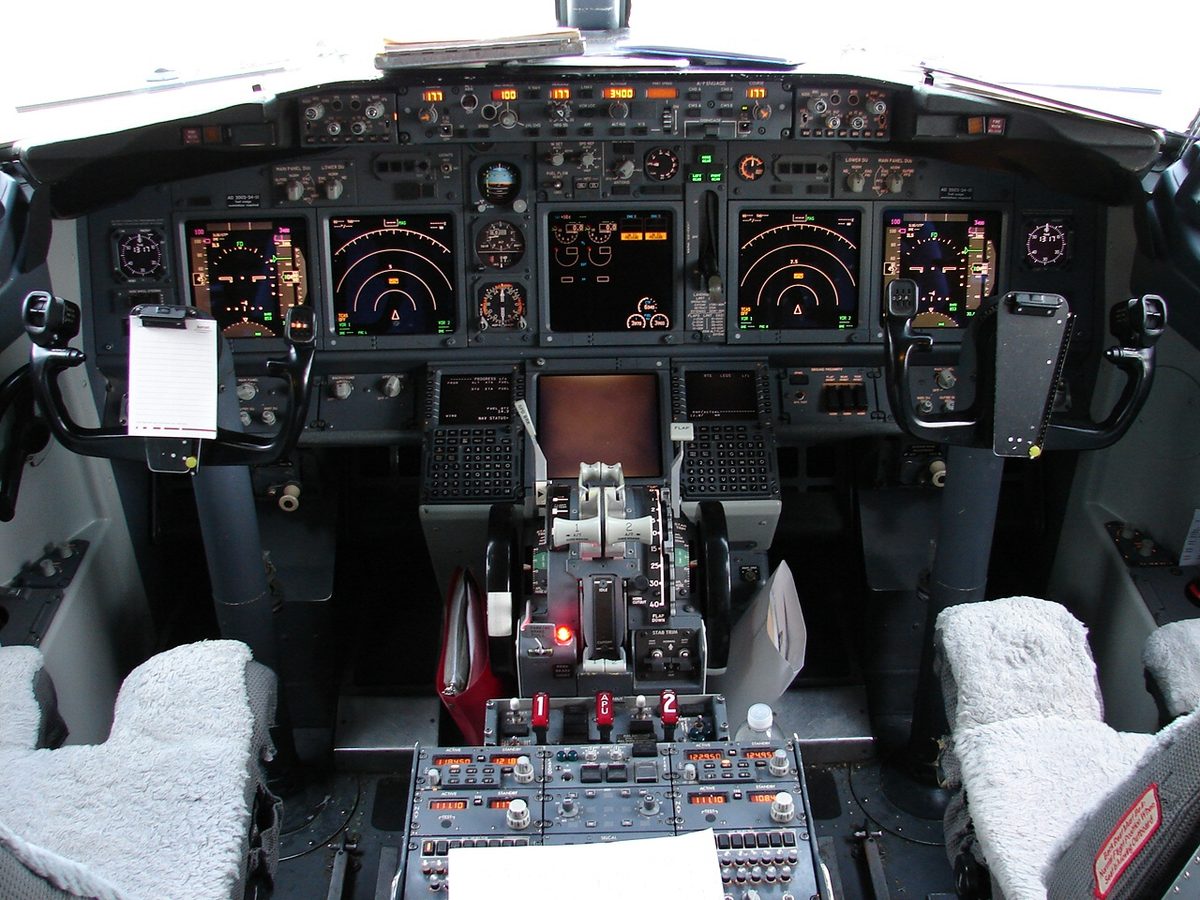
| Item | 737 NG (e.g. 737-800) | 737 MAX (e.g. 737-8) |
|---|---|---|
| Engines | CFM56-7B | LEAP-1B, larger, higher and further forward |
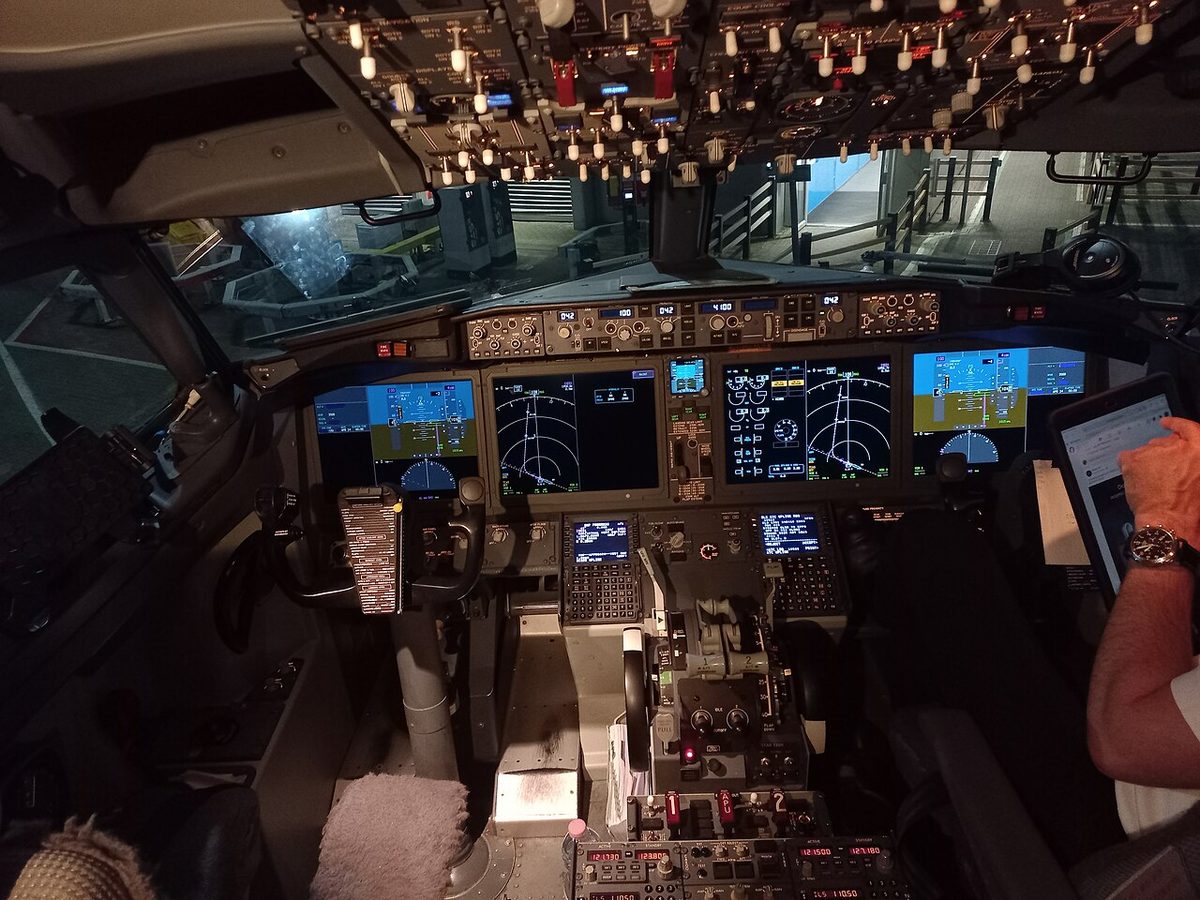
| Displays | Common Display System, six display units | Four large LCDs |
| Standby instruments | Three standby instruments basic; ISFD on some | Integrated standby flight display basic |
| Spoilers | Driven mechanically by cables | Fly-by-wire, with load alleviation and landing attitude modifier |
| Landing gear lever | UP, OFF, DN | Two positions |
| Pitch augmentation | Speed trim | Speed trim including MCAS |
| Maximum operating altitude | 41,000 ft | 41,000 ft |
| Maximum take-off weight (TCDS) | 79,015 kg (737-800) | 82,645 kg (737-8) |
The 737-8 is 39.5 m long like the 737-800, its nose gear 8 in longer to give the bigger engines ground clearance. The MAX family also includes the 737-7, the 737-8200 and the 737-9, whose 42.11 m matches the 737-900ER's length; the 737-9 and 737-8200 can have a mid exit door on each side. MCAS, part of the MAX's speed trim system, adds nose-down stabiliser trim at high angle of attack, in manual flight with the flaps up, because the larger, more forward engines would otherwise lighten the column near the stall more than the rules allow. The NG has speed trim but no MCAS.
From the NG to the MAX the FSB's master differences requirement is Level B training and checking, aided instruction such as computer-based training, plus the Appendix 7 special training, which no pilot may skip before operating the MAX. It includes simulator events on MCAS, the cross-FCC trim monitor and an erroneous high angle of attack on take-off, which need a MAX simulator, and manual stabiliser trim exercises that may be flown in an NG simulator. See class and type ratings.
The flight deck and its normal procedures
Boeing writes its normal procedures for a trained crew and assumes that all systems work normally and that the automatics (LNAV, VNAV, autopilot, autothrottle and autoland) are fully used, without ruling out manual flying for proficiency. For each phase of flight the procedures verify that the aeroplane's condition is satisfactory and the flight deck configured correctly. They are done from memory, following a scan flow of the panels that may be adapted as needed, and they assume coordination with the ground crew before hydraulic pressurisation, flight control movement or aeroplane movement.
Preflight and postflight duties are divided between captain and first officer; phase-of-flight duties between the pilot flying (PF), who taxies, controls the flight path and airspeed, configures the aeroplane and navigates, and the pilot monitoring (PM), who reads checklists, communicates, does tasks the PF asks for and monitors. The mode control panel is the PF's responsibility; CDU entries in flight are normally made by the PM and executed only after the other pilot has verified them. The captain is the final authority for all tasks directed and done.
The lights follow fixed colours: red for warnings, amber for conditions that need timely attention, blue for information such as power availability and valve positions, and green for a fully extended configuration such as gear and leading edge devices. Two system annunciator panels on the glareshield repeat the systems of the forward overhead, aft overhead and fire control panels and trigger the MASTER CAUTION lights. Pushing MASTER CAUTION puts the lights out and resets the system. Pushing an annunciator panel recalls any existing conditions, including simple faults, single faults in redundant systems that are stored without lighting MASTER CAUTION. Before engine start the crew use the system lights to check each system's configuration; after start the master caution system brings faults to their attention.
The FCOM's Limitations chapter combines AFM limitations, AFM operational information and non-AFM operational information, leaving out what is already in procedures or on placards and displays. A # marks a memory item. For weight limitations, the FCOM states that the AFM governs if the two disagree.
Preliminary preflight procedure
The preliminary preflight procedure assumes that the Electrical Power Up supplementary procedure is complete (see B737 electrical system). Its main items are:
- IRS: a full alignment is recommended before each flight, otherwise the Fast Realignment supplementary procedure. The mode selectors go OFF, then NAV; the ON DC lights come on and go out, and the ALIGN lights come on.
- Crew oxygen: a pressure drop test, needed at one station only. The pressure must not fall by more than 100 psig; a rapid or larger drop, or a slow recovery, suggests the cylinder valve is not fully open.
- Emergency equipment: fire extinguisher checked and stowed, crash axe and escape ropes stowed.
- Panels: FLIGHT DECK ACCESS SYSTEM switch guard closed; ELT, PSEU and GPS lights out; SERVICE INTERPHONE OFF; ENGINE panel with REVERSER and ENGINE CONTROL lights out and EEC switches ON; PASSENGER OXYGEN switch guard closed, since operating it drops the passenger masks, with the PASS OXY ON light out; FLIGHT RECORDER switch guard closed with its OFF light lit.
- Tests: the MACH AIRSPEED WARNING TEST switches, one at a time, each sounding the clacker; and the stall warning test, which needs the AC transfer buses powered for up to 4 minutes. With hydraulic power off the leading edge flaps can droop enough to give an asymmetry signal and fail the test; the crew then obtain clearance, pressurise system B with its electric pump, retract the flaps and repeat the test.
The CDU preflight procedure may start any time after the preliminary preflight. Initial data and navigation data must be entered before the flight instrument check of the preflight procedure, and performance data before the Before Start checklist.
Non-normal checklists
The QRH holds the non-normal checklists (NNC). If a red warning or amber caution light comes on during or after engine start, the crew do the respective NNC; on the ground they also check the DDG. If an amber caution appears on recall and goes out after a master caution reset, the NNC is not needed, only the DDG.
Some checklists start with recall items, done from memory, followed by reference items read from the QRH. In Airspeed Unreliable, checking the probe heat ON and cross-checking the captain's, first officer's and standby airspeeds are reference items after the recall steps. When the cabin altitude warning horn sounds in flight above 10,000 ft MSL, the crew immediately don oxygen masks with the regulators at 100 %, establish crew communication and do the CABIN ALTITUDE WARNING or Rapid Depressurization checklist. The emergency descent follows if the aeroplane is above 14,000 ft MSL and the cabin cannot be controlled, or if cabin pressure is lost. Checklists can also override limitations: the CARGO FIRE and SMOKE/FUMES REMOVAL checklists allow packs in HIGH despite the restriction for take-off, approach and landing.
After the MAX accidents several checklists were revised, and the current Runaway Stabilizer recall items are shared by the NG and MAX QRHs. The checklist now covers stabiliser movement that is continuous or wrong for the conditions, makes pitch control with the column and speed control with the thrust levers memory steps, and asks for main electric trim before both STAB TRIM CUTOUT switches; a note adds that reducing airspeed makes manual trimming easier. On the MAX, AOA DISAGREE leads to the Airspeed Unreliable checklist.
Note: EASA and the FAA differ on one MAX procedure. EASA's airspeed unreliable procedure allows the crew to silence an erroneous stick shaker with its circuit breaker; the FAA tested and rejected that option. At the 2021 return to service, EASA's AFM also prohibited RNP AR operations on the MAX. Follow your own AFM and QRH.
Dispatch deviation guide
The FCOM refers the crew to the Dispatch Deviation Guide (DDG), or the operator's equivalent, in three situations: on the ground, when a red warning or amber caution light comes on during or after engine start, after the respective NNC; when an amber caution seen during recall goes out after a master caution reset; and when a system annunciator light fails the recall test, in which all twelve system annunciator lights must come on while the press-to-test is held.
What may be deferred is set by the operator's minimum equipment list. Dispatch with the fuel tank nitrogen generation system inoperative, for example, is acceptable under MEL procedures, because the tanks are protected primarily by excluding ignition sources. For the 737 MAX, the revised FAA master MEL requires both flight control computers for passenger dispatch and no longer allows the speed trim function, the SPEED TRIM FAIL light or the control wheel trim switches to be deferred.
Performance data and the CDU
Take-off performance is usually calculated before flight with an electronic flight bag performance application or the operator's other performance tools. Whatever the tool, its results reach the aeroplane through the CDU, and the FCOM's rules for entering them guard against the commonest errors:
- on the PERF INIT page, the zero fuel weight must never be entered in the gross weight boxes, or the FMC computes performance data with significant errors; fuel on the CDU, the dispatch papers and the fuel gauges must agree, as must the gross weight and cruise CG;
- on the TAKEOFF REF page, page 2/2 is completed before page 1/2;
- the thrust reduction altitude accepts entries from 800 to 9,999 ft;
- the amber NO VSPD flag stays on the PFD on the ground until V1 and VR are entered or set;
- assumed temperature reduced thrust may reduce thrust by up to 25 % below any certified rating; it is not used on runways with standing water, slush, snow or ice, with possible windshear, or with antiskid inoperative. An R-TO display does not show whether the reduction comes from an assumed temperature, a derate or both;
- TAT on the engine display must not be used in place of outside air temperature for take-off performance.
In flight the FMC's own performance database, holding the aeroplane's drag and engine characteristics, maximum and optimum altitudes and speed limits, removes the need to refer to a performance manual.
Exam tip: the FCOM order is preliminary preflight (power assumed up), then CDU preflight, with initial and navigation data before the flight instrument check and performance data before the Before Start checklist.
Frequently asked questions
Do you need a separate type rating for the Boeing 737 MAX?
No. The FAA Flight Standardization Board gives every 737 model, from the -100 to the MAX, the single type rating B-737. A 737 NG pilot adds the MAX through Level B differences training and checking, plus the special training of Appendix 7 of the FSB report, which must be completed before operating the MAX at all. No supervised line flying is required between the NG and the MAX.
What is the difference between recall items and reference items on the 737?
Recall items are the first steps of certain non-normal checklists, done from memory before the checklist is read. Reference items follow and are read from the QRH and done step by step. In the Airspeed Unreliable checklist, for example, checking the probe heat switches ON and cross-checking the airspeed indications are reference items that come after the recall items.
When does a 737 crew use the dispatch deviation guide?
The FCOM sends the crew to the dispatch deviation guide (DDG), or the operator's equivalent, when a red warning or amber caution appears during or after engine start on the ground, after the respective non-normal checklist, and when an amber caution seen on recall goes out after a master caution reset. It is also the reference if a system annunciator light fails the recall test.
What does the 737 preliminary preflight procedure assume?
It assumes that the Electrical Power Up supplementary procedure is complete. It then covers the IRS alignment, with a full alignment recommended before each flight, the crew oxygen pressure drop test, the emergency equipment, a series of panel settings and tests such as the Mach/airspeed warning and stall warning tests. The CDU preflight procedure may start any time after it.
What are the main differences between the 737 NG and the 737 MAX?
The MAX has CFM LEAP-1B engines in place of the NG's CFM56-7B, mounted higher and further forward, a nose gear 8 in longer, four large displays instead of six, an integrated standby flight display as basic equipment, fly-by-wire spoilers, a two-position landing gear lever and MCAS within its speed trim system. The FSB grades the NG to MAX differences at Level B.
Test yourself on B737 Flight Deck and Operating Documentation
The v1prep banks cover this topic in the B737 type-rating bank, with a worked explanation for every answer. EASA ATPL, PPL, IR and CPL, the FAA written tests and A320/B737 type ratings.
Start practising →Sources and further reading
- FAA Flight Standardization Board Report, Boeing 737
- EASA Type Certificate Data Sheet IM.A.120, Boeing 737
- EASA, Boeing 737 MAX Return to Service Report (January 2021)
- EASA Easy Access Rules for Air Operations (Regulation (EU) No 965/2012), ORO.MLR manuals, logs and records, and ORO.MLR.105 Minimum equipment list
- FAA AC 120-71B, Standard Operating Procedures and Pilot Monitoring Duties
- 14 CFR 91.9, Civil aircraft flight manual, marking, and placard requirements
Library articles are written for study and exam preparation. They do not replace your aircraft's approved documentation, your operator's procedures or the regulations themselves.