Circulatory System and Cardiovascular Health
The circulatory system is the heart, the blood vessels and the blood. The heart pumps blood through the lungs to take up oxygen and then round the body to deliver it, while the blood carries carbon dioxide back to the lungs. Its diseases are a leading cause of pilot medical unfitness.
The circulatory system, or cardiovascular system, is the heart, the blood vessels and the blood. It collects oxygen in the lungs, delivers it to every tissue and brings carbon dioxide back to be breathed out. Every aviation hazard that starves the brain of oxygen works through it. Hypoxia lowers the oxygen the blood can load, carbon monoxide blocks the haemoglobin that carries it, and positive g stops the heart from lifting blood to the head.
The system matters to pilots in a second way. Cardiovascular disease remains the dominant career-ending diagnosis for pilots, and a heart attack in flight can incapacitate a pilot suddenly. ATPL texts attribute about 70 per cent of deaths of pilots during their careers to coronary disease, despite medical selection and regular examinations. The FAA's Aeronautical Information Manual lists myocardial infarction and angina pectoris among the conditions that disqualify a pilot, subject to special issuance.
The heart and circulation
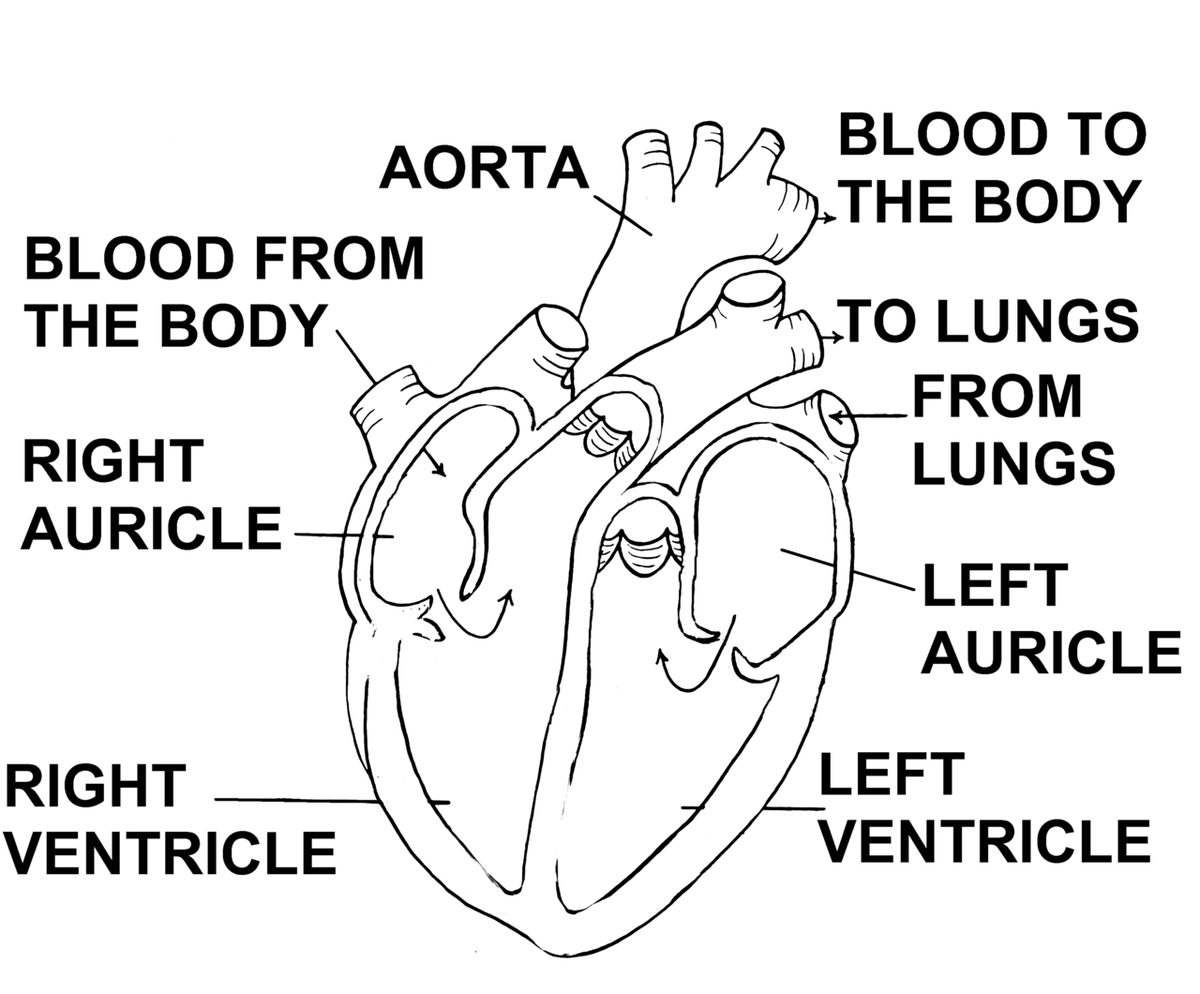
The heart is a muscular pump with four chambers. The two upper chambers, the atria (older texts: auricles), act mainly as entryways and pump only weakly. The two lower chambers, the ventricles, are the main pumps. Valves keep the blood flowing in one direction.
The heart drives two circuits in series:
- Pulmonary circulation. Deoxygenated blood returning from the body enters the right atrium, and the right ventricle pumps it the short distance to the lungs. There it gives up carbon dioxide and takes up oxygen, and it returns to the left atrium.
- Systemic circulation. The left ventricle, the largest and most muscular part of the heart, pumps the oxygenated blood into the aorta and round the whole body. It then returns, deoxygenated, to the right atrium.
The impulses that make the heart muscle contract are generated within the heart itself, by its natural pacemaker, the sino-atrial node. The brain only adjusts the rate, through the autonomic nerves. Under sudden stress the sympathetic branch releases adrenaline and raises the heart rate, blood pressure and breathing rate. An electrocardiogram (ECG), part of aircrew medical examinations, records these electrical impulses and shows irregular rhythm or conduction problems.
Blood vessels
- Arteries carry blood away from the heart at high pressure. The pulmonary artery is the exception to the rule that arteries carry oxygenated blood: it takes deoxygenated blood to the lungs, but it is still an artery because it leaves the heart.
- Veins return blood to the heart at low pressure.
- Capillaries join the smallest arteries to the smallest veins. Their walls are only one cell thick, so gases pass through them by diffusion. Even the smallest arteries and veins have walls too thick for exchange, so gas exchange takes place only at the capillaries: with the alveoli in the lungs, and with the cells everywhere else.
The heart muscle does not draw oxygen from the blood inside its chambers. It has its own supply, the coronary arteries and coronary veins, and narrowing of these vessels is the root of most heart disease.
Composition of blood
| Component | Description | Function |
|---|---|---|
| Blood plasma | The liquid part of the blood, pale straw-coloured, containing sodium chloride | Carries the cells, glucose, amino acids, proteins, hormones and enzymes, and most of the carbon dioxide |
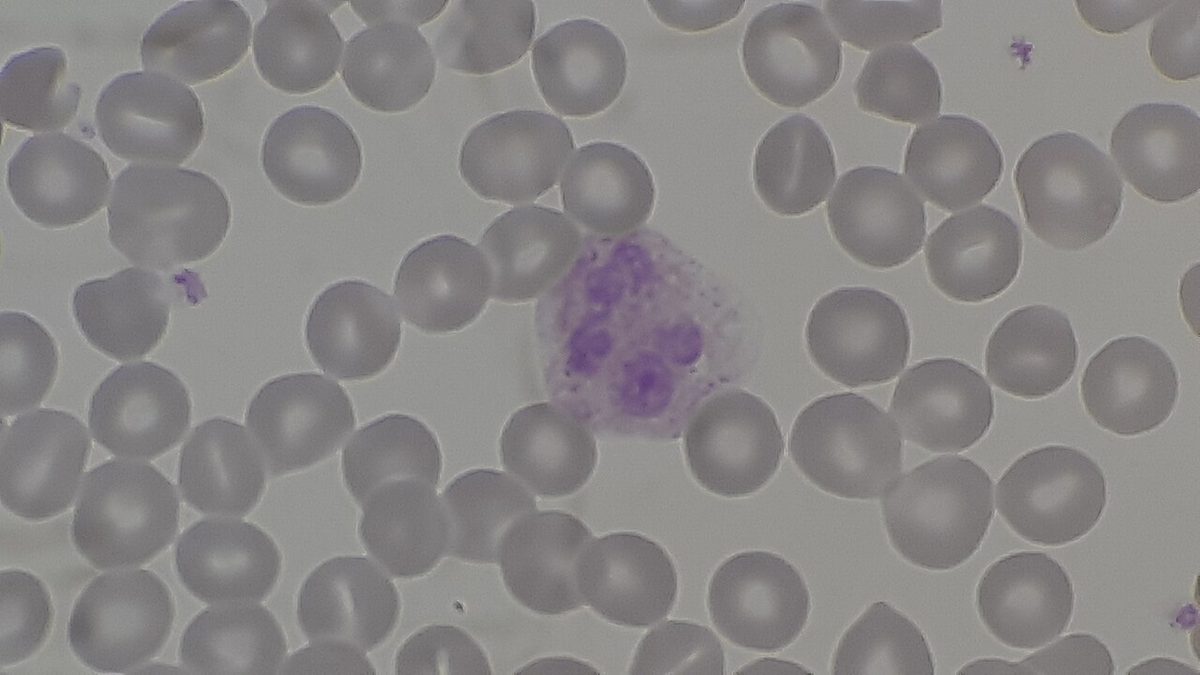
| Red blood cells | Cells with no nucleus, leaving more room for haemoglobin; made in the red bone marrow | Carry oxygen |
| White blood cells | Larger cells with a nucleus | Defend against disease: they engulf bacteria and produce antibodies and antitoxins |
| Platelets | The smallest blood cells | Help the blood to clot at the site of an injury |
In adults, red cells and their haemoglobin are made in the red bone marrow. The hormone erythropoietin, produced in the kidneys, stimulates the production. The liver and spleen make red cells before birth, and in adults only in some diseases.
Haemoglobin and oxygen transport
Haemoglobin is the iron-containing protein in the red cells that carries oxygen. About 98 per cent of the oxygen in the blood travels bound to it as oxyhaemoglobin, which gives up its oxygen where the tissues need it. Only about 2 per cent is dissolved in the plasma. The proportion of haemoglobin carrying oxygen, the saturation, is about 97.5 per cent at sea level in a healthy person. Because the dissociation curve is S-shaped, saturation holds up at first as altitude increases, then falls off rapidly above 10,000 ft, to about 65 per cent at 20,000 ft (see hypoxia and hyperventilation).
Carbon dioxide travels mostly in the plasma as bicarbonate, about 70 per cent. About 20 per cent is bound to haemoglobin, and under 10 per cent is simply dissolved. On its way to becoming bicarbonate, carbon dioxide forms carbonic acid. Blood is slightly alkaline, at a pH of about 7.4, but the carbonic acid produced in active tissues lowers the pH there. That acidity helps oxyhaemoglobin release its oxygen, an effect known as the Bohr effect. Hyperventilation washes out carbon dioxide, makes the blood less acidic and so impairs the release of oxygen to the tissues.
Carbon monoxide binds to haemoglobin about 200 to 250 times more readily than oxygen and forms carboxyhaemoglobin, which carries no oxygen at all (see carbon monoxide).
Blood pressure and cardiac output
Cardiac output is the volume of blood the left ventricle pumps into the aorta each minute:
cardiac output = stroke volume × heart rate
The stroke volume is the volume ejected by one beat. The heart rate, felt at the wrist or neck as the pulse rate, is about 70 beats a minute at rest in a healthy person, and resting cardiac output is about 5.0 to 5.5 litres a minute. Together these figures imply a resting stroke volume of roughly 70 to 80 mL. A faster heart rate raises the output only up to about 180 beats a minute, the limit of effective heart rate. Above that the heart cannot fill properly between beats, and the output falls.
Blood pressure is written as two figures in millimetres of mercury, for example 120/80:
- the systolic pressure, the higher figure, is produced when the ventricles contract and send blood round the body
- the diastolic pressure, the lower figure, is the pressure that remains in the arteries between contractions.
Blood pressure varies through the day with the circadian rhythm and rises under stress. Hypertension, persistently raised blood pressure, is a major risk factor for heart attack. It is linked to obesity, and chronic stress is associated with it. Its treatment also concerns pilots, because the AIM lists blood pressure drugs among the medications whose side effects can impair judgement, alertness and coordination. Under EASA rules, starting regular medication is one of the events that require aeromedical advice.
Hypotension, low blood pressure, reduces tolerance to positive g (see acceleration and g-forces). A sudden drop in the blood supply to the brain causes a faint. Typical triggers are standing up quickly, shock, blood loss or lack of food. Unlike a fit, a faint has no sinister significance for future flying as long as its cause is clearly understood.
Anaemia
Anaemia is a shortage of haemoglobin or of red blood cells. Its main causes are a breakdown in the production of haemoglobin in the bone marrow, excessive bleeding and lack of iron. The blood can then carry less oxygen: the pilot has an anaemic hypoxia before the flight begins. The AIM notes that lowered haemoglobin can reduce the blood's oxygen-carrying capacity to the point where the tissues receive only what they would get at a cabin altitude of several thousand feet. It also lists anaemia among the conditions that may be temporarily disqualifying.
Blood donation produces a temporary anaemia. A unit of blood is about 10 per cent of the blood volume. The plasma is replaced within a day or two, but the red cells take weeks. FAA guidance to aviation medical examiners is not to fly for at least 24 hours after donating a unit of blood, with longer intervals after larger donations.
Exam tip: Anaemia, blood donation and carbon monoxide all cause anaemic (FAA: hypemic) hypoxia. Sustained positive g causes stagnant hypoxia, because the blood is fully oxygenated but does not reach the head.
Coronary artery disease
Arteriosclerosis is the narrowing and hardening of arteries. When it affects the coronary arteries it is called coronary artery disease: fatty deposits build up in the artery walls and reduce the flow of blood to the heart muscle. Cholesterol carried in the blood contributes to these deposits, and raised blood cholesterol is an established risk factor. A narrowed artery may supply enough blood at rest but not under effort or stress. The result is angina, chest pain from a heart muscle short of oxygen. If a narrowed artery becomes blocked, part of the heart muscle dies.
The disease can progress without symptoms. The 1972 Staines Trident accident is the classic aviation example. The post-mortem showed that many of the captain's heart arteries had narrowed to about half their normal width, and that his annual ECG, recorded at rest, had not revealed it. For FAA first-class certificates an ECG is required at the first examination after age 35 and every year from age 40.
Heart attack and cardiac arrest
A myocardial infarction (MI), or heart attack, is the death of part of the heart muscle when its blood supply is cut off. The most common rhythm disturbance after an infarction is ventricular fibrillation. The ventricle muscle fibres twitch without coordination, so the heart stops pumping. That is a cardiac arrest. Brain cells begin to die after about two minutes without oxygen, and without treatment a cardiac arrest is fatal within about four minutes.
A defibrillator delivers a direct-current shock across the heart, which may stop the fibrillation and let a normal rhythm return. Cardiac massage and assisted ventilation keep some blood and oxygen reaching the brain until a defibrillator is available.
For the pilot the consequences are regulatory as well as medical. Under EASA rules a licence holder must not exercise the privileges of the licence when aware of any decrease in medical fitness. Holders must seek aeromedical advice without undue delay after admission to hospital, surgery, the start of regular medication or a significant illness (see fitness to fly). The FAA treats a history of myocardial infarction or angina as disqualifying, although a pilot may still be certificated through a special issuance.
Cardiovascular risk factors
ATPL texts list the factors predisposing to a heart attack in decreasing order of importance:
- family history (heredity)
- age
- previous cardiovascular problems
- raised blood pressure (hypertension)
- smoking
- raised cholesterol
- lack of exercise
- diabetes.
The same texts describe the role of stress, obesity, alcohol and diet as less clearly understood. The first three factors cannot be changed; the rest can. Smoking adds carbon monoxide to the blood, raises the risk of a heart attack, degrades night vision and reduces g tolerance. Type 2 diabetes, the adult form, is linked mainly to obesity, poor diet and a sedentary lifestyle.
Body mass index (BMI), also called the Quetelet index, is the weight in kilograms divided by the square of the height in metres. A pilot 1.80 m tall weighing 85 kg has a BMI of 85 ÷ 1.80², about 26.2.
| BMI (adults) | Category (World Health Organization) |
|---|---|
| Below 18.5 | Underweight |
| 18.5–24.9 | Normal |
| 25–29.9 | Overweight |
| 30 or more | Obese (40 or more is the most severe class) |
The WHO thresholds are the same for men and women; older texts, including some ATPL manuals, quote slightly lower cut-offs for women. Obesity increases susceptibility to heart attack, hypertension, hypoxia at lower altitudes, decompression sickness, g-forces and diabetes. ATPL texts state that the only practical way to lose weight is to eat less from a balanced diet, and warn pilots against crash diets and against appetite suppressants taken without aviation medical supervision.
Exercise protects against coronary artery disease only if it is regular and hard enough. ATPL texts specify raising the resting pulse rate by 100 per cent for at least 20 minutes, three times a week, as in swimming, jogging, cycling or squash. Walking the dog or a round of golf is pleasant but brings too little cardiovascular benefit.
Frequently asked questions
What is cardiac output?
Cardiac output is the volume of blood the left ventricle pumps into the aorta each minute. It equals the stroke volume, the blood ejected in one beat, multiplied by the heart rate. At rest it is about 5.0 to 5.5 litres a minute with a pulse of about 70 beats a minute. Above about 180 beats a minute the heart cannot fill properly between beats, so a faster rate no longer raises the output.
What do the two numbers of a blood pressure reading mean?
Blood pressure is written as two figures in millimetres of mercury, for example 120/80. The higher figure is the systolic pressure, produced when the ventricles contract and push blood into the arteries. The lower figure is the diastolic pressure, the pressure that remains in the arteries between beats. Persistently raised pressure is hypertension, a major risk factor for heart attack; low pressure is hypotension, which can cause fainting and reduces tolerance to g.
Can a pilot fly after donating blood?
A unit of blood is about 10 per cent of the blood volume. The plasma is replaced within a day or two but the red cells take weeks, so the donor has a mild anaemic hypoxia for some time. FAA guidance to aviation medical examiners is not to fly for at least 24 hours after donating a unit of blood, with longer intervals after larger donations. Pilots under other authorities should check the guidance that applies to them.
What is the difference between a heart attack and a cardiac arrest?
A heart attack, or myocardial infarction, is the death of part of the heart muscle when a narrowed coronary artery becomes blocked and cuts off its blood supply. A cardiac arrest is the heart ceasing to pump effectively, for example when ventricular fibrillation replaces the coordinated beat. A heart attack can trigger a cardiac arrest. Without treatment an arrest is fatal within about four minutes; defibrillation may restore a normal rhythm.
What BMI counts as obese?
Body mass index is the weight in kilograms divided by the square of the height in metres. On the World Health Organization adult scale, used for men and women alike, below 18.5 is underweight, 18.5 to 24.9 normal, 25 to 29.9 overweight and 30 or more obese. Older ATPL texts quote slightly lower cut-offs for women. Obesity raises the risk of heart disease, hypertension, diabetes and decompression sickness and lowers g tolerance.
Test yourself on Circulatory System and Cardiovascular Health
The v1prep banks cover this topic in Human Performance and Limitations (040), with a worked explanation for every answer. EASA ATPL, PPL, IR and CPL, the FAA written tests and A320/B737 type ratings.
Start practising →Sources and further reading
- FAA Aeronautical Information Manual, Chapter 8 Section 1 (8-1-1 Fitness for Flight, 8-1-2 Effects of Altitude)
- FAA Pilot's Handbook of Aeronautical Knowledge (FAA-H-8083-25), Chapter 17, Aeromedical Factors
- EASA Easy Access Rules for Aircrew (Regulation (EU) No 1178/2011), Annex IV Part-MED
- 14 CFR Part 67, Medical Standards and Certification
- FAA Guide for Aviation Medical Examiners
- World Health Organization, Obesity and overweight (fact sheet)
Library articles are written for study and exam preparation. They do not replace your aircraft's approved documentation, your operator's procedures or the regulations themselves.